
argenx to Present New Data at 2026 AAN Annual Meeting that Continue to Transform Patient Outcomes in MG and CIDP and Build Upon Strength of Pipeline

argenx to Present New Data at 2026 AAN Annual Meeting that Continue to Transform Patient Outcomes in MG and CIDP and Build Upon Strength of Pipeline


argenx to Present New Data at 2026 AAN Annual Meeting that Continue to Transform Patient Outcomes in MG and CIDP and Build Upon Strength of Pipeline

  • Positive results from Phase 3 ADAPT OCULUS study show VYVGART’s potential as the first targeted treatment for patients living with ocular MG
  • Additional data from ADAPT SERON – the largest study of patients with gMG who do not have detectable AChR-Ab – demonstrate VYVGART’s efficacy and safety across subtypes
  • New biomarker analysis, real-world evidence and post-hoc insights highlight VYVGART’s expanding treatment approach in CIDP

March 6, 2026, 7:00 AM CEST

Amsterdam, the Netherlands – argenx SE (Euronext & Nasdaq: ARGX), a global immunology company committed to improving the lives of people suffering from severe autoimmune diseases, will present data for VYVGART® (IV: efgartigimod alfa-fcab and SC or Hytrulo: efgartigimod alfa and hyaluronidase-qvfc) and pipeline candidates empasiprubart and adimanebart at the 2026 American Academy of Neurology (AAN) Annual Meeting in Chicago from April 18-22, 2026.

“The data we will present at AAN, including new Phase 3 results in ocular myasthenia gravis, demonstrate our relentless efforts to deliver a targeted treatment option to as many patients living with MG as possible,” said Luc Truyen, M.D., Ph.D., Chief Medical Officer, argenx. “We are also advancing our pipeline across two new mechanisms of action, aiming to deliver precision therapies for several neurological diseases with high unmet need.”

Notable myasthenia gravis (MG) data supporting our pursuit of the broadest label for MG patients to be presented include:

  • Data from the Phase 3 ADAPT OCULUS study, the first registrational study specifically designed to evaluate a targeted therapy for ocular myasthenia gravis (oMG), confirm the therapeutic potential of VYVGART in adults with oMG, marking an important step forward to expand targeted treatment options for these patients.
  • Data from Phase 3 ADAPT SERON and ADAPT Jr studies support the use of VYVGART across broader patient populations, including patients with generalized myasthenia gravis (gMG) who do not have detectable anti-acetylcholine receptor antibodies (AChR-Ab) across three subtypes – MuSK+, LRP4+, and triple seronegative gMG, as well as in adolescents with gMG.
  • Additional MG presentations further characterize the long-term safety and efficacy of VYVGART across both trial and real-world settings, as well as sustained clinical benefit across dosing patterns.

In chronic inflammatory demyelinating polyneuropathy (CIDP), argenx will highlight results from an ADHERE post hoc analysis in treatment-naïve patients that underscore VYVGART Hytrulo’s impact in this underserved population and support its use earlier in the treatment paradigm. Real-world insights will further illustrate physician approaches to transitioning patients from IVIg to VYVGART Hytrulo to support positive patient outcomes. Featured research also includes ADHERE neurofilament light chain (NfL) data from the most comprehensive dataset to date, advancing CIDP innovation by exploring this potential biomarker of disease.

Additional results from the ARGX-119 Phase 1b trial evaluating adimanebart in patients with DOK7 congenital myasthenic syndromes (CMS) will also be shared, providing proof-of-concept support based on a favorable safety profile and consistent functional improvements across multiple efficacy measures.

Details for oral and poster presentations at AAN are as follows:

Title Lead Author Presentation
Myasthenia Gravis (MG)
Efficacy and Safety of Efgartigimod in Anti-acetylcholine Receptor Antibody–Negative Generalized Myasthenia Gravis: Initial Results of ADAPT SERON James F. Howard Jr. Oral Presentation #008
S14: Updates on Myasthenia Gravis
Monday, April 20
2:24 p.m. CT
Results from the ADAPT JR Study Investigating Intravenous Efgartigimod in Juvenile Generalized Myasthenia Gravis Abigail N. Schwaede Oral Presentation #002
S19: Emerging Therapies in Child Neurology
Monday, April 20
3:42 p.m. CT
Efficacy and Safety of Subcutaneous Efgartigimod PH20 Administered by Prefilled Syringe in Adults With Ocular Myasthenia Gravis: Interim Results of ADAPT OCULUS Part A Vern C. Juel​ Poster #022
P9: Neuromuscular and Clinical Neurophysiology (EMG): Myasthenia Gravis Clinical Trials
Tuesday, April 21
5-6 p.m. CT
Sustained Clinical Efficacy and Long-term Safety of Intravenous Efgartigimod for Generalized Myasthenia Gravis: Part B of ADAPT NXT Arjun Seth​ Poster #003
P9: Neuromuscular and Clinical Neurophysiology (EMG): Myasthenia Gravis Clinical Trials
Tuesday, April 21
5-6 p.m. CT
Long-term Safety and Efficacy of Subcutaneous Efgartigimod PH20 in Adult Participants With Generalized Myasthenia Gravis: Final Results of the ADAPT-SC+ Study Claire Wan-Yi Huang Poster #002
P9: Neuromuscular and Clinical Neurophysiology (EMG): Myasthenia Gravis Clinical Trials
Tuesday, April 21
5-6 p.m. CT
Design of a Phase 2a Study to Evaluate the Safety, Efficacy, and Tolerability of Intravenous Empasiprubart as an Add-On Therapy to Intravenous Efgartigimod in Adult Participants With Generalized Myasthenia Gravis Jeff Guptill Poster #021
P9: Neuromuscular and Clinical Neurophysiology (EMG): Myasthenia Gravis Clinical Trials
Tuesday, April 21
5-6 p.m. CT
Safety and Effectiveness of Efgartigimod in Japanese Patients With Generalized Myasthenia Gravis by Serological Profiles: Analysis of Post-marketing Surveillance Hirofumi Teranishi​ Poster #006
P9: Neuromuscular and Clinical Neurophysiology (EMG): Myasthenia Gravis Clinical Trials
Tuesday, April 21
5-6 p.m. CT
Assessing Efgartigimod Dosing Patterns and Myasthenia Gravis Activities of Daily Living Outcomes in Clinical Practice: Results From a Large Patient Support Program Database in the United States Pushpa Narayanaswami Poster #020
P11: Neuromuscular and Clinical Neurophysiology (EMG): Myasthenia Gravis Treatments
Wednesday, April 22
11:45 a.m.-12:45 p.m. CT
Chronic Inflammatory Demyelinating Polyneuropathy (CIDP)
Impact of Subcutaneous Efgartigimod PH20 on Treatment-naïve Participants With Chronic Inflammatory Demyelinating Polyradiculoneuropathy (CIDP) in the ADHERE Trial: Post Hoc Analyses Hans Katzberg​ Poster #002
P1: Neuromuscular and Clinical Neurophysiology (EMG): Autoimmune Neuropathies
Sunday, April 19
8-9 a.m. CT
Serum NfL Z-score as a Biomarker of Disease Severity and Treatment History in the Largest CIDP Cohort to Date: Insights from the ADHERE Trial Roger Collet Vidiella​ Poster #004
P7: Neuromuscular and Clinical Neurophysiology (EMG): Peripheral Nerve Disorders
Tuesday, April 21
8-9 a.m. CT
Physician Insights on Transitioning Patients With Chronic Inflammatory Demyelinating Polyradiculoneuropathy From Intravenous Immunoglobulin to Subcutaneous Efgartigimod PH20 Jamie Aldridge Poster #016
P7: Neuromuscular and Clinical Neurophysiology (EMG): Peripheral Nerve Disorders
8-9 a.m. CT
Characteristics of Real-world Patients With Chronic Inflammatory Demyelinating Polyradiculoneuropathy Initiating Subcutaneous Efgartigimod in United States Nadia Zaveri Poster #013
P7: Neuromuscular and Clinical Neurophysiology (EMG): Peripheral Nerve Disorders
Tuesday, April 21
8-9 a.m. CT
Beyond Disability: The Burden of Fatigue in CIDP Swapna Karkare​ Poster #007
P1: Neuromuscular and Clinical Neurophysiology (EMG): Autoimmune Neuropathies
Sunday, April 19
8-9 a.m. CT
Real-world Effectiveness and Use of Efgartigimod in Chronic Inflammatory Demyelinating Polyradiculoneuropathy: ADHERE REAL Study Design Chafic Karam​ Poster #011
P6: Neuromuscular and Clinical Neurophysiology (EMG): Peripheral Nerve and Other Neuromuscular Disorders
Monday, April 20
5-6 p.m. CT
Empasiprubart Versus Placebo in Chronic Inflammatory Demyelinating Polyradiculoneuropathy: EMNERGIZE Phase Three Study Design Thomas H. Brannagan Poster #021
P1: Neuromuscular and Clinical Neurophysiology (EMG): Autoimmune Neuropathies
Sunday, April 19
8-9 a.m. CT
Empasiprubart vs Immunoglobulin in Chronic Inflammatory Demyelinating Polyradiculoneuropathy: EMVIGORATE Phase Three Study Design Simon Rinaldi​ Poster #022
P1: Neuromuscular and Clinical Neurophysiology (EMG): Autoimmune Neuropathies
Sunday, April 19
8-9 a.m. CT
Congenital Myasthenic Syndromes (CMS)
Phase 1b Study of the Safety, Tolerability, Pharmacokinetics, Immunogenicity, and Efficacy of ARGX-119 in Participants with DOK7 Congenital Myasthenic Syndromes Nancy L. Kuntz Oral Presentation #007
S32: General Neurology 1
Tuesday, April 21
4:42 p.m. CT
Multiple Disease Areas
Efgartigimod is a Unique FcRn Blocker That Allows IgG Reduction Without Broad Inhibition of Immune Responses Kristin Heerlein Poster #008
P3: Autoimmune Neurology: Inflammatory NOS 1
Sunday, April 19
5-6 p.m. CT

More information on the data presented at the 2026 AAN Annual Meeting can be found here.

Important Safety Information 

What is VYVGART® (efgartigimod alfa-fcab)? 
VYVGART is a prescription medicine used to treat a condition called generalized myasthenia gravis, which causes muscles to tire and weaken easily throughout the body, in adults who are positive for antibodies directed toward a protein called acetylcholine receptor (anti-AChR antibody positive). 
  
IMPORTANT SAFETY INFORMATION 
Do not use VYVGART if you have a serious allergy to efgartigimod alfa or any of the other ingredients in VYVGART. VYVGART can cause serious allergic reactions and a decrease in blood pressure leading to fainting. 
  
VYVGART may cause serious side effects, including: 

  • Infection. VYVGART may increase the risk of infection. The most common infections were urinary tract and respiratory tract infections. Signs or symptoms of an infection may include fever, chills, frequent and/or painful urination, cough, pain and blockage of nasal passages/sinus, wheezing, shortness of breath, fatigue, sore throat, excess phlegm, nasal discharge, back pain, and/or chest pain. 
  • Allergic Reactions (hypersensitivity reactions). VYVGART can cause allergic reactions such as rashes, swelling under the skin, and shortness of breath. Serious allergic reactions, such as trouble breathing and decrease in blood pressure leading to fainting have been reported with VYVGART.  
  • Infusion-Related Reactions. VYVGART can cause infusion-related reactions. The most frequent symptoms and signs reported with VYVGART were high blood pressure, chills, shivering, and chest, abdominal, and back pain.

  
Tell your doctor if you have signs or symptoms of an infection, allergic reaction, or infusion-related reaction. These can happen while you are receiving your VYVGART treatment or afterward. Your doctor may need to pause or stop your treatment. Contact your doctor immediately if you have signs or symptoms of a serious allergic reaction. 
  
Before taking VYVGART, tell your doctor if you: 

  • take any medicines, including prescription and non-prescription medicines, supplements, or herbal medicines, 
  • have received or are scheduled to receive a vaccine (immunization), or 
  • have any allergies or medical conditions, including if you are pregnant or planning to become pregnant, or are breastfeeding. 

What are the common side effects of VYVGART? 
The most common side effects of VYVGART are respiratory tract infection, headache, and urinary tract infection.

These are not all the possible side effects of VYVGART. Call your doctor for medical advice about side effects. You may report side effects to the US Food and Drug Administration at 1-800-FDA-1088. 

Please see the full Prescribing Information for VYVGART and talk to your doctor. 

Important Safety Information 

What is VYVGART HYTRULO® (efgartigimod alfa and hyaluronidase-qvfc)?

VYVGART HYTRULO is a prescription medicine used to treat adults with:

  • generalized myasthenia gravis (gMG) who are anti-acetylcholine receptor (AChR) antibody positive.
  • chronic inflammatory demyelinating polyneuropathy (CIDP).

It is not known if VYVGART HYTRULO is safe and effective in children.

IMPORTANT SAFETY INFORMATION 
Do not take VYVGART HYTRULO if you are allergic to efgartigimod alfa, hyaluronidase, or any of the ingredients in VYVGART HYTRULO. VYVGART HYTRULO can cause serious allergic reactions and a decrease in blood pressure leading to fainting.
  
Before taking VYVGART HYTRULO, tell your healthcare provider about all of your medical conditions, including if you:

  • have an infection or fever.
  • have recently received or are scheduled to receive any vaccinations.
  • have any history of allergic reactions.
  • have kidney (renal) problems.
  • are pregnant or plan to become pregnant. It is not known whether VYVGART HYTRULO will harm your unborn baby.
    • Pregnancy Exposure Registry. There is a pregnancy exposure registry for women who use VYVGART HYTRULO during pregnancy. The purpose of this registry is to collect information about your health and your baby. Your healthcare provider can enroll you in this registry. You may also enroll yourself or get more information about the registry by calling 1-855-272-6524 or going to VYVGARTPregnancy.com
  • are breastfeeding or plan to breastfeed. It is not known if VYVGART HYTRULO passes into your breast milk.

Tell your healthcare provider about all the medicines you take, including prescription and over-the-counter medicines, vitamins, and herbal supplements.

VYVGART HYTRULO can cause side effects which can be serious, including:

  • Infection. VYVGART HYTRULO may increase the risk of infection. If you have an active infection, your healthcare provider should delay your treatment with VYVGART HYTRULO until your infection is gone. Tell your healthcare provider right away if you get any of the following signs and symptoms of an infection: fever, chills, frequent and painful urination, cough, pain and blockage or nasal passages, wheezing, shortness of breath, sore throat, excess phlegm, nasal discharge.
  • Allergic reactions (hypersensitivity reactions). VYVGART HYTRULO can cause allergic reactions that can be severe. These reactions can happen during, shortly after, or weeks after your VYVGART HYTRULO injection. Tell your healthcare provider or get emergency help right away if you have any of the following symptoms of an allergic reaction: rash, swelling of the face, lips, throat, or tongue, shortness of breath, hives, trouble breathing, low blood pressure, fainting.
  • Infusion or injection-related reactions. VYVGART HYTRULO can cause infusion or injection-related reactions. These reactions can happen during or shortly after your VYVGART HYTRULO injection. Tell your healthcare provider if you have any of the following symptoms of an infusion or injection-related reaction: high blood pressure, chills, shivering, chest, stomach, or back pain.

The most common side effects of VYVGART HYTRULO include respiratory tract infection, headache, urinary tract infection, and injection site reactions.

These are not all the possible side effects of VYVGART HYTRULO. Call your doctor for medical advice about side effects. You may report side effects to FDA at 1-800-FDA-1088.

Please see the full Prescribing Information for VYVGART HYTRULO and talk to your doctor. 

About VYVGART and VYVGART Hytrulo
VYVGART® (efgartigimod alfa fcab) is a first-in-class human IgG1 antibody fragment that binds to the neonatal Fc receptor (FcRn), resulting in the reduction of circulating IgG autoantibodies. VYVGART® Hytrulo is a subcutaneous combination of efgartigimod alfa (VYVGART) and recombinant human hyaluronidase PH20 (rHuPH20), Halozyme’s ENHANZE® drug delivery technology to facilitate subcutaneous injection delivery of biologics. VYVGART is approved for generalized myasthenia gravis (gMG) and immune thrombocytopenia (Japan only). VYVGART Hytrulo is approved for gMG and chronic inflammatory demyelinating polyneuropathy (CIDP). VYVGART Hytrulo may be marketed under different proprietary names in other regions.

About Empasiprubart
Empasiprubart (ARGX-117) is a novel humanized monoclonal antibody that binds C2 and blocks activation of both the classical and lectin pathways of the complement cascade. By blocking complement activity upstream of C3 and C5, empasiprubart has the potential to reduce tissue inflammation and cellular damage, representing a broad pipeline opportunity across multiple severe autoimmune indications. In addition to multifocal motor neuropathy, argenx is evaluating empasiprubart in delayed graft function following kidney transplant, and chronic inflammatory demyelinating polyneuropathy (CIDP).

About Adimanebart
Adimanebart (ARGX-119) is a first-in-class humanized agonist monoclonal antibody (mAb) that specifically targets and activates muscle-specific tyrosine kinase (MuSK) to promote maturation and stabilization of the neuromuscular junction (NMJ). It is a mAb derived from llamas and discovered using the argenx SIMPLE Antibody™ platform technology. Adimanebart is being developed for patients with neuromuscular disease, including congenital myasthenic syndromes (CMS), amyotrophic lateral sclerosis (ALS) and spinal muscular atrophy (SMA). Adimanebart was developed through argenx’s IIP program in collaboration with the world’s leading key opinion leaders on MuSK and the NMJ, Professor Steven J. Burden from MGH, Professor Shohei Koide from NYU and Professor Jan Verschuuren and Associate Professor Maartje Huijbers from LUMC.

About Generalized Myasthenia Gravis (gMG)
Generalized myasthenia gravis (gMG) is a rare and chronic autoimmune disease where IgG autoantibodies disrupt communication between nerves and muscles, causing debilitating and potentially life-threatening muscle weakness. Approximately 85% of people with MG progress to gMG within 24 months, where muscles throughout the body may be affected. Patients with confirmed AChR antibodies account for approximately 85% of the total gMG population. 

About Ocular Myasthenia Gravis (oMG)
Ocular myasthenia gravis (oMG) is a rare and chronic autoimmune disease characterized by muscle weakness limited to the muscles controlling the eyes and eyelids. Symptoms commonly include ptosis (drooping eyelids), diplopia (double vision), and fluctuating visual disturbance that can impair daily activities. Approximately 80% of myasthenia gravis (MG) patients initially present with ocular symptoms, and up to 92% experience ocular involvement at some point during the course of disease. While many progress to generalized myasthenia gravis (gMG), in 15–25% of patients, weakness remains restricted to the ocular muscles. oMG is driven by pathogenic IgG autoantibodies that disrupt communication at the neuromuscular junction. Despite the functional and quality-of-life burden associated with persistent ocular symptoms, there are currently no approved targeted therapies specifically for oMG. Treatment approaches often rely on symptomatic therapies and generalized immunosuppression, underscoring the need for additional therapeutic options for this distinct MG population.

About Generalized Myasthenia Gravis (gMG) without detectable AChR-Ab
Generalized myasthenia gravis (gMG) is a rare, chronic, neuromuscular autoimmune disease caused by pathogenic IgGs targeting the neuromuscular junction (NMJ), resulting in impaired neuromuscular transmission and debilitating and potentially life-threatening muscle weakness and chronic fatigue. Approximately 80% of patients with gMG have detectable antibodies against the AChR in sera, and these patients are diagnosed as AChR-Ab seropositive gMG. Approximately 20% of patients with gMG do not have detectable serum antibodies directed against AChR. These patients may have detectable autoantibodies targeting other NMJ proteins, such as muscle-specific tyrosine kinase (MuSK) and low-density lipoprotein receptor-related protein 4 (LRP4), or others. Anti-MuSK antibodies are detected in approximately 1-10% of patients with gMG, while anti-LRP4 antibodies are detected in approximately 1-5% of patients with gMG. About 10% of patients do not have any detectable autoantibodies against AChR, MuSK or LRP4. These triple seronegative patients have historically been excluded from studies and have a higher disease burden and unmet medical need compared to patients with detectable autoantibodies. Currently, there are no approved treatments available for patients with anti-LRP4 antibodies or for triple seronegative patients.

About Chronic Inflammatory Demyelinating Polyradiculoneuropathy (CIDP)
Chronic inflammatory demyelinating polyradiculoneuropathy (CIDP) is a rare and serious autoimmune disease of the peripheral nervous system. CIDP is a heterogenous disease involving different yet overlapping pathways and a varied disease course. There is increasing evidence that IgG antibodies and the complement system play a key role in the damage to the peripheral nerves. People with CIDP experience fatigue, muscle weakness and a loss of feeling in their arms and legs that can worsen over time or may come and go. These symptoms can significantly impair a person’s ability to function in their daily lives. Without treatment, one-third of people living with CIDP will need a wheelchair.

About Congenital Myasthenic Syndromes (CMS)
Congenital Myasthenic Syndromes (CMS) are an ultra-rare and heterogenous group of congenital neuromuscular disorders caused by genetic defects that are essential for the integrity of the neuromuscular junction. Early age of onset and fatigable muscle weakness are considered clinical hallmarks of CMS. Muscle weakness can be debilitating and life-threatening causing difficulties in speaking or swallowing, impaired or absent mobility, proximal arm and leg weakness, and respiratory insufficiency. DOK7 variations are one of the more frequent and severe causes of CMS, accounting for approximately 24% of CMS cases. There are no approved treatments. The prevalence of CMS is estimated to be 5 per 1M (DOK7-CMS estimated to be 1.2 per 1M).

About argenx
argenx is a global immunology company committed to improving the lives of people suffering from severe autoimmune diseases. Partnering with leading academic researchers through its Immunology Innovation Program (IIP), argenx aims to translate immunology breakthroughs into a world-class portfolio of novel antibody-based medicines. argenx developed and is commercializing the first approved neonatal Fc receptor (FcRn) blocker and is evaluating its broad potential in multiple serious autoimmune diseases while advancing several earlier stage experimental medicines within its therapeutic franchises. For more information, visit  www.argenx.com  and follow us on LinkedIn, Instagram, Facebook, and YouTube.

Media:
Colin McBean
cmcbean@argenx.com

Investors:
Alexandra Roy
aroy@argenx.com

FORWARD LOOKING STATEMENTS

The contents of this announcement include statements that are, or may be deemed to be, “forward-looking statements.” These forward-looking statements can be identified by the use of forward-looking terminology, including the terms “advance,” “aim,” “build,” “commit,” “continue,” “potential,” and “will,” and include statements argenx makes concerning its plan to present certain new data at 2026 AAN Annual Meeting (including data for VYVGART and pipeline candidates empasiprubart and adimanebart) that continue to transform patient outcomes in myasthenia gravis (MG) and chronic inflammatory demyelinating polyneuropathy (CIDP) and build upon strength of pipeline; VYVGART’s potential as the first targeted treatment for patients living with ocular MG; VYVGART’s expanding treatment approach in CIDP; its advancement of its pipeline across two new mechanisms of action with an aim to deliver precision therapies for several neurological diseases with high unmet need; its plan to present myasthenia gravis (MG) data supporting its pursuit of the broadest label for MG patients, including: (1) data from the Phase 3 ADAPT OCULUS study, demonstrating the therapeutic potential of VYVGART in adults with oMG and the potential expansion of targeted treatment options for these patients, marking an important step forward to expand targeted treatment options for these patients; (2) data from Phase 3 ADAPT SERON and ADAPT Jr studies, supporting the use of VYVGART across broader patient populations, including patients with generalized myasthenia gravis (gMG) who do not have detectable anti-acetylcholine receptor antibodies (AChR-Ab) across three subtypes – MuSK+, LRP4+, and triple seronegative gMG, as well as in adolescents with gMG; and (3) additional MG presentations further characterizing the long-term safety and efficacy of VYVGART across both trial and real-world settings, as well as sustained clinical benefit across dosing patterns; its plan to highlight results from an ADHERE post hoc analysis in treatment-naïve patients with chronic inflammatory demyelinating polyneuropathy (CIDP) that underscore VYVGART Hytrulo’s impact in this underserved population and support its use earlier in the treatment paradigm; its intent to use real-world insights to further illustrate physician approaches to transitioning patients from IVIg to VYVGART Hytrulo to support positive patient outcomes; its plan to present featured research which includes ADHERE neurofilament light chain (NfL) data from the most comprehensive dataset to date, advancing CIDP innovation by exploring this potential biomarker of disease; its plan to share additional results from the ARGX-119 Phase 1b trial evaluating adimanebart in patients with DOK7 congenital myasthenic syndromes (CMS), providing proof-of-concept support based on a favorable safety profile and consistent functional improvements across multiple efficacy measures; argenx’s relentless efforts to deliver a targeted treatment option to as many patients living with MG as possible; its commitment to improve the lives of people suffering from severe autoimmune diseases; its aim to translate immunology breakthroughs into a world-class portfolio of novel antibody-based medicines; its commercialization of the first approved neonatal Fc receptor (FcRn) blocker and evaluation of its broad potential in multiple serious autoimmune diseases; and its advancement of several earlier stage experimental medicines within its therapeutic franchises. By their nature, forward-looking statements involve risks and uncertainties and readers are cautioned that any such forward-looking statements are not guarantees of future performance. argenx’s actual results may differ materially from those predicted by the forward-looking statements as a result of various important factors, including but not limited to, the results of argenx’s clinical trials; expectations regarding the inherent uncertainties associated with the development of novel drug therapies; preclinical and clinical trial and product development activities and regulatory approval requirements; the acceptance of its products and product candidates by its patients as safe, effective and cost-effective; the impact of governmental laws and regulations, including tariffs, export controls, sanctions and other regulations on its business; its reliance on third-party suppliers, service providers and manufacturers; inflation and deflation and the corresponding fluctuations in interest rates; and regional instability and conflicts. A further list and description of these risks, uncertainties and other risks can be found in argenx’s U.S. Securities and Exchange Commission (SEC) filings and reports, including in argenx’s most recent annual report on Form 20-F filed with the SEC as well as subsequent filings and reports filed by argenx with the SEC. Given these uncertainties, the reader is advised not to place any undue reliance on such forward-looking statements. These forward-looking statements speak only as of the date of publication of this document. argenx undertakes no obligation to publicly update or revise the information in this press release, including any forward-looking statements, except as may be required by law.
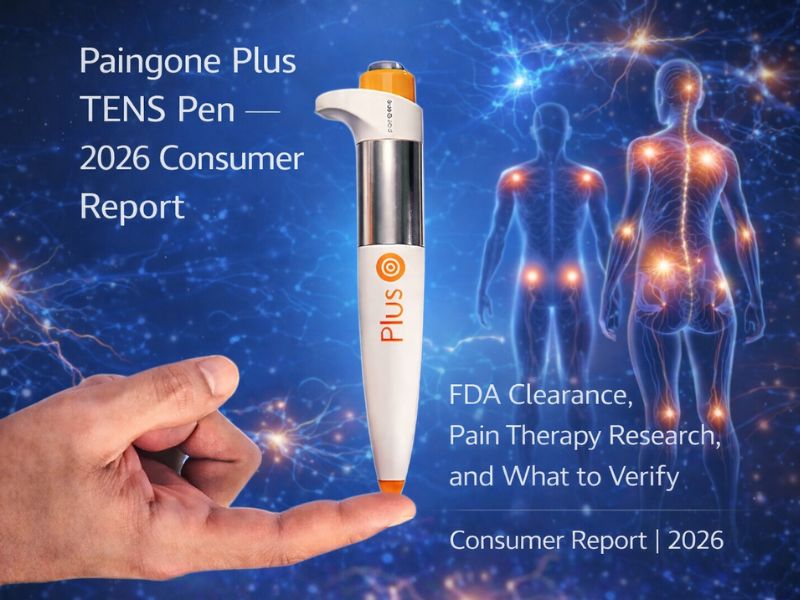
Paingone Plus TENS Pen Featured in 2026 Consumer Report Examining FDA Clearance Status, TENS Pain Therapy Research, and Portable Pain Relief Device Verification

Paingone Plus TENS Pen Featured in 2026 Consumer Report Examining FDA Clearance Status, TENS Pain Therapy Research, and Portable Pain Relief Device Verification


Paingone Plus TENS Pen Featured in 2026 Consumer Report Examining FDA Clearance Status, TENS Pain Therapy Research, and Portable Pain Relief Device Verification

A 2026 consumer research report examining Paingone Plus TENS pen searches, portable TENS pain relief device claims, FDA clearance status, published nerve stimulation therapy research, doctor endorsement context, and what consumers should verify before deciding

Tukwila, WA, March 05, 2026 (GLOBE NEWSWIRE) — This report examines publicly available marketing statements and published research literature. Where terms such as “evaluating” or “examining” appear, they refer to a neutral of company-published documentation — not an opinion, endorsement, or performance judgment. This article contains affiliate links. If a purchase is made through these links, a commission may be earned at no additional cost to the buyer. This article is an informational consumer research report and does not constitute medical, health, or treatment advice. All product details described below are stated as presented by the company and should be verified directly on the official website before any purchasing decision.

Growing Consumer Interest in Drug-Free Pain Management Devices

Consumers researching alternatives to pharmaceutical pain relief have increasingly explored non-drug approaches such as transcutaneous electrical nerve stimulation (TENS) therapy. Portable TENS devices have become more widely discussed online as individuals look for tools that may help manage everyday aches without relying exclusively on medications. This broader interest in non-pharmacological pain management technologies has contributed to rising search activity around handheld TENS devices and compact electrical stimulation tools designed for home use.

Online searches for “Paingone Plus review,” “Paingone Plus FDA cleared,” “TENS pen pain relief device,” and “portable TENS therapy device effectiveness” have grown alongside broader interest in non-pharmaceutical pain management tools. Additional consumer queries such as “does Paingone Plus work,” “is Paingone Plus legit,” and “Paingone Plus side effects” reflect the kind of due diligence people often conduct when researching a health-related device.

One device frequently appearing in these searches is Paingone Plus, a handheld electrical stimulation pen marketed as a compact alternative to traditional TENS machines. The company behind the device, QHI LLC based in Tukwila, Washington, describes it as an FDA Cleared medical device that delivers targeted TENS therapy at the push of a button.

Rather than a product review, this report examines the category of portable TENS pain relief devices, uses Paingone Plus as an example device within that category, and walks through what published research supports, what the company claims, and what you can verify independently before making a purchasing decision.

Paingone Plus TENS Pen Featured in 2026 Consumer Report Examining FDA Clearance Status, TENS Pain Therapy Research, and Portable Pain Relief Device Verification

Understanding TENS Therapy: What Published Medical Research Shows

If you’re considering any portable TENS device, understanding the underlying therapy is the most important first step — because the technology behind these devices has a much longer track record than any individual product on the market today.

Transcutaneous Electrical Nerve Stimulation (TENS) is a non-pharmacological pain management approach that has been studied in clinical settings for over 50 years. The therapy works by delivering mild electrical impulses through the skin to stimulate underlying nerves. Published research describes two primary mechanisms: the gate control theory, where electrical stimulation of sensory nerve fibers may reduce pain signal transmission to the brain, and endorphin release, where certain stimulation frequencies may trigger the body’s natural pain-relieving chemicals.

A comprehensive systematic review and meta-analysis published in BMJ Open (2022) examined 381 randomized controlled trials evaluating TENS for both acute and chronic pain in adults. The review found evidence of pain reduction when TENS was applied at strong but non-painful intensity, though the authors noted that the certainty of evidence was limited by the quality of existing clinical trials.

A separate appraisal published in Medicina (2022) reviewed 169 systematic reviews on TENS. Among the 49 meta-analyses evaluated, the three with the largest participant pools — each exceeding 500 participants — all showed that TENS was associated with lower pain levels in chronic musculoskeletal conditions and lower analgesic consumption after surgery.

One finding consistently emphasized across the research is that stimulation intensity matters. Studies show that TENS applied at higher, tolerable intensities produces better outcomes than low-intensity stimulation. Inadequate intensity is one of the primary factors contributing to conflicting results across clinical trials.

Here is the key distinction for anyone evaluating a portable device: the published TENS research was conducted using traditional machines with adjustable settings, electrode pads, and sessions lasting 15 to 60 minutes. A pen-format device with fixed parameters and a shorter application window operates under different conditions. That does not mean pen-format devices cannot provide relief — it means the published evidence base and the specific device format are not identical, and that distinction is worth keeping in mind.

Current product details, pricing, and terms can be confirmed by View the current Paingone Plus offer (official Paingone Plus page).

Growth of Portable TENS Devices in Consumer Health Technology

Portable TENS therapy devices represent one of the faster-growing segments of the non-pharmaceutical pain management market. Advances in miniaturization have allowed electrical nerve stimulation technology — once limited to clinical equipment — to be adapted into compact handheld devices designed for home use.

As the category has expanded, so have consumer questions about how these smaller, simplified devices compare to the clinical-grade machines that most published research has evaluated. That comparison is a central theme throughout this report.

What FDA Clearance Means for Consumer Medical Devices

If you have searched for “Paingone Plus FDA approved” or “Paingone Plus FDA status,” understanding the distinction between clearance and approval will help you interpret what you find.

FDA Clearance through the 510(k) pathway means the FDA has determined that a device is substantially equivalent to a legally marketed device already on the market. This is the standard regulatory pathway for most consumer TENS devices. It confirms that the device meets safety standards for its intended use category.

FDA Approval through the Premarket Approval (PMA) pathway is a more rigorous process typically required for higher-risk medical devices and involves clinical data demonstrating both safety and effectiveness.

The product page for Paingone Plus describes it as “FDA Cleared” — which, per the framework above, confirms compliance with safety standards but doesn’t independently validate the specific effectiveness claims in the company’s marketing materials. This is standard across the consumer TENS device category. You can verify clearance status through the FDA’s publicly searchable 510(k) database.

Physician Endorsements in Consumer Medical Device Marketing

When physician endorsements appear on consumer medical device pages, readers may wish to review the credentials of the physician and the context in which the endorsement is presented.

The official Paingone Plus product page features an endorsement from Dr. Stephanie Kane, DPM, who is quoted describing the device favorably and suggesting that anyone with chronic pain consider trying it. A DPM (Doctor of Podiatric Medicine) specializes in foot and ankle conditions, which represents one potential application area for a TENS device but doesn’t encompass the full range of pain conditions the product is marketed to address. The nature of any financial relationship between the physician and the company is not disclosed on the product page.

For consumers evaluating any health-related device, independent medical guidance from your own healthcare provider — someone who understands your specific pain condition and medical history — is a more reliable basis for a purchasing decision than any endorsement featured in product marketing, regardless of the product.

Pen-Format Devices Compared With Traditional TENS Machines

The company’s marketing materials for Paingone Plus emphasize convenience advantages over traditional TENS machines: no wires, no sticky electrode pads, no setup time, single-button operation, and a 30-to-90-second application compared to the longer sessions typical of conventional TENS therapy.

Those are real design differences that may genuinely matter if you have tried traditional TENS machines and found the setup cumbersome, or if you have limited hand dexterity that makes electrode placement difficult. The single-button design may be especially relevant for people with arthritis or other conditions affecting fine motor skills in the hands.

The trade-off worth understanding is that traditional TENS machines offer adjustable frequency and intensity settings — variables that published research identifies as important to therapeutic outcomes. A device with fixed stimulation and a shorter treatment window operates under different conditions than the equipment evaluated in most published clinical studies.

The company’s FAQ section offers an honest acknowledgment here: according to the product page, some people feel a benefit from the first application, while others may need to apply the device daily for up to three weeks before experiencing full effects. That kind of variability is consistent with how TENS therapy generally works — individual responses depend on pain type, severity, and personal physiology.

Paingone Plus Pricing, Availability, and Purchase Structure

According to the official product page at the time this report was prepared, Paingone Plus is marketed with a promotional discount described as 33% off the listed retail price. The company describes the current offer as available through a partnership with GiddyUp, identified on the site as a curator of innovative products.

The product page states that U.S. shipping is free, with orders shipping within 24 to 48 hours and delivery typically arriving within 3 to 5 business days. International shipping is available, though rates may vary by destination, and customs duties or VAT fees may apply depending on the destination country.

Because pricing and promotional terms can change at any time, consumers should confirm the current offer directly on the official product page before purchasing.

Current product details, pricing, and terms can be confirmed by View the current Paingone Plus offer (official Paingone Plus page).

Refund Policies and Consumer Protection Terms

The company’s published refund policy describes a 60-day money-back guarantee from the date the order is shipped. According to the company, consumers who are unsatisfied within the guarantee period can request a return by contacting the support team.

The company’s support email for return inquiries is help@paingone.com. The company address listed in the Terms of Service is 18205 Andover Park W, Tukwila, 98188, US. Refund processing timelines depend on the buyer’s financial institution.

Before purchasing, it’s worth reviewing the full Terms of Use and Conditions of Sale on the official website. Important details about dispute resolution procedures, liability limitations, and return conditions are contained in the terms of service rather than on the main product page.

Safety Information and Contraindications

This is the section that matters most if you are considering any TENS device — not just this one.

Per the company’s published product information, Paingone Plus should not be used by people with a pacemaker or other active implanted electrical device, people with heart rhythm problems, people with epilepsy, pregnant women, people under 18 years of age, or people with sensitive skin at the application site.

These contraindications are consistent with standard TENS device safety guidelines across the category. Electrical impulses from TENS devices could interfere with pacemakers or other implanted electrical devices and could pose risks for individuals with certain cardiac or neurological conditions. If any of these apply to you, this type of device is not appropriate regardless of how it is marketed.

Consult your healthcare provider before using any TENS device, particularly if you have an existing medical condition or are currently under medical care for a pain condition.

Understanding Common Marketing Language Used in the Portable TENS Device Category

Consumers researching portable TENS devices may encounter common marketing language across the category. The following explanations provide context for how these terms are generally used and how they can be interpreted when reviewing product information.

“FDA Cleared” — In the consumer TENS device category, this term refers to the 510(k) regulatory pathway. It confirms that the device meets safety standards for its intended use. The product page for Paingone Plus uses this term. Consumers can verify clearance status through the FDA’s public database.

“Over 2 Million Sold” — Sales volume claims are company-reported figures. The Paingone Plus product page states that more than 2 million devices have been sold worldwide. Independent verification of this figure is not publicly available to consumers.

“Proven TENS Technology” — TENS as a therapeutic modality has published peer-reviewed research spanning more than 50 years. When this phrase appears in device marketing, it typically refers to the broader research base for the therapy rather than to clinical testing of the specific product being sold.

“Doctor Approved” or “Doctor Recommended” — These phrases generally indicate that a named physician has endorsed the product in marketing materials. Whether such endorsements reflect independent clinical opinions or compensated relationships is not always disclosed. The Paingone Plus page features an endorsement from a named physician without disclosing the nature of the arrangement.

“90% of Customers Keep the Device” — Retention statistics are company-reported figures that may reflect a combination of product satisfaction, return policy convenience, price point, and other factors. The methodology behind this figure, as presented in the Paingone Plus FAQ, is not disclosed.

Current product details and published terms are available by View the current Paingone Plus offer (official Paingone Plus page).

Common Consumer Questions About Portable TENS Pen Devices

Is Paingone Plus a legitimate product?

It’s a commercially available TENS device sold through the official website getpaingoneplus.io, operated by QHI LLC. According to the company, the device is described as FDA Cleared and carries a 2-year warranty. The underlying TENS technology has been studied in published peer-reviewed research for over 50 years. Current details can be confirmed by View the current Paingone Plus offer (official Paingone Plus page).

Is it FDA approved?

The company describes it as “FDA Cleared,” which is different from “FDA Approved.” FDA clearance through the 510(k) pathway confirms that the device meets safety standards for its intended use category. This is the standard pathway for most consumer TENS devices.

Does it work for all types of pain?

According to the product page, the device can be used on multiple body areas. The company’s own FAQ acknowledges that individual responses vary and that some users may need daily use for up to three weeks before experiencing full effects. A healthcare provider familiar with your specific condition is the most reliable resource for assessing whether any TENS device is appropriate for you.

How does it differ from a traditional TENS machine?

Traditional TENS machines use electrode pads, adjustable settings, and treatment sessions lasting 15 to 60 minutes. This pen-format device uses single-button activation, requires no pads, and involves a 30-to-90-second application. The convenience trade-off involves fixed stimulation parameters and a shorter treatment duration compared to adjustable clinical-grade units.

Who should not use this device?

Per the company’s published safety information: people with pacemakers or implanted electrical devices, people with heart rhythm problems, people with epilepsy, pregnant women, people under 18, and people with sensitive skin at the application site.

Verification Steps Consumers Often Take Before Purchasing

Verify FDA clearance status independently. The FDA maintains a publicly searchable 510(k) database where you can look up cleared medical devices to confirm regulatory status.

Understand the difference between TENS modality research and device-specific evidence. TENS as a therapy has decades of published research. Specific pen-format devices represent a different delivery method than the traditional equipment used in most published clinical studies.

Evaluate physician endorsements with appropriate context. An independent assessment from your own healthcare provider carries more clinical weight than a promotional endorsement on a product sales page.

Read the full terms of service before purchasing. Important details about dispute resolution, refund conditions, and liability limitations are typically found in the terms of service rather than on the main product page.

Consult a qualified healthcare provider. This step is especially important if you have existing medical conditions, use a pacemaker, are pregnant, have epilepsy, or are currently under medical care for a pain condition.

Summary of Key Considerations

Consumers researching portable TENS pain relief devices in 2026 may find value in understanding both the published scientific research behind TENS therapy and the practical differences between portable pen-format devices and the traditional machines used in most published clinical studies.

The company behind Paingone Plus describes the device as FDA Cleared, doctor recommended, and backed by over 2 million units sold worldwide. TENS therapy as a broader modality has peer-reviewed research supporting its potential for pain relief at adequate stimulation intensity. The pen format offers a convenience trade-off — portability and ease of use in exchange for the adjustable parameters available on traditional TENS machines.

What you can verify before purchasing: TENS has published research support as a therapeutic modality; FDA clearance confirms safety standards but does not validate specific effectiveness claims; and the device’s full terms, refund policy, and contraindications are available on the official website. Reviewing those details directly is the most useful step you can take before deciding.

Complete product details, current pricing, and published terms are available by View the current Paingone Plus offer (official Paingone Plus page).

Contact Information

According to the company’s published documentation:

Company: QHI LLC

Address: 18205 Andover Park W, Tukwila, 98188, US

Email: help@paingone.com

Website: getpaingoneplus.io

Disclaimers

Content and Consumer Information Disclaimer: This article is an independent informational consumer research report and does not constitute medical, health, treatment, or legal advice. All product details, specifications, regulatory status claims, and policy terms described in this article are stated as presented by the company on its publicly available website and product labeling. This content has not been independently audited or verified unless specifically noted. Readers are encouraged to verify all claims directly with the manufacturer and to consult a qualified healthcare professional before using any pain relief device.

Medical Device and Health Notice: The company describes Paingone Plus as an FDA Cleared TENS device. FDA clearance through the 510(k) pathway confirms substantial equivalence to a predicate device and compliance with applicable safety standards. It doesn’t constitute independent validation of specific marketing effectiveness claims. TENS devices are not substitutes for professional medical evaluation, diagnosis, or treatment. Individual results vary based on the nature and severity of the pain condition, individual pain sensitivity, consistency of use, and other personal health variables. Pain conditions should be discussed with a qualified healthcare provider familiar with your personal medical history.

Contraindication Warning: Per the company’s published safety information, this device should not be used by people with pacemakers or other active implanted electrical devices, people with heart rhythm problems, people with epilepsy, pregnant women, people under 18, or people with sensitive skin. Consult your healthcare provider before use if you have any medical condition.

Results, Pricing, and Product Variability: All pricing, promotional offers, shipping terms, and refund policies referenced in this article are based on information published on the official product website at the time of writing and may change without notice. Verify current terms on the official website before completing any purchase.

FTC Affiliate Disclosure and Publisher Responsibility: This article contains affiliate links. If a product is purchased through these links, a commission may be earned at no additional cost to the buyer. This compensation does not influence the accuracy, neutrality, or integrity of the information presented. The publisher of this article is not responsible for typographical errors, manufacturer changes to the product after publication, or individual consumer outcomes.

CONTACT: Email: help@paingone.com

Quipt Home Medical Receives Final Order Approving Arrangement

Quipt Home Medical Receives Final Order Approving Arrangement


Quipt Home Medical Receives Final Order Approving Arrangement

CINCINNATI, March 05, 2026 (GLOBE NEWSWIRE) — Quipt Home Medical Corp. (the “Company”) (NASDAQ: QIPT; TSX: QIPT)‎, a U.S. based home medical equipment provider, focused on end-to-end respiratory care, announces that the Supreme Court of British Columbia issued a final order today in connection with the previously announced plan of arrangement under the Business Corporations Act (British Columbia) (the “Arrangement”) pursuant to which affiliates of Kingswood Capital Management, L.P. and Forager Capital Management, LLC will acquire all of the issued and outstanding common shares of the Company (each, a “Share”) for cash consideration of US$3.65 per Share. The final order was the final substantive court approval required prior to the closing of the Arrangement. Assuming all other terms and conditions to the Arrangement are satisfied, it is expected that the Arrangement will be completed by March 16, 2026.

It is anticipated that the Shares will be delisted from the Toronto Stock Exchange (“TSX”) and the Nasdaq Capital Markets (“NASDAQ”) and that the Company will cease to be a reporting issuer in all jurisdictions in which it is a reporting issuer under applicable securities laws, in each case shortly after completion of the Arrangement.

The terms of the Arrangement and the arrangement agreement among the Company, 1567208 B.C. Ltd. and REM Aggregator, LLC dated December 14, 2025 are further described in the Company’s management information circular and proxy statement dated January 23, 2026 and related materials for the special meeting of shareholders of the Company held on March 3, 2026, all of which are available under the Company’s profile on SEDAR+ at www.sedarplus.ca and on EDGAR at www.sec.gov.

ABOUT QUIPT HOME MEDICAL CORP.‎

The Company provides in-home monitoring and disease management services including end-to-end respiratory solutions for patients in the United States healthcare market. It seeks to continue to expand its offerings to include the management of several chronic disease states focusing on patients with heart or pulmonary disease, sleep disorders, reduced mobility, and other chronic health conditions. The primary business objective of the Company is to offer a broader range of services to patients in need of in-home monitoring and chronic disease management.

FORWARD-LOOKING STATEMENTS

Certain statements contained in this press release constitute “forward-looking statements” within the meaning of the U.S. Private Securities Litigation Reform Act of 1995 or “forward-looking information” as such term is defined in applicable Canadian securities legislation (collectively, “forward-looking statements”). The words “may”, “would”, “could”, “should”, “potential”, “will”, “seek”, “intend”, “plan”, “anticipate”, “believe”, “estimate”, “postulate”, “expect”, “outlook”, or the negatives thereof or variations of such words, and similar expressions as they relate to the Company are intended to identify forward-looking statements, including: the proposed Arrangement and terms thereof; and other statements that are not historical fact. All statements other than statements of historical fact, including those that express, or involve discussions as to, expectations, beliefs, plans, objectives, assumptions or future events or performance are not historical facts and may be forward-looking statements and may involve estimates, assumptions and uncertainties that could cause actual results or outcomes to differ materially from those expressed in the forward-looking statements. Such statements reflect the Company’s current views and intentions with respect to future events, and current information available to the Company, and are subject to certain risks, uncertainties and assumptions, including, without limitation: the ability to obtain the necessary regulatory and other third party approvals for the Arrangement, the timing of obtaining such approvals and the risk that such approvals may not be obtained in a timely manner or at all, and the risk that such approvals may be obtained on conditions that are not anticipated; the anticipated completion of the Arrangement and timing thereof; the abilities of the parties to satisfy, in a timely manner, the other conditions to the closing of the Arrangement; the delisting of the Shares from the TSX and NASDAQ; the Company ceasing to be a reporting issuer under Canadian and U.S. federal securities laws and the timing thereof; the failure of the Arrangement to close for any other reason; and the ability to achieve the expected benefits of the Arrangement. Many factors could cause the actual results, performance or achievements that may be expressed or implied by such forward-looking statements to vary from those described herein should one or more of these risks or uncertainties materialize. Examples of such risk factors include, without limitation: risks related to credit, market (including equity, commodity, foreign exchange and interest rate), liquidity, operational (including technology and infrastructure), reputational, insurance, strategic, regulatory, legal, environmental, and capital adequacy; the general business and economic conditions in the regions in which the Company operates; the ability of the Company to execute on key priorities, including the successful completion of acquisitions, business retention, and strategic plans and to attract, develop and retain key executives; difficulty integrating newly acquired businesses; the ability to implement business strategies and pursue business opportunities; low profit market segments; disruptions in or attacks (including cyber-attacks) on the Company’s information technology, internet, network access or other voice or data communications systems or services; the evolution of various types of fraud or other criminal behavior to which the Company is exposed; the failure of third parties to comply with their obligations to the Company or its affiliates; the impact of new and changes to, or application of, current laws and regulations; decline of reimbursement rates; dependence on few payors; possible new drug discoveries; a novel business model; dependence on key suppliers; granting of permits and licenses in a highly regulated business; legal proceedings and litigation, including as it relates to the civil investigative demand received from the Department of Justice; increased competition; changes in foreign currency rates; the imposition of trade restrictions such as tariffs and retaliatory counter measures; increased funding costs and market volatility due to market illiquidity and competition for funding; the availability of funds and resources to pursue operations; critical accounting estimates and changes to accounting standards, policies, and methods used by the Company; the Company’s status as an emerging growth company and a smaller reporting company; the occurrence of natural and unnatural catastrophic events or health epidemics or concerns; as well as those risk factors discussed or referred to in the Company’s disclosure documents filed with the SEC and available on EDGAR at www.sec.gov, including the Company’s most recent Annual Report on Form 10-K and subsequent Quarterly Reports on Form 10-Q, and with the securities regulatory authorities in certain provinces of Canada and available at www.sedarplus.ca. Should any factor affect the Company in an unexpected manner, or should assumptions underlying the forward-looking statement prove incorrect, the actual results or events may differ materially from the results or events predicted. Any such forward-looking statements are expressly qualified in their entirety by this cautionary statement. Moreover, the Company does not assume responsibility for the accuracy or completeness of such forward-looking statements. The forward-looking statements included in this press release are made as of the date of this press release and the Company undertakes no obligation to publicly update or revise any forward-looking statements, other than as required by applicable law.

For further information please visit our website at www.quipthomemedical.com, or contact:‎

Cole Stevens
VP of Corporate Development
Quipt Home Medical Corp.
‎859-300-6455
cole.stevens@myquipt.com

Gregory Crawford
Chief Executive Officer
Quipt Home Medical Corp.
‎859-300-6455
investorinfo@myquipt.com

Rakovina Announces Closing of $1 Million Debenture Unit Private Placement and Debt Settlement Agreements

Rakovina Announces Closing of $1 Million Debenture Unit Private Placement and Debt Settlement Agreements


Rakovina Announces Closing of $1 Million Debenture Unit Private Placement and Debt Settlement Agreements

VANCOUVER, British Columbia, March 05, 2026 (GLOBE NEWSWIRE) — Rakovina Therapeutics Inc. (TSX-V: RKV; FSE: 7JO0) (“Rakovina” or the “Company”), a biopharmaceutical company advancing innovative cancer therapies through AI-powered drug discovery, is pleased to announce closing of its previously announced non-brokered private placement of convertible debenture units (“Debenture Units”) for aggregate gross proceeds of $1,000,000 (the “Debenture Private Placement”). The Company also announces that it has entered into the previously announced debt settlement agreements with holders of the 12.0% unsecured convertible debentures of the Company (the “Existing Debentures”) to settle an aggregate outstanding debt of $1,587,130.59 (the “Settled Amount”), comprised of a principal amount of $1,454,000.00 and accrued interest of $133,130.59 as at March 5, 2026. In full satisfaction and settlement of the Settled Amount, the Company has agreed to issue (i) an aggregate of approximately 3,265,585 common shares in the capital of the Company (each, a “Settlement Share”) at a deemed price of $0.12 per share, and (ii) 12.0% unsecured convertible debentures of the Company (the “Replacement Debentures”) in the aggregate principal amount of $1,195,259.99, together with 2,390,519 common share purchase warrants (“Warrants”). Closing of the debt settlement transactions is expected to occur on or about March 9, 2026.

Debenture Unit Private Placement

The Debenture Units were issued at a price of $50,000 per Debenture Unit and each such Debenture Unit was comprised of (i) one unsecured convertible debenture (a “New Debenture”) in the principal amount of $50,000, and (ii) 100,000 Warrants. Each Warrant will entitle the holder to purchase one common share in the Company (a “Common Share”) at an exercise price of $0.20 per share until January 28, 2029, subject to customary adjustments.

The principal amount of each New Debenture shall be repayable on January 28, 2029 (unless earlier converted) and will accrue interest at a rate of 12% per annum, payable semi-annually in cash, or at the option of the holder, common shares. Until the principal amount is repaid, the holder shall have the option to convert the principal amount of the New Debenture into Common Shares at a conversion price of $0.20 per share, subject to customary adjustments.

The Company intends to use the proceeds of the Debenture Private Placement to provide near-term working capital to support ongoing corporate activities and strategic initiatives while the Company continues to evaluate longer-term financing alternatives.

The issuance of the New Debentures and Warrants is subject to the receipt of all requisite approvals, including, without limitation, the final approval of the TSX Venture Exchange (the “TSXV”). All securities issued pursuant to the Debenture Private Placement will be subject to a statutory hold period of four months and one day from the date of issuance, in accordance with applicable Canadian securities laws.

Debt Settlement

The Company offered holders of the Existing Debentures the opportunity to elect to receive Settlement Shares or Replacement Debentures in settlement of the amounts outstanding thereunder. Certain holders of Existing Debentures have agreed to settle an aggregate amount of $391,870.60 (which amount is comprised of an aggregate principal amount of $359,000.00, together with interest accrued thereon) for an aggregate of 3,265,585 Settlement Shares, with the remaining holders having agreed to settle an aggregate amount of $1,195,259.99 (which amount is comprised of an aggregate principal amount of $1,095,000.00, together with interest accrued thereon) through the issuance of Replacement Debentures and Warrants. The Replacement Debentures and Warrants to be issued pursuant to the debt settlement transactions will have substantially similar terms as the New Debentures and Warrants issued pursuant to the Debenture Private Placement described above.

The issuance of the Settlement Shares, Replacement Debentures and Warrants is subject to the receipt of all requisite approvals, including, without limitation, the final approval of the TSXV. All securities issued pursuant to the debt settlement transactions described above will be subject to a statutory hold period of four months and one day from the date of issuance, in accordance with applicable Canadian securities laws.

Neither TSX Venture Exchange nor its Regulation Services Provider (as that term is defined in the policies of the TSXV) accepts responsibility for the adequacy or accuracy of this release.

About Rakovina Therapeutics Inc.

Rakovina Therapeutics is a biopharmaceutical research company focused on the development of innovative cancer treatments. Our work is based on unique technologies for targeting the DNA-damage response powered by Artificial Intelligence (AI) using the proprietary Deep-Docking™ and Enki™ platforms. By using AI, we can review and optimize drug candidates at a much greater pace than ever before.

The Company has established a pipeline of distinctive DNA-damage response inhibitors with the goal of advancing one or more drug candidates into human clinical trials in collaboration with pharmaceutical partners. Further information may be found at www.rakovinatherapeutics.com.

Notice Regarding Rakovina Therapeutics Forward-Looking Statements:

This release includes forward-looking statements regarding the company and its respective business, which may include, but is not limited to, statements with respect to the proposed business plan of the company and other statements. Often, but not always, forward-looking statements can be identified by the use of words such as “plans,” “is expected,” “expects,” “scheduled,” “intends,” “contemplates,” “anticipates,” “believes,” “proposes” or variations (including negative variations) of such words and phrases, or state that certain actions, events, or results “may,” “could,” “would,” “might,” or “will” be taken, occur, or be achieved. Such statements are based on the current expectations of the management of the company. The forward-looking events and circumstances discussed in this release may not occur by certain specified dates or at all and could differ materially as a result of known and unknown risk factors and uncertainties affecting the company, including risks regarding the biopharmaceutical industry, economic factors, regulatory factors, the equity markets generally, and risks associated with growth and competition.

Although the company has attempted to identify important factors that could cause actual actions, events, or results to differ materially from those described in forward-looking statements, there may be other factors that cause actions, events, or results to differ from those anticipated, estimated, or intended. No forward-looking statement can be guaranteed. Except as required by applicable securities laws, forward-looking statements speak only as of the date on which they are made, and the company undertakes no obligation to publicly update or revise any forward-looking statement, whether as a result of new information, future events, or otherwise. The reader is referred to the company’s most recent filings on SEDAR+ for a more complete discussion of all applicable risk factors and their potential effects, copies of which may be accessed through the company’s profile page at www.sedar.com.

For Further Information Contact:
Investor Relations
Rakovina Therapeutics Inc.
IR@rakovinatherapeutics.com

Omada Health Announces GLP-1 Flex Care, Giving Employers a New, Flexible Path to Support Obesity Care

Omada Health Announces GLP-1 Flex Care, Giving Employers a New, Flexible Path to Support Obesity Care


Omada Health Announces GLP-1 Flex Care, Giving Employers a New, Flexible Path to Support Obesity Care

Through Omada’s GLP-1 Flex Care offering, employers gain a new flexible option to connect employees with anti-obesity medication, virtual care, and lifestyle support

SAN FRANCISCO, March 05, 2026 (GLOBE NEWSWIRE) — Omada Health (Nasdaq: OMDA), the virtual-first provider of between-visit care, today announced GLP-1 Flex Care, a new offering that will support employers looking to increase access to GLP-1 medications for obesity, including clinical evaluation, prescribing, and ongoing medical guidance and oversight. Members purchase their medications independently through cash-pay channels, helping employers limit their direct exposure to medication costs.

Employee demand for GLP-1 medications continues to grow, but for many employers, the economics of full coverage remain out of reach.1 The majority of employers consider managing GLP-1 coverage and cost important,2 but finding a financially sustainable path for access can be difficult. Meanwhile, employees are increasingly turning to fragmented cash-pay channels3 that lack coordinated medical oversight and provide little visibility into clinical best practices or sustainable outcomes. GLP-1 Flex Care is built for this reality, giving employers a way to act now, on their terms.

“Employers shouldn’t have to choose between providing the medication and obesity care their workforce needs to be healthy and protecting their bottom line,” said Wei-Li Shao, President of Omada Health. “GLP-1 Flex Care removes that tradeoff. It gives employers an affordable option they can offer today, one that keeps them in control of their spend while helping their employees get important medical oversight, prescribing, and lifestyle support.”

Through GLP-1 Flex Care, members can be evaluated for GLP-1 eligibility, have labs ordered, and receive prescriptions for FDA-approved GLP-1 medications. GLP-1 Flex Care will also provide ongoing clinical oversight including titration management, support with side-effects, nutrition and activity counseling, and discontinuation support. In-program providers will also work with each member to identify appropriate medications and cash-pay options based on their clinical profile and what they can afford, whether that’s an injectable or an oral formulation. Members will independently purchase medications through established cash-pay channels while receiving Omada’s proven virtual care, including personalized coaching and lifestyle support, throughout their GLP-1 journey. Because medications are purchased directly by employees, employers can offer a structured GLP-1 option without taking on open‑ended medication spend.

Affordability matters, but so does effectiveness. GLP-1 Flex Care is built on Omada’s GLP-1 care track, which has demonstrated strong real-world results across key metrics. A 12-month analysis found that medication persistence rates among Omada GLP-1 members were notably higher than key published benchmarks, with 67% of members remaining on medication at one year4 versus 47–49% in a comparable study.5 Omada members who persisted on their GLP-1 medication also achieved greater average weight loss at one year in the program: 18.4%4 compared to 11.9% seen in comparable real-world evidence.5

“These new pathways give more employers and members a way in, but what happens after that matters just as much,” said Thomas Tsang, MD, MPH, Chief Medical Officer at Omada Health. “Our peer-reviewed research has shown that when GLP-1 medication was paired with Omada’s wraparound care model, members stayed on their medications longer and lost more weight on average.4,6 And, more importantly, if they chose to stop, our research has shown that members maintained their weight loss on average for 12 months after discontinuing.7 That’s the difference between a prescription and a durable outcome.”

GLP-1 Flex Care reflects Omada’s commitment to support diverse benefits strategies, as Omada has supported more than 150,000 members on GLP-1s. Employer benefit designs vary widely: some cover GLP-1s broadly for obesity, others take a more selective approach with targeted coverage criteria, and many don’t cover them at all but still want evidence-based solutions for their population. Increasingly, employers are looking for ways to support employees who are paying for GLP-1s out of pocket. Omada serves employers across this entire spectrum, providing flexible, evidence-based pathways that balance access, affordability, and long-term outcomes as GLP-1 adoption accelerates.

GLP-1 Flex Care is the latest addition to Omada’s growing GLP-1 solution portfolio. Across purchasing pathways, Omada brings together proven companion care, clinical prescribing and medication management, and personalized lifestyle support deployable across pharmacy benefits, direct-to-employer, and other emerging purchasing channels. The result is a comprehensive platform that supports many employer benefit designs, wherever they are on the coverage spectrum today and wherever they go next. GLP-1 Flex Care will be available to employers beginning later in 2026. Employers interested in learning more can contact their Omada representative or visit omadahealth.com.

About Omada Health
Omada Health (Nasdaq: OMDA) is reverse engineering the way healthcare is delivered in America, putting the space between doctor visits–where health is won or lost–at the center of care. Today’s healthcare system poorly serves chronic conditions that require ongoing support outside of the exam room, like obesity, diabetes, hypertension, cholesterol, and musculoskeletal conditions. Omada’s virtual-first model combines human-led care teams, connected devices, and AI-enabled technology to deliver personalized care at scale, including support for GLP-1 therapy. Omada has served more than two million members since launch across 2,000+ employers, health plans, pharmacy benefit managers, and health systems. Learn more at omadahealth.com.

Contacts
Rose Ramseth
press@omadahealth.com

Citations

  1. Peterson‑KFF Health System Tracker. Perspectives from employers on the costs and issues associated with covering GLP‑1 agonists for weight loss. Published January 11, 2026. Accessed February 17, 2026. https://www.healthsystemtracker.org/brief/perspectives-from-employers-on-the-costs-and-issues-associated-with-covering-glp-1-agonists-for-weight-loss/
  2. Mercer. 2025 US survey on health and benefit strategies for 2026. Published 2025. Accessed February 17, 2026. https://www.mercer.com/assets/us/en_us/shared-assets/local/attachments/pdf-2025-us-survey-on-health-and-benefit-strategies-for-2026.pdf
  3. KFF. KFF Health Tracking Poll: Prescription drug costs, views on Trump administration actions, and GLP-1 use. Published November 13, 2025. Accessed February 17, 2026. https://www.kff.org/public-opinion/kff-health-tracking-poll-prescription-drug-costs-views-on-trump-administration-actions-and-glp-1-use/
  4. Devaraj SM, Chang H, Napoleone JB, Linke S. Weight Health at One Year: Outcomes from Omada’s Enhanced GLP-1 Care Track. Omada Health. Published January 8, 2026. Accessed February 17, 2026. https://www.omadahealth.com/resource-center/weight-health-at-one-year-outcomes-from-omadas-enhanced-glp-1-care-track
  5. Gasoyan H, Butsch WS, Schulte R, et al. Changes in weight and glycemic control following obesity treatment with semaglutide or tirzepatide by discontinuation status. Obesity (Silver Spring). 2025; 33(9): 1657-1667. doi:10.1002/oby.24331
  6. Chang H, Devaraj SM, Naqvi JB, Linke S. GLP-1 medication persistence, a key component of weight loss. Omada Health. Published 2025. Accessed February 17, 2026. https://www.omadahealth.com/resource-center/glp-1-medication-persistence-a-key-component-of-weight-loss
  7. Chang H, Devaraj SM, Naqvi JB, Napoleone J, Linke S. Weight maintenance is possible after GLP-1s—with the right support. Omada Health. Published September 8, 2025. Accessed February 17, 2026. https://www.omadahealth.com/resource-center/weight-maintenance-is-possible-after-glp-1s-with-the-right-support

Nyxoah to Release Fourth Quarter and Full Year 2025 Financial Results on March 19, 2026

Nyxoah to Release Fourth Quarter and Full Year 2025 Financial Results on March 19, 2026


Nyxoah to Release Fourth Quarter and Full Year 2025 Financial Results on March 19, 2026

Nyxoah to Release Fourth Quarter and Full Year 2025 Financial Results on March 19, 2026

Mont-Saint-Guibert, Belgium – March 5 2026, 10:05pm CET / 4:05pm ET – Nyxoah SA (Euronext Brussels/Nasdaq: NYXH) (“Nyxoah” or the “Company”), that develops breakthrough treatment alternatives for Obstructive Sleep Apnea (OSA) through neuromodulation, today announced that the Company will release financial results for the fourth quarter and full year of 2025 on Thursday, March 19, 2026. Company management will host a conference call to discuss financial results that day beginning at 10:30pm CET / 4:30pm ET.

A webcast of the call will be accessible via the Investor Relations page of the Nyxoah website or through this link: Nyxoah’s Q4 and FY 2025 Earnings Call Webcast. For those not planning to ask a question of management, the Company recommends listening via the webcast.

If you plan to ask a question, please use the following link: Nyxoah’s Q4 and FY 2025 Earnings Call . After registering, an email will be sent, including dial-in details and a unique conference call access code required to join the live call. To ensure you are connected prior to the beginning of the call, the Company suggests registering a minimum of 10 minutes before the start of the call.

The archived webcast will be available for replay shortly after the close of the call.

About Nyxoah

Nyxoah is a medical technology company focused on the development and commercialization of innovative solutions to treat OSA. Nyxoah’s lead solution is the Genio system, a patient-centered, leadless and battery-free hypoglossal neurostimulation therapy for OSA, the world’s most common sleep disordered breathing condition that is associated with increased mortality risk and cardiovascular comorbidities. Nyxoah is driven by the vision that OSA patients should enjoy restful nights and feel enabled to live their life to its fullest.

Following the successful completion of the BLAST OSA study, the Genio system received its European CE Mark in 2019. Nyxoah completed two successful IPOs: on Euronext Brussels in September 2020 and NASDAQ in July 2021. Following the positive outcomes of the BETTER SLEEP study, Nyxoah received CE mark approval for the expansion of its therapeutic indications to Complete Concentric Collapse (CCC) patients, currently contraindicated in competitors’ therapy. Additionally, the Company announced positive outcomes from the DREAM IDE pivotal study and receipt of approval from the FDA for a subset of adult patients with moderate to severe OSA with an AHI of greater than or equal to 15 and less than or equal to 65.

For more information, please visit http://www.nyxoah.com/.

Caution – CE marked since 2019. FDA approved in August 2025 as prescription-only device.

Forward-looking statements

Certain statements, beliefs and opinions in this press release are forward-looking, which reflect the Company’s or, as appropriate, the Company directors’ or management’s current expectations regarding the Genio system; the potential advantages of the Genio system; Nyxoah’s goals with respect to the potential use of the Genio system; the Company’s commercialization strategy and entrance to the U.S. market; the Company’s results of operations, financial condition, liquidity, performance, prospects, growth, future revenue and strategies. By their nature, forward-looking statements involve a number of risks, uncertainties, assumptions and other factors that could cause actual results or events to differ materially from those expressed or implied by the forward-looking statements. These risks, uncertainties, assumptions and factors could adversely affect the outcome and financial effects of the plans and events described herein. These risks and uncertainties include, but are not limited to, the risks and uncertainties set forth in the “Risk Factors” section of the Company’s Annual Report on Form 20-F for the year ended December 31, 2024, filed with the Securities and Exchange Commission (“SEC”) on March 20, 2025 and subsequent reports that the Company files with the SEC. A multitude of factors including, but not limited to, changes in demand, competition and technology, can cause actual events, performance or results to differ significantly from any anticipated development. Forward-looking statements contained in this press release regarding past trends or activities are not guarantees of future performance and should not be taken as a representation that such trends or activities will continue in the future. In addition, even if actual results or developments are consistent with the forward-looking statements contained in this press release, those results or developments may not be indicative of results or developments in future periods. No representations and warranties are made as to the accuracy or fairness of such forward-looking statements. As a result, the Company expressly disclaims any obligation or undertaking to release any updates or revisions to any forward-looking statements in this press release as a result of any change in expectations or any change in events, conditions, assumptions or circumstances on which these forward- looking statements are based, except if specifically required to do so by law or regulation. Neither the Company nor its advisers or representatives nor any of its subsidiary undertakings or any such person’s officers or employees guarantees that the assumptions underlying such forward-looking statements are free from errors nor does either accept any responsibility for the future accuracy of the forward-looking statements contained in this press release or the actual occurrence of the forecasted developments. You should not place undue reliance on forward-looking statements, which speak only as of the date of this press release.

Contacts:
Nyxoah
John Landry, CFO
IR@nyxoah.com

Rémi Renard
Head of Investor Relations & Corporate Communication
IR@nyxoah.com

Attachment

Hopewell Therapeutics Announces Sublicense of Proprietary Lipid Nanoparticles for Novel Cancer Vaccine to Foxcroft Therapeutics

Hopewell Therapeutics Announces Sublicense of Proprietary Lipid Nanoparticles for Novel Cancer Vaccine to Foxcroft Therapeutics


Hopewell Therapeutics Announces Sublicense of Proprietary Lipid Nanoparticles for Novel Cancer Vaccine to Foxcroft Therapeutics

  • Transaction is Hopewell’s first commercial license of proprietary lipid nanoparticles (LNPs)
  • Hopewell’s LNPs are the preferred delivery solution for the cancer vaccine technology that Foxcroft licensed from Tufts University in 2025
  • Foxcroft will conduct its first large mammal (canine) trial in mid-2026, using Hopewell’s LNPs

WOBURN, Mass., March 05, 2026 (GLOBE NEWSWIRE) — Hopewell Therapeutics, Inc., a Boston-based next-generation lipid nanoparticle (LNP) company (“Hopewell”), today announced that it entered into a sublicense agreement with Foxcroft Therapeutics, Inc., the developer of novel cancer vaccines (“Foxcroft”), granting Foxcroft a global sublicense to certain of its tissue-targeting LNPs (ttLNPs).   Hopewell and Foxcroft will collaborate on their evaluation of Hopewell’s ttLNPs as potential delivery vehicles for Foxcroft’s cancer vaccines.

Hopewell is currently developing ttLNPs as a delivery vehicle for a broad range of clinical and therapeutic applications, including vaccines, gene therapies, immune-oncology, and pulmonary therapies, targeting tissues in the lung, brain, bone marrow, ovaries, spleen, lymph nodes, kidneys, liver, and other vital organs. Pre-clinical testing has demonstrated Hopewell ttLNPs to perform more effectively than other LNPs available in the market.

In February 2025, Dr. Qiaobing Xu, Founder and President of Hopewell, authored a paper entitled “Antitumour vaccination via the targeted proteolysis of antigens isolated from tumour lysates,” which described a novel tumor lysate-based cancer vaccine, delivered through LNPs that target the lymph nodes.1  

In September 2025, Foxcroft obtained from Tufts University the exclusive global license to this cancer vaccine technology. The present Hopewell sublicense gives Foxcroft access to multiple ttLNPs as candidate delivery vehicles for its vaccine. Foxcroft plans to conduct confirmatory testing of vaccine formulations in large mammal trials, starting with a canine clinical trial expected to commence later this year.

The Hopewell sublicense includes a significant, non-refundable, up-front license fee to Hopewell, royalties on net sales, regulatory milestone payments, and up to $100 million of sales-based milestone payments.

“Hopewell is thrilled to announce the first sublicense of its ttLNP technology in the exciting field of cancer vaccines,” commented Dr. Xu. “We look forward to supporting Foxcroft to bring this important anti-cancer therapy to human testing as quickly as possible.”

Foxcroft’s management stated, “We recognize that Hopewell’s LNP library provides superior targeted delivery solutions for a number of clinical and therapeutic applications, including our vaccine. Over the months ahead, we are excited to work further with the Hopewell team to further evaluate the sublicensed LNPs.”

________________
1 Zhao Y, Song D, Wang Z, Huang Q, Huang F, Ye Z, Wich D, Chen M, Khirallah J, Gao S, Liu Y, Xu Q. Antitumour vaccination via the targeted proteolysis of antigens isolated from tumour lysates. Nat Biomed Eng. 2025 Feb;9(2):234-248. doi: 10.1038/s41551-024-01285-5. Epub 2024 Nov 28. PMID: 39609559.

About Hopewell Therapeutics
Hopewell Therapeutics is discovering, synthesizing, and developing the next generation of ttLNPs to bring genomic medicines to patients. Hopewell is pursuing opportunities to redefine the non-viral delivery space for novel genomic medicines by designing systemically administered LNPs to specifically target extrahepatic tissues and cells throughout the body. Hopewell has built a robust intellectual property portfolio with an expansive library of ionizable lipids and has established partnerships with several industry leading companies. Hopewell is developing its own internal pipeline while concurrently exploring the potential of its ttLNP platform for patients with unmet needs in oncology, infectious diseases, rare genetic diseases, and neurological disorders. For more information, visit www.hopewell-tx.com.

About Foxcroft Therapeutics
Foxcroft is a vaccine technology company focusing on immune-oncology based vaccines. Founded in 2025 by investors from the USA and Thailand, Foxcroft is actively investing to assemble strategic intellectual property necessary to develop state-of-the-art therapies and serve unmet medical needs.

Contact:
Qiaobing Xu
Founder and President Hopewell Therapeutics Inc. 
qxu@hopewelltx.com  
https://www.hopewell-tx.com

Evaxion announces business update and full year 2025 financial results

Evaxion announces business update and full year 2025 financial results


Evaxion announces business update and full year 2025 financial results

COPENHAGEN, Denmark, March 5, 2026 – Evaxion A/S (NASDAQ: EVAX) (“Evaxion”), a clinical-stage TechBio company developing novel vaccines with its pioneering AI-Immunology™ platform, provides business update and announces full year 2025 financial results.

Business highlights
2025 was a transformational year for Evaxion with significant strengthening of our fundamental business both strategically, scientifically and financially through achievement of several milestones. Highlights include:

  • The historic licensing of our infectious disease vaccine candidate EVX-B3 by MSD (tradename of Merck & Co., Inc., Rahway, NJ, USA)
  • Unprecedented two-year phase 2 data for our personalized cancer vaccine candidate EVX-01 demonstrating impressive clinical outcomes
  • Replenishing of our R&D pipeline adding EVX-04, an off-the-shelf vaccine candidate for acute myeloid leukemia (AML), and EVX-B4, a prophylactic vaccine candidate targeting Group A Streptococcus
  • Collaborating with the Gates Foundation to design new polio vaccine
  • Receiving the Galien Foundation Prix Bridges Award for Best medical technology/AI advances in human health for AI-Immunology™
  • Strengthening of our financial position and equity through partnership deal and capital market activities totaling more than $30 million, in addition to the debt conversion agreement with the European Investment Bank (EIB)
  • Improving future funding options by amending our At-The-Market (ATM) equity program

“We made tremendous progress in 2025 across all aspects of our business and achieved several vital points of validation of both our platform, R&D pipeline and strategy. This, coupled with the fact that we have cash on hand to fund our operations into the second half of 2027, puts us in a strong position to further progress both AI-Immunology™ and our R&D pipeline as per our strategy for long term value creation. We maintain our focus on building value through our platform and pipeline assets through partnerships and strong operational execution to deliver the milestones laid out for 2026,” says Helen Tayton-Martin, CEO of Evaxion.

Conference call and webcast
Evaxion’s Executive Management will host a conference call and webcast at 8.30 ET/14.30 CET tomorrow, presenting the business update and financial results as well as taking questions.

To join the conference call, listen to the presentation and ask verbal questions, please register in advance via this link to receive the dial-in telephone numbers and a unique PIN code. The call can be accessed 15 minutes prior to the start of the live event.

To join the webcast, please click on this link. The webcast recording will be available on our website shortly after the event.

2026 milestones
Based on the strengthening of Evaxion during 2025 we continue the execution of our strategy of creating value from both our platform and R&D pipeline assets through partnerships. This is reflected in our milestones for 2026 covering both the continued expansion of AI-Immunology™ and the progression of our R&D pipeline programs as outlined below.

Leveraging the unique scalability of AI-Immunology™, we will expand the platform to also enable the discovery and development of drug candidates targeting autoimmune diseases (AIDs). This will increase the pool of diseases for which we can potentially discover and develop new treatments.

AIDs are characterized by high unmet medical need and offer significant partnership potential across all stages of drug development. Currently, we are optimizing the indication strategy for development of AI-Immunology™ in the autoimmune space for use in the second half of 2026.

In oncology, we will continue to strengthen the data package for EVX-01, our personalized cancer vaccine in advanced melanoma, with additional biomarker and immunogenicity findings as well as three-year clinical results from the extension of the phase 2 trial. We plan to present both datasets at key medical conferences during the year.

Progressing our cancer vaccine pipeline also includes the preparation for a phase 1 trial with EVX-04, our conserved antigen vaccine in AML. Regulatory filing is expected before the end of the year.

In our infectious disease pipeline, the most significant expected event is the design and preclinical validation of antigens for our Group A Streptococcus vaccine, EVX-B4, with new data anticipated to be presented at a conference in the second half of the year.

Further to our specific 2026 milestones, we maintain our efforts to derive value from partnerships. This includes platform deals focusing on target discovery, candidate, validation and optimization plus pipeline deals focusing on validated assets. We continue to see strong external interest in both areas and are engaged in numerous partnership discussions. 

We maintain strict cost control and are diligently prioritizing and optimizing our cash and resource allocation. For 2026, we expect a cash expenditure similar to 2025, e.g. an operational cash burn of ~$14 million.

Asset Milestone Target
EVX-01 Additional biomarker and immunogenicity data H1
AI-Immunology™ Launch new application for autoimmune diseases H2
EVX-01 Three-year phase 2 clinical efficacy data H2
EVX-04 Regulatory filing for phase 1 trial H2
EVX-B4 Design and preclinical validation of antigens H2


Research & Development (R&D) update
Evaxion has a R&D pipeline of innovative vaccine candidates for both cancer and infectious diseases.

The personalized cancer vaccine EVX-01 is our most advanced asset. Developed with AI-Immunology™, it is designed to target multiple neoantigens; cancer unique proteins arising from mutations. We successfully completed the initially planned two-years of treatment in the phase 2 trial with EVX-01 in patients with advanced melanoma (skin cancer) with unprecedented results presented at an oral session at the prestigious ESMO 2025 conference.

Clinical results included an objective response rate of 75%, as 12 out of 16 patients had objective clinical responses, with four patients obtaining a complete response. Additionally, a durable clinical benefit was observed with 92% of patients still responding at two years of follow-up with no relapses.

In the trial, EVX-01 induced an immune response in all patients, with 81% of the targeted neoantigens generating potent, specific T-cell responses. This high immunogenicity rate stands out as highly encouraging compared to historical observations and compares very favorably to what is seen with other neoantigen prediction approaches.

Further immune data, presented at the SITC 2025 conference, showed that in subsets of analyzed patients, clinical responses were accompanied by a rapid and sustained induction of EVX-01-specific T-cells.

While all these data are encouraging and validates the clinical potential of EVX-01, it also provides a wider validation of AI-Immunology™, its predictive capabilities and its ability to find relevant vaccine targets associated with high clinical efficacy.

This validation was further supported both by the licensing of an undisclosed infectious disease program (EVX-B3) by MSD, the collaboration on polio with the Gates Foundation and the Galien Foundation award and serves as an important foundation on the use of AI-Immunology™ for all of our partnering discussions. We received the Galien Foundation Prix Bridges Award for Best medical technology/AI advances in human health for AI-Immunology™, further reinforcing our positioning as a leader in the field of AI-based target discovery.

EVX-04, the AML vaccine added to our pipeline in 2025, is developed through the ability of AI-Immunology™ to identify non-conventional endogenous retrovirus (ERV) tumor antigens from the dark genome. These antigens are selectively expressed in specific tumors but absent in normal tissue, making them highly attractive cancer vaccine targets.

Using sequencing data from AML patients, the AI-Immunology™ platform first identified ERV tumor antigens and then mined these to determine smaller fragments with the potential for immune recognition. From the five million ERV antigen fragments discovered, AI-Immunology™ combined and selected 16 optimal sets of ERV fragments based on their cross-patient relevance and immunogenic potential.

In December 2025, we presented new data for EVX-04 at an oral session at the ASH 2025 meeting, another very prestigious conference. The data demonstrates that all 16 ERV fragments included in EVX-04 elicit a specific immune response and that the vaccine candidate prevents tumor growth in preclinical tumor models. Thus, the data confirms our belief that EVX-04 could significantly improve treatment options for AML patients. It is another example of the unique capabilities of AI-Immunology™ in finding novel targets enabling the design of therapies with transformative potential.

These capabilities are also applied in our EVX-V1 program targeting Cytomegalovirus (CMV). AI-Immunology™ has discovered novel CMV antigens and EVX-V1 is a next-generation, multi-component vaccine program combining these novel AI-discovered antigens with AI-optimized versions of established CMV vaccine antigens. This broader multi-targeted strategy is expected to strengthen the protective potential of the future vaccine.

Data announced in November 2025 demonstrates protective effects of lead antigens in the program. These previously unexplored CMV-antigens induce specific immune responses, inhibit viral infection and reduce cell-to-cell spread in cellular and animal viral infection models. These are significant discoveries since very few protective CMV-antigens have been identified despite decades of intensive research.

Business development update
We are immensely proud to be the first company ever to license an AI-discovered preclinical vaccine candidate to a pharmaceutical company through the agreement on EVX-B3 with MSD. We received $7.5 million in option exercise fee and will be eligible for future payments of up to $592 million.

Subsequently, whilst MSD chose not to exercise its option on our Gonorrhea candidate EVX-B2, we retain full global rights to this exciting program and its strong data package. We are in the process of looking for another potential licensing partner.

We remain active in several parallel partnership discussions based on external interest in both our platform and pipeline as we continue to pursue our strategy of strengthening our platform and building value through multiple partnerships.

Strengthening of financial position and equity
Our financial position and equity were significantly enhanced through an influx of new capital totaling more than $30 million in 2025, including the $7.5 million option exercise fee from MSD. As a result, we significantly extended our cash runway and now hold cash on hand to fund our operations into the second half of 2027.

Our equity was further bolstered by the debt conversion agreement with the EIB, which also has a rolling positive cash effect in the form of lower interest payments.

Further to the extended cash runway, we have also improved our funding options going forward, even if we have no imminent need for new capital. Following the positive development in our market capitalization as a result of MSD’s option exercise, we were able to amend our Form F-3 shelf registration and ATM facility.

This potentially allows for flexible and cost-effective funding on optimal terms for Evaxion and our shareholders until March 2028. If and when funding needs should arise, we will be able to issue up to $45.5 million worth of Evaxion shares if and when market conditions allow during the coming three years.

Full year 2025 financial results
The financial results for the year 2025 showed a net loss of $7.7 million, an improvement of $2.9 million compared to 2024, driven by higher revenue and lower operating expenses.

Throughout 2025, we have delivered and executed according to our financial strategy, resulting in improved equity, lower leverage and extended cash runway.

Revenue for the year 2025 of $7.5 million relates to the MSD option exercise as well as the grant received from the Gates Foundation. With the out-licensing of EVX-B3 to MSD, all future development costs of the program will be carried by MSD, while the deal provides Evaxion with future revenue income potential of up to $592 million through milestone payments.

Research and development (R&D) expenses were $10.0 million for the year 2025, which is according to plan for the year, and slightly lower than the $10.5 million as shown for 2024. The lower R&D costs are mainly related to reduced external services and expenses.

General and administrative expenses were $6.8 million for the full year 2025, compared to $7.6 million in 2024. The decrease is primarily driven by lower capital market transaction costs.

Net financial income of $0.6 million is driven by $2.6 million financial income due to the share price premium from the EIB debt-to-equity conversion finalized in July 2025, and $2.4 million financial expense due to remeasurement of the derivative liability from the January 2025 public offering investor warrants.

Cash and cash equivalents as of December 31, 2025, were $23.2 million, compared to $6.0 million as of December 31, 2024, a significant strengthening achieved through out-licensing deal with MSD, debt-to-equity conversion with EIB, ATM facility and capital market activity.

Total equity amounts to $17.0 million as of December 31, 2025, which is a significant improvement compared to a negative equity of $1.7 million as of December 31, 2024.

Evaxion A/S
Consolidated Statement of Financial Position Data
(USD in thousands)

  Dec 31,
2025
Dec 31,
2024
Cash and cash equivalents 23,234 5,952
Total assets 28,408 12,485
Total liabilities 11,369 14,137
Share capital 15,791 10,516
Other reserves 127,492 106,369
Accumulated deficit (126,244) (118,537)
Total equity 17,039 1,652
Total liabilities and equity 28,408 12,485

Evaxion A/S
Consolidated Statement of Comprehensive Loss Data
(USD in thousands, except per share data)

  Three Months Ended
Dec 31,
Twelve Months Ended
Dec 31,
  2025 2024 2025 2024
Revenue – 122 7,528 3,344
Research and development (2,559) (2,255) (9,975) (10,457)
General and administrative (1,493) (1,891) (6,787) (7,619)
Operating gain / loss (4,052) (4,024) (9,234) (14,732)
Finance income 626 578 6,355 6,500
Finance expenses (2,748) (458) (5,736) (3,123)
Net gain/ loss before tax (6,174) (3,904) (8,615) (11,355)
Income tax benefit 255 275 908 788
Net gain / loss for the period (5,918) (3,629) (7,707) (10,567)
Net loss attributable to shareholders of Evaxion A/S (5,918) (3,629) (7,707) (10,567)
Loss per share – basic and diluted (0.02) (0.21) (0.02) (0.20)
Number of shares used for calculation (basic and diluted) 411,248,400 58,822,295 320,406,391 53,644,483


Contact information
 
Evaxion A/S
Mads Kronborg
Vice President, Investor Relations & Communication
+45 53 54 82 96
mak@evaxion.ai

About Evaxion
Evaxion is a pioneering TechBio company based upon its proprietary, clinically validated and scalable AI platform, AI-Immunology™. The platform harnesses the power of artificial intelligence to decode the human immune system and develop novel vaccine candidates for cancer and infectious diseases.        

With AI-Immunology™ we conduct rapid, efficient and high-quality target discovery, drug design and development. Our team of +40 experts covers the entire value chain from target discovery to clinical development

We have developed a clinical pipeline of both personalized and off-the-shelf cancer vaccine candidates as well as prophylactic vaccine candidates for infectious diseases. All our candidates address high unmet medical needs, reflecting our commitment to transforming patients’ lives by providing innovative and targeted treatment options.

For more information about Evaxion, AI-Immunology™ and our pipeline, please visit our website. 

Forward-looking statement 
This announcement contains forward-looking statements within the meaning of Section 27A of the Securities Act of 1933, as amended, and Section 21E of the Securities Exchange Act of 1934, as amended. The words “target,” “believe,” “expect,” “hope,” “aim,” “intend,” “may,” “might,” “anticipate,” “contemplate,” “continue,” “estimate,” “plan,” “potential,” “predict,” “project,” “will,” “can have,” “likely,” “should,” “would,” “could,” and other words and terms of similar meaning identify forward-looking statements. Actual results may differ materially from those indicated by such forward-looking statements as a result of various factors, including, but not limited to, risks related to: our financial condition and need for additional capital; our development work; cost and success of our product development activities and preclinical and clinical trials; commercializing any approved pharmaceutical product developed using our AI platform technology, including the rate and degree of market acceptance of our product candidates; our dependence on third parties including for conduct of clinical testing and product manufacture; our inability to enter into partnerships; government regulation; protection of our intellectual property rights; employee matters and managing growth; our ADSs and ordinary shares, the impact of international economic, political, legal, compliance, social and business factors, including inflation, and the effects on our business from other significant geopolitical and macro-economic events; and other uncertainties affecting our business operations and financial condition. For further discussion of these risks, please refer to the risk factors included in our most recent Annual Report on Form 20-F and other filings with the US Securities and Exchange Commission (SEC), which are available at www.sec.gov. We do not assume any obligation to update any forward-looking statements except as required by law. 

Vera Therapeutics Appoints Christopher Hite to Board of Directors

Vera Therapeutics Appoints Christopher Hite to Board of Directors


Vera Therapeutics Appoints Christopher Hite to Board of Directors

BRISBANE, Calif., March 05, 2026 (GLOBE NEWSWIRE) — Vera Therapeutics, Inc. (Nasdaq: VERA), a biotechnology company focused on developing and commercializing transformative treatments for patients with serious immunological diseases, today announced the appointment of Christopher Hite, an accomplished executive with decades of corporate and financial strategy leadership experience in the biopharmaceutical sector, to Vera Therapeutics’ Board of Directors.

“It is a pleasure to welcome Chris to our Board of Directors at this exciting juncture in Vera Therapeutics’ trajectory as we near the potential launch of our first-in-class dual BAFF/APRIL inhibitor for patients with IgA nephropathy,” said Marshall Fordyce, M.D., Founder and Chief Executive Officer of Vera Therapeutics. “Chris brings deep leadership and strategic expertise that will drive our growth and success.”

“I am pleased to join Vera Therapeutics’ exceptional Board of Directors and contribute to the company as it prepares for the potential launch of atacicept later this year,” said Christopher Hite, Executive Vice President and Vice Chairman of Royalty Pharma. “I am impressed with Vera Therapeutics’ focus on delivering a breakthrough therapy that has the potential to meet an unmet need in this devastating immunological disease that often leads to dialysis or a transplant. Vera Therapeutics is on an exciting growth path, and I am looking forward to adding to its continued success and long-term value creation.”

Mr. Hite, a seasoned executive with over 25 years of strategic and financial experience in the biopharmaceutical industry, will serve as an independent board member. Mr. Hite currently serves as Executive Vice President and Vice Chairman at Royalty Pharma. Prior to joining Royalty Pharma in 2020, he was at Citi for over a decade, serving most recently as Vice Chairman of Banking, Capital Markets and Advisory (BCMA) and a member of the BCMA Executive Committee, and previously as the Global Head of Healthcare Investment Banking. Prior to joining Citi, Mr. Hite was the Global Head of Healthcare Investment Banking at Lehman Brothers. He currently serves on the Board of Kailera Therapeutics and the Board of Trustees at Lehigh University and previously served on the Board of Directors of Acceleron Pharma until its acquisition by Merck in November 2021. Mr. Hite has a B.S. from Lehigh University, and a J.D. and M.B.A. from the University of Pittsburgh.

About Vera Therapeutics 

Vera Therapeutics is a biotechnology company focused on developing treatments for serious immunological diseases. Vera Therapeutics’ mission is to advance treatments that target the source of disease in order to change the standard of care for patients. Vera Therapeutics’ lead product candidate is atacicept, a fusion protein self-administered at home as a subcutaneous once weekly injection that blocks both B-cell Activating Factor (BAFF) and A Proliferation-Inducing Ligand (APRIL), which stimulate B cells to produce autoantibodies contributing to certain autoimmune diseases, including IgA nephropathy (IgAN) and lupus nephritis. Beyond IgAN, Vera Therapeutics is evaluating additional diseases where the reduction of autoantibodies by atacicept may prove clinically meaningful. In addition, Vera Therapeutics holds an exclusive license agreement with Stanford University for a novel, next generation fusion protein targeting BAFF and APRIL, known as VT-109, with wide therapeutic potential across the spectrum of B-cell–mediated diseases. Vera Therapeutics is also evaluating the development of MAU868, a monoclonal antibody designed to neutralize infection with BK virus, which can have devastating consequences in kidney transplant recipients. Vera Therapeutics retains all global developmental and commercial rights to atacicept, VT-109, and MAU868. For more information, please visit www.veratx.com. 

Forward-looking Statements

Statements contained in this press release regarding matters, events or results that may occur in the future are “forward-looking statements” within the meaning of the Private Securities Litigation Reform Act of 1995. Such forward-looking statements include statements regarding, among other things, Vera Therapeutics’ ability to launch a potential first-in-class dual BAFF/APRIL inhibitor for patients with IgA nephropathy; the new board member’s ability to contribute to Vera Therapeutics’ growth, success and long-term value creation; Vera Therapeutics’ ability to meet an unmet need in IgA nephropathy; and the plans, commitments, aspirations and goals under the caption “About Vera Therapeutics”. Words such as “believe,” “expect,” “may,” “plan,” “potential,” “will” and similar expressions are intended to identify forward-looking statements. These forward-looking statements are based upon Vera Therapeutics’ current expectations and involve assumptions that may never materialize or may prove to be incorrect. Actual results could differ materially from those anticipated in such forward-looking statements as a result of various risks and uncertainties, which include, without limitation, risks related to the regulatory approval process, results of earlier clinical trials may not be obtained in later clinical trials, preliminary results may not be predictive of topline results, risks and uncertainties associated with Vera Therapeutics’ business in general, the impact of macroeconomic and geopolitical events, and the other risks described in Vera Therapeutics’ filings with the U.S. Securities and Exchange Commission. All forward-looking statements contained in this press release speak only as of the date on which they were made and are based on management’s assumptions and estimates as of such date. Vera Therapeutics undertakes no obligation to update such statements to reflect events that occur or circumstances that exist after the date on which they were made, except as required by law. 

Investor Contact:
Joyce Allaire
LifeSci Advisors
212-915-2569
jallaire@lifesciadvisors.com

Media Contact:
Debra Charlesworth
Vera Therapeutics
415-854-051
corporatecommunications@veratx.com

NTG Nordic Transport Group A/S – Notice to convene the Annual General Meeting 2026

NTG Nordic Transport Group A/S – Notice to convene the Annual General Meeting 2026


NTG Nordic Transport Group A/S – Notice to convene the Annual General Meeting 2026

Company announcement no. 4 – 26 
5 March 2026

NTG Nordic Transport Group A/S – Notice to convene the Annual General Meeting 2026

The Annual General Meeting of NTG Nordic Transport Group A/S will be held on Friday, 27 March 2026, at 14:00 (CET) at Glostrup Park Hotel, Hovedvejen 41, 2600 Glostrup, Denmark. The notice to convene the Annual General Meeting including Appendix 1 and Appendix 2 is attached.

Additional information

For additional information, please contact:

Sebastian Rosborg, Head of Investor Relations                                      +45 42 12 80 99
ir@ntg.com
Pernille Skov Korsager, Group General Counsel +45 20 23 32 19
pko@ntg.com

Attachments

Notice to convene Annual General Meeting 2026 of NTG

Appendix 1

Appendix 2

Company announcement no. 4-26

Attachments