Synthetic Biology Focused Insights Report 2024-2029 with Competitive Analysis of 38 Vendors – Agilent, Codexis, Eurofins Scientific, Illumina, Novozymes, and Thermo Fisher Scientific Lead – ResearchAndMarkets.com

Synthetic Biology Focused Insights Report 2024-2029 with Competitive Analysis of 38 Vendors – Agilent, Codexis, Eurofins Scientific, Illumina, Novozymes, and Thermo Fisher Scientific Lead – ResearchAndMarkets.com


Synthetic Biology Focused Insights Report 2024-2029 with Competitive Analysis of 38 Vendors – Agilent, Codexis, Eurofins Scientific, Illumina, Novozymes, and Thermo Fisher Scientific Lead – ResearchAndMarkets.com

DUBLIN–(BUSINESS WIRE)–The “Synthetic Biology Market – Focused Insights 2024-2029” report has been added to ResearchAndMarkets.com’s offering.


The Synthetic Biology Market was valued at USD 15.20 Billion in 2023, and is expected to reach USD 59.91 Billion by 2029, rising at a CAGR of 25.68%

The global synthetic biology market report contains exclusive data on 38 vendors. The market is highly competitive, with major players like Agilent Technologies, Codexis, Eurofins Scientific, Illumina, Novozymes, and Thermo Fisher Scientific holding significant market shares. These companies face strong competition from emerging and established players, driving continuous technological innovation and product development across various sectors such as healthcare, industrial applications, food and beverages, agriculture, and environmental solutions. To maintain their market position and expand their presence, key players in the synthetic biology market focus on organic growth strategies, including launching new products, innovating existing ones, and securing patents for new technologies.

North America dominates the global synthetic biology market share. In North America, the synthetic biology landscape is particularly vibrant, with over 530 regenerative medicine companies, including those specializing in cell and gene therapy and stem cell-based medicines. These companies are heavily involved in research and development, utilizing synthetic biology products to advance medical treatments.

The US, in particular, is a global leader in conducting cell and gene therapy-based clinical trials, with a growing number of patients opting for these innovative treatments. Regulatory approvals for these therapies are also more frequent in North America, further driving the region’s leadership in this field.

MARKET TRENDS & DRIVERS

Increasing Applications of Synthetic Biology Products

Synthetic biology is revolutionizing real-world applications across multiple industries, including food, pharmaceuticals, and agriculture. From 2000 to 2021, significant advances in synthetic biology tools have enabled biotechnology, pharmaceutical, and agriculture companies to develop innovative products with real-world impact. Impossible Foods has transformed the plant-based food market by engineering the yeast Pichia pastoris to produce soy leghemoglobin, a key component in replicating the taste and experience of a traditional hamburger. Advances in metabolic engineering have efficiently transferred large metabolic pathways from natural sources to production hosts like yeast.

This breakthrough enables the production of plant-based burgers with authentic meaty flavors, creating a new category of food products that appeal to both consumers and environmental advocates. As synthetic biology advances, the next decade promises even greater innovations that will enhance the performance and affordability of products across life sciences, pharmaceuticals, and industrial sectors. The field’s growing influence offers significant opportunities for companies looking to harness its transformative potential.

The Rise of Bio-Based Products and Sustainable Energy Solutions

The synthetic biology sector is transforming, driven by the growing global demand for bio-based products and sustainable energy solutions. This growth is propelled by breakthroughs in genetic engineering, metabolic engineering, and synthetic biology tools, which have significantly enhanced the ability of researchers to manipulate microorganisms to produce high-value chemicals and fuels. These microorganisms are now engineered to efficiently convert renewable resources, such as biomass, algae, and waste materials, into diverse valuable products.

This shift marks a departure from traditional methods that relied heavily on non-renewable resources, offering a more sustainable and environmentally friendly approach to manufacturing. One of the most notable impacts of these advancements is the ability to produce biofuels from non-food biomass. This innovation provides a renewable alternative to fossil fuels and helps address pressing issues of energy security and environmental sustainability. By utilizing resources that would otherwise contribute to waste, synthetic biology enables the creation of biofuels with a significantly lower carbon footprint than conventional fuels.

Rising Use of Synthetic Biology in Multiplexed Diagnostics and Therapeutic Genome Editing

The field of synthetic biology is witnessing significant growth in its application for multiplexed diagnostics and therapeutic genome editing. This trend is driven by the technology’s ability to engineer highly precise, customizable solutions that can address complex healthcare challenges. Multiplexed diagnostics, which involve the simultaneous detection and analysis of multiple biomarkers or pathogens, are becoming increasingly sophisticated thanks to synthetic biology.

This technology allows for the design of synthetic gene circuits and CRISPR-based systems to identify multiple disease indicators in a single test, leading to faster, more accurate diagnoses. In therapeutic genome editing, synthetic biology revolutionizes how genetic disorders are treated. By leveraging tools like CRISPR-Cas9, researchers can target and edit multiple genes simultaneously, offering potential cures for previously difficult or impossible conditions.

These advancements are particularly impactful in developing personalized medicine, where therapies can be tailored to an individual’s unique genetic makeup. The growing use of synthetic biology in these areas is enhancing the effectiveness of diagnostics and treatments, reducing costs, and improving accessibility.

INDUSTRY RESTRAINTS

Threat to Existing Technologies

Synthetic biology start-ups and established chemical companies invest in various technologies to enter the market. Innovations in synthetic biology will hurt existing industries. In most cases, the more beneficial technology is widely accepted in the market. Many companies invest in various synthetic biology applications-based products. For instance, high-income countries like the US and the UK have more market patents than middle-income countries like India. These innovations largely impact their economies. Innovations in synthetic biology will hurt existing industries and can disrupt their processes.

SEGMENTATION HIGHLIGHTS

INSIGHTS BY TOOL

The global synthetic biology market by tool is segmented into oligonucleotides and synthetic DNA, enzymes, cloning technology kits, xeno-nucleic acids, and chassis organisms. The oligonucleotides and synthetic DNA segment holds the largest market share. Oligonucleotides, short DNA or RNA molecules, play a critical role in genetic testing, research, and forensics due to their stable, efficient, and rapid synthesis.

INSIGHTS BY TECHNOLOGY

The global synthetic biology market by technology is categorized into enabling and enabled. The enabling technology shows significant growth, with the fastest-growing CAGR during the forecast period. Enabling technologies are pivotal in advancing the global synthetic biology market, comprising key areas such as gene synthesis, bioinformatics, genome engineering, cloning technology, mutagenesis, gene measurement and modeling, and microfluidics.

INSIGHTS BY APPLICATION

Based on the application, the healthcare application accounted for the largest global synthetic biology market share. Basic life sciences are instrumental in the growth of synthetic biology, providing a foundation for innovation and the development of new tools and techniques. The collaboration between scientists, engineers, and chemists in this field has led to the creation of a wide array of tools that advance the goals of synthetic biology.

INSIGHTS BY END-USER

Based on the end-user, the pharma and biotech companies show the highest growth in the global synthetic biology market. Pharma and biotech companies have been pivotal in the early successes of synthetic biology, largely due to the inherent connection between synthetic biology and the production of small-molecule drugs.

KEY QUESTIONS ANSWERED:

  • What are the key drivers of the global synthetic biology market?
  • How big is the global synthetic biology market?
  • Which region dominates the global synthetic biology market?
  • What is the growth rate of the global synthetic biology market?
  • Who are the major players in the global synthetic biology market?

Key Attributes:

Report Attribute Details
No. of Pages 158
Forecast Period 2023 – 2029
Estimated Market Value (USD) in 2023 $15.2 Billion
Forecasted Market Value (USD) by 2029 $59.91 Billion
Compound Annual Growth Rate 25.6%
Regions Covered Global

VENDOR LANDSCAPE

Key Vendors

  • Agilent Technologies
  • Codexis
  • Eurofins Scientific
  • Illumina
  • Novozymes
  • Thermo Fisher Scientific

Other Prominent Vendors

  • Amyris
  • ATUM
  • Bio-Rad Laboratories
  • Creative Biogene
  • Creative Enzymes
  • Cyrus Biotechnology
  • Editas Medicine
  • Genomatica
  • Genscript
  • Ginkgo Bioworks
  • Integrated DNA Technologies
  • LGC Biosearch Technologies
  • New England Biolabs
  • OriGene Technologies
  • Precigen
  • Sentebiolab
  • SynbiCITE
  • Synthego
  • Tessera Therapeutics
  • Viridos
  • Asimov
  • Twist Bioscience
  • Mammoth Biosciences
  • ElevateBio
  • Dupont
  • DSM
  • Bota Biosciences
  • Kiverdi
  • Merck KGaA
  • Synlogic
  • Huee
  • Upside Foods

For more information about this report visit https://www.researchandmarkets.com/r/x0rpwi

About ResearchAndMarkets.com

ResearchAndMarkets.com is the world’s leading source for international market research reports and market data. We provide you with the latest data on international and regional markets, key industries, the top companies, new products and the latest trends.

Contacts

ResearchAndMarkets.com

Laura Wood, Senior Press Manager

press@researchandmarkets.com

For E.S.T Office Hours Call 1-917-300-0470

For U.S./ CAN Toll Free Call 1-800-526-8630

For GMT Office Hours Call +353-1-416-8900

Swisslog Healthcare Announces Robotics Partnership With BD to Automate Pharmacy Inventory Management in US Hospitals

Swisslog Healthcare Announces Robotics Partnership With BD to Automate Pharmacy Inventory Management in US Hospitals


Swisslog Healthcare Announces Robotics Partnership With BD to Automate Pharmacy Inventory Management in US Hospitals

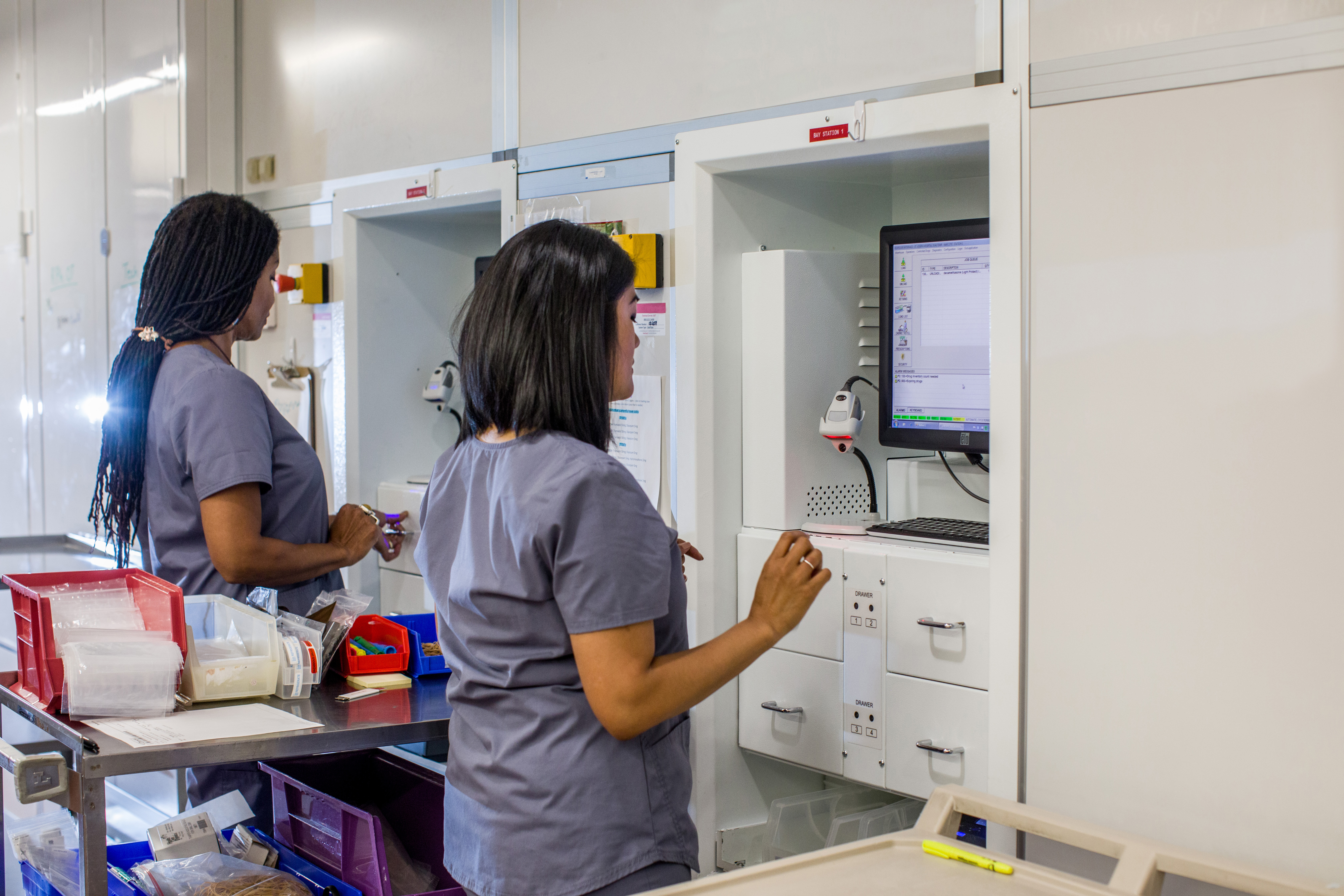
BROOMFIELD, Colo.–(BUSINESS WIRE)–Swisslog Healthcare, a leading provider of robotic medication management solutions, and BD, a leading global medical technology company, have entered into a co-marketing agreement to offer hospital pharmacies a new approach to end-to-end medication management that combines robotics from Swisslog Healthcare with world-class inventory management and workflow software from BD.


The partnership addresses the growing need for sophisticated and robust robotic pharmacy automation systems in hospitals throughout North America. Large, complex health systems often have hundreds of points of medication storage and dispensing across multiple sites. The connectivity between Swisslog Healthcare robots and BD Pyxis™ Logistics smart medication management software will improve enterprise-level inventory tracking and automated workflows across these points of medication storage and dispensing.

By automating tasks that had previously been manual, such as checking inventory levels and ordering and receiving medication, hospitals can enhance their operational efficiency and reduce blind spots that can negatively impact financial, operational and clinical performance. This type of automation and connectivity is particularly critical in centralized service centers (CSCs) that process large volumes of prescription medications for multiple pharmacies within a hospital system.

“This collaboration represents a significant advantage for hospital pharmacies as they implement pharmacy automation solutions,” said Cory Kwarta, President and CEO of Swisslog Healthcare. “Our joint effort demonstrates our commitment to innovation, customer-centricity, and a focused strategy centered on robotic medication management solutions. This collaboration provides health systems with broader access to technology, enhancing their visibility of inventory across both automated and manual storage units while ensuring smoother implementation and seamless connectivity across multiple offerings.”

Both companies emphasize that Swisslog Healthcare and BD will maintain autonomy in sales and service while ensuring a shared commitment to customer satisfaction and advancing the impact of automation in health care.

About Swisslog Healthcare

Swisslog Healthcare provides integrated medication supply chain solutions to hospitals and health systems to assist providers in treating patients across the continuum of care. Integrating transport and pharmacy automation, value-added services, and intelligent software, Swisslog Healthcare enables healthcare providers to respond to patients’ needs quickly and with greater accuracy. The company minimizes many sources of operational waste, so providers achieve higher levels of productivity to impact the well-being of patients in positive ways. For more information, visit www.swisslog-healthcare.com.

Swisslog Healthcare is a member of the KUKA Group, a leading global supplier of intelligent automation solutions. For more information, visit www.kuka.com.

Contacts

For media inquiries, please contact:

Erica Fetherston

10 to 1 Public Relations

480-676-9141

erica@10to1pr.com

Belantamab Mafodotin shows significant overall survival benefit, reducing the risk of death by 42% in multiple myeloma at or after first relapse

Belantamab Mafodotin shows significant overall survival benefit, reducing the risk of death by 42% in multiple myeloma at or after first relapse


Belantamab Mafodotin shows significant overall survival benefit, reducing the risk of death by 42% in multiple myeloma at or after first relapse

  • DREAMM-7 trial shows sustained overall survival benefit for belantamab mafodotin combination versus daratumumab combination; benefit seen early and maintained through follow-up
  • Data build on findings from DREAMM-7 and DREAMM-8 and support the potential for belantamab mafodotin combinations to become standard of care
  • Belantamab mafodotin combinations are under regulatory review in seven major markets

PHILADELPHIA–(BUSINESS WIRE)–#ASH24–GSK plc (LSE/NYSE: GSK) today announced statistically significant and clinically meaningful overall survival (OS) results from a planned interim analysis of the DREAMM-7 trial evaluating belantamab mafodotin in combination with bortezomib plus dexamethasone (BVd) versus daratumumab in combination with bortezomib plus dexamethasone (DVd) as a second line or later treatment for relapsed or refractory multiple myeloma. These data were featured today in an oral presentation at the 66th American Society of Hematology (ASH) Annual Meeting and Exposition.


The OS findings from DREAMM-7 build on previous data from the DREAMM-71 and DREAMM-82 trials, which showed a statistically significant and clinically meaningful improvement in progression-free survival (PFS) for both belantamab mafodotin-based combinations versus standard of care comparators.

Hesham Abdullah, Senior Vice President, Global Head Oncology, R&D, GSK, said:The compelling overall survival data from the DREAMM-7 trial establish the potential of belantamab mafodotin in combination to significantly extend the lives of patients with multiple myeloma at or after first relapse. This represents an important advancement that could redefine the treatment of relapsed or refractory multiple myeloma.”

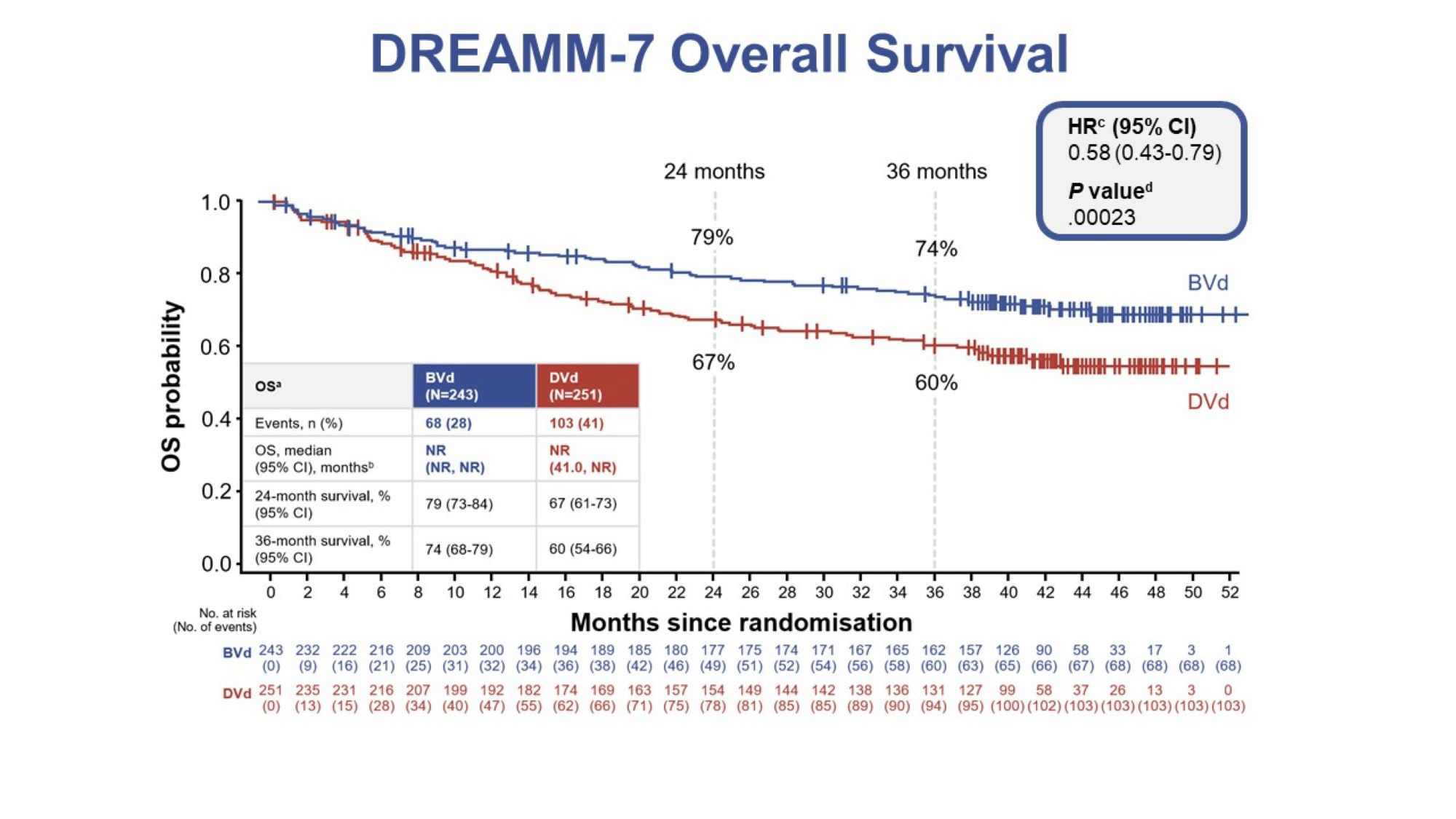
With a median follow up of 39.4 months, the analysis presented today shows a statistically significant 42% reduction in the risk of death among patients receiving the belantamab mafodotin combination (n=243) versus the daratumumab-based comparator (n=251) (HR 0.58; 95% CI: 0.43-0.79; p=0.00023). Although the median overall survival (mOS) was not reached in either arm of the study, the projected mOS for BVd is 84 months compared to 51 months for DVd.3

The three-year OS rate was 74% in the belantamab mafodotin combination arm and 60% in the daratumumab combination arm. The survival benefit favoring BVd was seen as early as four months and was sustained over time as illustrated by the separation of the lines in the Kaplan-Meier curve shown above.

María-Victoria Mateos, MD, PhD, Head of Myeloma and Clinical Trials Unit, Hematology Department and Professor of Medicine at the University of Salamanca, Spain, and DREAMM-7 principal investigator, said: “The totality of evidence from DREAMM-7 represents a potential paradigm shift for multiple myeloma patients who have experienced a relapse or become refractory to initial treatment. The OS results shown with the belantamab mafodotin combination in DREAMM-7 further cement the potential of this regimen to prolong the lives of patients with relapsed or refractory multiple myeloma compared to a standard of care daratumumab combination.”

The belantamab mafodotin combination also showed statistically significant superiority on the key secondary endpoint of minimal residual disease (MRD) negativity (no detectable cancer cells) compared to the daratumumab combination. The greater than 2.5-fold improvement in the rate of MRD negativity seen at the time of the primary analysis for patients who received BVd can now be declared as statistically significant (p<0.00001) after the positive OS readout based on the predefined testing procedure. This further underscores the transformative potential of this belantamab mafodotin combination for multiple myeloma patients at or after their first relapse.

In addition to OS and MRD negativity, the belantamab mafodotin combination resulted in clinically meaningful improvements in all key secondary efficacy endpoints compared to the daratumumab combination, including duration of response (DOR) and progression-free survival 2 (PFS 2). The results indicate deeper and more durable responses among patients treated with BVd compared to DVd.

The safety and tolerability of the belantamab mafodotin regimen were consistent with the primary analysis and known safety profile of the individual agents. Grade 3 or higher adverse events of clinical interest in the belantamab mafodotin combination and daratumumab combination arms, respectively included thrombocytopenia (56% versus 35%; 34 versus 25 patients/100 person-years); anemia (9% versus 10%; exposure-adjusted rate [per 100 person-years] not reported); and neutropenia (14% versus 10%; 8 versus 7 patients/100 person-years).

Eye-related side effects, a known risk of treatment with belantamab mafodotin, were generally manageable and resolvable with dose modification, and led to a low (10%) treatment discontinuation rate.

Full data summaries for OS and other key secondary endpoints are shown below.

Key Secondary Endpoints  

Endpoint

belantamab mafodotin +
bortezomib + dexamethasone (BVd)

n=243 

daratumumab +
bortezomib + dexamethasone (DVd)

n=251 

OS (overall survival), HR (95% CI)

0.58 (0.43-0.79)

P-value1

p=0.00023

OS, median (95% CI), months

NR (NR-NR)

NR (41.0-NR)

OS rate at 24 months, % (95% CI)

79% (73-84)

67% (61-73)

OS rate at 36 months, % (95% CI)

74% (68-79)

60% (54-66)

MRD (minimal residual disease) negativity rate for patients with CR or better, % (95% CI)

25.1% ​(19.8-31.0)​

10.4% ​(6.9-14.8)​

ORR (overall response rate), % (95% CI)

83.1% ​(77.8-87.6)

71.3% ​(65.3-76.8)​

CR (complete response), or better, % (95% CI)

35.8% ​(29.8-42.2)

17.5% ​(13.0-22.8)​

VGPR (very good partial response), or better, % (95% CI)

66.3%​ (59.9-72.2)

46.2% ​(39.9-52.6)​

Median DOR (duration of response) (95% CI), months

40.8 (30.5-NR)​

17.8 (13.8-23.6)​

Median PFS 2 (progression-free survival 2), months

NR (45.6-NR)​

33.4 (26.7-44.9)

HR

0.59 (0.45-0.77)

1One-sided p-value based on stratified log-rank test.

In 2024, regulatory filings for belantamab mafodotin combinations for the treatment of relapsed or refractory multiple myeloma based on the results of the DREAMM-7 and DREAMM-8 trials have been accepted in the US4, European Union5, Japan6 (with priority review), China (for DREAMM-7 only, with priority review; Breakthrough Therapy Designation7 also granted), United Kingdom, Canada and Switzerland (with priority review for DREAMM-8).

About the DREAMM clinical development program

The DREAMM (DRiving Excellence in Approaches to Multiple Myeloma) clinical development program continues to evaluate the potential of belantamab mafodotin in early lines of treatment and in combination with novel therapies and standard of care treatments. In addition to DREAMM-7 and DREAMM-8, a phase III study in newly diagnosed transplant ineligible multiple myeloma, DREAMM-10, is expected to be initiated by the end of 2024.

About DREAMM-7

The DREAMM-7 phase III clinical trial is a multi-center, open-label, randomized trial evaluating the efficacy and safety of belantamab mafodotin in combination with bortezomib plus dexamethasone (BVd) compared to a combination of daratumumab and bortezomib plus dexamethasone (DVd) in patients with relapsed/refractory multiple myeloma who previously were treated with at least one prior line of multiple myeloma therapy, with documented disease progression during or after their most recent therapy.

A total of 494 participants were randomized at a 1:1 ratio to receive either BVd or DVd. Belantamab mafodotin was scheduled to be dosed at 2.5mg/kg intravenously every three weeks.

The primary endpoint is PFS as per an independent review committee. The key secondary endpoints include OS, duration of response (DOR), and minimal residual disease (MRD) negativity rate as assessed by next-generation sequencing. Other secondary endpoints include overall response rate (ORR), safety, and patient reported and quality of life outcomes.

Results from DREAMM-7 were first presented1 at the American Society of Clinical Oncology (ASCO) Plenary Series in February 2024, shared in an encore presentation at the 2024 ASCO Annual Meeting, and published in the New England Journal of Medicine.

About multiple myeloma

Multiple myeloma is the third most common blood cancer globally and is generally considered treatable but not curable.8,9 There are approximately more than 180,000 new cases of multiple myeloma diagnosed globally each year.10 Research into new therapies is needed as multiple myeloma commonly becomes refractory to available treatments.11 Many patients with multiple myeloma, including approximately 65% in the US, are treated in a community cancer setting, leaving an urgent need for new, effective therapies with manageable side effects that can be administered outside of an academic center.12,13,14

About belantamab mafodotin

Belantamab mafodotin is an investigational antibody-drug conjugate comprising a humanized B-cell maturation antigen monoclonal antibody conjugated to the cytotoxic agent auristatin F via a non-cleavable linker. The drug linker technology is licensed from Seagen Inc.; the monoclonal antibody is produced using POTELLIGENT Technology licensed from BioWa Inc., a member of the Kyowa Kirin Group.

GSK in oncology

Oncology is an emerging therapeutic area for GSK where we are committed to maximizing patient survival with a current focus on hematologic malignancies, gynecologic cancers and other solid tumors through breakthroughs in immuno-oncology and tumor-cell targeting therapies.

About GSK

GSK is a global biopharma company with a purpose to unite science, technology, and talent to get ahead of disease together. Find out more at us.gsk.com. 

Cautionary statement regarding forward-looking statements

GSK cautions investors that any forward-looking statements or projections made by GSK, including those made in this announcement, are subject to risks and uncertainties that may cause actual results to differ materially from those projected. Such factors include, but are not limited to, those described under Item 3.D “Risk factors” in GSK’s Annual Report on Form 20-F for 2023, and GSK’s Q3 Results for 2024.

Registered in England & Wales:

No. 3888792

Registered Office:

79 New Oxford Street

London

WC1A 1DG

_____________________________________

1 GSK press release issued 05 February 2024. DREAMM-7 phase III trial shows Blenrep combination nearly tripled median progression-free survival versus standard of care combination in patients with relapsed/refractory multiple myeloma. Available at: https://www.gsk.com/en-gb/media/press-releases/dreamm-7-phase-iii-trial-shows-pfs-improvement-and-strong-os-trend-for-blenrep-combo-versus-soc-combo-in-multiple-myeloma/.

2 GSK press release issued 02 June 2024. Blenrep combination reduced the risk of disease progression or death by nearly 50% versus standard of care combination in relapsed/refractory multiple myeloma. Available at: https://www.gsk.com/en-gb/media/press-releases/blenrep-combination-reduced-the-risk-of-disease-progression/.

3 Post hoc analysis using simulation to predict median OS values in each arm utilising the observed data at the interim analysis with 39.4-month median follow up to extrapolate time to death of ongoing censored patients. Predicted median OS values subject to change as data matures.

4 GSK press release issued 25 November 2024. Blenrep combinations accepted for review by the US FDA for the treatment of relapsed/refractory multiple myeloma. Available at: https://www.gsk.com/en-gb/media/press-releases/blenrep-combinations-accepted-for-review-by-the-us-fda-for-the-treatment-of-relapsedrefractory-multiple-myeloma/.

5 GSK press release issued 19 July 2024. Blenrep (belantamab mafodotin) combinations in multiple myeloma accepted for review by the European Medicines Agency. Available at: https://www.gsk.com/en-gb/media/press-releases/blenrep-belantamab-mafodotin-combinations-in-multiple-myeloma-application-accepted-for-review-by-the-european-medicines-agency/.

6 GSK press release issued 17 September 2024. Blenrep (belantamab mafodotin) combinations in relapsed/refractory multiple myeloma accepted for regulatory review in Japan. Available at: https://www.gsk.com/en-gb/media/press-releases/blenrep-belantamab-mafodotin-combinations-in-relapsedrefractory-multiple-myeloma-accepted-for-regulatory-review-in-japan/.

7 GSK press release issued 13 September 2024. Blenrep (belantamab mafodotin) in combination receives Breakthrough Therapy Designation in China for treatment of relapsed/refractory multiple myeloma. Available at: https://www.gsk.com/en-gb/media/press-releases/blenrep-belantamab-mafodotin-in-combination-receives-breakthrough-therapy-designation-in-china-for-treatment-of-relapsedrefractory-multiple-myeloma/.

8 Sung H, Ferlay J, Siegel R, et al. Global Cancer Statistics 2020: GLOBOCAN Estimates of Incidence and Mortality Worldwide for 36 Cancers in 185 Countries. CA Cancer J Clin. 2021;71(3):209-249. doi:10.3322/caac.21660.

9 Kazandjian D. Multiple myeloma epidemiology and survival: A unique malignancy. Semin Oncol. 2016;43(6):676–681.doi:10.1053/j.seminoncol.2016.11.004.

10 Global Cancer Observatory. International Agency for Research on Cancer. World Health Organization. Multiple Myeloma fact sheet. Available at: https://gco.iarc.who.int/media/globocan/factsheets/cancers/35-multiple-myeloma-fact-sheet.pdf. Accessed 5 July 2024.

11 Nooka AK, Kastritis E, Dimopoulos MA. Treatment options for relapsed and refractory multiple myeloma. Blood. 2015;125(20).

12 Information licensed from IQVIA: APLD and DDD for the period of 2017-Jan. 2024, reflecting estimates of real-world activity. All rights reserved.

13 Gajra A, Zalenski A, Sannareddy A, et al. Barriers to Chimeric Antigen Receptor T-Cell (CAR-T) Therapies in Clinical Practice. Pharmaceut Med. 2022 Jun;36(3):163-171.

14 Crombie J, Graff T, Falchi L, et al. Consensus recommendations on the management of toxicity associated with CD3×CD20 bispecific antibody therapy. Blood (2024) 143 (16): 1565–1575.

Contacts

GSK inquiries
Media:

Tim Foley +44 (0) 20 8047 5502 (London)

Madison Goring +44 (0) 20 8047 5502 (London)

Kathleen Quinn +1 202 603 5003 (Washington DC)

Lyndsay Meyer +1 202 302 4595 (Washington DC)

Investor Relations:

Annabel Brownrigg-Gleeson +44 (0) 7901 101944 (London)

James Dodwell +44 (0) 7881 269066 (London)

Mick Readey +44 (0) 7990 339653 (London)

Camilla Campbell +44 (0) 7803 050238 (London)

Steph Mountifield +44 (0) 7796 707505 (London)

Jeff McLaughlin +1 215 751 7002 (Philadelphia)

Frannie DeFranco +1 215 751 4855 (Philadelphia)

Medincell and AIC Unveil New Positive Phase 3 Results for mdc-CWM: Major Subgroup Analysis Shows Reduced Pain and Opioid Use, and Accelerated Rehabilitation following Total Knee Replacement

Medincell and AIC Unveil New Positive Phase 3 Results for mdc-CWM: Major Subgroup Analysis Shows Reduced Pain and Opioid Use, and Accelerated Rehabilitation following Total Knee Replacement


Medincell and AIC Unveil New Positive Phase 3 Results for mdc-CWM: Major Subgroup Analysis Shows Reduced Pain and Opioid Use, and Accelerated Rehabilitation following Total Knee Replacement

MONTPELLIER, France–(BUSINESS WIRE)–Analysis of a major subgroup of patients undergoing a first Total Knee Replacement (TKR), representing over 70% of the trial population (108 out of 151), revealed the following benefits when comparing patients treated with F14/mdc-CWM (n=51) to those in the control group (n=57)1:


  • 70% reduction in the number of opioid users at 3 months post-surgery,
  • 28% reduction in the total quantity of opioids consumed during the first 3 months post-surgery,
  • Lower daily knee pain over the endpoints of 3 and 7 days, 2 and 6 weeks, and 3 months post-surgery,
  • Range of motion (ROM) milestone (100 degrees) achieved significantly faster,
  • Significant improvements across multiple, independent assessments of pain, inflammation and function.

The analysis of this large subgroup of patients undergoing their first TKR revealed a consistently greater treatment effect compared to the overall study population which also included patients receiving a second TKR.2

This subgroup of patients will be the primary focus of future clinical development, planned for 2025, provided FDA agreement.

ACCESS HERE THE COMPLETE PRESS RELEASE

About Medincell

Medincell is a clinical- and commercial-stage biopharmaceutical licensing company developing long-acting injectable drugs in many therapeutic areas. Our innovative treatments aim to guarantee compliance with medical prescriptions, to improve the effectiveness and accessibility of medicines, and to reduce their environmental footprint. They combine active pharmaceutical ingredients with our proprietary BEPO® technology which controls the delivery of a drug at a therapeutic level for several days, weeks or months from the subcutaneous or local injection of a simple deposit of a few millimeters, entirely bioresorbable.

UZEDY® and SteadyTeq™ are trademarks of Teva Pharmaceuticals

medincell.com

1 Source: F14 Clinical Phase 3 Study (100-CIP02; 2022-2024); Data on file. Arthritis Innovation Corporation – Toronto, Canada; ClinicalTrials.govID NCT05603832

2 Results presented in May 2024; www.medincell.com/wp-content/uploads/2024/05/PR_Medincell_CWM_14052024_EN.pdf

Contacts

David Heuzé
Head of Corporate and Financial Communications, and ESG

david.heuze@Medincell.com / +33 (0)6 83 25 21 86

Grace Kim
Head of US Financial Strategy & IR

grace.kim@Medincell.com / +1 (646) 991-4023

Nicolas Mérigeau/ Arthur Rouillé
Media Relations

Medincell@newcap.eu / +33 (0)1 44 71 94 94

Louis-Victor Delouvrier/Alban Dufumier
Investor Relations France

Medincell@newcap.eu / +33 (0)1 44 71 94 94

Star Therapeutics Presents Interim Clinical Data for VGA039 in Patients with Von Willebrand Disease (VWD) at ASH 2024

Star Therapeutics Presents Interim Clinical Data for VGA039 in Patients with Von Willebrand Disease (VWD) at ASH 2024


Star Therapeutics Presents Interim Clinical Data for VGA039 in Patients with Von Willebrand Disease (VWD) at ASH 2024

In single-ascending dose study in VWD patients, a subcutaneous dose of VGA039 was associated with substantial reductions in bleeds

Additional ASH posters show real-world patient data that identify over 50,000 diagnosed and treated VWD patients in the US and highlight high disease and treatment burden with current standard of care

SOUTH SAN FRANCISCO, Calif.–(BUSINESS WIRE)–Star Therapeutics, a clinical stage biotechnology company discovering and developing best-in-class antibodies, today announced interim clinical data from VIVID 2 (VGA039 Investigation in Von Willebrand Disease), a Phase 1 single ascending dose (SAD) study of VGA039 in Von Willebrand Disease (VWD) patients. VGA039 is an investigational monoclonal antibody that targets Protein S to restore balance in blood clotting, as a universal hemostatic therapy for numerous bleeding disorders. It is potentially the first subcutaneous therapy that addresses all types of VWD and has a convenient dosing regimen. The VGA039 clinical data is being presented at the annual meeting of the American Society of Hematology (ASH) on December 7-10, in San Diego, California.


The interim clinical data in VIVID 2 from three VWD patients with high bleeding rates showed that a subcutaneous dose of VGA039 was associated with substantial reductions in annualized bleed rate (ABR) in line with currently approved VWD prophylaxis therapies. In the interim VIVID 2 data, VGA039 sustained multi-week therapeutic concentrations following a single subcutaneous dose, in contrast to currently approved VWD prophylaxis therapies that require multiple intravenous (IV) infusions every week. These VWD patients had high bleeding rates with ABRs greater than 50 bleeds per year.

“Drug innovation for VWD has lagged behind advancements in treatments for other bleeding disorders, like hemophilia. VGA039 offers a promising breakthrough as a subcutaneous therapy, potentially transforming care for VWD patients by reducing their high treatment burden,” said Dr. Nicholetta Machin of the Hemophilia Center of Western Pennsylvania and University of Pittsburgh. “The interim clinical data is particularly encouraging, showing significant bleed reduction in VWD patients with high baseline bleeding rates.”

Interim clinical data from VIVID 2 (Phase 1 SAD study in VWD patients)

The interim clinical data from VIVID 2 reported in the poster presentation at ASH 2024 describe results in VWD patients who received a 3.0 or 4.5 mg/kg dose of VGA039 administered subcutaneously and evaluated over 8 weeks, including the following highlights:

  • In the seven VWD patients evaluated for safety, pharmacodynamic (PD) and pharmacokinetic (PK) activity, VGA039 was safe and well-tolerated with no injection site reactions observed. VGA039 demonstrated pharmacokinetics and pharmacodynamics that support convenient, prophylactic subcutaneous dosing.

    • Therapeutic concentrations of VGA039 were sustained for approximately 4 weeks following a single subcutaneous 4.5 mg/kg dose.
    • VGA039 showed PD activity across all types of VWD patients, including Type 1, Type 2 and Type 3.
  • In three VWD patients (a Type 2M and two Type 3) with high historic bleeding rates, a single subcutaneous 4.5 mg/kg dose of VGA039 resulted in 75% to 88% reductions in annualized

“These initial results showing a significant reduction of bleeds in VWD patients highlight the exciting prospects ahead for VGA039. We are keenly aware of the unmet need of VWD patients and are working to bring the first potential subcutaneous therapy for patients with all types of VWD,” said Gary Patou, MD, Chief Medical Officer of Star Therapeutics.Based on the positive results, we are moving ahead with our plans to begin a multi-dose study with VGA039 in early 2025.”

Additional ASH posters and session details

Star Therapeutics is also presenting three other posters at ASH 2024, including two posters with analyses of large real-world VWD patient data sets highlighting the significant disease burden and unmet treatment need in VWD.

  • The posters describe data from more than 50,000 diagnosed and treated VWD patients in a large US claims dataset.
  • VWD patients experienced high disease burden with bleeding comorbidities, including anemia, heavy menstrual bleeding, nosebleeds, gastrointestinal bleeds, and joint bleeds, sometimes requiring blood transfusions.
  • There still remains a disparity in VWD treatment with low prophylaxis use, likely due to the high treatment burden of currently available therapies, supporting the need for less frequent treatment options for VWD patients.

The Star Therapeutics posters are presented at ASH today, December 9, at 6:00 to 8:00 p.m. PT in Hall G/H of the San Diego Convention Center, with the following details:

  • 3981: A Phase 1a Study of VGA039, a Protein S-Targeting Monoclonal Antibody, in Individuals with Von Willebrand Disease Demonstrates Concentration-Dependent Increases in Thrombin Generation for Reducing Bleeding
  • 3980: Diagnosis and Disease Burden of Von Willebrand Disease in a Large US Population Based-Dataset
  • 3978: Disparities in Real-World Treatment Patterns Among Patients with Von Willebrand Disease in a Large US Population-Based Dataset
  • 3982: Factor VIII Coagulant Activity (FVIII:C) As an Independent Predictor of Bleeding across Different Subtypes of Von Willebrand Disease (VWD)

About the VIVID clinical program

The VIVID multinational clinical program is a platform multi-phase protocol for the development of VGA039 in Von Willebrand disease (VWD). Patient bleeding is quantified by the number of bleeding events per year or annualized bleeding rate (ABR). For the Phase 1 study, VIVID 2 is the single ascending dose study in VWD patients (NCT05776069).

About von Willebrand disease

Von Willebrand disease (VWD) is the most common inherited bleeding disorder in which the blood does not clot properly, caused by absent or defective von Willebrand factor (VWF). VWD patients may experience excessive bleeding with variability in severity and frequency, negatively impacting their daily lives. Current therapies for VWD prophylaxis include factor replacement therapies requiring multiple intravenous (IV) infusions every week.

About VGA039

VGA039 is a monoclonal antibody therapy with a novel mechanism of action that targets Protein S, a key component in restoring balance to the blood clotting process. VGA039 has potential to be a universal hemostatic therapy that can treat numerous bleeding disorders, with the first disease indication of VWD. As a subcutaneously self-administered antibody therapy with a convenient dosing regimen, VGA039 has the potential to dramatically reduce treatment burden for patients.

About Star Therapeutics

Star Therapeutics is a clinical stage biotechnology company discovering and developing best-in-class antibodies to create life-changing therapies for patients, initially addressing unmet needs in hematology and immunology. The company applies its expertise in antibody innovation to interrogate areas of biology that have been overlooked and have the potential for addressing multiple diseases with a single therapy. Star is backed by leading life sciences investors and located in South San Francisco. For more information, please visit Star Therapeutics and follow us on LinkedIn.

Contacts

Kathryn Morris

The Yates Network LLC

914-204-6412

kathryn@theyatesnetwork.com

Investigational Epcoritamab (DuoBody® CD3xCD20) Monotherapy Achieves High Overall and Complete Response Rates in Clinical Trial of Patients With Relapsed or Refractory (R/R) Chronic Lymphocytic Leukemia (CLL) in Preliminary Analysis

Investigational Epcoritamab (DuoBody® CD3xCD20) Monotherapy Achieves High Overall and Complete Response Rates in Clinical Trial of Patients With Relapsed or Refractory (R/R) Chronic Lymphocytic Leukemia (CLL) in Preliminary Analysis


Investigational Epcoritamab (DuoBody® CD3xCD20) Monotherapy Achieves High Overall and Complete Response Rates in Clinical Trial of Patients With Relapsed or Refractory (R/R) Chronic Lymphocytic Leukemia (CLL) in Preliminary Analysis

COPENHAGEN, Denmark–(BUSINESS WIRE)–Genmab A/S (Nasdaq: GMAB):


  • Preliminary analyses from the EPCORE® CLL-1 trial demonstrates overall response rate (ORR) of 61 percent and complete response (CR) rate of 39 percent in heavily pretreated patients with relapsed or refractory (R/R) chronic lymphocytic leukemia (CLL) who received epcoritamab monotherapy
  • In the study, 75 percent of evaluable responders achieved undetectable minimal residual disease (MRD), indicating no detectable disease following treatment with epcoritamab
  • The data were selected as part of the 2024 American Society of Hematology’s (ASH’s) Annual Meeting Press Program in the Diagnosing and Treating Blood Cancers and “Almost Cancers” briefing

Genmab A/S (Nasdaq: GMAB) today announced results from the Phase 1b/2 EPCORE® CLL-1 clinical trial evaluating epcoritamab (Abstract #883), a T-cell engaging bispecific antibody administered subcutaneously, demonstrated an overall response rate (ORR) of 61 percent and a complete response (CR) rate of 39 percent in difficult-to-treat adult patients with relapsed or refractory (R/R) chronic lymphocytic leukemia (CLL) treated with epcoritamab monotherapy. These results, from the monotherapy expansion (EXP) cohort (n=23) of the trial, along with the first safety data from the optimization (OPT) cohort, were presented at the 66th Annual Meeting and Exposition of the American Society of Hematology (ASH), during the ASH Annual Meeting Press Program. The data will be presented during an oral session on December 9, 2024.

In the EXP cohort, the median time to response was two (2.0) months and the median time to CR was 5.6 months. Among all patients in the cohort, median progression-free survival (PFS) was 12.8 months and median overall survival (OS) was not reached (median follow-up was 22.8 months). An estimated 65 percent of patients were alive at 15 months. Among 12 responders evaluable for minimal residual disease (MRD) by next-generation sequencing in peripheral blood, nine patients (75 percent) had undetectable MRD.

The most frequent non-hematologic treatment-emergent adverse events (TEAEs) in the EXP cohort were cytokine release syndrome (CRS; 96 percent), diarrhea (48 percent), peripheral edema (48 percent), fatigue (43 percent), and injection-site reaction (43 percent). Cytopenias were common (anemia, 65 percent; thrombocytopenia, 65 percent; neutropenia, 48 percent); however, most patients had baseline anemia and thrombocytopenia, suggesting that these events were largely disease-related. Three cases of immune effector cell-associated neurotoxicity syndrome (ICANS) were reported (one Grade 1; two Grade 2), and there was one clinical tumor lysis syndrome (CTLS) case (Grade 2). These cases did not lead to treatment discontinuation. Four fatal TEAEs occurred – two cases of pneumonia, one case of sepsis and one case of squamous cell carcinoma of the skin.

The EXP cohort followed a 2-step step-up dose regimen, and CRS was manageable and primarily low grade (9 percent Grade 1, 70 percent Grade 2, 17 percent Grade 3). In the first data from the separate OPT cohort, which followed a 3-step step-up dose regimen, CRS severity was substantially reduced with only low-grade events (71 percent Grade 1, 12 percent Grade 2). In both cohorts, CRS events primarily occurred following the first full dose, and none led to treatment discontinuation. No ICANS or CTLS cases were reported in the OPT cohort.

“These EPCORE CLL-1 data are encouraging, especially as the majority of patients were heavily pre-treated with at least four lines of therapy,” said Alexey Danilov, MD, PhD, Marianne and Gerhard Pinkus, Professor and Director of Early Clinical Therapeutics and Associate Director of the Toni Stephenson Lymphoma Center, Department of Hematology and Hematopoietic Cell Transplantation, City of Hope. “Despite progress in treating chronic lymphocytic leukemia, there remains a tremendous need for additional therapeutic options for high-risk patients whose disease has progressed following standard chemoimmunotherapy and targeted therapies.”

Additional data from the EXP cohort showed high response rates in patients with high-risk factors treated with epcoritamab, including TP53 aberrations, IGHV-unmutated disease and double-exposed disease – prognostic markers that are associated with disease progression and decreased survival.i,ii,iii In patients with TP53 aberrations (n=15), the ORR was 67 percent with a CR of 33 percent. Among patients with IGHV-unmutated disease (n=16), the ORR was 63 percent, and the CR was 44 percent. In double-refractory patients, the ORR was 53 percent, and the CR was 37 percent.

All patients in the trial had prior chemoimmunotherapy, and most patients had previously received targeted therapies such as BTK and BCL2 inhibitors (double-exposed) and had high-risk disease characteristics.

“Chronic lymphocytic leukemia is incurable, and patients often need a variety of treatments throughout their lifetime, especially if their disease has high-risk prognostic factors, has relapsed or has become refractory to the current standard-of-care, including targeted therapies,” said Dr. Judith Klimovsky, Executive Vice President & Chief Development Officer, Genmab. “These early data show the potential therapeutic applicability of epcoritamab in relapsed or refractory chronic lymphocytic leukemia, and further reinforce the potential of epcoritamab as a core therapy for the treatment of B-cell malignancies.”

Use of epcoritamab in CLL is not approved in the U.S. or in the EU or in any other territory. The safety and efficacy of epcoritamab for use in CLL have not been established.

About Chronic Lymphocytic Leukemia (CLL)

Chronic lymphocytic leukemia (CLL) is the most prevalent type of leukemia, affecting over 200,000 people in the United States alone.iv Chronic lymphocytic leukemia can be classified as either slow growing (indolent) or fast growing (aggressive).v CLL is incurable, and many patients will likely relapse and progress on frontline therapies.vi Most patients will experience consecutive episodes of disease progression and will require several lines of treatment in their lifetime.vii,viii

About the EPCORE® CLL-1 Trial

EPCORE® CLL-1 is a Phase 1b/2, open-label, multi-center trial to evaluate the safety and preliminary efficacy of epcoritamab as a monotherapy and in combination with standard of care agents in patients with difficult-to-treat relapsed/refractory (R/R) chronic lymphocytic leukemia (CLL), R/R small lymphocytic lymphoma (SLL) and Richter’s Syndrome (RS). The trial consists of two parts: a dose-escalation phase (Phase 1b) and an expansion phase (Phase 2). Patients with RS are only included in the expansion phase. The primary objective of Phase 1b is to determine the recommended Phase 2 dose and the maximum tolerated dose as well as establish the safety profile of epcoritamab monotherapy and epcoritamab plus venetoclax in participants with R/R CLL. The purpose of Phase 2 is to assess and evaluate the preliminary efficacy, safety and tolerability profiles of epcoritamab monotherapy and epcoritamab plus venetoclax for patients with R/R CLL and SLL. Additionally, epcoritamab monotherapy and combination therapy will be evaluated in patients with RS to assess their efficacy, safety and tolerability profiles. More information on this trial can be found at https://www.clinicaltrials.gov/ (NCT: 04623541).

About Epcoritamab

Epcoritamab is an IgG1-bispecific antibody created using Genmab’s proprietary DuoBody® technology and administered subcutaneously. Genmab’s DuoBody-CD3 technology is designed to direct cytotoxic T cells selectively to elicit an immune response toward target cell types. Epcoritamab is designed to simultaneously bind to CD3 on T cells and CD20 on B cells and induces T-cell-mediated killing of CD20+ cells.ix

Epcoritamab (approved under the brand name EPKINLY® in the U.S. and Japan, and TEPKINLY® in the EU) has received regulatory approval in certain lymphoma indications in several territories. Epcoritamab is being co-developed by Genmab and AbbVie as part of the companies’ oncology collaboration. The companies will share commercial responsibilities in the U.S. and Japan, with AbbVie responsible for further global commercialization. Both companies will pursue additional international regulatory approvals for the investigational R/R FL indication and additional approvals for the R/R DLBCL indication.

Genmab and AbbVie continue to evaluate the use of epcoritamab as a monotherapy, and in combination, across lines of therapy in a range of hematologic malignancies. This includes five ongoing Phase 3, open-label, randomized trials including a trial evaluating epcoritamab as a monotherapy in patients with R/R DLBCL compared to investigator’s choice chemotherapy (NCT04628494), a trial evaluating epcoritamab in combination with R-CHOP in adult patients with newly diagnosed DLBCL (NCT05578976), a trial evaluating epcoritamab in combination with rituximab and lenalidomide (R2) in patients with R/R FL (NCT05409066), a trial evaluating epcoritamab in combination with rituximab and lenalidomide (R2) compared to chemoimmunotherapy in patients with previously untreated FL (NCT06191744), and a trial evaluating epcoritamab in combination with lenalidomide compared to chemotherapy infusion in patients with R/R DLBCL (NCT06508658). The safety and efficacy of epcoritamab has not been established for these investigational uses. Please visit www.clinicaltrials.gov for more information.

EPKINLY® (epcoritamab-bysp) U.S. INDICATIONS & IMPORTANT SAFETY INFORMATION

What is EPKINLY?

EPKINLY is a prescription medicine used to treat adults with certain types of diffuse large B-cell lymphoma (DLBCL), high-grade B-cell lymphoma, or follicular lymphoma (FL) that has come back or that did not respond to previous treatment after receiving 2 or more treatments. EPKINLY is approved based on patient response data. Studies are ongoing to confirm the clinical benefit of EPKINLY. It is not known if EPKINLY is safe and effective in children.

Important Warnings—EPKINLY can cause serious side effects, including:

  • Cytokine release syndrome (CRS), which is common during treatment with EPKINLY and can be serious or life-threatening. To help reduce your risk of CRS, you will receive EPKINLY on a step-up dosing schedule (when you receive 2 or 3 smaller step-up doses of EPKINLY before your first full dose during your first cycle of treatment), and you may also receive other medicines before and for 3 days after receiving EPKINLY. If your dose of EPKINLY is delayed for any reason, you may need to repeat the step-up dosing schedule.
  • Neurologic problems that can be life-threatening and lead to death. Neurologic problems may happen days or weeks after you receive EPKINLY.

People with DLBCL or high-grade B-cell lymphoma should be hospitalized for 24 hours after receiving their first full dose of EPKINLY on day 15 of cycle 1 due to the risk of CRS and neurologic problems.

Tell your healthcare provider or get medical help right away if you develop a fever of 100.4°F (38°C) or higher; dizziness or lightheadedness; trouble breathing; chills; fast heartbeat; feeling anxious; headache; confusion; shaking (tremors); problems with balance and movement, such as trouble walking; trouble speaking or writing; confusion and disorientation; drowsiness, tiredness or lack of energy; muscle weakness; seizures; or memory loss. These may be symptoms of CRS or neurologic problems. If you have any symptoms that impair consciousness, do not drive or use heavy machinery or do other dangerous activities until your symptoms go away.

EPKINLY can cause other serious side effects, including:

  • Infections that may lead to death. Your healthcare provider will check you for signs and symptoms of infection before and during treatment and treat you as needed if you develop an infection. You should receive medicines from your healthcare provider before you start treatment to help prevent infection. Tell your healthcare provider right away if you develop any symptoms of infection during treatment, including fever of 100.4°F (38°C) or higher, cough, chest pain, tiredness, shortness of breath, painful rash, sore throat, pain during urination, or feeling weak or generally unwell.
  • Low blood cell counts, which can be serious or severe. Your healthcare provider will check your blood cell counts during treatment. EPKINLY may cause low blood cell counts, including low white blood cells (neutropenia), which can increase your risk for infection; low red blood cells (anemia), which can cause tiredness and shortness of breath; and low platelets (thrombocytopenia), which can cause bruising or bleeding problems.

Your healthcare provider will monitor you for symptoms of CRS, neurologic problems, infections, and low blood cell counts during treatment with EPKINLY. Your healthcare provider may temporarily stop or completely stop treatment with EPKINLY if you develop certain side effects.

Before you receive EPKINLY, tell your healthcare provider about all your medical conditions, including if you have an infection, are pregnant or plan to become pregnant, or are breastfeeding or plan to breastfeed. If you receive EPKINLY while pregnant, it may harm your unborn baby. If you are a female who can become pregnant, your healthcare provider should do a pregnancy test before you start treatment with EPKINLY and you should use effective birth control (contraception) during treatment and for 4 months after your last dose of EPKINLY. Tell your healthcare provider if you become pregnant or think that you may be pregnant during treatment with EPKINLY. Do not breastfeed during treatment with EPKINLY and for 4 months after your last dose of EPKINLY.

In DLBCL or high-grade B-cell lymphoma, the most common side effects of EPKINLY include CRS, tiredness, muscle and bone pain, injection site reactions, fever, stomach-area (abdominal) pain, nausea, and diarrhea. The most common severe abnormal laboratory test results include decreased white blood cells, decreased red blood cells, and decreased platelets.

In follicular lymphoma the most common side effects of EPKINLY include injection site reactions, CRS, COVID-19, tiredness, upper respiratory tract infections, muscle and bone pain, rash, diarrhea, fever, cough, and headache. The most common severe abnormal laboratory test results include decreased white blood cells and decreased red blood cells.

These are not all of the possible side effects of EPKINLY. Call your doctor for medical advice about side effects. You are encouraged to report side effects to the FDA at (800) FDA-1088 or www.fda.gov/medwatch or to Genmab US, Inc. at 1-855-4GENMAB (1-855-443-6622).

Please see Full Prescribing Information and Medication Guide, including Important Warnings.

Globally, prescribing information varies; refer to the individual country product label for complete information.

About Genmab

Genmab is an international biotechnology company with a core purpose of guiding its unstoppable team to strive toward improving the lives of patients with innovative and differentiated antibody therapeutics. For 25 years, its passionate, innovative and collaborative team has invented next-generation antibody technology platforms and leveraged translational, quantitative and data sciences, resulting in a proprietary pipeline including bispecific T-cell engagers, antibody-drug conjugates, next-generation immune checkpoint modulators and effector function-enhanced antibodies. By 2030, Genmab’s vision is to transform the lives of people with cancer and other serious diseases with knock-your-socks-off (KYSO®) antibody medicines.

Established in 1999, Genmab is headquartered in Copenhagen, Denmark, with international presence across North America, Europe and Asia Pacific. For more information, please visit Genmab.com and follow us on LinkedIn and X.

This Media Release contains forward looking statements. The words “believe,” “expect,” “anticipate,” “intend” and “plan” and similar expressions identify forward looking statements. Actual results or performance may differ materially from any future results or performance expressed or implied by such statements. The important factors that could cause our actual results or performance to differ materially include, among others, risks associated with preclinical and clinical development of products, uncertainties related to the outcome and conduct of clinical trials including unforeseen safety issues, uncertainties related to product manufacturing, the lack of market acceptance of our products, our inability to manage growth, the competitive environment in relation to our business area and markets, our inability to attract and retain suitably qualified personnel, the unenforceability or lack of protection of our patents and proprietary rights, our relationships with affiliated entities, changes and developments in technology which may render our products or technologies obsolete, and other factors. For a further discussion of these risks, please refer to the risk management sections in Genmab’s most recent financial reports, which are available on www.genmab.com and the risk factors included in Genmab’s most recent Annual Report on Form 20-F and other filings with the U.S. Securities and Exchange Commission (SEC), which are available at www.sec.gov. Genmab does not undertake any obligation to update or revise forward looking statements in this Media Release nor to confirm such statements to reflect subsequent events or circumstances after the date made or in relation to actual results, unless required by law.

Genmab A/S and/or its subsidiaries own the following trademarks: Genmab®; the Y-shaped Genmab logo®; Genmab in combination with the Y-shaped Genmab logo®; HuMax®; DuoBody®; HexaBody®; DuoHexaBody®, HexElect® and KYSO™. EPCORE®, EPKINLY®, TEPKINLY® and their designs are trademarks of AbbVie Biotechnology Ltd.

i Campo, et al. TP53 Aberrations in Chronic Lymphocytic Leukemia: An Overview of the Clinical Implications of Improved Diagnostics. Haematologica. 2018 Nov 15;103(12):1956–1968. https://haematologica.org/article/view/8691.

ii Galieni, et al. Unmutated IGHV at Diagnosis in Patients With Early Stage CLL Independently Predicts for Shorter Follow-Up Time to First Treatment (TTFT). Leukemia Research. 2024. https://doi.org/10.1016/j.leukres.2024.107541.

iii Zuber, et al. Efficacy and Effectiveness Outcomes of Treatments for Double-Exposed Chronic Lymphocytic Leukemia and Small Lymphocytic Lymphoma Patients: A Systematic Literature Review. Cancer Medicine. 2024. https://doi.org/10.1002/cam4.70258.

iv Fedele, et al. Chronic Lymphocytic Leukemia: Time to Care for the Survivors. Journal of Clinical Oncology. 2024. https://ascopubs.org/doi/10.1200/JCO.23.02738.

v Penn Medicine. Chronic Lymphocytic Leukemia (CLL). Accessed November 2024. https://www.pennmedicine.org/cancer/types-of-cancer/leukemia/types-of-leukemia/chronic-lymphocytic-leukemia.

vi Odetola, et al. Relapsed/Refractory Chronic Lymphocytic Leukemia (CLL). Curr Hematol Malig Rep. 2023 Jun 6:1–14. doi: 10.1007/s11899-023-00700-z

vii Moreno, Carol. Standard Treatment Approaches for Relapsed/Refractory Chronic Lymphocytic Leukemia After Frontline Chemoimmunotherapy. Hematology Am Soc Hematol Educ Program. 2020 Dec 4;2020(1):33-40. doi: 10.1182/hematology.2020000086.

viii Leukemia & Lymphoma Society. Relapsed and Refractory CLL. Accessed November 2024. https://www.lls.org/leukemia/chronic-lymphocytic-leukemia/treatment/relapsed-and-refractory.
ix Engelberts PJ, et al. DuoBody-CD3xCD20 Induces Potent T-Cell-Mediated Killing of Malignant B Cells in Preclinical Models and Provides Opportunities for Subcutaneous Dosing. EBioMedicine. 2020;52:102625. doi: 10.1016/j.ebiom.2019.102625.

Contacts

David Freundel, Senior Director, Global R&D & Portfolio Communications

T: +1 609 430 2481; E: dafr@genmab.com

Andrew Carlsen, Vice President, Head of Investor Relations

T: +45 3377 9558; E: acn@genmab.com

Fixed-duration CALQUENCE plus venetoclax demonstrated superior PFS vs. standard of care in previously untreated CLL, with 77% of patients progression free at three years in AMPLIFY Phase III trial

Fixed-duration CALQUENCE plus venetoclax demonstrated superior PFS vs. standard of care in previously untreated CLL, with 77% of patients progression free at three years in AMPLIFY Phase III trial


Fixed-duration CALQUENCE plus venetoclax demonstrated superior PFS vs. standard of care in previously untreated CLL, with 77% of patients progression free at three years in AMPLIFY Phase III trial

CALQUENCE plus venetoclax with obinutuzumab reduced the risk of disease progression or death by 58% versus standard of care in this setting

CALQUENCE plus venetoclax poised to become first all-oral fixed-duration regimen of a second-generation BTK inhibitor plus venetoclax in 1st-line CLL

WILMINGTON, Del.–(BUSINESS WIRE)–Positive results from the AMPLIFY Phase III trial showed AstraZeneca’s CALQUENCE® (acalabrutinib) in combination with venetoclax demonstrated a statistically significant and clinically meaningful improvement in progression-free survival (PFS) compared to standard-of-care chemoimmunotherapy in previously untreated adult patients with chronic lymphocytic leukemia (CLL).


These results will be presented at the American Society of Hematology (ASH) 2024 Annual Meeting in San Diego, CA.

At a median follow up of 41 months, results showed CALQUENCE plus venetoclax reduced the risk of disease progression or death by 35% compared to standard-of-care chemoimmunotherapy (hazard ratio [HR] 0.65; 95% confidence interval [CI] 0.49-0.87; p=0.0038). CALQUENCE plus venetoclax with obinutuzumab demonstrated a 58% reduction in the risk of disease progression or death compared to standard-of-care chemoimmunotherapy (HR 0.42; 95% CI 0.30-0.59; p<0.0001). Median PFS was not reached for either experimental arm versus median PFS of 47.6 months for chemoimmunotherapy.

Interim overall survival (OS) data demonstrated a favorable trend which was nominally statistically significant for CALQUENCE plus venetoclax (HR 0.33; 95% CI 0.18-0.56; p<0.0001), however the OS data were immature at the time of this analysis and the trial will continue to assess OS as a key secondary endpoint.

Jennifer R. Brown, MD, PhD, Director of the CLL Center of the Division of Hematologic Malignancies, Dana-Farber Cancer Institute, and the Worthington and Margaret Collette Professor of Medicine at Harvard Medical School, and principal investigator of the trial, said: “Chronic lymphocytic leukemia is considered an incurable cancer and patients live with the disease and the long-term effects of their treatments for many years. The AMPLIFY results show the promise of a new all-oral fixed-duration therapy approach which would allow patients to take breaks from treatment, reducing the risk of long-term adverse events and drug resistance.”

Susan Galbraith, Executive Vice President, Oncology R&D, AstraZeneca, said: “Based on these impressive data from the AMPLIFY trial, CALQUENCE is the only second-generation BTK inhibitor to demonstrate efficacy in the front-line treatment of patients with chronic lymphocytic leukemia as both a treat-to-progression and a fixed-duration approach. This advance is an important development for patients and their physicians who seek new options and more flexibility in managing this disease in the long term.”

Both investigational arms demonstrated durable responses, with estimated 36-month PFS rates of 76.5% for CALQUENCE plus venetoclax and 83.1% with the addition of obinutuzumab compared to 66.5% for chemoimmunotherapy. Patients also demonstrated a robust response in both investigational arms with an overall response rate (ORR) of 92.8% for CALQUENCE plus venetoclax and 92.7% with the addition of obinutuzumab, compared to 75.2% for chemoimmunotherapy.

Summary of Results: AMPLIFY


CALQUENCE plus venetoclax

CALQUENCE plus venetoclax and obinutuzumab

Control arm

Patient population (n)

291

286

290

Median PFS

(months)

NR

NR

47.6

PFS HR vs. control

(95% CI)

0.65

p=0.0038

0.42

p<0.0001

Reference

36-month PFS rate

76.5%

83.1%

66.5%

ORR (95% CI)

92.8% (89.4-95.4)

p<0.0001

92.7% (89.2-95.3)

p<0.0001

75.2% (70.0-79.9)

OS HR vs. control (95% CI)

0.33 (0.18-0.56)

p<0.0001

0.76 (0.49-1.18)

p=0.2224

Reference

NR=Not reached

Control arm = Investigator’s choice of fludarabine-cyclophosphamide-rituximab or bendamustine-rituximab

The safety and tolerability of CALQUENCE was consistent with its known safety profile, and no new safety signals were identified. Grade 3 or higher adverse events (AEs) occurred in 53.6% of patients treated with CALQUENCE plus venetoclax, 69.4% of patients treated with CALQUENCE plus venetoclax with obinutuzumab and 60.6% for patients treated with standard-of-care chemoimmunotherapy. The most common Grade 3 or higher AE was neutropenia across all arms, seen in 26.8%, 35.2% and 32.4% of patients respectively. There were over twice as many COVID-19 related deaths in the CALQUENCE plus venetoclax with obinutuzumab arm compared with the CALQUENCE plus venetoclax arm.

Notably, low rates of tumor lysis syndrome (TLS) were observed in both CALQUENCE arms with events of any grade seen in 0.3% of patients treated with CALQUENCE plus venetoclax and 0.4% with the addition of obinutuzumab, compared to 3.1% for patients treated with chemoimmunotherapy. No cases of clinical TLS were observed across CALQUENCE treatment arms.

CALQUENCE has been used to treat more than 85,000 patients worldwide1 and is approved for the treatment of CLL and small lymphocytic lymphoma (SLL) in the US and Japan, approved for CLL in the EU and many other countries worldwide and approved in China for relapsed or refractory CLL and SLL.

INDICATION AND USAGE

CALQUENCE is a Bruton tyrosine kinase (BTK) inhibitor indicated for the treatment of adult patients with chronic lymphocytic leukemia (CLL) or small lymphocytic lymphoma (SLL).

IMPORTANT SAFETY INFORMATION ABOUT CALQUENCE® (acalabrutinib) tablets

Serious and Opportunistic Infections

Fatal and serious infections, including opportunistic infections, have occurred in patients with hematologic malignancies treated with CALQUENCE.

Serious or Grade 3 or higher infections (bacterial, viral, or fungal) occurred in 19% of 1029 patients exposed to CALQUENCE in clinical trials, most often due to respiratory tract infections (11% of all patients, including pneumonia in 6%). These infections predominantly occurred in the absence of Grade 3 or 4 neutropenia, with neutropenic infection reported in 1.9% of all patients. Opportunistic infections in recipients of CALQUENCE have included, but are not limited to, hepatitis B virus reactivation, fungal pneumonia, Pneumocystis jirovecii pneumonia, Epstein-Barr virus reactivation, cytomegalovirus, and progressive multifocal leukoencephalopathy (PML). Consider prophylaxis in patients who are at increased risk for opportunistic infections. Monitor patients for signs and symptoms of infection and treat promptly.

Hemorrhage

Fatal and serious hemorrhagic events have occurred in patients with hematologic malignancies treated with CALQUENCE. Major hemorrhage (serious or Grade 3 or higher bleeding or any central nervous system bleeding) occurred in 3.0% of patients, with fatal hemorrhage occurring in 0.1% of 1029 patients exposed to CALQUENCE in clinical trials. Bleeding events of any grade, excluding bruising and petechiae, occurred in 22% of patients.

Use of antithrombotic agents concomitantly with CALQUENCE may further increase the risk of hemorrhage. In clinical trials, major hemorrhage occurred in 2.7% of patients taking CALQUENCE without antithrombotic agents and 3.6% of patients taking CALQUENCE with antithrombotic agents. Consider the risks and benefits of antithrombotic agents when co-administered with CALQUENCE. Monitor patients for signs of bleeding.

Consider the benefit-risk of withholding CALQUENCE for 3-7 days pre- and post-surgery depending upon the type of surgery and the risk of bleeding.

Cytopenias

Grade 3 or 4 cytopenias, including neutropenia (23%), anemia (8%), thrombocytopenia (7%), and lymphopenia (7%), developed in patients with hematologic malignancies treated with CALQUENCE. Grade 4 neutropenia developed in 12% of patients. Monitor complete blood counts regularly during treatment. Interrupt treatment, reduce the dose, or discontinue treatment as warranted.

Second Primary Malignancies

Second primary malignancies, including skin cancers and other solid tumors, occurred in 12% of 1029 patients exposed to CALQUENCE in clinical trials. The most frequent second primary malignancy was skin cancer, reported in 6% of patients. Monitor patients for skin cancers and advise protection from sun exposure.

Cardiac Arrhythmias

Serious cardiac arrhythmias have occurred in patients treated with CALQUENCE. Grade 3 atrial fibrillation or flutter occurred in 1.1% of 1029 patients treated with CALQUENCE, with all grades of atrial fibrillation or flutter reported in 4.1% of all patients. Grade 3 or higher ventricular arrhythmia events were reported in 0.9% of patients. The risk may be increased in patients with cardiac risk factors, hypertension, previous arrhythmias, and acute infection. Monitor for symptoms of arrhythmia (eg, palpitations, dizziness, syncope, dyspnea) and manage as appropriate.

Hepatotoxicity, Including Drug-Induced Liver Injury

Hepatotoxicity, including severe, life-threatening, and potentially fatal cases of drug-induced liver injury (DILI), has occurred in patients treated with Bruton tyrosine kinase inhibitors, including CALQUENCE.

Evaluate bilirubin and transaminases at baseline and throughout treatment with CALQUENCE. For patients who develop abnormal liver tests after CALQUENCE, monitor more frequently for liver test abnormalities and clinical signs and symptoms of hepatic toxicity. If DILI is suspected, withhold CALQUENCE. Upon confirmation of DILI, discontinue CALQUENCE.

ADVERSE REACTIONS

The most common adverse reactions (≥30%) of any grade in patients with CLL were anemia,* neutropenia,* thrombocytopenia,* headache, upper respiratory tract infection, and diarrhea.

*Treatment-emergent decreases (all grades) of hemoglobin, platelets, and neutrophils were based on laboratory measurements and adverse reactions.

In patients with previously untreated CLL exposed to CALQUENCE, fatal adverse reactions that occurred in the absence of disease progression and with onset within 30 days of the last study treatment were reported in 2% for each treatment arm, most often from infection. Serious adverse reactions were reported in 39% of patients in the CALQUENCE plus obinutuzumab arm and 32% in the CALQUENCE monotherapy arm, most often due to events of pneumonia (7% and 2.8%, respectively).

Adverse reactions led to CALQUENCE dose reduction in 7% and 4% of patients in the CALQUENCE plus obinutuzumab arm (N=178) and CALQUENCE monotherapy arm (N=179), respectively. Adverse events led to discontinuation in 11% and 10% of patients, respectively. Increases in creatinine to 1.5 to 3 times the upper limit of normal (ULN) occurred in 3.9% and 2.8% of patients in the CALQUENCE combination arm and monotherapy arm, respectively.

In patients with relapsed/refractory CLL exposed to CALQUENCE, serious adverse reactions occurred in 29% of patients. Serious adverse reactions in >5% of patients who received CALQUENCE included lower respiratory tract infection (6%). Fatal adverse reactions within 30 days of the last dose of CALQUENCE occurred in 2.6% of patients, including from second primary malignancies and infection.

Adverse reactions led to CALQUENCE dose reduction in 3.9% of patients (N=154), dose interruptions in 34% of patients, most often due to respiratory tract infections followed by neutropenia, and discontinuation in 10% of patients, most frequently due to second primary malignancies followed by infection. Increases in creatinine to 1.5 to 3 times ULN occurred in 1.3% of patients who received CALQUENCE.

DRUG INTERACTIONS

Strong CYP3A Inhibitors: Avoid co-administration of CALQUENCE with a strong CYP3A inhibitor. If these inhibitors will be used short-term, interrupt CALQUENCE. After discontinuation of strong CYP3A inhibitor for at least 24 hours, resume previous dosage of CALQUENCE.

Moderate CYP3A Inhibitors: Reduce the dosage of CALQUENCE to 100 mg once daily when co-administered with a moderate CYP3A inhibitor.

Strong CYP3A Inducers: Avoid co-administration of CALQUENCE with a strong CYP3A inducer. If co-administration is unavoidable, increase the dosage of CALQUENCE to 200 mg approximately every 12 hours.

SPECIFIC POPULATIONS

Based on findings in animals, CALQUENCE may cause fetal harm and dystocia when administered to a pregnant woman. There are no available data in pregnant women to inform the drug-associated risk. Advise pregnant women of the potential risk to a fetus.

Pregnancy testing is recommended for females of reproductive potential prior to initiating CALQUENCE therapy. Advise female patients of reproductive potential to use effective contraception during treatment with CALQUENCE and for 1 week following the last dose of CALQUENCE.

It is not known if CALQUENCE is present in human milk. Advise lactating women not to breastfeed while taking CALQUENCE and for 2 weeks after the last dose.

Avoid use of CALQUENCE in patients with severe hepatic impairment (Child-Pugh class C). No dosage adjustment of CALQUENCE is recommended in patients with mild (Child-Pugh class A) or moderate (Child-Pugh class B) hepatic impairment.

Please see full Prescribing Information, including Patient Information.

Notes

Chronic Lymphocytic Leukemia (CLL)

CLL is the most prevalent type of leukemia in adults, with over 100,000 new cases globally in 2019.2 Although some people with CLL may not experience any symptoms at diagnosis, others may experience symptoms, such as weakness, fatigue, weight loss, chills, fever, night sweats, swollen lymph nodes and abdominal pain.3 In CLL, there is an accumulation of abnormal lymphocytes within the blood, bone marrow and lymph nodes. As the number of abnormal cells increases, there is less room within the marrow for the production of normal white blood cells, red blood cells and platelets.4 This could result in infection, anemia and bleeding. B-cell receptor signaling through BTK is one of the essential growth pathways for CLL.

AMPLIFY

AMPLIFY is a randomized, global, multi-center, open-label Phase III trial evaluating the efficacy and safety of CALQUENCE in combination with venetoclax with and without obinutuzumab compared to investigator’s choice of chemoimmunotherapy (fludarabine-cyclophosphamide-rituximab or bendamustine-rituximab) in adult patients with previously untreated CLL without del(17p) or TP53 mutation.5 Patients were randomized 1:1:1 to receive either CALQUENCE plus venetoclax, CALQUENCE plus venetoclax with obinutuzumab for a fixed duration or standard-of-care chemoimmunotherapy.5 Both the CALQUENCE containing arms were administered for a fixed duration of 14 cycles (each 28 days), and the standard-of-care chemoimmunotherapy was for 6 cycles.5

The primary endpoint is PFS in the CALQUENCE and venetoclax arm as assessed by an Independent Review Committee and PFS in the CALQUENCE plus venetoclax with obinutuzumab is a key secondary endpoint. Other key secondary endpoints include OS and undetectable measurable residual disease.5 The trial includes 27 countries across North and South America, Europe, Asia and Oceania.5

The AMPLIFY trial enrolled patients from 2019 to 2021, continuing through the COVID-19 pandemic.5 Patients with blood cancer remain at a disproportionately high risk of severe outcomes from COVID-19, including hospitalization and death compared to the general population.6

CALQUENCE®

CALQUENCE (acalabrutinib) is a second-generation, selective inhibitor of Bruton’s tyrosine kinase (BTK). CALQUENCE binds covalently to BTK, thereby inhibiting its activity.7 In B-cells, BTK signaling results in activation of pathways necessary for B-cell proliferation, trafficking, chemotaxis and adhesion.

CALQUENCE is also approved in the US, China and several other countries for the treatment of adult patients with mantle cell lymphoma (MCL) who have received at least one prior therapy. CALQUENCE is not currently approved for the treatment of MCL in Japan or the EU.

As part of an extensive clinical development program, CALQUENCE is currently being evaluated as a single treatment and in combination with standard-of-care chemoimmunotherapy for patients with multiple B-cell blood cancers, including CLL, MCL and diffuse large B-cell lymphoma.

AstraZeneca in hematology

AstraZeneca is pushing the boundaries of science to redefine care in hematology. Our goal is to help transform the lives of patients living with malignant, rare and other related hematologic diseases through innovative medicines and approaches that are shaped by insights from patients, caregivers and physicians.

In addition to our marketed products, we are spearheading the development of novel therapies designed to target underlying drivers of disease across multiple scientific platforms. Our acquisitions of Alexion, with expertise in rare, non-malignant blood disorders, and Gracell Biotechnologies Inc., pioneers of autologous cell therapies, expand our hematology pipeline and enable us to reach more patients with high unmet needs through the end-to-end discovery, development and delivery of novel therapies.

AstraZeneca in oncology

AstraZeneca is leading a revolution in oncology with the ambition to provide cures for cancer in every form, following the science to understand cancer and all its complexities to discover, develop and deliver life-changing medicines to patients.

The Company’s focus is on some of the most challenging cancers. It is through persistent innovation that AstraZeneca has built one of the most diverse portfolios and pipelines in the industry, with the potential to catalyze changes in the practice of medicine and transform the patient experience.

AstraZeneca has the vision to redefine cancer care and, one day, eliminate cancer as a cause of death.

AstraZeneca

AstraZeneca is a global, science-led biopharmaceutical company that focuses on the discovery, development and commercialization of prescription medicines in Oncology, Rare Diseases and BioPharmaceuticals, including Cardiovascular, Renal & Metabolism, and Respiratory & Immunology. Based in Cambridge, UK, AstraZeneca operates in over 125 countries, and its innovative medicines are used by millions of patients worldwide. For more information, please visit www.astrazeneca-us.com and follow us on social media @AstraZeneca.

References

  1. Data on File, REF-236261. AstraZeneca Pharmaceuticals LP.
  2. Yao Y, et al. The global burden and attributable risk factors of chronic lymphocytic leukemia in 204 countries and territories from 1990 to 2019: analysis based on the global burden of disease study 2019. Biomed Eng Online. 2022;1:4.
  3. American Cancer Society. Signs and Symptoms of Chronic Lymphocytic Leukemia. Accessed November 2024. Available at: https://www.cancer.org/cancer/types/chronic-lymphocytic-leukemia/detection-diagnosis-staging/signs-symptoms.html.
  4. National Cancer Institute. Chronic lymphocytic leukemia treatment (PDQ®)–Patient version. Accessed November 2024. Available at: https://www.cancer.gov/types/leukemia/patient/cll-treatment-pdq.
  5. ClinicalTrials.gov. Study of Acalabrutinib (ACP-196) in Combination With Venetoclax (ABT-199), With and Without Obinutuzumab (GA101) Versus Chemoimmunotherapy for Previously Untreated CLL (AMPLIFY). Accessed November 2024. Available at: https://clinicaltrials.gov/study/NCT03836261.
  6. Dube S, et al. Continued Increased Risk of COVID-19 Hospitalization and Death in Immunocompromised Individuals Despite Receipt of ≥4 Vaccine Doses: Updated 2023 Results from INFORM, a Retrospective Health Database Study in England. Poster P0409 at ECCMID 2024.
  7. Wu J, et al. Acalabrutinib (ACP-196): a selective second-generation BTK inhibitor. J Hematol Oncol. 2016;9(21).

US-96571 Last Updated 12/24

Contacts

Media Inquiries

Fiona Cookson +1 212 814 3923

US Media Mailbox: usmediateam@astrazeneca.com           

Investigational Epcoritamab (DuoBody® CD3xCD20) Combination Therapy Demonstrates High Response Rates in Clinical Trial of Patients With Relapsed or Refractory (R/R) Follicular Lymphoma (FL)

Investigational Epcoritamab (DuoBody® CD3xCD20) Combination Therapy Demonstrates High Response Rates in Clinical Trial of Patients With Relapsed or Refractory (R/R) Follicular Lymphoma (FL)


Investigational Epcoritamab (DuoBody® CD3xCD20) Combination Therapy Demonstrates High Response Rates in Clinical Trial of Patients With Relapsed or Refractory (R/R) Follicular Lymphoma (FL)

COPENHAGEN, Denmark–(BUSINESS WIRE)–Genmab A/S (Nasdaq: GMAB):


  • Results show 96 percent overall response rate (ORR), 87 percent complete response (CR), and 80 percent 21-month progression-free survival (PFS) in patients with relapsed or refractory (R/R) follicular lymphoma (FL) following treatment with epcoritamab plus lenalidomide + rituximab (R2)
  • Long-term follow-up results demonstrated strong and durable efficacy, with an estimated two-year overall survival (OS) rate of 90 percent
  • Results follow recent breakthrough therapy designation (BTD) granted by U.S. Food and Drug Administration (FDA) and support ongoing Phase 3 EPCORE® FL-1 trial evaluating epcoritamab + R2 in patients with R/R FL

Genmab A/S (Nasdaq: GMAB) today announced new results from the Phase 1b/2 EPCORE® NHL-2 trial evaluating fixed-duration epcoritamab, a T-cell engaging bispecific antibody administered subcutaneously, plus lenalidomide + rituximab (R2) in adult patients with relapsed or refractory (R/R) follicular lymphoma (FL). The results demonstrated an overall response rate (ORR) of 96 percent and a complete response (CR) rate of 87 percent among 111 patients after a median follow-up of two years. Additionally, the study showed an estimated 21-month progression-free survival (PFS) rate of 80 percent and a two-year overall survival (OS) rate of 90 percent. The data (Abstract #342) were shared today during an oral presentation at the 66th Annual Meeting and Exposition of the American Society of Hematology (ASH).

“Follicular lymphoma is incurable in most patients, and patients living with relapsed or refractory follicular lymphoma, particularly those with high-risk features, are in need of additional therapeutic options,” said Lorenzo Falchi, MD, Lymphoma Specialist, Department of Medicine, Memorial Sloan Kettering Cancer Center.i “The durable responses seen in the EPCORE NHL-2 trial are encouraging and support the ongoing investigation of epcoritamab in combination with the standard regimen of rituximab plus lenalidomide.”

Additional data from the study showed an estimated 89 percent of complete responders to the combination therapy remained in CR at 18 months (duration of CR; DoCR).

With the majority of patients being enrolled and treated during the global COVID-19 pandemic, COVID-19 was reported in 57 percent of patients and led to epcoritamab discontinuation in 13 percent of patients. Five cases of COVID-19 led to fatal treatment-emergent adverse events (TEAEs; COVID-19, n=3; COVID-19 pneumonia, n=2). The other most common TEAEs were neutropenia (62 percent) and cytokine release syndrome (CRS; 51 percent). CRS events with the 2-step step-up dose regimen were mostly low grade (38 percent Grade 1, 12 percent Grade 2, 2 percent Grade 3) and primarily occurred following the first full dose. All CRS cases resolved. One case of immune effector cell-associated neurotoxicity syndrome (ICANS) was reported (Grade 1). The CRS and ICANS cases did not lead to treatment discontinuation.

“The long-term results for epcoritamab combination therapy presented at ASH are very encouraging for patients facing the challenges of relapsed or refractory follicular lymphoma,” said Dr. Judith Klimovsky, Executive Vice President & Chief Development Officer, Genmab. “These data reinforce the potential of epcoritamab in follicular lymphoma across treatment lines and support our goal to develop epcoritamab as a potential core therapy for the treatment of B-cell malignancies, both as a monotherapy and with different combinations of standards of care across different lines of therapy and patient populations. We look forward to further evaluating this combination in the ongoing Phase 3 EPCORE FL-1 trial.”

The U.S. Food and Drug Administration (FDA) recently granted breakthrough therapy designation (BTD) for epcoritamab plus R2 for the treatment of adult patients with R/R FL who have received at least one prior line of therapy. Epcoritamab in combination with R2 is being studied further in the ongoing, randomized, Phase 3 EPCORE FL-1 trial (NCT05409066).

Use of epcoritamab + R2 in R/R FL is not approved in the U.S. or in the EU or in any other territory. The safety and efficacy of epcoritamab for use as a combination therapy in FL have not been established.

About Follicular Lymphoma (FL)

FL is typically an indolent (or slow-growing) form of non-Hodgkin’s lymphoma (NHL) that arises from B-lymphocytes and is the second most common form of NHL accounting for 20-30 percent of all cases.ii About 15,000 people develop FL each year in the U.S.iii and it is considered incurable with current standard of care therapies.iv Patients often relapse and, with each relapse the remission and time to next treatment is shorter.v Over time, transformation to diffuse large B-cell lymphoma (DLBCL), an aggressive form of NHL associated with poor survival outcomes, can occur in more than 25 percent of FL patients.vi

About the EPCORE® NHL-2 Trial

EPCORE® NHL-2 is a Phase 1b/2 open-label interventional trial to evaluate the safety, tolerability, pharmacokinetics, pharmacodynamics/biomarkers, immunogenicity, and preliminary efficacy of epcoritamab as a monotherapy and in combination with other standard of care agents in patients with B-cell non-Hodgkin’s lymphoma (B-NHL). The trial consists of two parts: Part 1 (Dose Escalation) and Part 2 (Dose Expansion). The primary objective of Part 1 is safety, and the primary goal of Part 2 is preliminary efficacy. Arm 2 of the trial is epcoritamab + rituximab and lenalidomide (R2) in participants with relapsed/refractory (R/R) follicular lymphoma (FL). More information on this trial can be found at https://www.clinicaltrials.gov/ (NCT: 04663347).

About Epcoritamab

Epcoritamab is an IgG1-bispecific antibody created using Genmab’s proprietary DuoBody® technology and administered subcutaneously. Genmab’s DuoBody-CD3 technology is designed to direct cytotoxic T cells selectively to elicit an immune response toward target cell types. Epcoritamab is designed to simultaneously bind to CD3 on T cells and CD20 on B cells and induces T-cell-mediated killing of CD20+ cells.vii

Epcoritamab (approved under the brand name EPKINLY® in the U.S. and Japan, and TEPKINLY® in the EU) has received regulatory approval in certain lymphoma indications in several territories. Epcoritamab is being co-developed by Genmab and AbbVie as part of the companies’ oncology collaboration. The companies will share commercial responsibilities in the U.S. and Japan, with AbbVie responsible for further global commercialization. Both companies will pursue additional international regulatory approvals for the investigational R/R FL indication and additional approvals for the R/R DLBCL indication.

Genmab and AbbVie continue to evaluate the use of epcoritamab as a monotherapy, and in combination, across lines of therapy in a range of hematologic malignancies. This includes five ongoing Phase 3, open-label, randomized trials including a trial evaluating epcoritamab as a monotherapy in patients with R/R DLBCL compared to investigators choice chemotherapy (NCT04628494), a trial evaluating epcoritamab in combination with R-CHOP in adult patients with newly diagnosed DLBCL (NCT05578976), a trial evaluating epcoritamab in combination with rituximab and lenalidomide (R2) in patients with R/R FL (NCT05409066), a trial evaluating epcoritamab in combination with rituximab and lenalidomide (R2) compared to chemoimmunotherapy in patients with previously untreated FL (NCT06191744), and a trial evaluating epcoritamab in combination with lenalidomide compared to chemotherapy infusion in patients with R/R DLBCL (NCT06508658). The safety and efficacy of epcoritamab has not been established for these investigational uses. Please visit www.clinicaltrials.gov for more information.

EPKINLY® (epcoritamab-bysp) U.S. INDICATIONS & IMPORTANT SAFETY INFORMATION

What is EPKINLY?

EPKINLY is a prescription medicine used to treat adults with certain types of diffuse large B-cell lymphoma (DLBCL), high-grade B-cell lymphoma, or follicular lymphoma (FL) that has come back or that did not respond to previous treatment after receiving 2 or more treatments. EPKINLY is approved based on patient response data. Studies are ongoing to confirm the clinical benefit of EPKINLY. It is not known if EPKINLY is safe and effective in children.

Important Warnings—EPKINLY can cause serious side effects, including:

  • Cytokine release syndrome (CRS), which is common during treatment with EPKINLY and can be serious or life-threatening. To help reduce your risk of CRS, you will receive EPKINLY on a step-up dosing schedule (when you receive 2 or 3 smaller step-up doses of EPKINLY before your first full dose during your first cycle of treatment), and you may also receive other medicines before and for 3 days after receiving EPKINLY. If your dose of EPKINLY is delayed for any reason, you may need to repeat the step-up dosing schedule.
  • Neurologic problems that can be life-threatening and lead to death. Neurologic problems may happen days or weeks after you receive EPKINLY.

People with DLBCL or high-grade B-cell lymphoma should be hospitalized for 24 hours after receiving their first full dose of EPKINLY on day 15 of cycle 1 due to the risk of CRS and neurologic problems.

Tell your healthcare provider or get medical help right away if you develop a fever of 100.4°F (38°C) or higher; dizziness or lightheadedness; trouble breathing; chills; fast heartbeat; feeling anxious; headache; confusion; shaking (tremors); problems with balance and movement, such as trouble walking; trouble speaking or writing; confusion and disorientation; drowsiness, tiredness or lack of energy; muscle weakness; seizures; or memory loss. These may be symptoms of CRS or neurologic problems. If you have any symptoms that impair consciousness, do not drive or use heavy machinery or do other dangerous activities until your symptoms go away.

EPKINLY can cause other serious side effects, including:

  • Infections that may lead to death. Your healthcare provider will check you for signs and symptoms of infection before and during treatment and treat you as needed if you develop an infection. You should receive medicines from your healthcare provider before you start treatment to help prevent infection. Tell your healthcare provider right away if you develop any symptoms of infection during treatment, including fever of 100.4°F (38°C) or higher, cough, chest pain, tiredness, shortness of breath, painful rash, sore throat, pain during urination, or feeling weak or generally unwell.
  • Low blood cell counts, which can be serious or severe. Your healthcare provider will check your blood cell counts during treatment. EPKINLY may cause low blood cell counts, including low white blood cells (neutropenia), which can increase your risk for infection; low red blood cells (anemia), which can cause tiredness and shortness of breath; and low platelets (thrombocytopenia), which can cause bruising or bleeding problems.

Your healthcare provider will monitor you for symptoms of CRS, neurologic problems, infections, and low blood cell counts during treatment with EPKINLY. Your healthcare provider may temporarily stop or completely stop treatment with EPKINLY if you develop certain side effects.

Before you receive EPKINLY, tell your healthcare provider about all your medical conditions, including if you have an infection, are pregnant or plan to become pregnant, or are breastfeeding or plan to breastfeed. If you receive EPKINLY while pregnant, it may harm your unborn baby. If you are a female who can become pregnant, your healthcare provider should do a pregnancy test before you start treatment with EPKINLY and you should use effective birth control (contraception) during treatment and for 4 months after your last dose of EPKINLY. Tell your healthcare provider if you become pregnant or think that you may be pregnant during treatment with EPKINLY. Do not breastfeed during treatment with EPKINLY and for 4 months after your last dose of EPKINLY.

In DLBCL or high-grade B-cell lymphoma, the most common side effects of EPKINLY include CRS, tiredness, muscle and bone pain, injection site reactions, fever, stomach-area (abdominal) pain, nausea, and diarrhea. The most common severe abnormal laboratory test results include decreased white blood cells, decreased red blood cells, and decreased platelets.

In follicular lymphoma the most common side effects of EPKINLY include injection site reactions, CRS, COVID-19, tiredness, upper respiratory tract infections, muscle and bone pain, rash, diarrhea, fever, cough, and headache. The most common severe abnormal laboratory test results include decreased white blood cells and decreased red blood cells.

These are not all of the possible side effects of EPKINLY. Call your doctor for medical advice about side effects. You are encouraged to report side effects to the FDA at (800) FDA-1088 or www.fda.gov/medwatch or to Genmab US, Inc. at 1-855-4GENMAB (1-855-443-6622).

Please see Full Prescribing Information and Medication Guide, including Important Warnings.

Globally, prescribing information varies; refer to the individual country product label for complete information.

About Genmab

Genmab is an international biotechnology company with a core purpose of guiding its unstoppable team to strive toward improving the lives of patients with innovative and differentiated antibody therapeutics. For 25 years, its passionate, innovative and collaborative team has invented next-generation antibody technology platforms and leveraged translational, quantitative and data sciences, resulting in a proprietary pipeline including bispecific T-cell engagers, antibody-drug conjugates, next-generation immune checkpoint modulators and effector function-enhanced antibodies. By 2030, Genmab’s vision is to transform the lives of people with cancer and other serious diseases with knock-your-socks-off (KYSO®) antibody medicines.

Established in 1999, Genmab is headquartered in Copenhagen, Denmark, with international presence across North America, Europe and Asia Pacific. For more information, please visit Genmab.com and follow us on LinkedIn and X.

This Media Release contains forward looking statements. The words “believe,” “expect,” “anticipate,” “intend” and “plan” and similar expressions identify forward looking statements. Actual results or performance may differ materially from any future results or performance expressed or implied by such statements. The important factors that could cause our actual results or performance to differ materially include, among others, risks associated with preclinical and clinical development of products, uncertainties related to the outcome and conduct of clinical trials including unforeseen safety issues, uncertainties related to product manufacturing, the lack of market acceptance of our products, our inability to manage growth, the competitive environment in relation to our business area and markets, our inability to attract and retain suitably qualified personnel, the unenforceability or lack of protection of our patents and proprietary rights, our relationships with affiliated entities, changes and developments in technology which may render our products or technologies obsolete, and other factors. For a further discussion of these risks, please refer to the risk management sections in Genmab’s most recent financial reports, which are available on www.genmab.com and the risk factors included in Genmab’s most recent Annual Report on Form 20-F and other filings with the U.S. Securities and Exchange Commission (SEC), which are available at www.sec.gov. Genmab does not undertake any obligation to update or revise forward looking statements in this Media Release nor to confirm such statements to reflect subsequent events or circumstances after the date made or in relation to actual results, unless required by law.

Genmab A/S and/or its subsidiaries own the following trademarks: Genmab®; the Y-shaped Genmab logo®; Genmab in combination with the Y-shaped Genmab logo®; HuMax®; DuoBody®; HexaBody®; DuoHexaBody®, HexElect® and KYSO™. EPCORE®, EPKINLY®, TEPKINLY® and their designs are trademarks of AbbVie Biotechnology Ltd.

i Dr. Falchi has financial interests related to Genmab and AbbVie.

ii Lymphoma Research Foundation official website. https://lymphoma.org/aboutlymphoma/nhl/fl/. Accessed November 2024.

iii Leukemia & Lymphoma Society. https://www.lls.org/research/follicular-lymphoma-fl. Accessed November 2024.

iv Ghione P, Palomba ML, Ghesquieres H, et al. Treatment patterns and outcomes in relapsed/refractory follicular lymphoma: results from the international SCHOLAR-5 study. Haematologica. 2023;108(3):822-832. doi: 10.3324/haematol.2022.281421.

v Rivas-Delgado A, Magnano L, Moreno-Velázquez M, et al. Response duration and survival shorten after each relapse in patients with follicular lymphoma treated in the rituximab era. Br J Haematol. 2018;184(5):753-759. doi:10.1111/bjh.15708.

vi Al-Tourah AJ, Gill KK, Chhanabhai M, et al. Population-based analysis of incidence and outcome of transformed non-Hodgkin’s lymphoma. J Clin Oncol. 2008 Nov 10;26(32):5165-9. doi: 10.1200/JCO.2008.16.0283. Epub 2008 Oct 6. PMID: 18838711.

vii Engelberts PJ, et al. DuoBody-CD3xCD20 Induces Potent T-Cell-Mediated Killing of Malignant B Cells in Preclinical Models and Provides Opportunities for Subcutaneous Dosing. EBioMedicine. 2020;52:102625. doi: 10.1016/j.ebiom.2019.102625.

Contacts

David Freundel, Senior Director, Global R&D & Portfolio Communications

T: +1 609 430 2481; E: dafr@genmab.com

Andrew Carlsen, Vice President, Head of Investor Relations

T: +45 3377 9558; E: acn@genmab.com

Orca Bio Presents Clinical Results on Use of Orca-Q® without GvHD Prophylaxis in Patients with Hematological Malignancies at the 66th ASH Annual Meeting

Orca Bio Presents Clinical Results on Use of Orca-Q® without GvHD Prophylaxis in Patients with Hematological Malignancies at the 66th ASH Annual Meeting


Orca Bio Presents Clinical Results on Use of Orca-Q® without GvHD Prophylaxis in Patients with Hematological Malignancies at the 66th ASH Annual Meeting

Orca-Q allogeneic T-cell immunotherapy with no GvHD prophylaxis in patients with matched donors demonstrated low rates of GvHD and non-relapse mortality

MENLO PARK, Calif.–(BUSINESS WIRE)–Orca Bio, a late-stage biotechnology company committed to transforming the lives of patients through high-precision cell therapy, today presented clinical findings on the use of Orca-Q, its investigational second-generation allogeneic T-cell immunotherapy, without the use of any graft versus host disease (GvHD) prophylaxis in patients with diverse hematological conditions at the 66th American Society of Hematology (ASH) Annual Meeting.


Preliminary data from a subset of the multicenter Phase 1 clinical trial of Orca-Q in patients with acute myeloid leukemia (AML), acute lymphoblastic leukemia (ALL), chronic myeloid leukemia (CML) and myelofibrosis (MF) showed encouraging patient outcomes without the use of GvHD prophylaxis, including low rates of GvHD, infection and non-relapse mortality (NRM) in patients with fully matched donors.

“With a conventional allogeneic stem cell transplant, patients typically receive a mix of strong immunosuppressive drugs to control GvHD. These can also lead to poor immune reconstitution and increase the risk of infections, organ damage and relapse,” said presenting author Mehrdad Abedi, MD, hematologist and professor of Medicine at UC Davis Comprehensive Cancer Center. “The possibility of achieving a cure without the need for preventative agents could expand the treatment landscape for patients with hematologic malignancies. While additional data is needed, these early findings suggest Orca-Q without GvHD prophylaxis may have the potential to transform our treatment approach.”

This analysis evaluated 14 patients enrolled in the HLA-identical donor dose expansion arm who received myeloablative conditioning (MAC) with Orca-Q and either busulfan, fludarabine and thiotepa (BFT) or total body irradiation-based conditioning (TBI). Across all patients, the median time to engraftment of neutrophils and platelets was 11 days and rates of GvHD and serious infections were low. In the subgroup of patients who received Orca-Q and BFT, there was no chronic GvHD of any grade and two cases of grade 2 acute GvHD. There were no cases of non-relapse mortality (NRM) reported across all 14 patients. Relapse-free survival (RFS) and overall survival (OS) were both 85% among all patients, and both 90% in the BFT population. GvHD-free, relapse-free survival (GRFS) was 77% and 90% across all patients and in the BFT group, respectively.

Across all patients, Orca-Q was manufactured reliably and delivered with vein-to-vein times of 72 hours or less across the U.S.

“Our team is inspired by the possibility of developing a product that could eliminate the need for GvHD prophylaxis while preserving safety and efficacy, a concept representing a significant advancement for hematology and beyond,” said Nate Fernhoff, PhD, co-founder and chief scientific officer at Orca Bio. “We are highly encouraged by these preliminary data which provide an early glimpse into the future therapeutic potential of Orca-Q.”

About Orca-Q

Orca-Q is Orca Bio’s second-generation investigational allogeneic T-cell immunotherapy being evaluated in clinical trials for the treatment of multiple hematologic malignancies, including in patients with haploidentical donors. Orca-Q is a proprietary composition of stem cells combined with specific T-cell subsets derived from healthy donors and engineered by Orca Bio’s high-precision platform.

About Orca Bio

Orca Bio is a late-stage biotechnology company developing high-precision cell therapies for the treatment of cancer and autoimmune diseases. Our investigational products are designed to replace a patient’s diseased blood and immune system with a healthy one, with the goal of improving outcomes with fewer risks than the standard of care. Our manufacturing platform uses single-cell precision to create proprietary, uniquely-defined products that have the potential to transform allogeneic cell therapy. At Orca Bio, our mission is to make curative cell therapies both more effective and safer, and in doing so, push past the field’s current boundaries and redefine its future. For more information, visit www.orcabio.com.

Contacts

Corporate Communications

Kelsey Grossman

media@orcabio.com

Investor Relations

Joshua Murray

ir@orcabio.com

MiNA Therapeutics Presents New Pre-Clinical Data from Lead Sickle Cell Disease Program at the American Society of Hematology Annual Meeting

MiNA Therapeutics Presents New Pre-Clinical Data from Lead Sickle Cell Disease Program at the American Society of Hematology Annual Meeting


MiNA Therapeutics Presents New Pre-Clinical Data from Lead Sickle Cell Disease Program at the American Society of Hematology Annual Meeting

MTL-HBG drug candidate demonstrated best-in-class activity and safety in pre-clinical models

Data supports therapeutic potential in sickle cell disease without necessitating gene editing

LONDON–(BUSINESS WIRE)–MiNA Therapeutics Limited, the pioneer in small activating RNA (RNAa) therapeutics, today presented new pre-clinical data for its lead RNA activation program for the treatment of sickle cell disease, which demonstrated best-in-class activity and safety. The data shared at the 2024 American Society of Hematology (ASH) Annual Meeting in San Diego will also be highlighted at a poster walk session on December 9, 2024, at 12:30 pm PST.


MTL-HBG is an RNAa medicine designed to increase transcription of the gamma globin gene (HBG), enabling people with sickle cell disease to produce enhanced levels of fetal hemoglobin (HbF). HbF is a compensatory form of hemoglobin which, when induced to sufficient levels, protects people with sickle cell disease from a range of symptoms including recurrent vaso-occlusive crises and progressive organ damage.

The pre-clinical data establish MTL-HBG as a promising drug candidate in sickle cell disease. The levels of fetal hemoglobin safely induced by MTL-HBG underscore the potential to protect from severe symptoms without the need for gene editing,” said Robert Habib, CEO of MiNA Therapeutics. “We are excited by this compelling evidence, which strongly supports advancement of MTL‑HBG into IND-enabling studies.”

MTL-HBG is administered in vivo without the need for harmful pre-conditioning or complex cell engineering. MTL-HBG comprises an RNAa payload, which directly targets the HBG gene and is encapsulated in NOV340 liposomes. A previous RNAa medicine formulated in NOV340 liposomes has demonstrated biodistribution to greater than 60% of erythroid progenitor cells in bone marrow in non-human primates, and preliminary safety and activity in clinical trials. MiNA anticipates advancing MTL-HBG into IND-enabling studies in 2025.

The poster entitled, “Small Activating RNA-Mediated Induction of HBG Via Liposome Delivery for In Vivo Treatment of Sickle Cell Disease and Beta-Thalassemia,” highlights how MTL-HBG induced HbF by 3.6-fold as a proportion of total hemoglobin (% HbF) in erythroid progenitor cells derived from human bone marrow tissue. HbF levels induced by MTL-HBG exceeded 20%, a threshold which is widely recognized to protect people with sickle cell disease from vaso-occlusive crises. The activity in erythroid progenitor cells was demonstrated to be durable, pancellular and highly specific. In vivo delivery of MTL-HBG was confirmed in non-human primates as evidenced by an increase in red blood cells containing HbF (F-cells). Monthly administration of MTL-HBG was predicted to achieve 20%-30% HbF in sickle cell patients in an industry-standard model simulation.

MTL-HBG is the first drug candidate to emerge from MiNA’s genetic medicine portfolio.

The poster presentation is available on the MiNA website: www.minatx.com.

About MiNA Therapeutics

MiNA Therapeutics is the leader in small activating RNA therapeutics. Harnessing innate mechanisms of gene activation, small activating RNA therapeutics are a revolutionary new class of medicines that can restore normal function to patients’ cells. We are advancing a proprietary pipeline of new medicines with an initial focus on cancer and genetic diseases, while collaborating with leading pharmaceutical companies to apply our technology platform across a broad range of therapeutic areas. Based on our unique know-how in RNA activation we are expanding the possibilities of RNA-based medicine for patients. For more information, visit www.minatx.com.

Contacts

MiNA Therapeutics

Robert Habib, CEO

Phone: +44 208 811 6700

E-Mail: info@minatx.com

Media Contact:
Sam Brown, Inc.

Mike Beyer

Phone: +1 312-961-2502

E-Mail: mikebeyer@sambrown.com