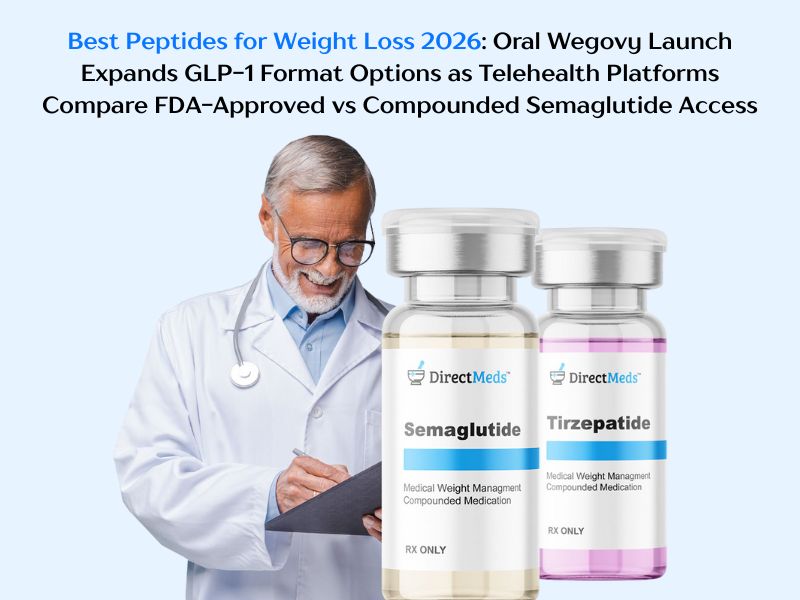
Best Peptides for Weight Loss 2026: Oral Wegovy Launch Expands GLP-1 Format Options as Telehealth Platforms Compare FDA-Approved vs Compounded Semaglutide Access
Best Peptides for Weight Loss 2026: Oral Wegovy Launch Expands GLP-1 Format Options as Telehealth Platforms Compare FDA-Approved vs Compounded Semaglutide Access
Following Oral Wegovy Introduction, Consumer Analysis Examines Injectable vs Oral Semaglutide Pricing, Compounded Tirzepatide Access Through Direct Meds, and Three-Entity Telehealth Platform Structure
HOUSTON, TX, Jan. 06, 2026 (GLOBE NEWSWIRE) — Disclaimer: This article is for informational purposes only. It is not medical advice. Medical decisions about prescription weight-management treatments are appropriately made with a qualified clinician who can evaluate individual risks and eligibility. If you purchase through links in this article, a commission may be earned at no additional cost to you.
Brand/Affiliation Notice: Direct Meds is a telehealth platform operated by Direct Meds, LLC and is not affiliated with, endorsed by, or sponsored by Novo Nordisk (Ozempic®/Wegovy®) or Eli Lilly (Mounjaro®/Zepbound®). References to brand-name medications are included for educational context only.
Reports published January 5-6, 2026 describe Novo Nordisk’s introduction of an oral Wegovy (oral semaglutide) option for chronic weight management, expanding format considerations beyond weekly injections. Reported cash-pay ranges are commonly described in the $149-$299 per-month range, though pricing and coverage vary by plan, dose, and pharmacy. Current availability and out-of-pocket cost are confirmed through official manufacturer resources and local pharmacy networks. This development arrives as the search term “best peptides for weight loss” often increases during post-holiday wellness planning, reflecting consumer research interest in prescription GLP-1 medications as part of medically supervised weight management. This consumer analysis examines the current GLP-1 weight loss medication landscape, comparing FDA-approved options in injectable and oral formats with compounded alternatives available through telehealth services, using Direct Meds as a representative case study based on publicly available platform information.
Breaking Development: Wegovy Oral Pill Now Available, Highlighting Format Options and Cost Considerations in GLP-1 Market
Recent manufacturer announcements describe the availability of oral Wegovy through U.S. pharmacy distribution channels. According to company materials, this represents an FDA-approved oral GLP-1 option for weight management, offering an alternative to injectable formats for patients with needle aversion.
According to manufacturer disclosures, reported pricing ranges vary by pharmacy, insurance coverage, and dose. Cash-pay pricing has been described in ranges between $149-$299 per month in some materials, with insured patients potentially paying lower amounts when coverage applies. The oral and injectable formats differ in administration schedules as outlined in prescribing information.
According to company phase III clinical trial data, patients using oral Wegovy lost approximately 14% of their body weight when combined with reduced-calorie diet and exercise. Patients who remained on treatment lost about 17% of their body weight compared to approximately 3% for placebo recipients. These outcomes are described by the company as similar to results observed with injectable Wegovy in separate clinical trials.
This development arrives during peak New Year resolution season when the search term “best peptides for weight loss” often shows a noticeable uptick during post-holiday wellness planning periods, reflecting heightened consumer research activity. For consumers researching their options, understanding the regulatory status, pricing structures, format differences, and access pathways across these categories helps inform medical decisions made in consultation with healthcare providers. Readers reviewing telehealth-based GLP-1 access pathways can reference current platform information through the official Direct Meds page.
What People Are Actually Searching for When They Research “Best Peptides for Weight Loss”
When people search “best peptides for weight loss” in January 2026, they’re typically at a specific point in their research journey. They’ve seen advertisements for GLP-1 medications on social media platforms, heard about weight loss results from friends or family members, read celebrity coverage, or seen news about medications like Ozempic and Wegovy. Now they’re looking to understand their options for accessing these prescription weight loss peptides and whether the medications could work for their specific situation.
The phrase “peptides for weight loss” in this consumer research context primarily refers to GLP-1 receptor agonists—a class of medications that includes semaglutide and tirzepatide. These compounds work by mimicking natural hormones that regulate appetite and blood sugar. Clinical research has documented significant weight loss outcomes in controlled trial settings using FDA-approved versions of these medications.
According to a study published in the New England Journal of Medicine examining semaglutide, participants receiving once-weekly semaglutide alongside lifestyle intervention experienced a mean weight loss of 14.9% from baseline over 68 weeks, compared with 2.4% for placebo plus lifestyle intervention. Another major trial examining tirzepatide demonstrated weight reductions ranging from 16% to 22.5% over 72 weeks, depending on dosage strength administered.
These outcomes reflect FDA-reviewed products studied under controlled trial conditions; compounded formulations have not been evaluated as FDA-approved finished products in the same way. The FDA notes that compounded drugs are not FDA-approved, meaning the agency does not review compounded versions for safety, effectiveness, or quality before they are marketed or dispensed.
These results reflect outcomes from FDA-approved branded medications studied under controlled research conditions with carefully selected participants who met specific inclusion criteria. The compounded versions available through telehealth platforms have not undergone the same FDA approval process. Individual results vary significantly based on numerous factors including baseline weight, metabolic health, consistency of medication use, concurrent lifestyle modifications, and other health variables.
Based on search behavior patterns and consumer research inquiries, people searching for “best peptides for weight loss” are typically looking for answers to these questions:
Legitimacy and Safety: Is this medication actually safe and effective, or is it another weight loss fad? What are the real side effects? Are compounded versions as safe as branded medications? How do I know if a telehealth platform is legitimate?
Cost and Access: Why does Wegovy cost over $1,000 per month without insurance? Are there more affordable alternatives? Will my insurance cover weight loss medications? Can I really get a prescription online without an in-person doctor visit? What’s the catch with cheaper options? For readers comparing FDA-approved versus compounded GLP-1 access pathways, pricing structure and regulatory framework differences become central decision factors.
Format and Administration: Do I have to give myself injections? How often? Is the new oral Wegovy pill as effective as injections? What if I’m afraid of needles? How difficult is self-injection?
Medical Appropriateness: Will this work for someone my age? Will it work with my medical conditions like prediabetes, PCOS, thyroid issues, or menopause? Do I qualify for a prescription? What if my doctor won’t prescribe it? Can I use this while taking other medications?
Results and Timeline: How much weight can I realistically expect to lose? How long does it take to see results? What happens when I stop taking it? Will I gain all the weight back? Do I have to stay on it forever?
Side Effects Management: How bad is the nausea really? Can I manage the side effects? What if the side effects are too severe? Are there strategies to reduce gastrointestinal issues?
This comprehensive analysis addresses these consumer questions by examining the current landscape of GLP-1 weight loss medications, comparing regulatory frameworks, pricing structures, format options, and access pathways. The goal is to provide accurate, well-sourced information that helps readers make informed decisions in consultation with their healthcare providers.
Understanding the GLP-1 Weight Loss Medication Landscape: FDA-Approved, Oral Formats, and Compounded Alternatives
When people research “best peptides for weight loss,” they’re encountering a market with multiple medication categories that differ significantly in regulatory status, pricing, administration format, and access pathways. Understanding these distinctions helps consumers evaluate options and have informed conversations with healthcare providers.
FDA-Approved Branded GLP-1 Medications
Semaglutide (Injectable): Ozempic is FDA-approved primarily for type 2 diabetes treatment. The FDA requires that medications demonstrate safety and effectiveness for their approved indications through extensive clinical trials. Ozempic is sometimes prescribed off-label for weight management by healthcare providers, though this is not its primary FDA-approved indication.
Wegovy is FDA-approved specifically for chronic weight management in adults with obesity or overweight with at least one weight-related condition such as high blood pressure, type 2 diabetes, or high cholesterol. According to the STEP clinical trial program, participants experienced mean weight loss of approximately 15% over 68 weeks when the medication was combined with lifestyle modifications. The branded injectable version is administered once weekly via subcutaneous injection.
Semaglutide (Oral – New as of January 2026): Recent manufacturer announcements describe oral Wegovy availability through U.S. pharmacy distribution channels. This represents the first FDA-approved oral GLP-1 medication for weight management. According to the company’s phase III clinical trial data, patients using oral Wegovy lost approximately 14% of their body weight when combined with reduced-calorie diet and exercise, with those remaining on treatment losing about 17% compared to approximately 3% for placebo recipients.
The oral format requires daily administration according to prescribing information. According to Novo Nordisk, the oral medication does not require refrigeration unlike the injectable version, potentially offering logistical advantages for some patients. Side effects reported in clinical trials are described by the company as similar to those observed with injectable formats, including nausea, diarrhea, and vomiting.
Tirzepatide (Injectable): Mounjaro is FDA-approved for type 2 diabetes treatment. Tirzepatide activates both GLP-1 and GIP receptors, representing a dual mechanism that research suggests may produce greater weight loss than GLP-1 activation alone.
Zepbound is FDA-approved specifically for chronic weight management in adults with obesity or overweight with weight-related medical conditions. According to the SURMOUNT clinical trial program, participants experienced weight reductions ranging from 16% to 22.5% over 72 weeks depending on dosage strength. Zepbound is administered once weekly via subcutaneous injection.
A 2021 study published in the New England Journal of Medicine compared tirzepatide directly to semaglutide in patients with type 2 diabetes. The trial found that patients receiving tirzepatide experienced greater average weight reductions than those receiving semaglutide in that study, though individual outcomes varied.
Pricing for FDA-Approved Branded Medications:
According to publicly available pricing information and recent company disclosures:
Injectable Wegovy typically costs approximately $300 per month without insurance coverage, though some sources report higher retail pricing around $1,300-$1,500 monthly at certain pharmacies. Novo Nordisk reports that patients with insurance coverage typically pay $25 or less monthly when the medication is covered by their plan.
Oral Wegovy costs between $149-$299 per month without insurance according to Novo Nordisk’s January 2026 announcement. With insurance coverage, patients can expect $25 or less monthly when covered.
Injectable Zepbound pricing falls in similar ranges to Wegovy. Eli Lilly offers savings programs for eligible patients, though eligibility requirements and savings amounts vary by program and patient circumstances.
Insurance coverage for weight loss medications varies significantly by plan, with many plans not covering medications prescribed specifically for weight management. Some patients with documented metabolic conditions may have better coverage prospects, but this varies by insurer and specific policy terms.
Compounded GLP-1 Formulations Through Telehealth Platforms
Compounded medications represent a different category from FDA-approved branded medications. According to FDA guidance, compounded medications are prepared by licensed pharmacies based on individual prescriptions using FDA-approved active ingredients, but the finished compounded products themselves are not FDA-approved and have not undergone the same regulatory review for safety, effectiveness, and quality that approved drugs receive. The FDA notes that compounded drugs are not FDA-approved, meaning the agency does not review compounded versions for safety, effectiveness, or quality before they are marketed or dispensed.
503A Compounding Pharmacy Framework: Compounded GLP-1 medications available through telehealth platforms are prepared by licensed 503A compounding pharmacies operating under federal and state compounding regulations. These pharmacies prepare medications on a patient-by-patient basis according to prescriptions written by licensed healthcare providers. The active ingredients used in compounding are sourced from FDA-registered facilities, but the finished compounded product has not undergone FDA approval as a complete medication.
Compounded Semaglutide and Tirzepatide Availability: According to disclosures from telehealth platforms operating in this category, some platforms advertise compounded versions of semaglutide and tirzepatide in both injectable and oral formats. Pricing for compounded versions is typically significantly lower than FDA-approved branded medications. The FDA notes that compounded drugs are not FDA-approved, meaning the agency does not review compounded versions for safety, effectiveness, or quality before they are marketed or dispensed. Availability of compounded GLP-1 formulations can change based on pharmacy sourcing, state rules, and evolving regulatory posture.
On the Direct Meds offer page accessed in early January 2026, the platform displays compounded semaglutide at $197 per month based on platform-displayed pricing at the time of review, and compounded tirzepatide at $397 per month based on platform-displayed pricing at the time of review. The company states this pricing includes medication, independent provider consultations, shipping, and injection supplies. Direct Meds also advertises an oral sublingual semaglutide option for patients who prefer non-injectable formats. Pricing, eligibility, and included services can change, so verification of the latest terms directly on the official Direct Meds pages is recommended before making a purchase decision. Readers evaluating Direct Meds GLP-1 medication access and platform structure can reference additional operational details and patient qualification processes.
Other telehealth platforms operating in this category advertise similar compounded GLP-1 pricing ranges, though specific pricing, included services, and additional fees vary by platform. Some platforms charge separate consultation fees, access fees, or membership fees beyond medication costs, while others like Direct Meds state they do not charge separate access or membership fees according to company disclosures.
Important Distinction for Consumers: The primary difference between FDA-approved branded medications and compounded versions is the regulatory oversight framework. FDA-approved medications have undergone extensive clinical trials demonstrating safety and effectiveness for specific indications, with ongoing FDA oversight of manufacturing quality. Compounded medications are prepared under state and federal compounding regulations but have not undergone the same FDA approval process as finished products.
This distinction reflects differences in regulatory review and evidence standards between FDA-approved and compounded medications. The evidence base differs from FDA-approved products that have undergone extensive clinical trial review. Some patients prefer FDA-approved branded medications due to the more extensive clinical trial data and FDA oversight. Others prioritize cost accessibility when branded medications are financially prohibitive, particularly when insurance does not cover weight loss prescriptions.
How Telehealth Platforms Structure GLP-1 Weight Loss Services: The Three-Entity Model
Before examining specific platform offerings, understanding how telehealth weight loss services structure their operations helps consumers set realistic expectations about what they’re actually signing up for and what these platforms can and cannot guarantee.
Most telehealth weight loss services involve three separate entities working together:
The Telehealth Platform (such as Direct Meds) functions as the technology company facilitating connections between patients and healthcare providers. According to platform terms of use, the platform itself is not a healthcare provider. The platform provides the technology infrastructure, customer service, and coordination that enables the telehealth experience. The platform cannot make medical decisions or guarantee that any individual will receive a prescription.
Licensed Medical Providers are independent healthcare professionals who review patient information and determine whether prescriptions are medically appropriate. These providers make clinical decisions based on the health information patients submit through online forms and questionnaires. The platform cannot override a provider’s medical judgment or guarantee prescription approval, as that determination rests entirely with the evaluating clinician based on individual patient factors.
Partner Pharmacies fulfill prescriptions written by the medical providers. In the case of compounded GLP-1 medications, prescriptions are fulfilled by licensed U.S. 503A compounding pharmacies, depending on the patient’s state of residence. Other platforms work with different pharmacy partners.
This three-entity structure is common across telehealth platforms and ensures appropriate separation between the technology platform, clinical decision-making, and medication dispensing. This separation is important for regulatory compliance and patient safety, as it maintains independence between the commercial platform and the medical providers making prescription decisions.
For consumers, this structure means several important things:
Completing an online health questionnaire and submitting payment information does not guarantee you will receive a prescription. The independent medical provider reviews your information and makes that determination based on medical appropriateness.
The telehealth platform facilitates the process but cannot override medical judgment if a provider determines a prescription is not appropriate for your specific health profile.
If a prescription is not approved, according to Direct Meds and similar platforms, any card authorization typically falls off and no charge occurs, since the service being purchased is the medical evaluation and medication if prescribed.
The quality and safety of compounded medications depends on the specific pharmacy partner the platform works with, making it important to verify that platforms work with licensed, properly regulated compounding pharmacies.
Injectable vs Oral GLP-1 Medications: Comparing Administration Formats and Effectiveness
With the January 2026 availability of oral Wegovy, consumers now have format options within both FDA-approved and compounded GLP-1 categories. Understanding the practical differences between injectable and oral administration helps match medication format to individual preferences and lifestyle factors.
Injectable GLP-1 Medications: Injectable semaglutide and tirzepatide are administered once weekly via subcutaneous injection according to prescribing information and clinician guidance.
Prescribing information describes clinician-guided dosing progression based on individual patient response. Gradual dose escalation under clinician supervision is described in prescribing information to support tolerability.
The once-weekly injection schedule offers convenience for many patients, though some people report needle aversion when considering injectable formats even with small needles. Injectable medications require refrigeration until use according to most product guidelines, which can present logistical challenges for travel or situations without reliable refrigeration access.
Oral GLP-1 Medications: According to Novo Nordisk’s disclosures about oral Wegovy, the oral format requires daily administration according to prescribing information. This timing requirement adds a daily routine consideration that some patients may find more burdensome than weekly injections, while others may find daily pills more familiar and comfortable than self-injection.
Novo Nordisk reports that oral Wegovy does not require refrigeration, potentially offering advantages for patients who travel frequently or lack consistent refrigeration access. The company’s clinical trial data indicates weight loss outcomes with oral Wegovy are similar to those observed with injectable Wegovy in separate trials, though direct head-to-head comparison studies have not been conducted.
For patients considering compounded oral semaglutide options through telehealth platforms, according to Direct Meds website information, the platform offers sublingual administration formats that differ from FDA-approved oral tablets. Some telehealth platforms offer alternative oral delivery formats; however, these formulations have not undergone FDA review as finished products, and evidence standards differ from FDA-approved medications.
Effectiveness Considerations: Clinical trial data for FDA-approved medications shows both injectable and oral formats can produce significant weight loss when combined with lifestyle modifications. Injectable semaglutide demonstrated approximately 15% mean weight loss over 68 weeks in the STEP trials. Oral Wegovy demonstrated approximately 14-17% weight loss in Novo Nordisk’s phase III trials. Injectable tirzepatide demonstrated 16-22.5% weight loss over 72 weeks in the SURMOUNT trials.
These are average outcomes in controlled settings. Individual results vary significantly based on baseline weight, metabolic factors, consistency of use, lifestyle modifications, and numerous other variables. Neither injectable nor oral formats guarantee specific weight loss amounts for any individual patient.
For compounded versions available through telehealth platforms, clinical trial data comparable to FDA-approved medications is not available, as compounded products have not undergone the same research and approval process. The FDA notes that compounded drugs are not FDA-approved, meaning the agency does not review compounded versions for safety, effectiveness, or quality before they are marketed or dispensed. The active ingredients are sourced from FDA-registered facilities, though finished formulations and delivery mechanisms differ.
Self-Assessment Framework: Which GLP-1 Approach Might Align With Your Situation
Rather than focusing on individual experiences which reflect self-selected cases rather than typical outcomes, it’s more useful to consider whether different GLP-1 medication approaches align with your specific situation, preferences, and priorities.
FDA-Approved Branded Medications May Align Well With People Who:
Prioritize extensive clinical trial data and FDA oversight: If knowing that your specific medication formulation has undergone full FDA review for safety and effectiveness is important to you, and you’re willing to pay premium pricing or have insurance coverage that makes branded medications financially accessible, this path may fit your preferences. The STEP and SURMOUNT clinical trials represent some of the most extensive weight loss medication research available.
Have insurance coverage for weight loss medications: If your health plan covers FDA-approved weight loss medications like Wegovy or Zepbound, and your out-of-pocket costs with insurance are lower than self-pay compounded options, branded medications may be your most cost-effective choice. Insurance coverage details are verified with your specific plan, as policies vary significantly.
Prefer working through traditional healthcare channels: If you value in-person doctor relationships, prefer having weight loss medication prescribed by your existing primary care physician, and want your weight management integrated into your overall medical care, pursuing branded medications through traditional channels may be more comfortable than telehealth platforms.
Want the newest FDA-approved oral format: If you have needle aversion and specifically want the FDA-approved oral Wegovy that became available in January 2026, this is currently the only FDA-approved oral GLP-1 option for weight management. Eli Lilly has an oral medication under FDA review expected in 2026, but Novo Nordisk’s oral Wegovy is currently the only approved oral option.
Compounded GLP-1 Through Telehealth May Align Well With People Who:
Are looking for lower-cost alternatives to branded medications: According to publicly available pricing information, branded Wegovy can cost $300-$1,500 per month depending on pharmacy and insurance status, while compounded versions available through telehealth platforms like Direct Meds are advertised at $197-$397 per month according to current promotional pricing. For patients without insurance coverage for weight loss medications, this price difference may be significant and may determine whether ongoing treatment is financially sustainable.
Prefer telehealth convenience over in-person appointments: If you’re comfortable providing health information through online forms and having a clinician review your case remotely rather than meeting face-to-face, the telehealth model may fit your preferences. Some people appreciate the ability to complete the process from home without scheduling in-person visits, while others prefer in-person medical evaluation.
Understand the regulatory distinction between FDA-approved and compounded: If you’ve researched the difference between FDA-approved finished products and medications prepared by compounding pharmacies under state and federal compounding guidelines, and you’re comfortable with compounded formulations prepared by licensed pharmacies, the telehealth compounded model may be appropriate. This requires understanding that compounded medications have not undergone the same FDA approval process as branded versions.
Are prepared to combine medication with lifestyle modifications: GLP-1 medications work best when combined with dietary changes and increased physical activity, regardless of whether you choose branded or compounded versions. If you understand that the medication reduces appetite and improves satiety but you still make daily decisions about food choices and activity levels, you’re more likely to see meaningful results. The medication is a tool that makes lifestyle changes easier, not a replacement for behavior change.
Live in states where telehealth platforms operate: According to Direct Meds disclosures, the platform currently does not serve residents of Mississippi or Louisiana where telehealth prescription of weight loss medications is restricted by state law. The company is working on options for California. Other platforms have different geographic restrictions. State eligibility is verified before beginning the evaluation process.
Other Approaches May Be Preferable For People Who:
Have complex medical histories requiring comprehensive in-person evaluation: If you have multiple chronic conditions, take numerous medications that could interact with GLP-1s, have a history of pancreatitis or gallbladder disease, or have medical circumstances that warrant detailed in-person assessment, traditional in-person care with specialists may be more appropriate than telehealth evaluation based on online questionnaires.
Prefer ongoing in-person medical supervision and support: Some patients value the ability to meet regularly with a healthcare provider face-to-face to discuss progress, side effects, dosage adjustments, and challenges. In-person medical weight loss programs often include nutritional counseling, behavioral support, and more frequent provider interaction than typical telehealth platforms offer. If this level of support is important to you, in-person programs may better meet your needs despite higher costs.
Are not prepared for potential gastrointestinal side effects: GLP-1 medications commonly cause nausea, vomiting, diarrhea, and constipation, particularly during dose escalation periods. These side effects are commonly reported in clinical trials and prescribing information. Most people find these effects decrease as their body adjusts, but some experience persistent symptoms. More serious but less common risks include pancreatitis, gallbladder problems, and low blood sugar when combined with certain diabetes medications. Medical appropriateness for GLP-1 medications depends on individual tolerance for potential side effects and willingness to work with clinicians on dosage adjustments if needed.
Are seeking medication to avoid lifestyle changes: If you’re hoping prescription weight loss medication will produce results without any dietary modifications or activity changes, outcomes are likely to disappoint. Clinical trials that demonstrated significant weight loss included structured dietary counseling and exercise recommendations as part of the protocol. The medications work by reducing appetite and improving satiety, making it easier to eat less, but patients who view them as solutions requiring zero behavior change typically experience less significant outcomes than trial data suggests.
Questions to Consider Before Choosing Any GLP-1 Approach:
Do you understand the difference between FDA-approved branded medications and compounded versions available through telehealth, and which regulatory framework matters most to you?
Are you comfortable with telehealth evaluation based on online questionnaires, or do you strongly prefer in-person medical assessment with a provider you can meet face-to-face?
Have you researched the potential side effects of GLP-1 medications including common gastrointestinal issues and rare but serious risks, and are you prepared to manage them if they occur?
Are you ready to make dietary and lifestyle changes alongside medication use, understanding that GLP-1s make behavior change easier but don’t replace the need for healthier choices?
Does the pricing structure make sense for your budget on an ongoing basis, recognizing that GLP-1 medications typically require continuous use to maintain weight loss?
Differences in administration frequency between oral and injectable formats are commonly considered when evaluating treatment preferences.
Your answers to these questions help determine which approach to prescription weight loss peptides, if any, makes sense for your specific situation.
How the Oral Wegovy Launch Highlights Broader Market Access Challenges
The January 5, 2026 availability of oral Wegovy represents more than just a format option—it highlights the ongoing tension between pharmaceutical innovation and consumer affordability that characterizes the GLP-1 weight loss market. While Novo Nordisk’s oral pill addresses needle aversion and eliminates refrigeration requirements, pricing between $149-$299 monthly without insurance still represents a significant financial barrier for many consumers seeking medically supervised weight loss options.
This pricing reality helps explain the parallel growth of compounded GLP-1 telehealth platforms. According to recent industry analyses examining telehealth weight loss services, compounded semaglutide pricing through platforms typically ranges from $197-$397 monthly including provider consultations and supplies.
The oral Wegovy launch does not fundamentally change the calculus for most consumers: FDA-approved medications offer extensive clinical trial data and full regulatory oversight but at premium pricing, while compounded versions use the same active ingredients but differ in regulatory review and finished-product approval. The existence of both pathways—branded pharmaceuticals through traditional channels and compounded medications through telehealth platforms—reflects the market’s attempt to balance clinical rigor with financial accessibility.
Practical Considerations: What to Expect From GLP-1 Weight Loss Medications
Based on information from FDA prescribing information for branded medications, company disclosures from telehealth platforms, and general medical knowledge about GLP-1 medication use, here’s what patients can typically expect:
Common Side Effects and Management: According to FDA prescribing information for branded GLP-1 medications, the most common side effects include nausea, vomiting, diarrhea, constipation, and abdominal discomfort. These effects are typically most pronounced during dose escalation periods when increasing from one dose level to the next, and may decrease as the body adjusts to each new dose level.
Prescribing information describes gastrointestinal adverse reactions as common, particularly during dose escalation, and clinicians typically individualize titration based on tolerability and patient history.
More serious but less common risks include pancreatitis, gallbladder problems including gallstones, kidney issues including acute kidney failure in patients who experience severe vomiting or diarrhea, changes in vision, low blood sugar especially when combined with other diabetes medications, and increased heart rate. The FDA also requires warnings about potential thyroid tumors based on animal studies. GLP-1 medications are not recommended for patients with personal or family history of medullary thyroid carcinoma or Multiple Endocrine Neoplasia syndrome type 2.
Weight Loss Timeline Expectations: According to clinical trial data from FDA-approved medications, patients typically begin seeing gradual weight loss within the first few weeks of treatment, with results becoming more significant over several months. The major clinical trials measured outcomes at 68-72 weeks. Clinical trials showed that weight loss is typically fastest in the first 16-20 weeks, then continues at a slower pace, with some patients reaching a plateau where additional loss becomes minimal.
Individual timelines vary significantly based on starting weight, dosage progression, baseline metabolic health, lifestyle factors including diet and exercise consistency, sleep quality, stress levels, other medications, and genetic factors. Compounded versions available through telehealth may follow similar patterns based on the same active ingredients, but individual results vary widely and are not guaranteed to match clinical trial averages from branded medication studies.
Long-Term Use and Maintenance Considerations: Clinical research shows that most people who stop GLP-1 medications regain some weight over time. This occurs because the medication’s mechanism of reducing appetite and improving satiety is active only while taking the medication. When the medication is discontinued, appetite regulation returns toward baseline levels, and without the medication’s effects, maintaining the same caloric restriction becomes more difficult.
The amount of weight regained varies significantly among individuals. Some people regain most of the weight lost, while others maintain more of their loss through sustained lifestyle changes. For this reason, many patients and providers view GLP-1 medications as long-term or indefinite treatments rather than short-term interventions, particularly for patients with significant weight to lose or metabolic conditions.
The cost implications of long-term use matter significantly. At $197-$397 per month for compounded versions through platforms like Direct Meds, annual costs range from approximately $2,364 to $4,764. At $149-$299 per month for oral Wegovy without insurance, annual costs range from approximately $1,788 to $3,588. At $300+ per month for branded injectable medications without insurance, annual costs exceed $3,600. These long-term costs are often considered during discussions with healthcare providers.
Insurance and Payment Considerations: According to Direct Meds and similar telehealth platforms, many insurance plans do not cover compounded medications obtained through telehealth services. Some HSA/FSA plans may reimburse qualifying weight loss medication expenses, but this varies by plan and specific plan rules are verified before assuming reimbursement eligibility.
For FDA-approved branded medications, insurance coverage varies widely. Some plans cover weight loss medications when prescribed for specific metabolic conditions but not for weight management alone. Other plans exclude weight loss medications entirely from coverage. Novo Nordisk and Eli Lilly offer savings programs for branded medications, but eligibility requirements and savings amounts vary and are verified directly with the manufacturers.
Geographic Service Availability: According to Direct Meds website information current as of January 2026, the platform provides services to most US states but does not currently serve residents of Mississippi or Louisiana, where telehealth prescription of weight loss medications is restricted by state law. The company states it is working on options for California and encourages California residents to contact customer service for updates on availability. Other telehealth platforms have different geographic restrictions based on state regulations and provider licensing.
Contact Information
Before ordering or if you have questions about the evaluation process, medication options, or pricing details, according to the Direct Meds website, the company offers customer support:
Phone: 888-696-7176
Hours: Standard business hours (current hours are verified directly with the company)
Email: Available through the official website contact form
Readers comparing compounded GLP-1 access models can reference additional platform information via the official Direct Meds contact and service page.
Frequently Asked Questions About Peptides for Weight Loss
Which peptide is most effective for weight loss according to clinical research?
According to clinical trial data from FDA-approved medications, tirzepatide has demonstrated higher average weight loss outcomes in certain clinical trials, with the SURMOUNT trials showing 16-22.5% weight reduction over 72 weeks. Semaglutide demonstrated approximately 15% mean weight loss in the STEP trials over 68 weeks. Both require combination with lifestyle modifications for optimal results. These are average outcomes in controlled settings—individual results vary significantly.
What is the difference between oral and injectable GLP-1 medications?
Injectable formats like Wegovy and Zepbound are administered once weekly via subcutaneous injection. According to Novo Nordisk’s January 2026 announcement, oral Wegovy requires daily administration according to prescribing information. Clinical trial data suggests similar average weight loss outcomes between formats, though administration frequency and lifestyle fit differ significantly. Some people prefer weekly injections to avoid daily medication routines, while others prefer daily pills to avoid needles.
How much does oral Wegovy cost compared to injectable versions?
According to Novo Nordisk, oral Wegovy costs $149-$299 monthly without insurance, compared to approximately $300 monthly for injectable Wegovy at some pharmacies though retail pricing varies. With insurance coverage, patients typically pay $25 or less monthly when the medication is covered by their plan. Many insurance plans do not cover weight loss medications, making the price difference without insurance coverage significant for many consumers.
Are compounded GLP-1 medications as safe as FDA-approved versions?
Compounded medications prepared by licensed 503A pharmacies operate under state and federal compounding regulations, but differ from FDA-approved finished products in regulatory review and evidence standards. However, compounded products have not undergone the same FDA review process as finished FDA-approved medications. The FDA notes that compounded drugs are not FDA-approved, meaning the agency does not review compounded versions for safety, effectiveness, or quality before they are marketed or dispensed. The oversight frameworks differ—FDA-approved medications have extensive clinical trial data and ongoing FDA manufacturing oversight, while compounded medications are prepared under state and federal compounding regulations but without the same finished product approval. Consumers understanding this distinction when weighing options is important.
How long do you need to stay on GLP-1 medications to maintain weight loss?
Clinical research shows that most people regain some weight after discontinuing GLP-1 medications because the appetite-suppressing effects are active only while taking the medication. Many patients and providers view these as long-term treatments rather than short-term interventions. The duration of use is determined by a healthcare provider based on individual factors including weight loss goals, metabolic health, financial sustainability, and personal preferences. Some people stay on these medications indefinitely, while others use them for specific periods.
What are the most common side effects of GLP-1 weight loss medications?
According to FDA prescribing information, the most common side effects include nausea, vomiting, diarrhea, and constipation, particularly during dose escalation. These side effects are commonly reported in clinical trials and prescribing information, particularly during dose escalation. Most people find these effects decrease as their body adjusts, but some experience persistent symptoms. More serious but less common risks include pancreatitis, gallbladder problems, and low blood sugar when combined with certain diabetes medications. Discussing potential side effects thoroughly with a healthcare provider is important for anyone considering these medications.
Can I use GLP-1 medications if I have PCOS, thyroid issues, or prediabetes?
Many people with these conditions use GLP-1 medications successfully, but medical appropriateness depends on your complete health profile. Independent licensed providers evaluate specific situations including all medical conditions, current medications, and health history to determine if prescription is appropriate. Initiation and dosing decisions for GLP-1 medications are determined through individualized clinical evaluation with complete medical history disclosure.
Do telehealth platforms guarantee I’ll receive a prescription?
No. According to telehealth platform disclosures including those from Direct Meds, independent medical providers make prescription decisions based on medical appropriateness after reviewing your submitted health information. The platform facilitates the connection but cannot override provider judgment or guarantee prescription approval. The evaluating clinician determines whether the medication is medically appropriate for your specific situation. If a prescription is not approved, card authorizations typically fall off with no charge.
What states cannot access GLP-1 medications through telehealth platforms?
Service availability varies by platform based on state regulations and provider licensing. According to Direct Meds disclosures, that platform does not currently serve Mississippi or Louisiana where telehealth weight loss prescriptions are restricted by state law, and is working on California availability. Other platforms have different geographic limitations. State eligibility is verified before beginning evaluation.
How does the new oral Wegovy compare to compounded oral semaglutide options?
Oral Wegovy is an FDA-approved finished product that has undergone full regulatory review with extensive clinical trial data demonstrating safety and effectiveness. Compounded oral semaglutide formulations available through telehealth platforms have not undergone the same FDA approval process as finished products. The FDA notes that compounded drugs are not FDA-approved, meaning the agency does not review compounded versions for safety, effectiveness, or quality before they are marketed or dispensed. Novo Nordisk’s oral format is a swallowed tablet, while some compounded options use sublingual administration formats that differ from FDA-approved oral tablets and have not undergone FDA review as finished products. The regulatory framework, clinical evidence, and pricing differ significantly—oral Wegovy costs $149-$299 monthly per company disclosures, while compounded oral options through platforms like Direct Meds cost approximately $197 monthly according to current promotional pricing.
Conclusion: 2026 Evaluation Criteria for GLP-1 Weight-Management Access
Novo Nordisk’s recent launch of oral Wegovy represents a meaningful development in the GLP-1 weight loss medication market, providing an FDA-approved oral alternative for patients with needle aversion while highlighting the ongoing evolution of format options and pricing structures across this medication category. For people researching “best peptides for weight loss” during peak New Year resolution season, understanding the full landscape of available options helps inform medical decisions made in consultation with healthcare providers.
Consumers comparing GLP-1 options often weigh: FDA-approved medications like injectable Wegovy and Zepbound, and now oral Wegovy, offer the most extensive clinical trial data, full FDA regulatory oversight, and established safety profiles. The STEP and SURMOUNT trials represent some of the most rigorous weight loss medication research available, with tens of thousands of participants studied over 68-72 weeks. For patients who prioritize this level of clinical evidence and regulatory oversight, and who have insurance coverage that makes branded medications financially accessible, these represent the most extensively studied options in the GLP-1 category.
The new oral Wegovy option addresses a real barrier for patients with needle aversion, though it requires daily administration according to prescribing information rather than once-weekly dosing. According to Novo Nordisk’s disclosures, pricing for oral Wegovy without insurance ranges from $149-$299 monthly, potentially lower than injectable Wegovy at some pharmacies but still representing a significant ongoing expense for most patients without insurance coverage.
Consumers also consider compounded alternatives when: For patients who prefer telehealth convenience, are looking for lower-cost alternatives to branded medications, understand the distinction between FDA-approved and compounded formulations, and are prepared to combine medication with lifestyle modifications, platforms like Direct Meds represent one option in this category. The pricing transparency with clear monthly costs and no separate membership or access fees according to company disclosures addresses one common frustration consumers express about some telehealth services charging layered fees beyond medication costs.
The availability of both injectable and oral compounded semaglutide formats provides flexibility for patients with different administration preferences. The three-entity structure that separates the technology platform from independent prescribing clinicians and licensed compounding pharmacies follows standard telehealth industry practice for appropriate separation of roles.
Critical Considerations That Apply Regardless of Which Path You Choose: Compounded medications are not FDA-approved finished products and have not undergone the same regulatory review as branded GLP-1 medications. The FDA notes that compounded drugs are not FDA-approved, meaning the agency does not review compounded versions for safety, effectiveness, or quality before they are marketed or dispensed. For some patients, this distinction matters significantly. Others prioritize cost accessibility over FDA-approved designation, particularly when branded medications would be financially prohibitive without insurance coverage.
Telehealth evaluation differs fundamentally from in-person medical assessment. The evaluation relies entirely on information patients provide through online forms, without the benefit of in-person examination, laboratory testing, or the relationship continuity that comes with seeing the same provider regularly over time. For patients with complex medical histories or those who value in-person medical relationships, traditional care channels may be more appropriate despite higher costs.
Individual weight loss outcomes with GLP-1 medications vary significantly regardless of whether you choose branded or compounded versions. While clinical trials show impressive average results, averages include both patients who experience substantial weight loss and those who see more modest changes. There is no way to predict how any specific individual will respond before trying the medication. Genetic factors, metabolic health, lifestyle consistency, and numerous other variables influence individual outcomes.
The question of long-term sustainability matters for any GLP-1 approach. Clinical research shows that most people regain weight after stopping these medications. This means many patients face a choice between indefinite medication use with its ongoing financial costs and health considerations, or accepting that some or most weight may return after discontinuation. This trade-off exists whether using branded or compounded medications.
Important Regulatory Context: Prescription telehealth weight loss services have experienced rapid growth and have attracted increased regulatory scrutiny from federal and state agencies. The FDA has issued communications regarding distinctions between FDA-approved and compounded GLP-1 medications. State medical boards are reviewing telehealth prescribing practices to ensure evaluations meet appropriate standards of care. This regulatory attention reflects the balance between expanding medication access through telehealth and ensuring patient safety through adequate oversight.
Regulatory guidance highlights the role of platform compliance standing, pharmacy licensure status, and provider credentials when evaluating GLP-1 access pathways. This recommendation applies to Direct Meds and all other options in this market segment.
The Bottom Line
The search for “best peptides for weight loss” reflects genuine interest in medically supervised weight management options, particularly during January 2026 when New Year resolutions drive heightened consumer research. Recent availability of oral Wegovy adds another dimension to a market that now includes multiple FDA-approved medications in injectable and oral formats, off-label use of diabetes formulations, and compounded versions through telehealth platforms at various price points. The most appropriate option varies based on individual medical history, financial considerations, care preferences, and clinician evaluation. Readers comparing telehealth versus traditional care access can reference additional platform information via the official Direct Meds service page.
Disclaimers
Content and Medical Disclaimer:This article is for informational purposes only and is not a substitute for professional medical advice, diagnosis, or treatment. The descriptions of potential benefits are not guarantees and are not a substitute for an individualized medical evaluation. Compounded GLP-1 medications require evaluation by a licensed clinician. The information provided here does not replace the professional judgment of your healthcare provider.
Professional Medical Disclaimer: This article is educational and does not constitute medical advice. Prescription weight loss medications are not substitutes for prescribed medical treatment. Medical decisions about prescription treatments are appropriately made through consultation with qualified clinicians. Changes to medications or prescribed treatments occur under physician guidance.
Compounded Medication Notice: Direct Meds offers compounded prescription medications prepared by licensed pharmacies based on individual prescriptions. Compounded medications are not reviewed or approved by the FDA as finished products. They are prepared using active ingredients sourced from FDA-registered facilities under the direction of a prescribing clinician.
FDA-Approved vs. Compounded Distinction: FDA-approved semaglutide (Wegovy) and tirzepatide (Zepbound) are finished products that have undergone full FDA review for safety, effectiveness, and quality for weight management indications. Compounded formulations of these medications available through telehealth platforms have not undergone this same FDA approval process. The evaluating clinician determines whether compounded options are appropriate based on individual health factors.
Results May Vary: Individual results will vary based on factors including age, baseline weight, metabolic health, genetic factors, consistency of medication use, dietary choices, physical activity levels, sleep quality, stress levels, current medications, and other individual variables. While clinical trials show significant average weight loss with GLP-1 medications, results are not guaranteed and some patients experience more modest outcomes.
FTC Affiliate Disclosure: This article contains affiliate links. If you purchase through these links, a commission may be earned at no additional cost to you. This compensation does not influence the accuracy, neutrality, or integrity of the information presented. All opinions and descriptions are based on published research and publicly available information.
Pricing Disclaimer: All prices, discounts, and promotional offers mentioned were accurate at the time of publication (January 2026) but are subject to change without notice. Current pricing and terms are verified on the official Direct Meds website before making purchase decisions.
Publisher Responsibility: The publisher of this article has made every effort to ensure accuracy at the time of publication. We do not accept responsibility for errors, omissions, or outcomes resulting from the use of the information provided. Readers are encouraged to verify all details directly with Direct Meds and their healthcare provider before making decisions.
Insurance Coverage Note: Many direct-to-consumer prescription weight loss medications are not covered by traditional insurance plans, but coverage policies vary. Benefits verification with individual insurers is recommended. Some HSA/FSA plans may reimburse qualifying expenses; specific plan rules determine eligibility.
Regulatory Scrutiny Acknowledgment: Prescription telehealth weight loss services have been under increased regulatory scrutiny in recent years. Public regulatory communications emphasize the importance of reviewing platform compliance standing, pharmacy licensure status, and provider credentials when evaluating telehealth services.
Brand/Affiliation Notice: Direct Meds is a telehealth platform operated by Direct Meds, LLC and is not affiliated with, endorsed by, or sponsored by Novo Nordisk (manufacturer of Ozempic® and Wegovy®) or Eli Lilly (manufacturer of Mounjaro® and Zepbound®). Any references to brand-name medications in this article serve educational context only and do not represent official partnerships, endorsements, or verified licenses from these pharmaceutical companies.
CONTACT: Phone: US Toll Free (888) 696-7176
Email: help@direct-meds.com
9am to 9pm EST daily