
SafeSpace Global Opens Nashville Office, Builds Operational Infrastructure to Support Revenue Growth

SafeSpace Global Opens Nashville Office, Builds Operational Infrastructure to Support Revenue Growth


SafeSpace Global Opens Nashville Office, Builds Operational Infrastructure to Support Revenue Growth

Company Transitions from Remote Operations to Physical Facility; Plans Technology Demonstration Center, Expanded Workforce and Investor Events

NASHVILLE, TN., March 09, 2026 (GLOBE NEWSWIRE) — SafeSpace Global Corporation [OTCID: SSGC] (SafeSpace Global or the Company), which recently announced its transition to revenue-generating operations through initial deployment of AI-powered safety technology in senior living facilities, today announced the opening of its Nashville Office at Stocking 51, 5016 Centennial Blvd, Nashville, TN 37209.

This marks a significant operational milestone as the Company transitions from remote operations to a dedicated facility designed to support commercial scaling, customer demonstrations, and expanded workforce capacity.

From Virtual to Physical: Supporting Commercial Operations

Following the Company’s 2025 rebrand from Healthcare Integrated Technologies (Ticker: HITC) to SafeSpace Global Corporation (OTCID: SSGC), the establishment of dedicated office space at Stocking 51, 5016 Centennial Boulevard in Nashville represents the Company’s evolution from a development-stage organization operating remotely to a commercial entity with active revenue contracts requiring operational infrastructure. The facility will serve as the central hub for sales, technical support, customer onboarding, and ongoing system monitoring as the Company initially scales its deployment across additional senior living communities, followed by their other verticals.

“The opening of our Nashville office reflects the operational realities of running a revenue-generating technology company,” said Scott M. Boruff, Chief Executive Officer of SafeSpace Global. “As we transition from eight facilities to dozens and eventually hundreds, we need physical infrastructure to support customer demonstrations, technical operations, workforce expansion, and stakeholder engagement. This facility provides that foundation.”

Nashville: Strategic Location for Multi-Vertical AI Safety Deployment

The selection of Nashville as the Company’s latest office location reflects strategic considerations aligned with SafeSpace Global’s deployment across four key vertical markets: healthcare, education, transportation, and correctional facilities. Nashville’s position as both a national healthcare hub and a central transportation corridor provides optimal access to customers across all four sectors. The city hosts numerous senior living operators, healthcare systems, school districts, transportation authorities, and correctional facilities throughout the Southeast and Mid-Atlantic regions, where the Company is actively pursuing expansion opportunities.

“Nashville’s unique position as both a healthcare innovation center and geographic crossroads made it the ideal location for SafeSpace Global at this juncture,” noted Dustin Hillis, President and Chief Strategy Officer. “We’re deploying AI safety technology across healthcare, education, transportation and correctional facilities; four sectors where Nashville’s concentration of expertise, central location, and business-friendly environment create natural advantages. The city provides efficient access to customers across all our verticals, from senior living facilities and school systems to transportation operations and correctional institutions throughout multiple states.”

Facility Capabilities and Strategic Functions

The Nashville Office will house several critical operational functions:

Customer Demonstration Center: A dedicated space where prospective customers can experience live demonstrations of the Company’s patented multimodal AI safety platform, including real-time elopement detection, visitor management, and incident investigation use-cases.

Technical Operations Center: Infrastructure to support remote monitoring, system diagnostics, customer technical support, and ongoing optimization of deployed AI systems across the growing facility portfolio.

Workforce Expansion Capacity: Office space designed to accommodate planned hiring across sales, technical support, customer success, and engineering functions as the Company scales to support expanded deployment.

Investor and Stakeholder Engagement: Professional meeting space for investor presentations, board meetings, and stakeholder events, including planned Investor Day presentations where shareholders can receive operational updates and technology demonstrations.

Workforce Growth and Regional Economic Impact

The Company is actively recruiting for several positions to support commercial operations, with near-term hiring planned across customer success, technical support, sales engineering, and administrative functions.

As revenue growth accelerates through expanded facility deployments, the Company anticipates continued workforce expansion throughout 2026, contributing to Nashville’s growing technology employment sector and reinforcing the region’s position as a center for healthcare and innovation.

Operational Milestone in Commercial Trajectory

The office establishment follows the Company’s February 2026 announcement of its transition from pre-revenue to revenue-generating operations, with eight senior living facilities now utilizing SafeSpace Global’s AI safety technology under executed service contracts. The physical infrastructure represents a necessary foundation for supporting the sales pipeline, customer onboarding processes, and technical operations required as additional facilities adopt the platform.

“This is about building the operational capacity to serve a growing customer base, and not about office space for its own sake” emphasized CEO Boruff. “Every revenue-generating technology company reaches a point where full remote operations become insufficient. For us, that point is now. We have paying customers who need support, prospects who want to see the technology in action, and investors who deserve transparent engagement. This facility enables all of that.”

About SafeSpace Global Corporation

SafeSpace Global Corporation (OTCID: SSGC) is a publicly traded technology company providing proprietary multimodal artificial intelligence safety, security, and situational awareness software solutions. The Company’s platform delivers advanced threat detection, incident notification, and comprehensive security capabilities designed to protect people and property across multiple sectors, verticals and use-cases.

As of February 2026, SafeSpace Global is generating recurring monthly revenue through service contracts with eight senior living facilities utilizing its AI-powered safety monitoring platform. The Company now has offices in both Knoxville and Nashville, Tennessee.

SafeSpace Global Corporation: https://www.safespaceglobal.ai

Forward-Looking Statements

This press release contains forward-looking statements within the meaning of Section 27A of the Securities Act of 1933, as amended, and Section 21E of the Securities Exchange Act of 1934, as amended. Forward-looking statements include statements regarding anticipated workforce expansion, facility utilization, customer demonstrations, operational scaling, and revenue growth. Words such as “plans,” “intends,” “anticipates,” “designed to support,” “as the Company scales,” and similar expressions identify forward-looking statements. These statements are based on current expectations and assumptions that are subject to risks and uncertainties, which could cause actual results to differ materially. Important factors that could cause actual results to differ include, but are not limited to, the Company’s ability to successfully scale operations, secure additional customer contracts, hire qualified personnel, maintain existing customer relationships, generate sufficient revenue to support expanded operations, manage operational costs, and execute on business plans. The establishment of office space does not guarantee revenue growth, successful customer demonstrations, or operational success. SafeSpace Global Corporation undertakes no obligation to publicly update or revise any forward-looking statements, whether as a result of new information, future events, or otherwise.

Investor Contact:
Carmel Fisher
Investor Relations | SafeSpace Global Corporation
+1 (310) 745-9171
Investors@safespaceglobal.ai

Media Contact:
Harvest Communications
info@harvestcomms.com
AsymBio Completes its Dual-Site, One-Center Network with Fengxian Commercial Manufacturing Site Operational, Enhancing End-to-End Biologics CDMO Capabilities

AsymBio Completes its Dual-Site, One-Center Network with Fengxian Commercial Manufacturing Site Operational, Enhancing End-to-End Biologics CDMO Capabilities


AsymBio Completes its Dual-Site, One-Center Network with Fengxian Commercial Manufacturing Site Operational, Enhancing End-to-End Biologics CDMO Capabilities

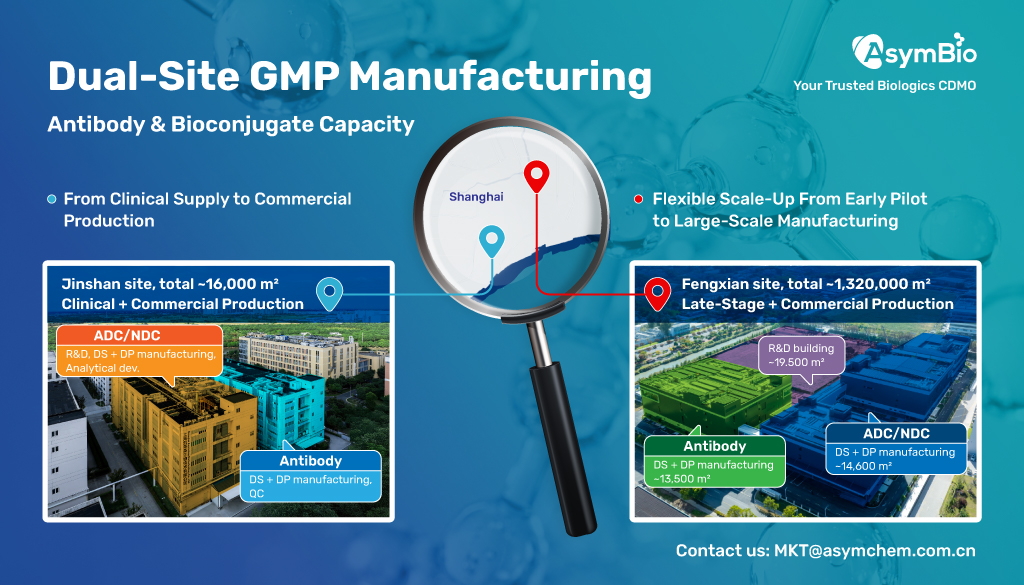
SHANGHAI, March 09, 2026 (GLOBE NEWSWIRE) — AsymBio, a subsidiary of Asymchem Group (stock code: 002821.SZ /6821.HK), recently announced that its Fengxian commercial manufacturing site in Shanghai has officially commenced operations. This milestone completes a Shanghai-based “Golden Triangle” footprint comprising the Zhangjiang Science & Technology Center, Jinshan Site, and Fengxian Site. The three locations integrate end-to-end CDMO capabilities from early R&D and process development through clinical pilot-scale production, to commercial manufacturing, advancing client programs from IND to BLA through efficient cross-site coordination.

AsymBio’s “Dual Sites + One Center” model provides connected functions and complementary strengths across the biologics lifecycle:

  • Zhangjiang Science & Technology Center: A technology-driven central engine for innovation, focusing on early R&D and process development for antibodies, proteins, novel drug conjugates (NDCs), and other advanced therapies, with forward-looking technology deployment. The Center builds and optimizes technology platforms for cell line development, upstream/downstream process development and optimization, conjugation toolbox development, and analytical method development. It supports concept-to-process translation and enables defined technology transfer pathways for subsequent pilot and commercial manufacturing.
  • Jinshan Site: A one-stop manufacturing site providing manufacturing services from clinical supply and pilot-scale to commercial production, covering drug substance (DS) and drug product (DP) capabilities for antibodies, protein therapeutics, ADCs, and NDCs. The site supports programs across clinical stages, spanning from R&D to antibody DS/DP and conjugate DS/DP.
  • Fengxian Site: A newly commissioned intelligent, large-scale, and internationally compliant manufacturing site focused on late-stage development and large-scale commercial supply for antibodies, protein therapeutics, ADCs, and NDCs. It introduces advanced smart manufacturing systems to enable compliant operations and meet global demand for large-scale supply of high-quality biologics.

Dual-site GMP manufacturing to flexibly support capacity needs from early pilot to large-scale commercial supply

Dual-Site GMP Manufacturing Inforgraphic

The network is equipped with:

  • Single-use bioreactors for antibody drug substance: 200 L / 500 L / 2,000 L
  • Conjugation reactors for conjugate drug substance: 50 L / 100 L / 200 L / 500 L
  • ORABS fully automated filling line
  • Multi-specification lyophilization and isolator filling systems: 5 m² / 10 m² / 15 m² / 20 m² lyophilizers, supporting 2R–20R formats

These capabilities support diverse dosage forms and specifications and strengthen integrated delivery in biologics, enabling customized manufacturing services.

Integrating Asymchem’s Payload–Linker Facility to Provide End-to-End, One-Stop Services for Drug Conjugates

AsymBio integrates Asymchem Group resources by linking Shanghai’s conjugation manufacturing with the Group’s Tianjin payload–linker R&D and manufacturing capabilities. The Tianjin site focuses on payload–linker process development and manufacturing while connecting seamlessly with Shanghai’s antibody DS, conjugate DS, and DP manufacturing and fill-finish. This end-to-end model enables cross-regional coordination, ensures supply chain stability, and improves both execution efficiency and cross-stage collaboration.

With the Fengxian site now in operation, AsymBio’s Shanghai footprint covers the full value chain from early-stage development through commercialization. Through the “Dual Sites + One Center” model and integrated payload–linker capabilities, the company provides global clients with efficient, reliable, and customized development and manufacturing solutions, supporting pipelines from the laboratory to clinical development and commercialization.

About AsymBio

AsymBio, a subsidiary of Asymchem Group, focuses exclusively on biopharmaceutical CDMO services. With more than 25 years of experience and global operations, the company delivers one-stop CDMO services from early-stage and process development to clinical, toxicology, and commercial-scale manufacturing. Building on deep ADC experience, AsymBio is expanding into NDCs, including RDCs, AOCs, PDCs, APCs, BsADCs, and dpADCs, while maintaining comprehensive service capabilities for antibody therapeutics (monoclonal, bispecific, and multispecific antibodies) and protein-based therapeutics (fusion proteins, recombinant proteins).

For more information, visit www.asymbio.com or follow us on LinkedIn.

Business inquiries: MKT@asymchem.com.cn

Compliance Notes

Forward-Looking Statement Disclaimer: This press release contains forward-looking statements regarding future events and expectations. Actual results may differ materially due to various factors. AsymBio undertakes no obligation to update these statements.

Non-Solicitation Statement: This announcement is for informational purposes only and does not constitute investment advice or an offer to buy or sell securities.

A photo accompanying this announcement is available at https://www.globenewswire.com/NewsRoom/AttachmentNg/8ed786fe-4826-4980-b706-9d97a67cfb51

Bristol Myers Squibb Announces Positive Phase 3 Results from the SUCCESSOR-2 Study of Oral Mezigdomide in Relapsed or Refractory Multiple Myeloma

Bristol Myers Squibb Announces Positive Phase 3 Results from the SUCCESSOR-2 Study of Oral Mezigdomide in Relapsed or Refractory Multiple Myeloma


Bristol Myers Squibb Announces Positive Phase 3 Results from the SUCCESSOR-2 Study of Oral Mezigdomide in Relapsed or Refractory Multiple Myeloma

Study marks the first positive Phase 3 study for mezigdomide and the second positive Phase 3 study for the Bristol Myers Squibb CELMoD program

PRINCETON, N.J.–(BUSINESS WIRE)–$BMY #CELMoD—Bristol Myers Squibb (NYSE: BMY) today announced positive interim Phase 3 results from the SUCCESSOR-2 study (NCT05552976). In the trial, oral mezigdomide in combination with carfilzomib and dexamethasone (MeziKd) demonstrated statistically significant and clinically meaningful improvement in progression-free survival (PFS) versus carfilzomib and dexamethasone alone (Kd) in patients with relapsed or refractory multiple myeloma (RRMM). Safety findings were consistent with the known profile of mezigdomide and the combination regimen. Patients will continue to be followed for survival and safety.


“We are excited by these results, which underscore Bristol Myers Squibb’s leadership in treating multiple myeloma and our unwavering commitment to patients living with this persistent and challenging disease,” said Cristian Massacesi, executive vice president, chief medical officer and head of development at Bristol Myers Squibb. “Importantly, these findings reinforce the value of our CELMoD program and our targeted protein degradation platform, and strengthen our confidence in bringing forward effective, accessible oral treatment options for patients with difficult-to-treat blood cancers and potentially beyond.”

“While treatment advances have been meaningful, far too many patients with multiple myeloma still relapse or stop responding—making the need for new options urgent,” said Paul Richardson, MD, Director of Clinical Research and Clinical Program Leader at the Jerome Lipper Multiple Myeloma Center, the Dana-Farber Cancer Institute and RJ Corman Professor of Medicine, Harvard Medical School. “These data underscore the potential of MeziKd as an oral regimen that could address a key unmet need for patients previously exposed to anti-CD38 and lenalidomide.”

“It is important for patients to have treatment options that offer enduring disease control,” said Meletios-A. (Thanos) Dimopoulos, MD, Professor and Chairman, Department of Clinical Therapeutics at Alexandra Hospital, School of Medicine, National and Kapodistrian University of Athens. “These positive interim data show that adding mezigdomide, a CELMoD specifically optimized for enhanced myeloma cell killing and immune activation compared with IMiD agents, to carfilzomib and dexamethasone may provide clinical benefit in earlier relapse.”

Data from SUCCESSOR-2 will be presented at a future medical meeting and results will be shared with health authorities.

About SUCCESSOR-2

SUCCESSOR-2 (NCT05552976) is an inferential, seamless Phase 2/3, multicenter, randomized, open-label study evaluating the efficacy and safety of mezigdomide in combination with carfilzomib and dexamethasone (MeziKd) versus carfilzomib and dexamethasone (Kd) in patients with relapsed or refractory multiple myeloma (RRMM).

The primary endpoint of the Phase 3 portion is progression-free survival (PFS). Key secondary endpoints include overall survival (OS), overall response rate (ORR), duration of response (DoR), time to progression (TTP), time to next treatment (TTNT), minimal residual disease (MRD) negativity, and health-related quality of life (HR-QoL).

About Targeted Protein Degradation and Novel CELMoD Agents

Targeted protein degradation (TPD) is a differentiated research platform at Bristol Myers Squibb built on more than two decades of scientific expertise, providing new avenues to degrade therapeutically relevant proteins that were previously considered “undruggable.” BMS is the only company that has successfully developed and commercialized protein degrader agents for the treatment of multiple myeloma. These agents, known as immunomodulatory drugs (IMiDs), helped establish the current standard of care in the treatment of this disease, which remains without a cure. BMS is building on this foundation with several investigational protein degraders in clinical trials, leveraging three different modalities including CELMoD agents, ligand-directed degraders (LDDs), and degrader antibody conjugates (DACs). This three-pronged approach enables matching the right therapeutic modality to a molecular mechanism of action to modulate targets most effectively and ultimately provide more opportunities for potential breakthroughs that may offer meaningful new options for patients across a broad range of diseases, in and beyond hematology and oncology. Learn more about the science behind TPD at Bristol Myers Squibb here.

About Bristol Myers Squibb

Bristol Myers Squibb is a global biopharmaceutical company whose mission is to discover, develop and deliver innovative medicines that help patients prevail over serious diseases. For more information about Bristol Myers Squibb, visit us at BMS.com or follow us on LinkedIn, X, YouTube, Facebook and Instagram.

Cautionary Statement Regarding Forward-Looking Statements

This press release contains “forward-looking statements” within the meaning of the Private Securities Litigation Reform Act of 1995 regarding, among other things, the research, development and commercialization of pharmaceutical products. All statements that are not statements of historical facts are, or may be deemed to be, forward-looking statements. Such forward-looking statements are based on current expectations and projections about our future financial results, goals, plans and objectives and involve inherent risks, assumptions and uncertainties, including internal or external factors that could delay, divert or change any of them in the next several years, that are difficult to predict, may be beyond our control and could cause our future financial results, goals, plans and objectives to differ materially from those expressed in, or implied by, the statements. These risks, assumptions, uncertainties and other factors include, among others, that future study results may not be consistent with the results to date, and that mezigdomide in combination with carfilzomib and dexamethasone (MeziKd) may not receive regulatory approval for the indication described in this release in the currently anticipated timeline or at all, any marketing approvals, if granted, may have significant limitations on their use, and, if approved, whether such combination treatment for such indication will be commercially successful. No forward-looking statement can be guaranteed. Forward-looking statements in this press release should be evaluated together with the many risks and uncertainties that affect Bristol Myers Squibb’s business and market, particularly those identified in the cautionary statement and risk factors discussion in Bristol Myers Squibb’s Annual Report on Form 10-K for the year ended December 31, 2024, as updated by our subsequent Quarterly Reports on Form 10-Q, Current Reports on Form 8-K and other filings with the Securities and Exchange Commission. The forward-looking statements included in this document are made only as of the date of this document and except as otherwise required by applicable law, Bristol Myers Squibb undertakes no obligation to publicly update or revise any forward-looking statement, whether as a result of new information, future events, changed circumstances or otherwise.

corporatefinancial-news

Contacts

Bristol Myers Squibb

Media Inquiries:

media@bms.com

Investors:

investor.relations@bms.com

Pfizer’s Phase 2 Study of Trispecific Antibody Positive in Moderate to Severe Atopic Dermatitis

Pfizer’s Phase 2 Study of Trispecific Antibody Positive in Moderate to Severe Atopic Dermatitis


Pfizer’s Phase 2 Study of Trispecific Antibody Positive in Moderate to Severe Atopic Dermatitis

  • Study met primary endpoint, demonstrating statistically significant increase in the percentage of participants achieving EASI-75 at Week 16 across all doses tested, compared to placebo
  • Tilrekimig (PF-07275315) was well-tolerated with a favorable safety profile
  • Tilrekimig has the potential to be a first-in-class, once-monthly trispecific antibody targeting interleukin-4 (IL-4), interleukin-13 (IL-13), and thymic stromal lymphopoietin (TSLP) for multiple chronic Type 2 (Th2) inflammatory conditions including atopic dermatitis, asthma, and chronic obstructive pulmonary disease (COPD)
  • Based on encouraging results, Pfizer plans to accelerate tilrekimig to Phase 3 development, with a pivotal study in atopic dermatitis on track to start this year

NEW YORK–(BUSINESS WIRE)–Pfizer Inc. (NYSE: PFE) today announced positive topline results from a Phase 2 study investigating tilrekimig (PF-07275315) in adults with moderate to severe atopic dermatitis. The study met its primary efficacy endpoint, demonstrating a statistically significant increase in the percentage of participants achieving EASI-75* (≥ 75% reduction in the Eczema Area and Severity Index) at Week 16, compared to placebo. In Stage 2 of the study, which evaluated monthly dosing regimens, tilrekimig showed competitive efficacy. The placebo-adjusted percentage of participants achieving EASI-75 at Week 16 was:


  • 38.7% for the low tested dose;
  • 51.9% for the middle tested dose; and
  • 49.4% for the high tested dose.

The two highest dose levels tested with tilrekimig strongly suggest potentially meaningful improvements to approved standard of care biologics. Tilrekimig is an investigational trispecific antibody that simultaneously targets interleukin-4 (IL-4), interleukin-13 (IL-13), and thymic stromal lymphopoietin (TSLP), with the potential to be a once-monthly treatment option for multiple chronic inflammatory conditions driven by an overactive Type 2 (Th2) immune response, without affecting receptors on healthy cells.

“We are encouraged by the topline Phase 2 results for tilrekimig, which show that combining the potent inhibition of IL-4/13 and TSLP pathways has the potential to deliver improved efficacy over the standard of care for atopic dermatitis,” said Mike Vincent, Chief Inflammation & Immunology Officer at Pfizer. “We plan to advance a broad clinical development program for tilrekimig, a potential first-in-class trispecific antibody discovered at Pfizer, in atopic dermatitis and other Th2-mediated inflammatory diseases including asthma and COPD.”

Tilrekimig was well-tolerated with a favorable safety profile and no dose dependent safety signals; adverse event (AE) rates were comparable to placebo. The most common AEs were infections and infestations, skin and subcutaneous tissue disorders and general disorders, and administration site reactions. Three serious adverse events (SAEs) were observed, which were all considered to be unrelated to treatment. Of note, the observed frequency of conjunctivitis in this study was lower than rates reported with IL-4 receptor alpha inhibitors.

The Phase 2 study is an ongoing randomized, double-blind, placebo-controlled trial in adults with moderate to severe atopic dermatitis. It is being conducted in four overlapping stages:

  • Stage 1 tested a high dose of tilrekimig versus placebo. In addition, Stage 1 included an arm testing a high dose of ompekimig (PF-07264660), an investigational trispecific antibody targeting IL-4, IL-13, and interleukin-33 (IL-33), versus placebo. Stage 1 has concluded and both tilrekimig and ompekimig groups met the primary endpoint.
  • Stage 2 was a dose-ranging study in which participants received either tilrekimig or placebo.
  • Stage 3 is an ongoing study in which participants who previously received biologic treatments receive either tilrekimig or placebo.
  • Stage 4 is an ongoing dose-ranging study in which participants receive either ompekimig or placebo.

In addition to the ongoing Phase 2 study in atopic dermatitis, Pfizer is studying tilrekimig in an ongoing Phase 2 study in asthma and the company recently initiated a Phase 2b/3 study of tilrekimig in chronic obstructive pulmonary disease (COPD). Phase 3 planning for atopic dermatitis is ongoing, with a pivotal study on track to start this year.

Detailed results from the Phase 2 study of tilrekimig will be submitted to a future medical meeting and a peer-reviewed journal. Pfizer plans to share results from the ongoing portions of the study in the future, pending completion.

About Atopic Dermatitis

Atopic dermatitis is more than “just a rash.” It is a chronic Type 2 (Th2) inflammatory skin condition, affecting people of all ages and genders around the world.i,ii Atopic dermatitis is the most common form of eczema, and sometimes the terms are used interchangeably.iii The most frequent symptom of atopic dermatitis is itchy skin, which can lead to rashes, pain, and poor sleep.iii The condition can be debilitating, disrupting patients’ daily lives, and negatively affecting their emotional well-being. Many patients do not experience a clinically meaningful response to currently available treatments, signaling a critical need for further innovation in this class of medicines.

About Pfizer: Breakthroughs That Change Patients’ Lives

At Pfizer, we apply science and our global resources to bring therapies to people that extend and significantly improve their lives. We strive to set the standard for quality, safety and value in the discovery, development and manufacture of health care products, including innovative medicines and vaccines. Every day, Pfizer colleagues work across developed and emerging markets to advance wellness, prevention, treatments and cures that challenge the most feared diseases of our time. Consistent with our responsibility as one of the world’s premier innovative biopharmaceutical companies, we collaborate with health care providers, governments and local communities to support and expand access to reliable, affordable health care around the world. For 175 years, we have worked to make a difference for all who rely on us. We routinely post information that may be important to investors on our website at www.Pfizer.com. In addition, to learn more, please visit us on www.Pfizer.com and follow us on X at @Pfizer and @Pfizer News, LinkedIn, YouTube and like us on Facebook at Facebook.com/Pfizer.

Disclosure Notice

The information contained in this release is as of March 9, 2026. Pfizer assumes no obligation to update forward-looking statements contained in this release as the result of new information or future events or developments.

This release contains forward-looking information about tilrekimig (PF-07275315), an investigational trispecific antibody, including its potential benefits; results from the Phase 2 study of tilrekimig in participants with moderate to severe atopic dermatitis; Pfizer’s investigational inflammation and immunology portfolio, and anticipated trial starts and clinical development plans, including plans to accelerate tilrekimig to Phase 3 development, with a pivotal study in atopic dermatitis planned to start this year, as well as their potential benefits, that involves substantial risks and uncertainties that could cause actual results to differ materially from those expressed or implied by such statements. Risks and uncertainties include, among other things, the uncertainties inherent in research and development, including the ability to meet anticipated clinical endpoints, commencement and/or completion dates for our clinical trials, regulatory submission dates, regulatory approval dates and/or launch dates, as well as the possibility of unfavorable new clinical data and further analyses of existing clinical data; risks associated with initial, preliminary or interim data; the risk that clinical trial data are subject to differing interpretations and assessments by regulatory authorities; whether regulatory authorities will be satisfied with the design of and results from the clinical studies; whether and when drug applications may be filed in any jurisdictions for tilrekimig or any other product candidates for any potential indications; whether and when any such applications may be approved by regulatory authorities, which will depend on myriad factors, including making a determination as to whether the product’s benefits outweigh its known risks and determination of the product’s efficacy and, if approved, whether tilrekimig or any such other product candidates will be commercially successful; decisions by regulatory authorities impacting labeling, manufacturing processes, safety and/or other matters that could affect the availability or commercial potential of tilrekimig or any such other product candidates; risks and uncertainties related to issued or future executive orders or other new, or changes in, laws or regulations; uncertainties regarding the impact of COVID-19 on Pfizer’s business, operations and financial results; and competitive developments.

A further description of risks and uncertainties can be found in Pfizer’s Annual Report on Form 10-K for the fiscal year ended December 31, 2025, and in its subsequent reports on Form 10-Q, including in the sections thereof captioned “Risk Factors” and “Forward-Looking Information and Factors That May Affect Future Results”, as well as in its subsequent reports on Form 8-K, all of which are filed with the U.S. Securities and Exchange Commission and available at www.sec.gov and www.pfizer.com.

*EASI-75 is the industry standard for measuring how effectively a treatment candidate reduces atopic dermatitis (eczema) severity and extent from baseline


i Laughter MR, Maymone MBC, Mashayekhi S, et al. The global burden of atopic dermatitis: lessons from the Global Burden of Disease Study 1990–2017*. British Journal of Dermatology. 2021;184(2):304-309. doi:10.1111/bjd.19580

ii Choragudi S, Yosipovitch G. Trends in the Prevalence of Eczema Among US Children by Age, Sex, Race, and Ethnicity From 1997 to 2018. JAMA Dermatol. 2023;159(4):454-456.

iii Eczema (contact dermatitis): Symptoms, causes, & treatment | National Eczema Association

Contacts

Media Contact:

PfizerMediaRelations@Pfizer.com

Investors Contact:

IR@Pfizer.com

Atamyo Therapeutics Presents Promising Results in the First Patients Treated With Its ATA-200 Gene Therapy in the Clinical Trial Targeting LGMD-R5 Limb-girdle Muscular Dystrophy

Atamyo Therapeutics Presents Promising Results in the First Patients Treated With Its ATA-200 Gene Therapy in the Clinical Trial Targeting LGMD-R5 Limb-girdle Muscular Dystrophy


Atamyo Therapeutics Presents Promising Results in the First Patients Treated With Its ATA-200 Gene Therapy in the Clinical Trial Targeting LGMD-R5 Limb-girdle Muscular Dystrophy

  • Four patients with LGMD-R5 (gamma-sarcoglycanopathy, formerly LGMD-2C) have received the ATA-200 gene therapy as part of the ongoing Phase 1b/2 trial evaluating the safety, pharmacodynamics, and efficacy of ATA-200.
  • Atamyo Therapeutics’ clinical trial is currently being conducted at the Powell Gene Therapy Center, University of Florida, with Dr. Barry Byrne, MD, PhD, as the principal investigator.
  • Nine-month follow-up data (including muscle biopsies performed at six months) for the first two patients treated have been reported: the safety of the product has been demonstrated and the efficacy results for these first two patients treated are very encouraging.

EVRY, France–(BUSINESS WIRE)–Atamyo Therapeutics, a biotechnology company specializing in the development of next-generation gene therapies for limb-girdle muscular dystrophy (LGMD), announced at the MDA (Muscular Dystrophy Association) Conference 2026 the first safety, pharmacodynamics, and efficacy results for its ATA-200 gene therapy in LGMD-2C/R5 limb-girdle muscular dystrophy associated with γ-sarcoglycan deficiency (SGCG, gamma-sarcoglycanopathy). The results are from the first patients treated in the clinical trial conducted at the Powell Gene Therapy Center at the University of Florida by Dr. Barry Byrne and supported by The Dion Foundation for Children with Rare Diseases.


LGMD-2C/R5 is a severe form of muscular dystrophy that appears in childhood and causes loss of walking ability before adulthood, respiratory and heart failure, and premature death. This Phase 1b/2 clinical trial (NCT05973630) is a single-center study evaluating the safety, pharmacodynamics, efficacy, and immunogenicity of ATA-200 in children aged 6 to 13 years. ATA-200 is an adeno-associated virus (AAV) gene therapy carrying a normal copy of the human SGCG gene and administered as a single intravenous injection at a dose of 1.0E+14 vg/kg. This gene therapy product was developed by Isabelle Richard, a pioneer in the study of limb-girdle muscular dystrophies and the development of innovative therapies at Genethon.

At a dose of 1.0E+14 vg/kg, the following was observed in the first two patients treated with ATA-200:

  • More than 90% of muscle fibers expressing the SGCG protein—demonstrating that almost all muscle fibers had received the therapeutic gene (90.2% for patient 1 and 92.1% for patient 2, biopsies at 6 months).
  • A significant and sustained reduction in CPK levels (a biomarker of muscle damage) and a decrease in transaminases 9 months after treatment, demonstrating the significant efficacy of ATA-200 gene therapy.
  • Also 9 months post-treatment, clinical benefits were observed on several other important parameters in ambulatory patients, particularly in timed functional tests.

No serious side effects were observed in the four patients treated, confirming the safety of the product.

“These initial results are very encouraging and demonstrate the potential of our product with biological data rarely seen in neuromuscular diseases and at such an early stage of the trial. I would like to commend the quality of the work done by the teams at Atamyo Therapeutics and, in particular, the commitment and determination of Isabelle Richard, which has made it possible to offer this hope to patients and their families. We are deeply grateful for the collaboration with the Dion Foundation and Dr. Barry Byrne of the Powell Gene Therapy Center and proud to offer children with LGMD-R5 the opportunity to receive a treatment that could change their lives.” — Angela Columbano, CEO, Atamyo Therapeutics.

Further results from this ongoing study are expected to be published in the coming months, when new longer-term follow-up data becomes available.

We are grateful to the Dion Foundation for Children with Rare Diseases and CureSCG for their financial contributions that made it possible to launch the trial.

About the ATA-200 program in LGMD-2C/R5

About the ATA-200 program in LGMD-2C/R5 LGMD-2C/R5 is a rare genetic disease caused by mutations in the gene that produces γsarcoglycan, a transmembrane protein that is involved in the connection between muscle fibers and their environment. It affects an estimated 2,000 people in Europe and in the US. In the classical form, symptoms appear in early childhood and patients suffer from progressive muscular weakness leading to loss of ambulation before adulthood. Cardiac involvement, typically presented as dilated cardiomyopathy, is reported in approximately half of patients and will eventually impact life expectancy. There is no curative treatment. The management of LGMD-2C/R5 is solely supportive. ATA-200, Atamyo’s gene therapy for LGMD-2C/R5, delivers a normal copy of the gene for production of γ-sarcoglycan. In preclinical mice models, ATA-200 demonstrated its tolerability and capability to correct symptoms and biomarkers of the pathology.

ATA-200 has been awarded Orphan Drug Designation in the US and Europe, and Rare Pediatric Disease Designation by the US FDA.

The therapy is based on the research of Atamyo Chief Scientific Officer Isabelle Richard, Ph.D., Research Director at CNRS who heads the Progressive Muscular Dystrophies Laboratory at Genethon.

About Atamyo Therapeutics

Atamyo Therapeutics is a clinical-stage biopharma focused on the development of a new generation of effective and safe gene therapies for neuromuscular diseases. A spin-off of gene therapy pioneer Genethon, Atamyo leverages unique expertise in AAV-based gene therapy and muscular dystrophies from the Progressive Muscular Dystrophies Laboratory at Genethon. Atamyo’s most advanced programs address different forms of limb-girdle muscular dystrophies (LGMD), with two clinical-stage programs targeting respectively LGMD-R9 and LGMD-R5. The name of the company is derived from two words: Celtic Atao which means “Always” or “Forever” and Myo which is the Greek root for muscle. Atamyo conveys the spirit of its commitment to improve the life of patients affected by neuromuscular diseases with life-long efficient treatments.

For more information visit www.atamyo.com

Contacts

US & Europe contacts: contact@atamyo.com  

Stephanie Bardon – communication@genethon.fr /+33 (0)6 45 15 95 87

Daniel Eramian – Opus Biotech Communications – danieleramian@comcast.net

Abselion Establishes US Subsidiary in Cambridge, MA

Abselion Establishes US Subsidiary in Cambridge, MA


Abselion Establishes US Subsidiary in Cambridge, MA

Supports closer engagement with scientists in North America, to meet growing international adoption of its Amperia protein quantification platform

CAMBRIDGE, United Kingdom & CAMBRIDGE, Mass.–(BUSINESS WIRE)–#Abselion–Abselion, a pioneering life sciences technology company focused on simplifying biomolecule quantification, today announced that it has established a US subsidiary at The Engine in Cambridge, MA. The new location strengthens its presence in the North American life sciences ecosystem, providing a formal base to support more direct engagement with academic, biotech, and pharma research teams working across biologics characterisation and development workflows.


The US site will provide Abselion with an organisational framework to complement its established collaborations and support its next stage of development as interest in its Amperia™ protein quantification system extends beyond the UK and Europe. The Engine, built by the Massachusetts Institute of Technology (MIT), is a Tough Tech incubator and accelerator and a strategic US hub for life sciences, biotech, and other transformational technologies. It provides specialised infrastructure, deep technical collaboration, and long-term company building support. Aligning Abselion’s organisational structure with the geographic distribution of its customer base will allow the company to plan and coordinate its North American activities more effectively. This will help to support system introduction, ongoing use, and collaboration in the region, while the company continues to build on its scientific and operational foundations in the UK. Expanding the company’s global footprint will also help ensure the appropriate structures are in place to support future international growth.

Dr Ruizhi Wang, CEO and Founder, Abselion, said: “Our vision is to make high-quality quantification more accessible through closer international collaboration. Establishing a US subsidiary marks an important milestone in Abselion’s growth, strengthening our ability to operate across key life science markets globally while continuing to build on our strong scientific foundation.

The US represents a significant focus for advanced biologics research and development. A formal presence there demonstrates our commitment to supporting long-term adoption of our protein quantification systems and will allow our growing international team to work more closely with customers and partners as they explore and build workflows around our Amperia platform.”

For further information about Abselion’s US site and it’s Amperia platform, please visit: https://www.abselion.com/ or meet the team at BPI West from 9–11 March in San Diego, CA to learn more.

Contacts

Codon Communications
Dr Michelle Ricketts

Tel: +447789053885

Email: michelle.ricketts@codoncommunications.com

Claritas Neuroclould™ Receives Approval from Brazil Regulator ANVISA to Market the Software Device for Brain Imaging Analysis, Localisation and Quantification in PET, SPECT and MRI

Claritas Neuroclould™ Receives Approval from Brazil Regulator ANVISA to Market the Software Device for Brain Imaging Analysis, Localisation and Quantification in PET, SPECT and MRI


Claritas Neuroclould™ Receives Approval from Brazil Regulator ANVISA to Market the Software Device for Brain Imaging Analysis, Localisation and Quantification in PET, SPECT and MRI

LONDON and SAO PAULO, March 09, 2026 (GLOBE NEWSWIRE) — Claritas NucMed Technologies Ltd (Claritas), a healthcare technology company specializing in state-of-the-art image enhancement, noise reduction, segmentation and quantification, and related AI technologies, is pleased to announce that the Brazil regulatory agency for medical devices, namely, ANVISA (Agência Nacional de Vigilância Sanitária) has approved Claritas Neuroclould™ for supply in Brazil.

Claritas Neurocloud™, provides powerful and much-needed solutions for analysis, localization and quantification of conditions and related biomarkers in the brain in PET, SPECT and MRI brain imaging.

The demand for brain imaging and screening is rapidly increasing due to expanding clinical applications in neurological and psychiatric conditions. With increasing lifespans and rising aging populations, the incidence of cognitive and neurodegenerative diseases such as Alzheimer’s, Parkinson’s, and Dementia is becoming more prevalent. Additionally, the recognition and rise in mental health conditions are contributing to the heightened demand for brain imaging. Detection, analysis, and diagnosis in these areas are leading to a greater need, emphasizing the importance and existing gap in detection and diagnosis.

Claritas Neurocloud™ can be used to determine the location of abnormal areas of patients’ brains, quantify hypo- and hypermetabolism areas, determine whether grey or white matter atrophy is within the expected range of the patient’s age, and aid in monitoring the evolution of neurodegenerative diseases. The unbiased, objective identification and automated quantification of regions of interest in brain scans improves workflow, and aids clinicians to use their time more efficiently on making diagnostic decisions.

Claritas Neurocloud™ is agnostic to hardware and hence works with all scanner types/manufacturers.

About

Claritas NucMed Technologies Ltd, a subsidiary of Claritas HealthTech Ltd, is based in London, United Kingdom, and is the authorised distributor of Claritas iPET™, iPETcertum™, Claritas Neurocloud™, iSPECTcardiac™, and other nuclear medicine devices globally.

Claritas HealthTech Ltd conducts research and development in the fields of image enhancement, machine vision and artificial intelligence (“AI”) with a focus on medical image processing and AI assisted interpretation and diagnostics. Claritas aims to transform the diagnostics industry with powerful and effective software products created using image enhancement and AI technology enabling and assisting doctors and physicians to make accurate diagnosis and improve patient lives. All Claritas products are compliant with HIPPA, DPDPA and GDPR requirements.

For more information, please visit www.claritashealthtech.com

For Enquiries, please contact:

Devika Dutt, COO

Claritas HealthTech Ltd

d.d@claritasco.com

New paper in Frontiers in Medicine reveals first reliable biomarker test for early kidney transplant rejection detection in living-donor recipients

New paper in Frontiers in Medicine reveals first reliable biomarker test for early kidney transplant rejection detection in living-donor recipients


New paper in Frontiers in Medicine reveals first reliable biomarker test for early kidney transplant rejection detection in living-donor recipients

  • Use of numares’ metabolite constellation showed a stable urinary metabolic profile in the first 14 days for living donor recipients, enabling accurate early rejection detection
  • Deceased donor recipients exhibit ischemia‑driven metabolic alterations that transiently mask rejection signals
  • Groundbreaking study was led by researchers at University Hospital Regensburg in conjunction with numares Health

REGENSBURG, Germany, March 09, 2026 (GLOBE NEWSWIRE) — numares Health (“numares”), the transformative metabolomics company pioneering multidimensional biomarker insights that deliver clinical pathways for optimal patient care, today announces the publication of a new analysis in Frontiers in Medicine highlighting numares’ urinary metabolite constellation as the first biomarker test to show reliable diagnostic accuracy for detecting acute kidney transplant rejection during the critical first 14 days after transplantation in recipients of living donor kidneys.

The study, “Diagnosis of Early Kidney Allograft Rejection: Influencing Factors in Metabolite‑Based Urine Analysis”, confirms that while many biomarker platforms struggle in the immediate post‑transplant phase, the metabolite constellation developed and validated by numares performs with full diagnostic strength right from day 1 in living-donor recipients (AUC 0.72; 95% CI 0.62–0.82).

Acute rejection remains a major challenge in kidney transplantation, often requiring invasive biopsies for diagnosis. Traditional methods, such as serum creatinine monitoring, lack sensitivity and specificity, leading to missed cases or unnecessary procedures.

The game‑changing study, led by researchers at University Hospital Regensburg and numares, identified critical factors that influence the accuracy of numares’ non-invasive urine test for early detection of acute kidney allograft rejection – especially in the immediate phase after transplantation.

Prof. Dr. med. Miriam Banas, Department of Nephrology, University Hospital Regensburg, commented: “Unlike other biomarker approaches, which cannot be applied reliably in the first days after transplantation, this metabolite constellation retains its diagnostic strength in living‑donor recipients. This is a meaningful step toward continuous, non‑invasive monitoring from day one.”

Florian Voss, Chief Executive Officer of numares Health, said: “At numares, we use nuclear magnetic resonance (NMR) spectroscopy to quantify multiple biomarkers from a single serum sample. The paper’s findings are both a validation of our technology and a source of new hope for improving patient outcomes through personalized post-transplant monitoring.”

numares Health’s urinary assay leverages NMR metabolomics to support clinical decision making in the context of kidney transplant rejection. This non-invasive test analyzes and evaluates a metabolite biomarker constellation previously identified and validated and is suitable for outpatient monitoring to improve patient compliance, decreasing the need for invasive, painful and expensive biopsy.

The UMBRELLA study conducted at the Department of Nephrology, University Hospital Regensburg, Germany, analysed 682 urine samples from 109 kidney transplant recipients within the first 14 days post-transplant, using metabolomic profiling alongside 29 clinical and transplant-related parameters. Ten significant confounding factors were identified, including donor type, ischemia times, deceased donor status, recipient age, residual urine volume, eGFR, induction therapy, and HLA mismatches.

For further information please contact:

Optimum Strategic Communications
Nick Bastin | Vici Rabbetts | Vareen Outhonesack | Katherine Bliss
Email: Numares@optimumcomms.com
Tel: +44 (0) 20 4566 8543

About numares Health
numares Health is a pioneering metabolomics platform delivering multidimensional biomarker insights and clinical pathways for optimal patient care. Its highly automated digital conversion of biochemical pathways uses NMR spectra to simultaneously measure hundreds of biomarkers from a single, minimally-processed sample, ensuring precise, consistent, scalable and streamlined workflows across labs, clinical trials/treatment and geographies. With robust standardization, incremental tests can also be rapidly processed, even from historically collected spectra, accelerating the pace of clinical research. These digital biomarkers allow the seamless transition from lab bench to bedside, with no further chemical intervention required, dramatically saving costs, while boosting accuracy and efficiency.

numares Health’s aim is to revolutionize R&D and treatment in the way that genomic analyses have changed cancer treatment but with far greater scope across intersecting causes of disease. It wants to change medicine from diagnosis/management of symptoms to accurately finding and treating underlying causes of disease.

kyron.bio Announces Strategic Partnership with Servier to Advance Precision Glycosylation in Antibody Therapeutics

kyron.bio Announces Strategic Partnership with Servier to Advance Precision Glycosylation in Antibody Therapeutics


kyron.bio Announces Strategic Partnership with Servier to Advance Precision Glycosylation in Antibody Therapeutics

Innovative glycobiology platform aimed at enhancing the efficacy, safety, and scalability of next-generation antibody therapeutics across multiple disease areas

PARIS, March 09, 2026 (GLOBE NEWSWIRE) — kyron.bio, a biotechnology company pioneering precision glycoengineering for antibody therapeutic development, today announced a strategic partnership with Servier, an international pharmaceutical group governed by a Foundation.

Under the terms of the agreement, kyron.bio will use its technology to glycoengineer an antibody selected by Servier, who will fund the associated research activities. Servier will have the option to further explore antibody engineering and development opportunities based on the outcomes. Financial details are not disclosed.

kyron.bio’s proprietary glycoengineering platform can enhance therapeutic performance of antibodies by enabling precise control of the glycan structures to improve efficacy, safety, and scalability. In this partnership kyron.bio will seek to demonstrate clear glycan control on the Servier antibody of interest for a specific pre-determined N-glycoform.

To date, engineering of glycans have been under-exploited, due to technical challenges, limiting the use of glycan engineering in drug design. kyron.bio is changing that. The company has developed a scalable, proprietary method to achieve comprehensive control over glycosylation, unlocking the possibility to use precision glycosylation in next generation drug design.

Dr. Emilia McLaughlin, founder and Chief Executive Officer of kyron.bio, said,

“We are delighted that Servier has chosen to explore the potential of our glycoengineering platform. Servier has deep expertise in therapeutic development and combined with our precision glycosylation technology, this partnership provides a powerful opportunity to unlock new levels of antibody performance and deliver better outcomes for patients.

“Precision glycosylation represents a transformative approach in biologics development. By engineering defined glycan profiles, therapeutic antibodies can be optimized for improved immune engagement, pharmacokinetics, and reduced variability.”

In 2024, kyron.bio was the winner of the Servier Golden Ticket award which has provided invaluable support and mentorship through the company’s early translational phase and has developed a foundation for understanding the potential of kyron.bio’s technology.

Dr. Emmanuel Nony, Director of External Innovation Europe at Servier, said,

“Meeting kyron.bio as a winner of Servier’s Golden Ticket award has enabled our scientists to develop an understanding of the kyron.bio glycan engineering technology and its exciting possibilities in antibody drug design. This collaboration is opening new frontiers for antibody derivatives as well. Together, we are exploring innovative pathways to optimize drug design and production, with a shared commitment to bringing safer and more effective therapies to patients.”

kyron.bio’s strategy is to form strategic drug design partnerships with pharmaceutical and biotech companies working on next-generation antibody therapeutics, alongside in house therapeutic development programs.

A successful company creation from the French Entrepreneur First Scheme, in 2025 kyron.bio raised €5.5m in a seed round from an experienced syndicate of venture investors including HCVC, Verve Ventures, Entrepreneurs First and Saras Capital, as well as private angel investors and the European Innovation Council. It has established an R&D base at the biotech hub Paris Biotech Santé in the Cochin Hospital.

Media images can be found here. 

About kyron.bio

kyron.bio is pioneering precision control of glycosylation in antibody therapeutics to enhance functionality and efficacy. Leveraging both proprietary cell-based systems and structure-guided design, the company unlocks the untapped potential of N-glycans in drug development to address a spectrum of therapeutic indications including oncology, and autoimmune diseases.

The company was founded in 2022, to commercialise technology developed by kyron.bio’s founder and CEO Emilia McLaughlin as part of the French Entrepreneur First Program.

kyron.bio’s strategy is to form strategic drug design partnerships with pharmaceutical companies working on next-generation antibody therapeutics, to apply its patent-protected glycoengineering technology to improve antibody performance, whilst also building an in-house therapeutics portfolio.

Based at Paris Biotech Santé in the Cochin Hospital, Kyron.bio investors include Entrepreneur First, HCVC, Verve Ventures, Entrepreneurs First, Saras Capital, and private angel investors. In addition, the company has received grants from the European Innovation Council and Banque Publique d’investissement France. It was the 2024 recipient of a prestigious Servier Golden Ticket award.

Learn more at: www.kyron.bio

Follow us on social media: LinkedIn

For further information:

At the company – Dr. Emilia McLaughlin, Chief Executive Officer of kyron.bio

hello@kyron.bio

Media enquiries – Charles Consultants

Sue Charles sue@charles-consultants.com +44 7968 726585

TME Pharma extends financial runway to over 12 months

TME Pharma extends financial runway to over 12 months


TME Pharma extends financial runway to over 12 months

TME Pharma extends financial runway to over 12 months

Berlin, Germany, March 9, 2025, 08.00am CET – TME Pharma N.V. (Euronext Growth Paris: ALTME), a clinical-stage biotechnology company specializing in the development of novel therapies for cancer and eye diseases, is pleased to announce that certain lenders have accepted to extend the maturity of their loan by a further 12 months. TME Pharma now has cash runway into Q2 2027.

An agreement has been reached with certain lenders who participated in the May and August 2025 fundraisings (including board members and CEO) lending the Company at such time a total amount of approximately €2.06M, representing 93.2 percent of the total May and August 2025 loans. The maturity of these loan agreements has been extended by 12 months, and in consideration for the extension of the loan repayment, the term of the warrants has been extended until December 31, 2030. The lenders have received 30% extra warrants at the same strike price as the current warrants (€0.10 and €0.11 respectively for the May and August 2025 loans). These extra warrants are subject to a lock-up until January 1, 2029, unless the share price is €0.25 or higher. In case of full exercise of all the new warrants under the amended loan agreements, the Company could receive a total additional amount of approximately €678k in exchange for the issuance of 6,584,116 shares (which is approximately 7% dilution).

TME Pharma will redeem bonds early on March 11 to bondholders who did not wish to extend. The amount is €163,562.50 including interest.

Diede van den Ouden, CEO of TME Pharma, said: “I am delighted that TME Pharma and its shareholders have once again earned the trust of its investors. This demonstrates the lenders’ confidence in the company and its management to achieve success. Now that TME Pharma has secured further financial stability, management can accelerate its discussions with partners to optimize the value of NOX-A12 and NOX-36. I am convinced that with the extra time gained by extending the debt, we will be able to achieve our goals.”

A tracking table of the warrants will be maintained on the website, showing that only 3.130 new shares, resulting from the exercise of the former Z Warrant program of February 2024, have been issued since January 1, 2025. None of the warrants issued to the lenders under the May and August 2025 loans have currently been exercised. TME Pharma has not issued any further new shares in 2025 and 2026 and is fully focused on creating value for shareholders.

For more information, please contact:

TME Pharma N.V.
Diede van den Ouden, CEO
ir@tmepharma.com

About TME Pharma

TME Pharma is a clinical-stage biotechnology company specializing in the development of novel therapies for cancer and eye diseases. The Company’s lead compounds have been designed to act on the tumor microenvironment (TME) and the cancer immunity cycle by breaking tumor protection barriers against the immune system and blocking tumor repair. The Company’s two lead assets are:

  • NOX-A12 (olaptesed pegol, an anti-CXCL12 L-RNA aptamer), which is being studied (GLORIA Phase 1/2 clinical trial) in newly-diagnosed brain cancer patients who will not benefit clinically from standard chemotherapy. The US FDA and the German BfArM have approved the design of a randomized Phase 2 trial in glioblastoma, and TME Pharma was awarded Fast Track Designation by the FDA for NOX-A12 in combination with radiotherapy and bevacizumab for use in the treatment of the aggressive adult brain cancer, glioblastoma. NOX-A12 in combination with radiotherapy had also previously received orphan drug designation (ODD) for glioblastoma in the United States and glioma in Europe.
  • NOX-E36 (emapticap pegol, L-RNA aptamer inhibiting CCL2 and related chemokines), which is being evaluated in ophthalmic diseases with a high need for well-tolerated therapies with anti-fibrotic effect.

The Company, under the leadership of its new CEO, Diede van den Ouden, who joined in the June 2025, is currently undertaking a strategic restructuring with the goal of providing the financial resources to unlock the value of NOX-A12 and NOX-E36. These steps include:

  • Raising funds from alternative sources (€1.7 million raised in May 2025, including €500,000 from the new CEO)
  • Pursuing stable, cash-generating business opportunities to achieve positive operational cash flow for the Company
  • Leveraging tax loss carry forwards
  • Potentially gaining exposure to digital assets

Further information can be found at: www.tmepharma.com.

About the GLORIA Study

GLORIA (NCT04121455) is TME Pharma’s dose-escalation, Phase 1/2 study of NOX-A12 in combination with radiotherapy in first-line partially resected or unresected glioblastoma (brain cancer) patients with unmethylated MGMT promoter (resistant to standard chemotherapy). GLORIA further evaluates safety and efficacy of NOX-A12 in the expansion arm in which NOX-A12 is combined with radiotherapy and bevacizumab.

About the OPTIMUS Study

OPTIMUS (NCT04901741) is TME Pharma’s planned open-label two-arm Phase 2 study of NOX-A12 combined with pembrolizumab and nanoliposomal irinotecan/5-FU/leucovorin or gemcitabine/nab-paclitaxel in microsatellite-stable metastatic pancreatic cancer patients.

Disclaimer

Translations of any press release into languages other than English are intended solely as a convenience to the non-English-reading audience. The company has attempted to provide an accurate translation of the original text in English, but due to the nuances in translating into another language, slight differences may exist. This press release includes certain disclosures that contain “forward-looking statements.” Forward-looking statements are based on TME Pharma’s current expectations and are subject to inherent uncertainties, risks and assumptions that are difficult to predict. Factors that could cause actual results to differ include, but are not limited to, the risks inherent in oncology drug development, including clinical trials and the timing of and TME Pharma’s ability to obtain regulatory approvals for NOX-A12 as well as any other drug candidates. Forward-looking statements contained in this announcement are made as of this date, and TME Pharma undertakes no duty to update such information except as required under applicable law.

Management will now iParallel to its core biotechnology activities, the company is exploring potential acquisitions and partnerships in stable, profitable businesses. These efforts are aimed at creating a fundamentally profitable corporate structure in which revenues from non-core activities will support and strengthen the further development of its patented drug candidates, which remain the company’s flagship products, NOXA12 and NOX-E36.

Attachment