Ryoncil® Profits Underpinning Substantial Growth Pipeline

Ryoncil® Profits Underpinning Substantial Growth Pipeline


Ryoncil® Profits Underpinning Substantial Growth Pipeline

Financial Results and Operational Update for Half-Year Ended December 31, 2025

NEW YORK, Feb. 26, 2026 (GLOBE NEWSWIRE) — Mesoblast Limited (Nasdaq:MESO; ASX:MSB), global leader in allogeneic cellular medicines for inflammatory diseases, today provided financial results and an operational update for the period ended December 31, 2025 (H1 FY2026).

FINANCIAL HIGHLIGHTS FOR H1 FY20261

Performance driven by successful commercial launch of Ryoncil®

  • Total revenue of US$51.3 million (A$78.3 million),2 up from US$3.2 million.
  • Successful U.S. commercial launch of Ryoncil® (remestemcel-L-rknd) generated gross sales of US$57.0 million and revenue of US$48.7 million after gross to net adjustment.
  • Ryoncil® gross profit, excluding amortization, was US$44.2 million versus nil in the prior year period. Direct selling costs were US$7.7 million.
  • The strong operating performance in the period allowed us to invest in R&D, including to support the Phase 3 trial on the blockbuster chronic low back pain indication, for clinical programs for lifecycle extension, and for commercial manufacturing of Ryoncil® inventory as well as for launch of second-generation product.
  • Reported net loss of US$40.2 million compared to US$47.9 million, an improvement of US$7.8 million. Excluding a US$23.0 million inventory reversal reported in the prior year period, the improvement in net loss year-over-year would have been US$30.7 million.
  • Net operating cash spend of US$30.3 million. Mesoblast expects to see reduction in net cash spend over the remainder of the fiscal period based on projected receipts from quarterly revenues.
  • Period-end cash balance of US$130.0 million. Mesoblast entered into a US$125.0 million five-year non-dilutive credit-line facility. The second tranche of US$50.0 million is available to be drawn at our option until June 30, 2026.

OPERATIONAL HIGHLIGHTS FOR H1 FY2026

Successful Ryoncil® commercial launch

  • To date 49 transplant centers have been onboarded, with a target of 64 centers which account for 94% of transplants performed in the U.S. Ryoncil®.
  • Coverage by government and commercial payers already extends to 280 million U.S. lives with Federal Medicaid coverage by U.S. Centers for Medicare & Medicaid Services (CMS) and mandatory fee-for-service Medicaid coverage in all U.S. states.
  • Issuance on October 1, 2025, of a specific Healthcare Common Procedure Coding System (HCPCS) J-Code by CMS for billing and reimbursement resulted in growth of Ryoncil® usage under CMS coverage versus commercial coverage in the last quarter.3
  • 84% of patients in ‘real-world’ clinical setting able to complete the initial 28-day treatment regimen as per the FDA approval label and alive.4
  • These early data are consistent with the prior clinical experience with Ryoncil®. The outcomes highlight our focus on getting patients on Ryoncil® therapy as early as possible following steroid resistance to enable completion of an initial 28-day treatment course and maximize survival.
  • Ryoncil® lifecycle extension: Mesoblast intends to expand the clinical indications of Ryoncil® for life-cycle extension in both adults and children with life-threatening inflammatory conditions. The final protocol design for the Phase 3 trial of Ryoncil® as part of the second-line treatment regimen in adults with steroid-refractory acute graft versus host disease (SR-aGvHD), a population approximately three times the size of the pediatric SR-aGvHD population, is locked down following a recent meeting with FDA and will be provided to the Institutional Review Board (IRB) in March for site initiation.

Mesoblast’s second generation product rexlemestrocel-L to create multiple revenue streams in blockbuster indications

  • Mesoblast will seek to use its data from large randomized controlled trials in chronic discogenic low back pain (CLBP) and inflammatory chronic heart failure with low ejection fraction to support approvals for rexlemestrocel-L, aligning with recent announcements by the FDA that a single pivotal trial is the new default option for FDA approval.5
  • Confirmatory Phase 3 trial for chronic discogenic low back pain (CLBP): During the period, Mesoblast received positive feedback from FDA on potential filing of a Biologics License Application (BLA) confirming that a clinically meaningful reduction in pain intensity in the active arm versus placebo at 12 months can support product efficacy and stated that the robust results on opioid reduction from at least one adequate and well controlled trial could be included in the Clinical Studies section of product labeling. Mesoblast’s second randomized controlled Phase 3 trial in CLBP is on track to complete its 300-patient enrollment target in March/April this year with the trial actively recruiting across 40 sites in the U.S.
  • BLA filing for end-stage patients with chronic heart failure with low ejection fraction (HFrEF): Mesoblast has generated new data showing that a single administration of rexlemestrocel-L at the time of open heart surgery and device implantation to support the left ventricle in end-stage patients with HFrEF, reduces right heart failure hospitalizations, mortality from right heart failure, and portal hypertension with major bleeding events. With these new data, existing Orphan Drug designation for treating this group of patients, and FDA’s stated preference for randomized controlled trials, Mesoblast is moving from filing for accelerated approval to filing for full FDA approval next quarter. A confirmatory study would no longer be needed, if approved.
  • Commercial manufacturing: scale-up work for rexlemestrocel-L is well progressed to support BLA filings for both CLBP and, in the first instance, for end-stage HFrEF patients with LVADs.

FY2026 Net Revenue Guidance
Mesoblast anticipates full-year fiscal 2026 Ryoncil® net revenue to range between US$110 million and US$120 million.

Commentary
Mesoblast Chief Executive Dr. Silviu Itescu, commented on the result: “Today we report strong operational and financial performance for the first half of FY2026, a period that marks an important inflection point in Mesoblast’s evolution from clinical development to sustainable commercial execution. Sales momentum for Ryoncil® continued to build, driving meaningful revenue and reinforcing the product’s value in addressing significant unmet medical need and the strength of our commercial strategy.

Importantly, we have improved the Company’s financial position with positive cash flow generated from Ryoncil® sales, disciplined cost management, and a strategic refinancing, providing greater flexibility to support expansion and late-stage clinical programs.

As we enter the second half of FY2026, we remain focused on accelerating commercial uptake, advancing regulatory and label expansion opportunities, and maintaining financial discipline to deliver sustainable long-term shareholder value.”

Conference Call
There will be a webcast today, beginning at 5.00pm EST (Thursday, February 26); 9.00am AEDT (Friday, February 27). It can be accessed via: https://webcast.openbriefing.com/msb-hyr-2026/

The archived webcast will be available on the Investor page of the Company’s website: www.mesoblast.com

Other
Please refer ‘Risk Factors’ and ‘Management’s Discussion and Analysis’ sections in our Form 6-K filed with SEC and Appendix 4D filed with ASX.

About Mesoblast
Mesoblast (the Company) is a world leader in developing allogeneic (off-the-shelf) cellular medicines for the treatment of severe and life-threatening inflammatory conditions. The therapies from the Company’s proprietary mesenchymal lineage cell therapy technology platform respond to severe inflammation by releasing anti-inflammatory factors that counter and modulate multiple effector arms of the immune system, resulting in significant reduction of the damaging inflammatory process.

Mesoblast’s Ryoncil® (remestemcel-L-rknd) for the treatment of steroid-refractory acute graft versus host disease (SR-aGvHD) in pediatric patients 2 months and older is the first FDA-approved mesenchymal stromal cell (MSC) therapy. Please see the full Prescribing Information at www.ryoncil.com.

Mesoblast is committed to developing additional cell therapies for distinct indications based on its remestemcel-L and rexlemestrocel-L allogeneic stromal cell technology platforms. Ryoncil® is being developed for additional inflammatory diseases including SR-aGvHD in adults and biologic-resistant inflammatory bowel disease. Rexlemestrocel-L is being developed for heart failure and chronic low back pain. The Company has established commercial partnerships in Japan, Europe and China.

About Mesoblast intellectual property: Mesoblast has a strong and extensive global intellectual property portfolio, with over 1,000 granted patents or patent applications covering mesenchymal stromal cell compositions of matter, methods of manufacturing and indications. These granted patents and patent applications provide commercial protection extending through to at least 2044 in all major markets.

About Mesoblast manufacturing: The Company’s proprietary manufacturing processes yield industrial-scale, cryopreserved, off-the-shelf, cellular medicines. These cell therapies, with defined pharmaceutical release criteria, are planned to be readily available to patients worldwide.

Mesoblast has locations in Australia, the United States and Singapore and is listed on the Australian Securities Exchange (MSB) and on the Nasdaq (MESO). For more information, please see www.mesoblast.com, LinkedIn: Mesoblast Limited and Twitter: @Mesoblast

References / Footnotes

  1. See summary consolidated financial tables at the end of this release.
  2. Translated at the average US$:A$ exchange rate for the six months ended December 31, 2025 as reported by the Reserve Bank of Australia, being 0.65539.
  3. Coding and coverage decisions are made by payers, and coverage cannot be guaranteed.
  4. Mesoblast ASX announcement January 27, 2026.
  5. Prasad V, Makary MA. One Pivotal Trial, the New Default Option for FDA Approval — Ending the Two-Trial Dogma. N Engl J Med 2026;394:815-817.

Forward-Looking Statements
This press release includes forward-looking statements that relate to future events or our future financial performance and involve known and unknown risks, uncertainties and other factors that may cause our actual results, levels of activity, performance or achievements to differ materially from any future results, levels of activity, performance or achievements expressed or implied by these forward-looking statements. We make such forward-looking statements pursuant to the safe harbor provisions of the Private Securities Litigation Reform Act of 1995 and other federal securities laws. Forward-looking statements should not be read as a guarantee of future performance or results, and actual results may differ from the results anticipated in these forward-looking statements, and the differences may be material and adverse. Forward-looking statements include, but are not limited to, statements about: the initiation, timing, progress and results of Mesoblast’s preclinical and clinical studies, and Mesoblast’s research and development programs; Mesoblast’s ability to advance product candidates into, enroll and successfully complete, clinical studies, including multi-national clinical trials; Mesoblast’s ability to advance its manufacturing capabilities; the timing or likelihood of regulatory filings and approvals, manufacturing activities and product marketing activities, if any; the commercialization of Mesoblast’s RYONCIL for pediatric SR-aGVHD and any other product candidates, if approved; regulatory or public perceptions and market acceptance surrounding the use of stem-cell based therapies; the potential for Mesoblast’s product candidates, if any are approved, to be withdrawn from the market due to patient adverse events or deaths; the potential benefits of strategic collaboration agreements and Mesoblast’s ability to enter into and maintain established strategic collaborations; Mesoblast’s ability to establish and maintain intellectual property on its product candidates and Mesoblast’s ability to successfully defend these in cases of alleged infringement; the scope of protection Mesoblast is able to establish and maintain for intellectual property rights covering its product candidates and technology; estimates of Mesoblast’s expenses, future revenues, capital requirements and its needs for additional financing; Mesoblast’s financial performance; developments relating to Mesoblast’s competitors and industry; and the pricing and reimbursement of Mesoblast’s product candidates, if approved. You should read this press release together with our risk factors, in our most recently filed reports with the SEC or on our website. Uncertainties and risks that may cause Mesoblast’s actual results, performance or achievements to be materially different from those which may be expressed or implied by such statements, and accordingly, you should not place undue reliance on these forward-looking statements. We do not undertake any obligations to publicly update or revise any forward-looking statements, whether as a result of new information, future developments or otherwise.

Not financial product advice
This announcement does not constitute financial product advice or investment advice (nor tax, accounting or legal advice) and has been prepared without taking into account the objectives, financial situation or needs of individuals. Before making an investment decision, prospective investors should consider the appropriateness of the information having regard to their own objectives, financial situation and needs and seek appropriate professional advice.

Disclaimer
To the maximum extent permitted by law, Mesoblast and its directors, officers, employees, advisers and agents disclaim any obligation or undertaking to release any updates or revisions to the information to reflect any change in expectations or assumptions, and disclaim all responsibility and liability for these forward-looking statements (including, without limitation, any liability for negligence).

Release authorized by the Chief Executive.

For more information, please contact:

Corporate Communications / Investors  
Paul Hughes  
T: +61 3 9639 6036  
   
Media – Global Media – Australia
Rubenstein BlueDot Media
Caroline Nelson Steve Dabkowski
T: +1 703 489 3037 T: +61 419 880 486
E: cnelson@rubenstein.com E: steve@bluedot.net.au
   

Consolidated Income Statement

    Six Months Ended
December 31,
(in U.S. dollars, in thousands, except per share amount)   2025   2024
Revenue:        
Product sales, net   48,685     —  
Royalty revenue   2,657     3,156  
Total revenues   51,342     3,156  
Cost of revenues (including amortization of currently marketed intangible assets, December 31, 2025: $3.082 million & 2024: $Nil)   (7,604 )   —  
Research & development   (46,162 )   (5,085 )
Selling, general and administration   (28,541 )   (18,012 )
Fair value remeasurement of contingent consideration   7,641     (4,303 )
Fair value remeasurement of warrant liability   (4,498 )   (11,978 )
Other operating income and expenses   3,217     (673 )
Finance costs   (15,112 )   (10,827 )
Loss before income tax   (39,717 )   (47,722 )
Income tax benefit/(expense)   (445 )   (212 )
Loss attributable to the owners of Mesoblast Limited   (40,162 )   (47,934 )
         
Losses per share from continuing operations attributable to the ordinary equity holders of the Group:   Cents   Cents
Basic – losses per share   (3.11 )   (4.20 )
Diluted – losses per share   (3.11 )   (4.20 )
             

Consolidated Statement of Comprehensive Income

    Six Months Ended
December 31,
(in U.S. dollars, in thousands)   2025   2024
Loss for the period   (40,162 )   (47,934 )
Other comprehensive income/(loss)        
Items that may be reclassified to profit and loss        
Exchange differences on translation of foreign operations   237     (113 )
Items that will not be reclassified to profit and loss        
Financial assets at fair value through other comprehensive income   163     194  
Other comprehensive income for the period, net of tax   400     81  
Total comprehensive losses attributable to the owners of Mesoblast Limited   (39,762 )   (47,853 )
             

Consolidated Balance Sheet

(in U.S. dollars, in thousands)

  As of
December 31,
2025
  As of
June 30,
2025
Assets        
Current Assets        
Cash & cash equivalents   129,975     161,551  
Trade & other receivables   43,300     14,866  
Inventory   21,664     22,246  
Prepayments   7,544     5,687  
Total Current Assets   202,483     204,350  
         
Non-Current Assets        
Property, plant and equipment   1,793     1,702  
Right-of-use assets   6,486     4,121  
Financial assets at fair value through other comprehensive income   1,551     1,388  
Other non-current assets   1,194     1,296  
Intangible assets   568,800     571,826  
Total Non-Current Assets   579,824     580,333  
Total Assets   782,307     784,683  
         
Liabilities        
Current Liabilities        
Trade and other payables   33,576     19,082  
Provisions and other liabilities   11,201     20,985  
Borrowings   66,738     54,155  
Lease liabilities   2,382     2,680  
Warrant liability   14,172     5,724  
Total Current Liabilities   128,069     102,626  
         
Non-Current Liabilities        
Provisions and other liabilities   11,030     10,793  
Borrowings   60,132     67,739  
Lease liabilities   5,892     3,583  
Deferred consideration   2,500     2,500  
Total Non-Current Liabilities   79,554     84,615  
Total Liabilities   207,623     187,241  
Net Assets   574,684     597,442  
         
Equity        
Issued Capital   1,519,456     1,508,846  
Reserves   106,293     99,499  
Accumulated losses   (1,051,065 )   (1,010,903 )
Total Equity   574,684     597,442  
             

Consolidated Statement of Cash Flow

    Six Months Ended
December 31,
(in U.S. dollars, in thousands)   2025   2024
Cash flows from operating activities        
Receipts from customers   28,033     3,063  
Payments to suppliers and employees (inclusive of goods and services tax)   (61,020 )   (24,159 )
Interest received   2,642     441  
Income taxes refund/(paid)   1     (2 )
Government grants and tax incentives and credits received   —     2  
Net cash (outflows) in operating activities   (30,344 )   (20,655 )
         
Cash flows from investing activities        
Payments for property, plant and equipment   (422 )   (106 )
(Payments for)/Receipt from investment in sublease   (125 )   124  
Payments for intellectual property   (60 )   —  
Receipt of security deposits   —     609  
Net cash (outflows)/inflows in investing activities   (607 )   627  
         
Cash flows from financing activities        
Proceeds from borrowings   71,039     —  
Proceeds from issue of warrants   3,961     —  
Repayment of borrowings   (69,338 )   (2,608 )
Payment of transaction costs from borrowings   (4,288 )   (644 )
Interest and other costs of finance paid   (7,099 )   (2,720 )
Proceeds from issues of shares and other equity securities   1,557     —  
Payment of transaction costs from issues of shares and other equity securities   (128 )   (24 )
Proceeds from exercise of options   3,994     1,341  
Proceeds from settlement of lease liabilities   314     —  
Payments for lease liabilities   (1,140 )   (971 )
Proceeds from exercise of warrants   —     1,362  
Net cash (outflows) by financing activities   (1,128 )   (4,264 )
         
Net (decrease) in cash and cash equivalents   (32,079 )   (24,292 )
Cash and cash equivalents at beginning of period   161,551     62,960  
Foreign exchange gains/(losses) on the translation of foreign bank accounts   503     (639 )
Cash and cash equivalents at end of period   129,975     38,029  

Herz P1 Smart Ring in 2026: Features, Pricing, Accuracy Context, and What Consumers Should Verify Before Buying

Herz P1 Smart Ring in 2026: Features, Pricing, Accuracy Context, and What Consumers Should Verify Before Buying


Herz P1 Smart Ring in 2026: Features, Pricing, Accuracy Context, and What Consumers Should Verify Before Buying

Examining the Herz P1 Smart Ring’s Consumer Wearable Category for 2026: 24/7 Heart Rate Monitoring, Sleep Tracking, Stress and HRV Analysis, Activity Metrics, Smart Ring Pricing From $49.99 Per Unit, No Subscription Model, IP68 Waterproof Rating, Battery Life, Sizing, Offline Storage, iOS and Android Compatibility, and What Consumers Should Verify Before Purchasing Any Direct-to-Consumer Smart Ring

Akron, OH, Feb. 26, 2026 (GLOBE NEWSWIRE) — This article is for informational purposes only. It is not medical advice, and no claims made herein should replace consultation with a qualified healthcare professional. Product details described below are based on publicly available information from the company at the time of publication. Individual experiences with consumer wearable devices vary. This content contains affiliate links, and a commission may be earned at no additional cost to the reader. Affiliate relationships do not influence the informational content presented.

The Herz P1 Smart Ring is marketed as a subscription-free smart ring designed for continuous health tracking in 2026. As consumer interest in finger-based wearable technology grows, prospective buyers are researching pricing, accuracy, battery life, waterproof ratings, and return policies before purchasing. This briefing examines the Herz P1 Smart Ring based on publicly available company materials and broader smart ring wearable category context.

Herz P1 Smart Ring in 2026 Features, Pricing, Accuracy Context, and What Consumers Should Verify Before Buying

Consumers encountering ads for the Herz P1 Smart Ring often have the same questions: what the company claims, what can be verified, what remains unknown, and what to confirm before purchasing.

Any product details are described as stated by the company and should be verified on the official site and through independent research.

Consumer wearable devices, including smart rings, are not medical-grade diagnostic instruments, and performance claims are not guaranteed.

To view the current Herz P1 Smart Ring offer (official WuzuTech page), consumers can review specifications, sizing options, and current pricing directly.

What the Herz P1 Smart Ring Is

The Herz P1 Smart Ring is a consumer wearable device manufactured by WuzuTech LLC, a company based in Akron, Ohio. The company markets it as a 24/7 health monitoring ring that tracks heart rate, sleep patterns, stress levels, blood oxygen, and daily activity — all without requiring a monthly subscription for data access.

Here is the key distinction that matters: the Herz P1 Smart Ring is classified as a consumer electronics product. It is not an FDA-cleared or FDA-approved medical device. The company’s materials do not position it as a diagnostic or therapeutic instrument. That is an important line for consumers to understand — health data from consumer-grade wearables, including smart rings from any manufacturer, is designed for general wellness tracking, not clinical diagnosis.

Per the company’s website, the Herz P1 Smart Ring uses optical sensors (photoplethysmography), accelerometers, and temperature sensors embedded in what the company describes as a durable steel construction intended for everyday wear. Data syncs to the Herz companion app via Bluetooth, compatible with both iOS and Android.

How the Smart Ring Category Works in 2026

Smart rings sit in a specific lane within the broader wearable health technology market. Unlike smartwatches — which give you screens, notifications, and full app ecosystems — smart rings focus on passive, continuous monitoring in a compact form factor. You put it on and it collects biometric data in the background without you needing to interact with it throughout the day.

The smart ring market has grown significantly. Industry reports estimate the global market was valued at approximately $417 to $519 million in 2025-2026, with projected annual growth rates of 22% to 29% through the early 2030s. This growth reflects real consumer demand for discreet health tracking that does not require a device on the wrist.

Smart rings generally fall into three pricing tiers in 2026: premium subscription-based models, premium one-time purchase models, and lower-priced direct-to-consumer options. Consumers comparing the Herz P1 Smart Ring to other tiers often evaluate battery life, waterproof ratings, subscription requirements, app usability, return terms, and whether independent validation studies exist for the specific device they’re considering.

The Herz P1 enters at the lower-priced direct-to-consumer tier. That positioning does not automatically mean inferior quality — but it also does not guarantee equivalent performance to premium-tier devices. Independent accuracy comparisons between smart ring brands at different price points remain limited as of February 2026.

Herz P1 Smart Ring Accuracy Context

The company states that the Herz P1 Smart Ring uses optical sensors and finger-based positioning for biometric tracking. In the broader wearable industry, finger placement may support stable sensor contact during sleep for some users. However, accuracy varies by fit, skin temperature, motion, and algorithm design. Consumer wearables should not be considered medical-grade diagnostic instruments.

It is important to draw clear boundaries here. Published clinical validation studies in the smart ring space have primarily focused on premium-tier devices — not the broader range available at lower price points. As of February 2026, no publicly available independent clinical validation data specific to the Herz P1 Smart Ring’s sensor accuracy has been identified.

This does not mean the device is inaccurate — it means consumers do not yet have independent third-party data to verify the company’s accuracy claims. This is common across the budget segment of the consumer wearable market.

General wellness tracking — step counting, sleep duration estimates, and resting heart rate trends — is where most consumer wearables perform reasonably well for non-clinical purposes. Metrics requiring higher precision, such as sleep staging, SpO2 (blood oxygen estimates), and HRV analysis, are where performance differences between price tiers typically show up.

Herz P1 Smart Ring Battery Life

According to the company’s documentation, the Herz P1 Smart Ring provides up to 6 days of battery life on a single charge. WuzuTech describes a fast magnetic charging system that fully charges the ring in under an hour.

Actual battery life may vary depending on which tracking features are active, how frequently the ring syncs with the companion app, and environmental conditions. Battery performance in consumer wearables can also shift over time as the battery ages through charge cycles — this is standard across the category, not specific to any one device.

Battery life claims in the smart ring category commonly fall within a multi-day range, though real-world performance varies by model and usage. The Herz P1’s stated 6-day battery life falls within the mid-range of what manufacturers in this category commonly advertise.

Herz P1 Smart Ring Waterproof Rating (IP68 Explained)

WuzuTech rates the Herz P1 Smart Ring with an IP68 waterproof rating, described as waterproof up to 164 feet (50 meters). That means the ring is designed to handle swimming, showering, hand washing, and rain exposure without interrupting tracking.

A quick note on what IP68 actually means: the “6” indicates complete protection against dust, and the “8” indicates protection against sustained water immersion beyond 1 meter. However, IP ratings are tested under controlled laboratory conditions. Real-world factors — hot water, soap, chlorine, saltwater, and water pressure from diving or water sports — can exceed what the rating covers.

Water resistance can also degrade over time with regular wear. If maintaining the waterproof capability matters to you, it is worth understanding that no consumer wearable’s water resistance is permanent.

Herz P1 Smart Ring No Subscription Model

One of the features that draws the most consumer attention to the Herz P1 Smart Ring is the no-subscription model. Unlike some competitors that require monthly or annual fees to access full health data and insights, WuzuTech states that all features and data are accessible through the free Herz companion app with no recurring charges.

This matters because subscription fatigue is real in the wearable technology space. Over a multi-year ownership period, subscription costs on other platforms can add hundreds of dollars to the total cost of ownership beyond the device purchase price.

That said, consumers should verify whether the company’s no-subscription policy applies to all current and future app features, or whether premium tiers could be introduced later. Checking the company’s current terms directly is the safest approach.

Herz P1 Smart Ring and Weight Loss Context

Online search trends show increasing queries such as “Herz P1 Smart Ring weight loss” and “smart ring for fat burning.” It is important to clarify what a consumer wearable can and cannot do in this context.

Devices like the Herz P1 Smart Ring collect biometric data such as activity levels, sleep duration, calorie estimates, and heart rate trends. How an individual uses that data — including dietary and exercise decisions — determines outcomes. The ring itself does not cause weight loss. It provides data that some consumers use to inform their health and fitness routines.

The company’s marketing emphasizes fitness and body-composition motivation themes. Consumers should treat outcome-oriented statements in any marketing as anecdotal and not predictive. Wearables can display trends and estimates, but they do not produce results, and individual outcomes vary widely.

Consumers searching for smart ring weight loss solutions should understand that no wearable device — regardless of brand or price point — produces weight loss on its own. What wearables can do is provide data visibility that some individuals find useful for tracking progress and maintaining accountability.

Herz P1 Smart Ring Pricing and Purchase Structure

As of February 2026, the company displays quantity-based pricing on its website, with lower per-unit pricing shown for multi-unit purchases. The page includes reference price comparisons and percentage-based savings messaging. Here is what is listed:

1 Ring: $59.99 per unit — the company describes this with reference price savings compared to a listed regular price.

2 Rings: $54.99 per unit — the company displays this as a multi-unit purchase option.

3 Rings: $49.99 per unit — the company displays a lower per-unit price for the highest-quantity option.

Promotional pricing structures are common in direct-to-consumer electronics and may change at any time. It is worth verifying final checkout totals, return terms, and current promotional availability directly on the official WuzuTech page before purchasing.

Herz P1 Smart Ring Return Policy and 90-Day Guarantee

The company describes a 90-day money-back guarantee on its website. For consumers evaluating the Herz P1 Smart Ring, understanding the full return terms before purchasing is important.

Key points to verify directly on the official site include: whether return shipping costs are covered by the company or the consumer, whether there are any restocking fees, and what condition the product must be in for a return to qualify. It is also worth confirming how long refund processing takes after a return is received.

Across the smart ring and consumer wearable categories, sizing-related returns are among the most common customer service interactions. Getting the right size upfront is the most effective way to avoid return friction with any smart ring purchase.

Herz P1 Smart Ring Sizing Guide Considerations

Smart ring sizing differs from standard jewelry sizing — and this catches a lot of first-time buyers off guard. The Herz P1 Smart Ring is available in multiple sizes, and the company provides a sizing guide on its website.

A few practical considerations: finger size can change throughout the day based on temperature, hydration, and activity. A ring that fits perfectly in the morning might feel tight after exercise or in warm weather. For health tracking accuracy, the ring needs consistent skin contact, so a slightly snug fit is generally better than a loose one.

Multiple third-party sources note that some consumers find smart rings from various brands run slightly different from standard ring sizes. Checking the company’s specific sizing recommendations — and measuring carefully — is worth the extra few minutes before ordering.

Herz P1 Smart Ring App Compatibility (iOS and Android)

Based on publicly available materials, the Herz P1 Smart Ring connects via Bluetooth to the Herz companion app, which is compatible with both iOS and Android devices.

Before purchasing, consumers should verify that the app is compatible with their specific phone model and operating system version. Minimum OS requirements can change with app updates, and not all older devices may be supported. The app is where all health data — heart rate trends, sleep analysis, activity metrics, and stress tracking — is displayed and reviewed.

Herz P1 Smart Ring Offline Storage

WuzuTech states that the Herz P1 Smart Ring can store data offline for up to 7 days if Bluetooth connectivity is interrupted. Once reconnected, the ring syncs stored data to the companion app.

This is a useful feature for anyone who does not always carry their phone or who travels in areas with limited connectivity. The company recommends syncing within the 7-day window to avoid data loss. Current offline storage specifications can be confirmed on the official website.

How to Verify a Smart Ring Before Buying

Whether you’re looking at the Herz P1 Smart Ring or any other consumer wearable, here’s what experienced buyers typically check before committing:

Company registration and physical address — verify that the company lists a real business address, not just a P.O. box. WuzuTech LLC lists a physical address in Akron, Ohio.

Return policy specifics — don’t just confirm a guarantee exists. Read the actual terms, including who pays return shipping, refund timelines, and any exclusions.

Payment processing security — check that checkout uses encrypted payment processing (look for PCI-DSS compliance). The company’s terms reference PCI-DSS compliant payment processing.

Customer support accessibility — test the support channels before buying if possible. The company lists email support at support@wuzutech.com and phone support at (866) 479-1629.

Data privacy terms — review how your biometric and personal data is collected, stored, and shared. The company’s privacy policy is available on its website.

Independent reviews — look for verified third-party reviews beyond the company’s own website. Consider multiple review sources for a balanced perspective.

Smart Ring vs. Medical Device

This is worth stating clearly: the Herz P1 Smart Ring — like all consumer smart rings currently on the market — is not a medical device. It’s a wellness tracker. The data it provides can be informative for personal awareness, but it should never replace professional medical evaluation.

Consumers with symptoms or medical concerns should rely on clinical testing and licensed medical guidance rather than wearable estimates.

Who Might Consider a Smart Ring in 2026

Fitness hobbyists — individuals who want passive activity and heart rate data without wearing a smartwatch during workouts or throughout the day.

Sleep tracking enthusiasts — consumers specifically interested in overnight biometric data who find wrist-worn devices uncomfortable for sleep.

Data-driven consumers — people who enjoy reviewing personal health trends over time and using data to inform routine adjustments.

First-time wearable buyers — consumers curious about health tracking technology who want to explore the category without a large upfront investment or subscription commitment.

Consumer Questions About the Herz P1 Smart Ring

Is the Herz P1 Smart Ring a medical device?

No. The company does not position the Herz P1 as an FDA-cleared or FDA-approved medical device. It’s a consumer wearable for general wellness tracking.

Who manufactures the Herz P1 Smart Ring?

The Herz P1 Smart Ring is manufactured by WuzuTech LLC, based in Akron, Ohio. The company lists a US physical address, phone support, and email support on its website.

Does the Herz P1 require a monthly subscription?

Per the company’s published terms, no subscription is required. All health tracking features and data access are included with the purchase. Current terms can be verified on the official website.

How does the Herz P1 Smart Ring compare to other smart rings?

The Herz P1 enters at a lower price point ($49.99–$59.99) than premium-tier smart rings, which are often several hundred dollars depending on brand and feature set. Feature sets overlap in general categories like heart rate and sleep tracking. Independent accuracy comparisons specific to the Herz P1 are limited as of February 2026.

What sizes are available?

Multiple sizes are available. A sizing guide is listed on the company’s website. Measuring carefully before ordering is recommended, as smart ring sizing can differ from standard jewelry sizing.

What is the return policy?

The company describes a 90-day money-back guarantee. Full terms — including return shipping, conditions, and refund timelines — should be verified directly on the official site.

Is the Herz P1 Smart Ring waterproof?

The company states a rating of IP68, waterproof up to 164 feet. Water resistance can degrade over time, and hot water or high-pressure exposure may exceed the rating’s tested conditions.

How accurate is the sleep tracking?

WuzuTech describes multi-stage sleep tracking including light, deep, and REM. Independent clinical validation specific to the Herz P1’s sleep accuracy hasn’t been publicly identified as of February 2026.

Does the Herz P1 track blood pressure?

Blood pressure tracking is not listed among the primary features on the company’s official page as of February 2026. Consumer-grade blood pressure estimation via wearable sensors relies on algorithms and should not replace clinical measurement.

Can the Herz P1 help with weight loss?

The ring collects biometric data including activity levels and calorie estimates. It does not cause weight loss. How consumers use that data in their daily health routines determines outcomes. No consumer wearable produces weight loss on its own.

Additional Informational Resources

For additional context on the Herz P1 Smart Ring’s health monitoring features and general specifications, consumers can read the full informational analysis here. That overview covers the broader context of 24/7 monitoring capabilities, design considerations, and the growing smart ring wearable market. This third-party article is cited for general category context only.

The above analysis was published for informational purposes and is not an endorsement or recommendation.

Summary of Key Considerations

The Herz P1 Smart Ring from WuzuTech LLC enters the 2026 smart ring market as a budget-tier consumer wearable with a subscription-free model covering core health tracking categories — heart rate, sleep, stress, activity, and blood oxygen. Its pricing ($49.99–$59.99 per unit) positions it within the lower-priced direct-to-consumer segment of the smart ring category, which may appeal to consumers exploring the smart ring form factor for the first time.

At the same time, consumers should approach any purchase with clear expectations. Independent accuracy data specific to the Herz P1 is limited as of February 2026, and the device is not a medical instrument. For individuals whose tracking needs require validated clinical-grade accuracy, premium-tier devices with published validation data may be more appropriate.

Consumers interested in reviewing full specifications, current pricing, and ordering options can view the current Herz P1 Smart Ring offer (official WuzuTech page) to verify details directly before making a purchasing decision.

Contact Information

Company: WuzuTech LLC

Product: Herz P1 Smart Ring

Email: support@wuzutech.com

Phone Support: (866) 479-1629

Address: WuzuTech LLC, 839 E Market St, Ste 106 #165, Akron, OH 44305, United States

Disclaimers

Content and Consumer Information Disclaimer: This article is an independent informational overview published for consumer education purposes. It is not a recommendation, endorsement, or review of the Herz P1 Smart Ring or WuzuTech LLC. All product details are based on publicly available information at the time of publication. Features, pricing, and availability are subject to change. Consumers should verify all claims directly on the official WuzuTech website before purchasing.

Health and Wellness Information Notice: The Herz P1 Smart Ring is a consumer wearable device. It is not an FDA-cleared or FDA-approved medical device. Health data provided by consumer wearable devices is for general informational and wellness tracking purposes only and should not replace professional medical advice, diagnosis, or treatment. Consumers with medical concerns should consult a licensed healthcare provider.

Results, Pricing, and Product Variability: Individual experiences with the Herz P1 Smart Ring will vary based on usage patterns, device fit, and individual physiology. Features, specifications, and pricing described herein are based on publicly available information as of February 26, 2026, and are subject to change without notice. Promotional pricing and return policy terms should be verified directly on the official website before purchasing.

FTC Affiliate Disclosure and Publisher Responsibility: This article contains affiliate links. If a consumer clicks on an affiliate link and makes a purchase, a commission may be earned at no additional cost to the consumer. This affiliate relationship does not influence the informational content presented. The publisher is not responsible for the accuracy of the company’s product claims, customer service outcomes, or post-purchase experiences.

CONTACT: Email: support@wuzutech.com
Phone Support: (866) 479-1629

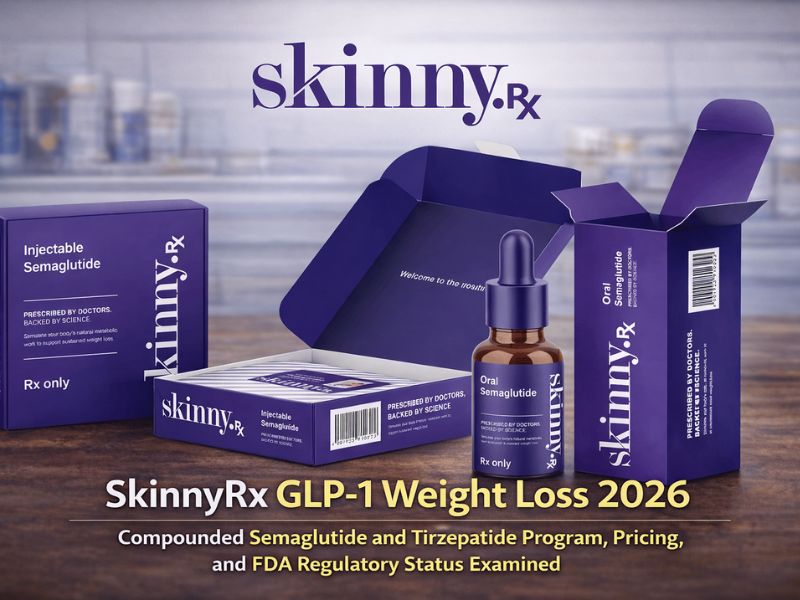
SkinnyRx GLP-1 Weight Loss 2026: Compounded Semaglutide and Tirzepatide Program, Pricing, and FDA Regulatory Status Examined

SkinnyRx GLP-1 Weight Loss 2026: Compounded Semaglutide and Tirzepatide Program, Pricing, and FDA Regulatory Status Examined


SkinnyRx GLP-1 Weight Loss 2026: Compounded Semaglutide and Tirzepatide Program, Pricing, and FDA Regulatory Status Examined

Examining SkinnyRx’s Compounded GLP-1 Weight Loss Platform for 2026: Semaglutide and Tirzepatide Medication Formats, Subscription Pricing From $199 Per Month, 503A Pharmacy Sourcing, Clinical Research Boundaries, and What Consumers Should Verify Before Enrolling in Any Telehealth Prescription Weight Loss Program

Sacramento, CA, Feb. 26, 2026 (GLOBE NEWSWIRE) — Disclaimer: This article is for informational purposes only and does not constitute medical advice. Weight management concerns should be evaluated by a qualified healthcare professional. Compounded GLP-1 medications are prescription medications that require evaluation by a licensed clinician. Prescription approval is not guaranteed. If you purchase through links in this article, a commission may be earned at no additional cost to you. This compensation does not influence the accuracy or integrity of the information presented.

If you’ve been researching GLP-1 medications for weight loss in 2026, you’re not alone. Search interest in prescription weight loss options has continued to climb year over year, and telehealth platforms offering compounded formulations have become one of the most talked-about access points for weight management. But with that growth comes real questions — about legitimacy, about regulatory status, and about whether a particular weight loss platform is appropriate for an individual’s circumstances, as determined through clinical evaluation.

This article is an independent informational overview and is not a recommendation or endorsement. Any program details are described as stated by the company and should be verified on the official site and with a licensed clinician. Compounded GLP-1 medications are not FDA-approved finished products, and outcomes are not guaranteed.

For those who want to explore the platform directly, view the current SkinnyRx offer (official SkinnyRx page).

SkinnyRx GLP-1 Weight Loss 2026_ Compounded Semaglutide and Tirzepatide Program, Pricing, and FDA Regulatory Status Examined

What SkinnyRx Is: Platform Classification and Compounding Status

SkinnyRx is a direct-to-consumer telehealth platform operated by Lean Rx, Inc., based in Sacramento, California. If you’ve seen their ads on social media or encountered their name while comparing GLP-1 options, the first thing worth understanding is what the platform actually is — and what it isn’t.

According to the company’s terms of service, Lean Rx, Inc. is not itself a healthcare provider. The platform facilitates connections between consumers and independent licensed medical providers who evaluate whether prescription GLP-1 medications are appropriate based on individual health information. That distinction matters, and it is covered in more detail in the three-entity section below.

The compounding distinction is important to understand upfront. SkinnyRx’s primary medication offerings are compounded formulations of semaglutide and tirzepatide. Compounded medications are not FDA-approved as finished products. They have not been reviewed by the FDA for safety, effectiveness, or quality as finished formulations. Compounded drugs are not generic equivalents of FDA-approved branded medications such as Wegovy, Ozempic, Zepbound, or Mounjaro.

According to SkinnyRx’s website, their compounded medications are prepared by state-licensed 503A pharmacies that are regulated by state boards of pharmacy and the FDA. These pharmacies prepare medications based on individual prescriptions under the direction of prescribing clinicians.

Regulatory Framework: What Has Changed for Compounded GLP-1 Access in 2026

This is arguably the most important section for anyone considering a compounded GLP-1 platform right now, because the landscape has shifted in ways that directly affect your options.

According to public FDA communications, the semaglutide drug shortage was officially resolved in February 2025, and tirzepatide was removed from the shortage list in October 2024. Under the Federal Food, Drug, and Cosmetic Act, compounding pharmacies are generally prohibited from producing drugs that are essentially copies of commercially available FDA-approved products, with limited exceptions under Section 503A when a prescriber determines that a patient’s medical needs cannot be met by an FDA-approved drug.

What this means for consumers: The regulatory environment that initially enabled widespread compounded GLP-1 access has narrowed. FDA communications in recent years have signaled increased scrutiny of certain non-FDA-approved GLP-1 offerings, and the permissibility of compounding can depend on patient-specific clinical need and evolving enforcement priorities. Regulatory status can change, so consumers should verify the current program structure and pharmacy sourcing before enrolling.

Consumers evaluating GLP-1 access in 2026 typically encounter multiple pathways with different regulatory status and oversight characteristics:

FDA-approved branded medications (Wegovy, Ozempic, Zepbound, Mounjaro) have undergone comprehensive FDA review for safety, efficacy, and manufacturing quality. These carry specific FDA-approved indications and extensive clinical trial data. Publicly reported cash-pay list prices for some branded GLP-1 medications can exceed $1,000 per month without insurance.

Compounded GLP-1 medications through telehealth platforms, including SkinnyRx, are prepared by licensed compounding pharmacies based on individual prescriptions. These are not FDA-approved as finished products and are not evaluated by the FDA as equivalent to branded medications.

In-person physician-prescribed treatment may include either branded or compounded medications and often provides more comprehensive monitoring, including lab work and physical examinations that telehealth-only models may not offer.

How the SkinnyRx Model Works: Three Separate Entities

One of the things that often confuses people about telehealth platforms is that the company name on the website, the doctor writing the prescription, and the pharmacy shipping the medication are typically three separate entities. Understanding this structure helps set realistic expectations about how the process works.

SkinnyRx (Lean Rx, Inc.) functions as the telehealth technology platform. According to the company’s terms of service, SkinnyRx itself is not a healthcare provider. The platform provides the technology infrastructure, customer service interface, and coordination that facilitates the telehealth experience. The company advertises 24/7 live support through the platform and a mobile application.

Licensed Medical Providers are independent healthcare professionals who review patient intake information and determine whether prescriptions are appropriate. The company states that all providers are based in the United States, licensed, and board certified. The platform cannot guarantee that any individual will receive a prescription, as that determination rests entirely with the evaluating clinician.

Partner Pharmacies fulfill prescriptions written by the medical providers. According to the company’s website, these are 503A pharmacies licensed by state boards of pharmacy and regulated by the FDA. The company states that free overnight shipping is available for fulfilled prescriptions.

This three-entity structure is common across telehealth platforms and ensures appropriate separation between the technology platform, clinical decision-making, and medication dispensing.

What SkinnyRx Offers: Available Medication Formats

One area where SkinnyRx differentiates itself is formulation variety. According to the company’s website, the platform offers compounded GLP-1 medications in multiple formats — which is relatively uncommon in the telehealth GLP-1 space. The company describes five primary medication options:

Compounded Injectable Semaglutide — a once-weekly injection format.

Compounded Sublingual Semaglutide — a daily liquid format.

Compounded Semaglutide Tablets — a daily oral tablet format.

Compounded Injectable Tirzepatide — a once-weekly injection format containing a dual GLP-1/GIP receptor agonist.

Compounded Tirzepatide Tablets — a daily oral tablet format containing tirzepatide.

Specific administration directions, dosing schedules, and format selection are determined by the prescribing clinician and the dispensing pharmacy’s instructions based on individual health evaluation. The company’s provider documentation describes differences between formats, including frequency and method of administration, but clinical decisions about which format is appropriate rest with the evaluating provider.

An important evidence boundary to understand here: While the active ingredients in these compounded formulations (semaglutide and tirzepatide) have been studied in FDA-approved branded forms, the specific compounded formulations offered through SkinnyRx have not been individually evaluated by the FDA for safety, effectiveness, or quality. This isn’t unusual for compounded medications generally, but it’s something consumers should factor into their decision-making.

What the Clinical Research Actually Shows — and What It Does Not

This is where it’s especially important to be precise, because there’s a meaningful distinction between what has been clinically studied and what SkinnyRx specifically offers.

Large clinical trials of FDA-approved branded injectable semaglutide (conducted under controlled conditions) reported substantial average weight reduction versus placebo over 68 weeks in some participants. This evidence relates to the branded, FDA-reviewed formulation studied in those trials and does not establish safety, effectiveness, or equivalence for compounded formulations, which are not FDA-approved finished products and may differ by concentration, excipients, and pharmacy-specific preparation.

According to publicly available company materials, SkinnyRx describes that weight changes may occur over time for some patients. These descriptions are informational only and are not a prediction or guarantee of results. Outcomes vary and depend on clinical factors, adherence, baseline health, and clinician-directed dosing.

The bottom line on evidence: Ingredient-level research has evaluated GLP-1 receptor agonists in FDA-approved branded forms under controlled clinical trial conditions. Product-level evidence for SkinnyRx’s specific compounded formulations does not exist in the same way it does for FDA-approved branded medications. That distinction is critical for informed decision-making.

Pricing and Program Structure

According to the company’s website as of February 26, 2026, SkinnyRx lists the following starting monthly prices by medication format:

Compounded Injectable Semaglutide: as low as $199 per month

Compounded Sublingual Semaglutide: as low as $199 per month

Compounded Semaglutide Tablets: as low as $249 per month

Compounded Injectable Tirzepatide: as low as $299 per month

Compounded Tirzepatide Tablets: as low as $299 per month

Pricing and program terms are subject to change and may vary based on clinical evaluation, dosing, and subscription terms. Consumers should verify the latest details directly on the official website before enrolling.

The company states that payment is processed after completing the pre-qualification quiz and selecting a medication format. The company states that if a provider determines a consumer does not qualify, a full refund is issued within 24 to 48 hours. SkinnyRx operates as a cash-pay platform and does not accept insurance, according to the company’s published terms. The company states it accepts major credit cards, FSA/HSA cards, and offers Buy Now, Pay Later financing options.

Subscription auto-renewal terms apply. According to the company’s terms, renewal may be charged up to five days before the start of the next subscription period. Consumers should review current cancellation policies, which are available on the official website and by contacting customer support. According to the company’s published refund terms, orders become non-refundable once the prescription has been completed and fulfillment has begun. Bundled subscriptions are non-refundable per the company’s stated terms.

Many direct-to-consumer compounded prescription products are not covered by traditional insurance plans, but coverage policies vary. Some HSA/FSA plans may reimburse qualifying medical expenses; verify eligibility with your plan administrator.

Safety Considerations

GLP-1 receptor agonists carry known side effect profiles that are worth understanding before beginning any treatment. The company’s materials reference both common gastrointestinal side effects and rarer serious risks discussed for GLP-1 medications generally. The company’s materials describe that some side effects may improve over time for some patients, but severity and timing vary. Consumers should review the complete safety information provided with any prescription and discuss side effects or warning signs directly with the prescribing clinician or pharmacist. For urgent or severe symptoms, seek appropriate medical care.

According to the company’s documentation, GLP-1 medications should not be used during pregnancy or breastfeeding. Any individual with existing health conditions should have these reviewed by the evaluating clinician before beginning treatment. This overview is not exhaustive and does not replace prescriber-provided safety information.

What Consumers Commonly Verify Before Enrolling

Consumers conducting due diligence on telehealth GLP-1 platforms often review several verification points:

Business registration: SkinnyRx is operated by Lean Rx, Inc., with a listed address at 2108 N St, Suite N, Sacramento, CA 95816, according to publicly available records and the company’s terms of service.

Pharmacy licensing: The company states its partner pharmacies are 503A facilities licensed by state boards of pharmacy and regulated by the FDA. Consumers may verify pharmacy licensing through their state board of pharmacy.

Provider licensing: According to the company, all providers are US-based, licensed, and board certified. Consumers may verify individual provider credentials through state medical boards.

Third-party review platforms: The company references reviews on Trustpilot. Consumers may review current ratings and feedback on independent review platforms and should consider that individual review experiences reflect personal circumstances.

Terms and refund policies: Cancellation and refund terms vary depending on the stage of the process. Consumers should review the current terms of service on the official website before enrolling.

Key Terminology for Consumers Researching GLP-1 Programs

Understanding a few terms helps cut through the noise when comparing platforms:

GLP-1 (Glucagon-Like Peptide-1): A hormone involved in appetite regulation and blood sugar management. GLP-1 receptor agonist medications mimic this hormone’s effects.

GIP (Glucose-Dependent Insulinotropic Polypeptide): A second hormone targeted by dual-action medications like tirzepatide, which acts on both GLP-1 and GIP receptors.

Compounded Medication: A medication prepared by a licensed compounding pharmacy based on an individual prescription. Compounded medications are not FDA-approved as finished products and have not been evaluated by the FDA for safety, effectiveness, or quality as finished formulations. Federal compounding frameworks are generally designed for patient-specific circumstances as determined by a licensed prescriber.

FDA-Approved Branded Medication: A medication that has undergone the FDA’s full review process for safety and efficacy (examples include Wegovy, Ozempic, Zepbound, and Mounjaro).

503A Pharmacy: A state-licensed compounding pharmacy regulated under Section 503A of the Federal Food, Drug, and Cosmetic Act. These pharmacies prepare patient-specific compounded prescriptions.

Telehealth Platform vs. Healthcare Provider: A telehealth platform (like SkinnyRx) provides the technology and coordination layer. It is not itself a healthcare provider. Medical decisions are made by independently licensed clinicians who use the platform.

Consumer Questions: What People Commonly Ask Before Enrolling

Is SkinnyRx a healthcare provider or a platform?

According to the company’s terms of service, SkinnyRx (Lean Rx, Inc.) is a telehealth technology platform. It is not a healthcare provider. Medical decisions and prescribing are handled by independent licensed clinicians. Verify this distinction on the company’s official terms of service.

What does “compounded” mean in this context?

Compounded medications are prepared by licensed pharmacies based on individual prescriptions. They use the same active ingredients found in branded products but are not FDA-approved as finished products. Federal compounding frameworks are generally designed for patient-specific circumstances, and consumers should discuss whether an FDA-approved option is appropriate with a licensed clinician.

Are the compounded medications the same as Ozempic or Wegovy?

According to publicly available information, they are not. The compounded versions contain the same active ingredient (semaglutide) but are prepared by compounding pharmacies and have not been evaluated by the FDA for bioequivalence to branded formulations. Differences in concentration, excipients, and preparation may exist.

What should consumers verify about the pharmacy?

The company states its partner pharmacies are 503A facilities licensed by state boards of pharmacy and regulated by the FDA. Consumers can verify pharmacy licensing through their state board of pharmacy.

What affects monthly pricing?

According to the company’s website, pricing varies by medication format and may be influenced by dosing, subscription terms, and clinical evaluation. Pricing is subject to change, and consumers should verify current details on the official site.

What happens if a prescription is not approved?

The company states that if a provider determines a consumer does not qualify, a full refund is issued within 24 to 48 hours. Verify current refund terms on the official website.

Does SkinnyRx accept insurance?

Per the company’s published terms, SkinnyRx operates as a cash-pay platform and does not accept insurance. The company states it accepts major credit cards, FSA/HSA cards, and Buy Now, Pay Later financing. Insurance coverage for compounded medications varies; verify eligibility with your plan administrator.

What is the current regulatory status of compounded GLP-1 medications?

The regulatory landscape for compounded GLP-1 access has shifted in recent years. Consumers should verify the current regulatory status of compounded GLP-1 access with their healthcare provider and the prescribing platform, as enforcement priorities and permissibility can change. Regulatory status is subject to change.

How does compounded telehealth compare to seeing a doctor in person?

Telehealth and in-person care differ in visit format, monitoring options, and follow-up structure. The appropriate pathway depends on individual health factors, which a licensed clinician can evaluate.

Can consumers cancel their subscription?

Per the company’s published terms, subscriptions can be canceled, but timing and refund eligibility depend on when cancellation occurs relative to the prescription and fulfillment process. Consumers should review cancellation terms on the official website before enrolling.

What is the difference between semaglutide and tirzepatide?

Semaglutide is a GLP-1 receptor agonist, while tirzepatide is a dual GLP-1 and GIP receptor agonist that targets two hormone pathways. Both have been studied in their FDA-approved branded forms under clinical trial conditions. The company offers compounded versions of both, and the prescribing clinician determines which medication is appropriate based on individual health evaluation. Compounded versions of either medication are not FDA-approved as finished products.

Who qualifies for SkinnyRx? What are the BMI requirements?

According to the company’s published eligibility criteria, the platform’s service is described as intended for adults with a BMI of 27 or higher. Specific eligibility, including whether a weight-related health condition is required, is determined by the evaluating clinician during the intake review process. Consumers who do not qualify are entitled to a full refund, according to the company.

Is SkinnyRx accredited by the BBB or LegitScript?

According to publicly available records, SkinnyRx has a listing with the Better Business Bureau. Consumers can review the company’s current BBB profile, including any filed complaints and business responses, directly on the BBB website. Consumers conducting due diligence may also check for current LegitScript certification status, which evaluates whether telehealth platforms meet recognized standards for online healthcare operations.

What is the difference between compounded injectable and tablet formats?

According to the company’s website, injectable formats are administered once weekly, while sublingual and tablet formats are taken daily. The formats differ in administration method, frequency, and how the active ingredient is absorbed. Research on FDA-approved branded versions has generally studied injectable forms most extensively. The prescribing clinician determines which format is appropriate based on individual patient factors; consumers should discuss format options during their clinical evaluation.

Additional Informational Resources on GLP-1 Telehealth Access

Consumers researching compounded GLP-1 access through telehealth platforms may find the following previously published informational analyses relevant to their evaluation:

SkinnyRx Platform Overview and Compounded Semaglutide Formulation Analysis: A detailed examination of SkinnyRx’s multi-format compounded semaglutide offerings, platform structure, and pricing model published in December 2025. The analysis covers the platform’s intake process, provider oversight structure, and medication format comparisons as described in publicly available company materials. Read the full informational analysis here.

FDA Regulatory Timeline and Compounded Tirzepatide Access Pathways: An industry-level examination of how the FDA’s tirzepatide shortage resolution reshaped compounded GLP-1 access in 2026, including a review of published SURMOUNT clinical trial data, the distinction between FDA-approved branded Zepbound and compounded alternatives, and an overview of how telehealth platforms describe their tirzepatide access pathways. Read the full informational analysis here.

Both analyses were published for informational purposes and are not endorsements or recommendations. Consumers should verify all program details, pricing, and regulatory status directly with the platform and their healthcare provider before making any decisions.

Summary of Key Considerations

SkinnyRx, operated by Lean Rx, Inc., offers a multi-format compounded GLP-1 telehealth program with published pricing, 24/7 support access, and licensed provider oversight, according to the company’s disclosures. The platform differentiates itself through formulation variety — including injectable, sublingual, and tablet options for both semaglutide and tirzepatide — which gives consumers and their prescribing clinicians more flexibility in selecting an administration method.

Before enrolling, most consumers weigh a few key factors: the compounded nature of the medications and their non-FDA-approved status as finished products; the evolving regulatory landscape for compounded GLP-1 medications in 2026; whether individual health considerations favor in-person medical evaluation instead; the cost sustainability of monthly subscription payments over a multi-month treatment timeline; and the platform’s specific cancellation and refund terms.

Regulatory context for 2026: The telehealth weight loss sector, and compounded GLP-1 access specifically, has been an area of increased regulatory attention. Consumers should review the most current information about any telehealth platform’s regulatory standing and medication sourcing before proceeding. Verify current program availability and terms directly with the company before enrolling.

For additional information on SkinnyRx’s current program, view the current SkinnyRx offer (official SkinnyRx page).

Contact Information

For questions before or during the enrollment process, according to the company’s website, SkinnyRx offers customer support:

Phone: 1 (888) 979-9580

Email: support@skinnyrx.com

Address: 2108 N St, Suite N, Sacramento, CA 95816

This informational overview was prepared by an independent digital publisher. The publisher may maintain a commercial relationship with the brand referenced.

Disclaimers

Medical and Content Disclaimer: This article is for informational purposes only and is not a substitute for professional medical advice, diagnosis, or treatment. The descriptions of potential benefits are not guarantees and are not a substitute for an individualized medical evaluation. GLP-1 medications discussed here are compounded prescription medications that require evaluation by a licensed clinician. If you are currently taking medications, have existing health conditions, are pregnant or nursing, or are considering any major changes to your health regimen, consult your physician before starting any new prescription treatment. Do not change, adjust, or discontinue any medications or prescribed treatments without your physician’s guidance and approval. The information provided here does not replace the professional judgment of your healthcare provider.

Compounded Medication and FDA Regulatory Notice: The medications discussed are compounded prescription medications prepared by licensed pharmacies based on individual prescriptions. Compounded medications are not reviewed or approved by the FDA as finished products. They are prepared using active ingredients under the direction of a prescribing clinician. Compounded drugs are not generic equivalents of FDA-approved branded medications. In general, federal compounding frameworks are designed for patient-specific circumstances as determined by a licensed prescriber. Consumers considering compounded medications should discuss whether an FDA-approved option is appropriate with a licensed clinician. As of February 2026, the FDA has resolved the semaglutide drug shortage and has signaled increased attention to certain non-FDA-approved GLP-1 offerings. The permissibility of compounding depends on patient-specific clinical need and evolving enforcement priorities. Consumers should verify the current regulatory status of compounded GLP-1 access with their healthcare provider and the prescribing platform. Regulatory status is subject to change.

Results, Pricing, and Insurance: Individual results will vary based on factors including age, baseline health condition, lifestyle factors, consistency of use, genetic factors, current medications, dosage progression, and other individual variables. Results are not guaranteed. Clinical trial data cited in this article pertains to FDA-approved branded formulations studied under controlled conditions and may not be representative of outcomes with compounded versions. All prices, subscription terms, and promotional offers mentioned were based on publicly available information at the time of publication (February 2026) and are subject to change without notice. Always verify current pricing and terms on the official SkinnyRx website before enrolling. SkinnyRx operates as a cash-pay platform and does not accept insurance, according to the company’s published terms. Some HSA/FSA plans may reimburse qualifying medical expenses; verify eligibility with your plan administrator.

FTC Affiliate Disclosure and Publisher Responsibility: This article contains affiliate links. If you purchase through these links, a commission may be earned at no additional cost to you. This compensation does not influence the accuracy, neutrality, or integrity of the information presented. All descriptions are based on publicly available information from the company’s official website, terms of service, and provider documentation. The publisher of this article has made every effort to ensure accuracy at the time of publication. We do not accept responsibility for errors, omissions, or outcomes resulting from the use of the information provided. Readers are encouraged to verify all details directly with SkinnyRx and their healthcare provider before making decisions.

CONTACT: Phone: 1 (888) 979-9580
Email: support@skinnyrx.com

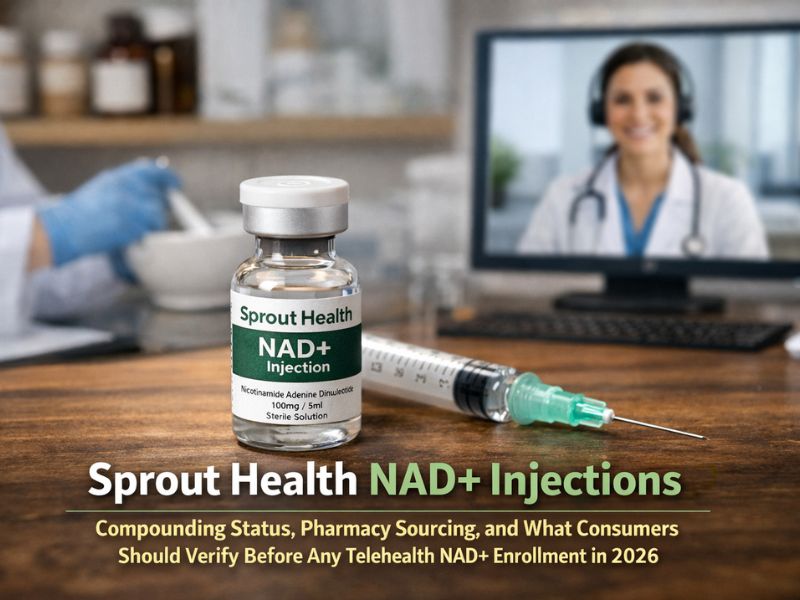
Sprout Health NAD+ Injections — Compounding Status, Pharmacy Sourcing, and What Consumers Should Verify Before Any Telehealth NAD+ Enrollment in 2026

Sprout Health NAD+ Injections — Compounding Status, Pharmacy Sourcing, and What Consumers Should Verify Before Any Telehealth NAD+ Enrollment in 2026


Sprout Health NAD+ Injections — Compounding Status, Pharmacy Sourcing, and What Consumers Should Verify Before Any Telehealth NAD+ Enrollment in 2026

Compounded NAD+ Telehealth Access, FDA Classification, Pharmacy Sourcing Standards, Prescription Requirements, and Consumer Verification Steps for Evaluating Any NAD+ Injection Program in 2026

Encinitas, CA, Feb. 26, 2026 (GLOBE NEWSWIRE) — Disclaimer: This article is for informational purposes only. It is not medical advice. Anti-aging, cellular health, and longevity concerns should be evaluated by a qualified healthcare professional. Compounded NAD+ is a prescription medication that requires evaluation by a licensed clinician. Prescription approval is not guaranteed. If you purchase through links in this article, a commission may be earned at no additional cost to you.

As consumer interest in NAD+ therapy and anti-aging telehealth programs continues to accelerate in 2026, individuals researching injectable nicotinamide adenine dinucleotide (NAD+) options are navigating a category with expanding access models and distinct regulatory considerations. One platform that appears frequently in that research process is Sprout Health NAD+ — a telehealth service operated by Sprout Health Partners LLC that connects consumers with licensed clinicians and partner compounding pharmacies for potential access to compounded NAD+ injections.

Sprout Health NAD+ Injections — Compounding Status, Pharmacy Sourcing, and What Consumers Should Verify Before Any Telehealth NAD+ Enrollment in 2026

Before discussing enrollment in any compounded NAD+ telehealth program with a clinician, there are regulatory, clinical, and platform-level details that are worth understanding clearly. This article walks through those details — not as a recommendation, but as the kind of informed verification framework that helps someone ask the right questions and confirm the right information before making a decision that directly involves their health.

A previously released regulatory and verification briefing examining Sprout Health’s compounded GLP-1 telehealth model provided a detailed framework for evaluating the platform’s weight loss program, FDA classification, and consumer due-diligence considerations. This article applies a similar verification framework to the company’s NAD+ anti-aging program specifically.

Consumers can review the company’s disclosures directly and view the current Sprout Health NAD+ program details (official Sprout Health page) for the most up-to-date information.

What This Product Is: Regulatory Classification First

This is the single most important starting point — and it warrants careful reading regardless of which compounded NAD+ product or telehealth platform someone may be evaluating.

Sprout Health NAD+ is a telehealth platform — not a healthcare provider, pharmacy, or drug manufacturer — that connects consumers with independent licensed clinicians and partner compounding pharmacies for potential access to compounded NAD+ injections. The company describes its program as supporting cellular health, energy, and recovery. Compounded NAD+ is a prescription medication, and prescription approval is not guaranteed.

Based on publicly available disclosures on the company’s website, Sprout Health Partners LLC operates the technology platform at joinsprouthealth.com. The platform provides the intake process, customer support, subscription management, and coordination between patients, providers, and pharmacies. The platform itself does not prescribe medications or make clinical decisions.

Here is the key classification distinction that matters most: compounded NAD+ injections are not FDA-approved finished products. They have not been reviewed by the FDA for safety, effectiveness, or quality as finished formulations. Compounded NAD+ is not equivalent to an FDA-approved drug product. Compounded medications are prepared by pharmacies based on individual prescriptions issued by licensed healthcare providers.

Regulatory Framework: What Compounded NAD+ Means Under FDA Guidelines

Pharmacy compounding is the practice of creating customized medications tailored to individual patient needs. Compounding pharmacies operate under federal and state regulations, and the practice is overseen by state pharmacy boards. Compounded medications are legally prescribed and dispensed in the United States when prepared by licensed pharmacies under the direction of a licensed prescriber.

The regulatory distinction from FDA-approved drugs is specific. FDA-approved medications undergo clinical trials evaluating the finished product’s safety and efficacy as a complete formulation. Compounded medications use active pharmaceutical ingredients but are not required to undergo separate clinical trials for the specific compounded version.

According to the company’s website, Sprout Health’s NAD+ injections are compounded in the United States by state-licensed pharmacies that follow FDA compounding guidelines. The company states that each batch is third-party tested in FDA- and DEA-registered labs. These statements are attributable to the company and have not been independently verified by the publisher of this article.

NAD+ as a therapeutic substance occupies a distinct regulatory position. Unlike compounded GLP-1 medications — which reference FDA-approved branded counterparts such as Ozempic and Wegovy — there is no widely marketed FDA-approved NAD+ injection product serving as a direct branded equivalent. This means the compounding framework for NAD+ operates under different market conditions than categories where FDA-approved alternatives are commercially available.

How the Telehealth Structure Works: Platform, Clinician, and Pharmacy

One of the most common points of confusion with telehealth prescription services — and one that really matters when someone is evaluating a platform for the first time — is understanding who actually does what. With Sprout Health, and with most telehealth prescription platforms, there are three separate entities involved. Knowing the distinction between them is more important than most people initially realize.

Sprout Health Partners LLC operates as the telehealth platform. According to the company’s terms of use, Sprout Health itself is not a healthcare provider. The platform provides the technology infrastructure, customer service, subscription management, and coordination that facilitates the telehealth experience. Sprout Health does not diagnose conditions, write prescriptions, or make clinical treatment decisions.

Licensed Medical Providers are independent healthcare professionals who review patient-submitted medical information and independently determine whether a prescription is clinically appropriate. The company states that these clinicians operate through MD Integrations (MDI), a physician network. In certain states, synchronous telehealth visits are required by state law. The platform cannot guarantee that any individual will receive a prescription — that determination rests entirely with the evaluating clinician.

Licensed Partner Pharmacies compound and dispense medications based on prescriptions written by the independent medical providers. According to the company’s terms and conditions, Sprout Health partners with Foothills Pharmacy and Promise Pharmacy. Some third-party sources report LegitScript certification for the platform; consumers can verify current certification status directly at legitscript.com/directory, which is LegitScript’s own public verification tool.

This three-entity structure — platform, prescriber, pharmacy — is standard across telehealth prescription services. It exists to maintain appropriate separation between technology facilitation, clinical judgment, and pharmaceutical dispensing.

What It Contains: NAD+ Formulation and Delivery Method

According to the company’s website, Sprout Health’s NAD+ program provides access to compounded NAD+ (nicotinamide adenine dinucleotide) injections delivered via subcutaneous injection — administered just under the skin, not into muscle or veins. Compounded NAD+ is a prescription medication. Prescription approval is not guaranteed.

The company states that each vial contains 1000 mg of sterile, preservative-free compounded NAD+, prepared in U.S. state-licensed compounding pharmacies. The platform describes the formulation as pharmacy-grade and third-party lab-tested. These characterizations are attributable to the company.

NAD+ is a coenzyme naturally found in every cell of the body. According to publicly available scientific literature, NAD+ plays a central role in cellular processes including mitochondrial energy production (ATP synthesis), DNA repair, gene expression regulation, and cell signaling. Research published in peer-reviewed journals has documented that NAD+ levels decline with age and in response to various metabolic stressors.

Important evidence boundary: While ingredient-level research on NAD+ as a molecule is published in scientific literature, these findings describe the biological role of NAD+ at the cellular and molecular level. They do not constitute clinical evidence that any specific compounded NAD+ injection product will produce particular health outcomes in individual consumers. The distinction between ingredient-level research and product-level clinical evidence is significant and should inform consumer expectations.

Delivery, Usage, and Program Structure

According to the company’s website, the NAD+ program follows a structured telehealth access model. The process begins with a free online consultation where a licensed provider reviews the consumer’s health information and determines whether NAD+ therapy is clinically appropriate. If a prescription is issued, a compounded NAD+ kit is shipped directly to the consumer.

If prescribed, the company states the medication is intended for at-home subcutaneous administration, with detailed instructions provided by the dispensing pharmacy and prescribing clinician. A complete home injection kit is included with the supplies needed to begin treatment. Consumers with questions about administration technique should consult their prescribing provider directly.

According to the company’s dosing guidance, prescribing providers determine the appropriate dosage and schedule. The company states that the recommended dosage is two injections per week at 1000 mg per vial. Consumers should follow their prescribing provider’s exact instructions regarding dosing frequency and amount.

The company states that orders are typically delivered within three to seven business days after prescription approval and processing. Monthly subscribers complete a refill medical questionnaire to allow the assigned clinician to evaluate progress and assess any potential side effects before issuing a subsequent prescription. Dosage adjustments are determined by the licensed clinician based on clinical assessment.

Individual responses to NAD+ therapy may vary depending on factors including age, baseline NAD+ levels, overall health status, lifestyle factors, adherence to the prescribed treatment plan, and individual metabolic response. No specific outcome is guaranteed.

Pricing Disclosures

Pricing and subscription structure are material consumer-disclosure points in telehealth programs and should be reviewed carefully before initiating any discussion with a clinician.

According to the company’s posted pricing at the time of this article, the NAD+ program is listed at $149 for the first month, with standard pricing of $240 per month on auto-renewal every four weeks thereafter. The company identifies this as the recommended dosage of two injections per week at the 1000 mg vial size. Pricing is subject to change; consumers should verify current pricing directly on the official website before beginning any treatment discussions. Compounded NAD+ is a prescription medication. Prescription approval is not guaranteed. Compounded medications are not FDA-approved finished products.

According to the company, each subscription includes a free initial consultation, compounded NAD+ medication, a complete home injection kit, free shipping, ongoing doctor access, and dedicated support. The company states that if a consumer is determined to be ineligible for NAD+ therapy during the initial consultation, no charge is incurred.

Sprout Health operates on a subscription basis that auto-renews every four weeks. The company does not accept or bill insurance for NAD+ therapy and accepts major debit and credit cards.

According to the company’s refund policy, prescription medications are non-refundable once processed by the partner pharmacy. Consumers are encouraged to review the complete terms and conditions before purchase.

Safety, Risks, and Limitations

While NAD+ is a naturally occurring coenzyme in the body, compounded injectable NAD+ therapy carries considerations that anyone thinking about this category should discuss with a qualified healthcare provider before getting started.

Potential side effects associated with injectable NAD+ may include injection site reactions such as redness, swelling, or discomfort. Some individuals may experience nausea, headache, fatigue, or flushing following administration. More information about individual risk factors should be obtained from the prescribing clinician.

Compounded medication-specific considerations include potential variability in formulation between batches, the importance of proper self-administration technique, and the need for appropriate storage conditions. The company states that vials should be kept refrigerated and stored away from children or pets.

Telehealth limitations also apply to this model. A telehealth evaluation may not capture all relevant clinical information that would be available in an in-person examination. Consumers with complex medical histories, multiple medications, or significant comorbidities should discuss NAD+ therapy with their primary care provider or specialist in addition to any telehealth evaluation.

Compounded NAD+ injections are not FDA-approved finished products and have not been reviewed by the FDA for safety, effectiveness, or quality as finished formulations. Any decision to prescribe, dose, or continue therapy is made by the licensed clinician based on the patient’s medical profile.

According to the company’s website, NAD+ therapy is not available to consumers in Arkansas, Kansas, or New Mexico due to state-specific restrictions. Additional state restrictions may apply. Consumers should verify current eligibility directly with the platform.

What Consumers Commonly Verify

For anyone doing their homework on a telehealth platform — especially one that involves compounded prescription medications — there are a handful of verification categories that tend to come up consistently. None of these replace professional medical advice, but they represent the kind of due-diligence steps that informed consumers typically take.

Business registration and entity verification: Consumers often verify whether the operating entity is registered and identifiable. According to the company’s terms and conditions, Sprout Health Partners LLC is the registered business entity, with Michigan identified as the governing law jurisdiction.

Clinician licensing and oversight: Consumers often verify whether prescribing clinicians are independently licensed. The company states that providers operate through the MD Integrations (MDI) physician network. Individual provider credentials can be verified through the relevant state medical board. Availability and licensing status can change; verification should be done through the issuing state licensing authority.

Pharmacy licensing and certification: Consumers often verify whether compounding pharmacies are state-licensed and hold third-party certifications. The company identifies Foothills Pharmacy and Promise Pharmacy as partners. Certification status can change; verification should be done through the issuing organization directly.

Third-party testing claims: The company states that each batch is third-party tested in FDA- and DEA-registered labs. Consumers may request specific certificate of analysis documentation from the dispensing pharmacy to independently confirm testing claims.

Terms, refund policies, and subscription structure: The company’s refund policy states that prescription medications are non-refundable once processed by the partner pharmacy. Consumers are encouraged to review the complete terms and conditions — including auto-renewal, cancellation, and refund provisions — before purchase.

How This Category Compares to Other NAD+ Access Models

Anyone exploring NAD+ therapy in 2026 will quickly discover that there are several different ways to access it — and each model comes with a different set of trade-offs in terms of regulatory status, cost, convenience, and clinical oversight. Understanding those differences makes it much easier to evaluate any individual platform in context.

IV NAD+ infusion clinics: In-person clinics administering NAD+ intravenously under direct clinical supervision. These typically involve higher per-session costs and require in-person attendance, but provide direct medical oversight during administration. IV delivery is a different administration route than subcutaneous injection.

Compounded NAD+ through telehealth platforms: Platforms facilitating access to compounded NAD+ injections prepared by licensed compounding pharmacies for at-home self-administration. This model may be perceived as more convenient for some consumers because it can involve at-home administration following a clinician evaluation; however, costs, oversight, and suitability vary widely by provider, pharmacy, dosage, and individual medical profile.

Oral NAD+ precursor supplements: Over-the-counter supplements containing NAD+ precursors such as nicotinamide riboside (NR) or nicotinamide mononucleotide (NMN), available without a prescription. These are dietary supplements regulated differently than compounded injectable products. According to publicly available research, oral bioavailability of NAD+ precursors differs from injectable delivery methods.

No specific platform or model is presented as superior. Each carries distinct trade-offs in cost, convenience, regulatory status, bioavailability, and level of clinical oversight.

What Regulators Mean by Compounding vs FDA Approval

This distinction comes up in virtually every conversation about compounded medications, and it is worth understanding clearly — not just for NAD+, but for any compounded prescription product accessed through a telehealth platform.

When the FDA approves a medication, that approval covers the complete finished product: the active ingredient, the inactive ingredients, the manufacturing process, the quality controls, and the specific labeling. The manufacturer submits clinical trial data demonstrating that the finished product is safe and effective for its intended use. The FDA then monitors the approved product through ongoing surveillance, adverse event reporting, and periodic facility inspections.

Compounded medications follow a different pathway. Under Section 503A of the Federal Food, Drug, and Cosmetic Act, licensed pharmacies may compound medications to fill individual prescriptions for patients whose needs cannot be met by commercially available FDA-approved products. Compounding pharmacies are regulated by state pharmacy boards and must comply with applicable federal guidelines, but compounded medications themselves are not independently reviewed by the FDA for safety, effectiveness, or quality as finished formulations.

This does not mean compounded medications are unregulated or inherently unsafe. It means they occupy a different regulatory category with different oversight mechanisms. Consumers evaluating any compounded medication — whether NAD+, GLP-1, hormone therapy, or other categories — should understand that the evidence base, quality assurance processes, and regulatory oversight differ meaningfully from FDA-approved products. A licensed healthcare provider is the appropriate resource for evaluating whether a compounded medication is clinically appropriate for an individual patient.

Questions To Ask Any NAD+ Telehealth Platform

Regardless of which NAD+ telehealth platform someone is evaluating, there are several questions that informed consumers commonly ask before committing to a subscription. These questions are not specific to any single company — they apply broadly to the category.

About the prescribing process: Who is the licensed clinician reviewing the medical intake? Are they independently licensed in the consumer’s state? Is the evaluation synchronous (live consultation) or asynchronous (questionnaire review)? What happens if the clinician determines that NAD+ therapy is not appropriate — is there a charge?

About the compounding pharmacy: Which pharmacy compounds the medication? Is the pharmacy state-licensed and operating under Section 503A or 503B of the FD&C Act? This varies by pharmacy and should be confirmed directly with the dispensing entity. Does the pharmacy hold any third-party certifications such as PCAB accreditation or LegitScript verification? Can the consumer request a certificate of analysis for their specific batch?

About the medication itself: What is the concentration and volume per vial? What are the inactive ingredients (excipients) in the formulation? Is the formulation preservative-free? What are the storage requirements, and how is temperature controlled during shipping?

About the subscription and financial terms: What is the auto-renewal cadence? What is the cancellation process? What is the refund policy if the prescription is not approved, or if medication has already been shipped? Are there price-lock guarantees, or can pricing change between renewal cycles?

About ongoing clinical oversight: How are dosage adjustments handled? Is there a medical questionnaire required before each refill? Can the consumer message their clinician directly between refill cycles? What should a consumer do if they experience side effects?

These questions are designed to help consumers conduct independent verification regardless of which platform they are considering. The answers should come directly from the platform, the prescribing clinician, and the dispensing pharmacy — not from marketing materials alone.

Evidence Boundaries

Consumers should understand the distinction between molecular-level research on NAD+ and product-level clinical evidence when evaluating any compounded NAD+ program. This distinction is not always made clear in marketing materials, which is exactly why it belongs in an independent verification framework like this one.

Molecular and preclinical evidence exists for the biological role of NAD+ in cellular function. Research published in peer-reviewed journals has documented the involvement of NAD+ in mitochondrial energy production, DNA repair through sirtuin and PARP enzyme pathways, and cellular signaling processes. Studies have also documented the age-related decline of NAD+ levels in human tissues.

Limited clinical trial evidence exists specifically evaluating injectable compounded NAD+ products in human subjects. While some clinical studies have examined NAD+ precursors (such as NR and NMN) and their effects on NAD+ bioavailability in humans, large-scale randomized controlled trials specifically evaluating the safety, efficacy, and optimal dosing of compounded injectable NAD+ for anti-aging or wellness outcomes remain limited in the published literature as of early 2026.

Product-level evidence does not exist for any specific compounded NAD+ injection product as prepared by compounding pharmacies. The biological research on NAD+ as a molecule should not be interpreted as clinical evidence that a specific compounded product will produce particular health outcomes.

Summary of Key Considerations

Sprout Health NAD+ operates as a telehealth platform connecting consumers with licensed clinicians and partner compounding pharmacies for potential access to compounded NAD+ injections. The platform is operated by Sprout Health Partners LLC.

Key considerations include the non-FDA-approved status of compounded NAD+ injections as finished products, the distinction between molecular research on NAD+ and the limited product-level clinical trial data available for compounded injectable formulations, the platform’s posted pricing of $149 for the first month with $240 per month on auto-renewal, and the self-administration model requiring consumers to perform subcutaneous injections at home. Prescription approval is not guaranteed. Compounded medications are not FDA-approved finished products.

Consumers interested in reviewing the platform’s current terms can view the current Sprout Health NAD+ program details (official Sprout Health page) for the latest program and pricing information.

Contact Information

For questions about Sprout Health NAD+, according to the company’s website:

Sprout Health Partners LLC

Website: https://joinsprouthealth.com

Email: help@joinsprouthealth.com

Phone: +1 (833) 496-4020

Hours: According to the company, support is available Monday through Friday, 9:00 a.m. to 5:30 p.m. Mountain Time.

Disclaimers

General Disclaimer: This article is for informational purposes only and does not constitute medical, financial, or professional advice. Individuals should consult a qualified healthcare provider before starting, stopping, or modifying any prescription medication regimen. If you purchase through links in this article, a commission may be earned at no additional cost to you.

Compounded Medication Notice: Compounded NAD+ injections are not FDA-approved finished products. They have not been reviewed by the FDA for safety, effectiveness, or quality as finished formulations. Compounded drugs are prepared by pharmacies based on individual prescriptions and are not generic equivalents of any FDA-approved branded medication. Compounded medications should only be used when determined clinically appropriate by a licensed healthcare provider.

Evidence Disclaimer: Scientific research cited in this article refers to published studies examining the biological role of NAD+ at the molecular and cellular level. These findings do not constitute clinical evidence that any specific compounded NAD+ injection product will produce particular health outcomes in individual consumers. Large-scale randomized controlled trials specifically evaluating compounded injectable NAD+ for anti-aging or wellness outcomes remain limited in published literature.

Results Disclaimer: Individual results may vary. Responses to NAD+ therapy depend on numerous factors including age, baseline NAD+ levels, overall health status, adherence to prescribed treatment, lifestyle factors, and individual metabolic response. No specific outcome is guaranteed.

CONTACT: Email: help@joinsprouthealth.com
Phone: +1 (833) 496-4020

Anteris Reports 2025 Financial Results and Provides Corporate Update

Anteris Reports 2025 Financial Results and Provides Corporate Update


Anteris Reports 2025 Financial Results and Provides Corporate Update

MINNEAPOLIS and BRISBANE, Australia, Feb. 26, 2026 (GLOBE NEWSWIRE) — Anteris Technologies Global Corp. (“Anteris” or the “Company”) (NASDAQ: AVR, ASX: AVR), a global structural heart company committed to designing, developing, and commercializing cutting-edge medical devices to restore healthy heart function, today reported financial results for the full year ended December 31, 2025, and provided a corporate update.

2025 Full Year Highlights & Recent Developments

  • Initiated the global pivotal PARADIGM Trial, building on experience from successfully treating 130 patients with the DurAVR® THV, including de novo (first time) aortic stenosis cases, complex anatomies and valve-in-valve patients
  • Received FDA Investigational Device Exemption (“IDE”) approval in the fourth quarter of 2025 to initiate the PARADIGM Trial in the United States
  • Reported favorable 30-day (100 patients) and 1-year (65 patients) DurAVR® THV clinical outcomes from rolling cohorts of small annuli, symptomatic severe aortic stenosis patients
  • Completed the first “double DurAVR®” implant in a patient receiving a valve-in-valve replacement in both the mitral and aortic valve positions
  • Strengthened operational infrastructure and advanced quality management system buildout while advancing manufacturing scale-up to support clinical activities, including ISO 13485 certification for DurAVR® THV production
  • Appointed David Roberts and Gregory Moss to serve as two new independent directors on the Board of Directors
  • Received approval from the Company’s stockholders for ASX Limited’s grant to the Company of a waiver from ASX Listing Rule 7.1
  • Completed aggregate capital raises totalling $320 million in early 2026, including a strategic investment from Medtronic, plc to support execution of the PARADIGM Trial and advance the Company toward global commercialization of the DurAVR® THV System

“2025 was a pivotal year for Anteris, advancing DurAVR® with disciplined execution, strengthening our clinical foundation, and positioning the company for long term leadership in structural heart. We converted strategy into measurable progress, reinforcing our competitive position and accelerating our path toward commercial readiness. The progress achieved in 2025 has strengthened our foundation and sharpened our trajectory toward becoming a leader in next-generation TAVR. We remained focused on what matters most; advancing clinical evidence, strengthening our balance sheet, and building sustainable long-term value,” said Wayne Paterson, Vice Chairman and Chief Executive Officer of Anteris.

2025 Financial Results

The financial results for Anteris for the year ended December 31, 2025, are presented below.

The Company’s net operating cash outflows for the year ended December 31, 2025, were $77.8 million, in line with the increase in clinical, regulatory and manufacturing requirements to support the PARADIGM Trial. Reflecting this clinical focus, the key areas of the Company’s operating expenditures for the year ended December 31, 2025, were as follows:

  • R&D expenses were $69.1 million and included the upscaling of manufacturing and quality capabilities, including process design and validation activities, an increase in R&D headcount, PARADIGM Trial preparatory activities, including clinical costs associated with the enrolment of additional patients and the scaling of our field-based clinical team, and expansion of our medical affairs activities, partially offset by lower DurAVR® THV product research costs as we shifted our focus to clinical, regulatory and manufacturing activities ahead of the PARADIGM Trial.
  • Selling, general and administrative expenses were $26.1 million.

Anteris refers to the detailed financial information contained in its Annual Report on Form 10-K for the fiscal year ended December 31, 2025, including the discussion under the headings “Item 1A. Risk Factors” and “Item 7. Management’s Discussion & Analysis of Financial Condition and Results of Operations.”

About the PARADIGM Trial

The PARADIGM Trial is a prospective randomized controlled trial which will evaluate the safety and effectiveness of the DurAVR® THV compared to commercially available transcatheter aortic valve replacements (“TAVRs”).

This head-to-head study will enroll approximately 1000 patients in the ‘All Comers Randomized Cohort’ with 1:1 randomization of patients who will receive either the DurAVR® THV or TAVR using commercially available and approved THVs. The PARADIGM Trial will assess non-inferiority on a primary composite endpoint of all-cause mortality, all stroke and cardiovascular hospitalization at one year post procedure.

The PARADIGM Trial is actively recruiting with the first patients enrolled and implanted during the fourth quarter of 2025. For further information, please refer to ClinicalTrials.gov NCT07194265.

About Anteris

Anteris Technologies Global Corp. (NASDAQ: AVR, ASX: AVR) is a global structural heart company committed to designing, developing, and commercializing cutting-edge medical devices to restore healthy heart function. Founded in Australia, with a significant presence in Minneapolis, USA, Anteris is a science-driven company with an experienced team of multidisciplinary professionals delivering restorative solutions to structural heart disease patients.

Anteris’ lead product, the DurAVR® Transcatheter Heart Valve (“THV”), was designed in collaboration with the world’s leading interventional cardiologists and cardiac surgeons to treat aortic stenosis – a potentially life-threatening condition resulting from the narrowing of the aortic valve. The balloon-expandable DurAVR® THV is the first biomimetic valve, which is shaped to mimic the performance of a healthy human aortic valve and aims to replicate normal aortic blood flow. DurAVR® THV is made using a single piece of molded ADAPT® tissue, Anteris’ patented anti-calcification tissue technology. ADAPT® tissue, which is FDA-cleared, has been used clinically for over 10 years and distributed for use in over 55,000 patients worldwide. The DurAVR® THV System is comprised of the DurAVR® valve, the ADAPT® tissue, and the balloon-expandable ComASUR® Delivery System.

Forward-Looking Statements

This announcement contains forward-looking statements. Forward-looking statements include all statements that are not historical facts. Forward-looking statements generally are identified by the words “believe,” “project,” “expect,” “anticipate,” “estimate,” “intend,” “budget,” “target,” “aim,” “strategy,” “plan,” “guidance,” “outlook,” “may,” “should,” “could,” “will,” “would,” “will be,” “will continue,” “will likely result” and similar expressions, although not all forward-looking statements contain these identifying words. These forward-looking statements are subject to a number of risks, uncertainties, and assumptions, including those described under “Risk Factors” in Anteris’ Annual Report on Form 10-K for the fiscal period ended December 31, 2025 that was filed with the Securities and Exchange Commission and ASX. Readers are cautioned not to put undue reliance on forward-looking statements, and except as required by law, Anteris does not assume any obligation to update any of these forward-looking statements to conform these statements to actual results or revised expectations.

For more information:

Global Investor Relations
investors@anteristech.com
Debbie Ormsby
Anteris Technologies Global Corp.
+61 1300 550 310 | +61 7 3152 3200
Investor Relations (US)
mchatterjee@bplifescience.com
Malini Chatterjee, Ph.D.
Blueprint Life Science Group
+1 917 330 4269
   
Website www.anteristech.com  
X @AnterisTech  
LinkedIn https://www.linkedin.com/company/anteristech  

Structure Therapeutics Reports Fourth Quarter and Full Year 2025 Financial Results and Recent Highlights

Structure Therapeutics Reports Fourth Quarter and Full Year 2025 Financial Results and Recent Highlights


Structure Therapeutics Reports Fourth Quarter and Full Year 2025 Financial Results and Recent Highlights

Positive results from the aleniglipron Phase 2 ACCESS programs in December 2025 demonstrated significant weight loss across all doses and up to 15.3% at 36 weeks

Topline 44-week data from the ACCESS II study with higher doses expected in Q1 2026 

Aleniglipron Phase 3 initiation expected in 2H 2026

Initial data from the ongoing Phase 1 study of oral small molecule amylin receptor agonist ACCG-2671 and Phase 1 initiation of second oral amylin compound ACCG-3535 expected in 2H 2026

Cash, cash equivalents and short-term investments of $1.4 billion as of December 31, 2025, expected to provide cash runway through the end of 2028

SAN FRANCISCO, Feb. 26, 2026 (GLOBE NEWSWIRE) — Structure Therapeutics Inc. (NASDAQ: GPCR), a clinical-stage global biopharmaceutical company developing novel oral small molecule therapeutics for metabolic diseases, with a focus on obesity, today reported financial results for the fourth quarter and full year ended December 31, 2025, and provided a business update.

“The obesity market is clearly embracing the introduction of new oral treatment options and Structure Therapeutics is well positioned to capture market share in this important therapeutic area,” said Raymond Stevens, Ph.D., CEO of Structure Therapeutics. “In 2025, we delivered positive Phase 2b 36-week data for aleniglipron and advanced ACCG-2671 our first oral small molecule amylin receptor agonist into the clinic. We completed a $748 million financing providing a strong financial balance sheet to continue advancing aleniglipron which has the potential to be best-in-class. Our broad portfolio positions us well in the evolving landscape that we believe will favor more accessible oral small molecules, extended maintenance treatment periods, and fixed dose combinations for specific patient populations and expanded indications. The upcoming 44-week data readout with higher doses in ACCESS II, expected in the first quarter, will provide a more complete profile of aleniglipron as we prepare for Phase 3 this year, with additional data readouts expected throughout 2026.”

Recent and Upcoming Milestones

Aleniglipron – Oral Small Molecule Selective Glucagon-Like Peptide 1 (GLP-1) Receptor Agonist for the Treatment of Obesity and Overweight

As reported in December 2025, data from the aleniglipron clinical program included 36-week data from the core Phase 2b ACCESS study and the exploratory ACCESS II study, as well as interim data from the Phase 2 body composition study and the Phase 2b ACCESS open label extension (OLE) study.

  • The Phase 2b ACCESS study demonstrated a placebo-adjusted mean weight loss of 11.3% with the 120 mg dose at 36 weeks. No plateau of weight loss was observed.
  • The exploratory ACCESS II study with higher doses of 180 mg and 240 mg demonstrated a placebo-adjusted mean weight loss of 15.3% with the 240 mg dose at 36 weeks. No plateau of weight loss was observed.
  • No adverse event-related treatment discontinuations were observed when utilizing the new lower starting titration dose of 2.5 mg in the ACCESS OLE and the Body Composition studies.

Data from the ACCESS, ACCESS II, Body Composition, and the ACCESS OLE studies provide a strong foundation for the decision to advance aleniglipron into Phase 3 clinical development. The Company expects to report topline results from the ACCESS II 44-week study in Q1 2026.

The Company has planned an End-of-Phase 2 meeting with the U.S. Food and Drug Administration (FDA) to align on a Phase 3 registrational program with a starting titration dose of 2.5 mg and the intent to evaluate multiple maintenance doses. The Company anticipates initiating the Phase 3 program in the second half of 2026.

Supplementary studies enhance competitive profile of aleniglipron:

  • Ongoing ACCESS OLE study to evaluate the tolerability of the 2.5 mg starting titration dose regimen for those participants rolling over from the placebo arm and to collect up to 72 weeks of data.
  • Ongoing study to assess the transition from an approved injectable GLP-1 receptor agonist to once-daily oral aleniglipron for weight loss maintenance. This study assesses different aleniglipron starting doses and weight loss maintenance over 12 weeks.
  • Ongoing body composition study to assess the effect of aleniglipron on body fat loss over a 40-week evaluation period, which includes a 28-week titration period and a starting dose of 2.5 mg. These data will be used to inform the inclusion of potential body composition endpoints and the appropriate number of participants for a sub-study within the Phase 3 program.
  • Ongoing 38-week study in patients with type 2 diabetes mellitus (T2DM) with obesity/overweight to evaluate the potential for including participants with T2DM in the Phase 3 obesity program.

Oral Small Molecule Amylin Receptor Agonists

  • In December 2025, Structure Therapeutics advanced ACCG-2671 into a Phase 1 clinical study as the industry’s most advanced oral small molecule amylin therapy for the treatment of obesity. ACCG-2671 is being evaluated in an ongoing single ascending dose (SAD) study to measure safety, tolerability, pharmacokinetics, and food-effect of single ascending doses of ACCG-2671 in healthy adult participants. Data are anticipated in the second half of 2026.
  • Structure Therapeutics declared a second oral small molecule dual amylin calcitonin receptor agonist development candidate, ACCG-3535. ACCG-3535, which has a unique chemical structure compared to ACCG-2671, demonstrated robust food intake suppression and significant, dose-dependent body weight reduction as a monotherapy in diet-induced obese rats. Combination therapy with semaglutide (both concurrently and as a subsequent add-on to semaglutide) resulted in superior weight loss compared to semaglutide or ACCG-3535 monotherapy. Structure Therapeutics expects to initiate a Phase 1 clinical study of ACCG-3535 in the second half of 2026.

Fourth Quarter and Full Year 2025 Financial Highlights

Cash Position: Cash, cash equivalents and short-term investments totaled $1.4 billion as of December 31, 2025. The Company expects its current cash, cash equivalents and short-term investments to fund projected operations and key clinical milestones through the end of 2028. This includes costs related to the ongoing aleniglipron ACCESS OLE, ACCESS II extension study, the supplementary studies, and Phase 3 registrational program in chronic weight management, but excludes additional costs related to pre-commercialization activities including commercial manufacturing.

Research and Development (R&D) Expenses: R&D expenses for the fourth quarter of 2025 were $68.7 million, as compared to $33.5 million for the same period in 2024. For the year ended December 31, 2025, R&D expenses were $225.3 million, as compared to $108.8 million for the full year 2024. The increase in R&D expenses was primarily due to increases related to clinical trial costs, preclinical research and development expenses and employee expenses (primarily due to an increase in personnel) to support the advancement of our GLP-1R franchise including aleniglipron and a milestone payment under our collaboration agreement.

General and Administrative (G&A) Expenses: G&A expenses for the fourth quarter of 2025 were $17.6 million, as compared to $13.6 million for the same period in 2024. For the year ended December 31, 2025, G&A expenses were $61.6 million, as compared to $49.4 million for the full year 2024. The increase in G&A expenses was primarily due to increases in employee expenses as we expanded our infrastructure to drive and support the growth in our operations.

Other license income: Other license income was $100.0 million for the fourth quarter of 2025 and the year ended December 31, 2025, consisting of income from the license of certain patents that cover a class of oral GLP-1 receptor agonists that is different from aleniglipron.

Gains on sale of non-financial assets: Gains on sale of non-financial assets was $10.2 million for the fourth quarter of 2025 and the year ended December 31, 2025, consisting of the sale of certain early-stage non-metabolic and non-obesity assets.

Net Income/Loss: Net income for the fourth quarter of 2025 totaled $33.0 million, with non-cash share-based compensation expense of $8.1 million, compared to a net loss of $36.5 million for the fourth quarter of 2024 with non-cash share-based compensation expense of $5.8 million. For the year ended December 31, 2025, net loss totaled $141.2 million, with non-cash share-based compensation expense of $29.0 million, compared to $122.5 million for the full year 2024 with non-cash share-based compensation expense of $18.8 million.

About Aleniglipron and Structure Therapeutics’ Oral Metabolic Franchise
Aleniglipron (GSBR-1290) is an investigational oral small molecule agonist of the GLP-1 receptor, a validated drug target for the treatment of obesity and T2DM. Through Structure Therapeutics’ structure-based drug discovery platform, aleniglipron was designed to be a biased G Protein-Coupled Receptor (GPCR) agonist, which selectively activates the G-protein signaling pathway. Beyond aleniglipron, Structure Therapeutics is developing next generation oral small molecules including amylin receptor agonists (ACCG-2671 and ACCG-3535), and other combination GLP-1 receptor agonists candidates targeting the glucose-dependent insulinotropic polypeptide (GIP), glucagon and apelin receptors.

About Structure Therapeutics
Structure Therapeutics is a science-driven clinical-stage biopharmaceutical company focused on discovering and developing innovative oral small molecule treatments for chronic metabolic conditions with significant unmet medical needs. Utilizing its next generation structure-based drug discovery platform, the Company has established a robust GPCR-targeted pipeline, featuring multiple wholly-owned proprietary clinical-stage oral small molecule compounds designed to surpass the scalability limitations of traditional biologic and peptide therapies and be accessible to more people living with obesity around the world. For additional information, please visit www.structuretx.com.

Forward- Looking Statements
This press release contains “forward-looking statements” within the meaning of the “safe harbor” provisions of the Private Securities Litigation Reform Act of 1995. All statements other than statements of historical fact are statements that could be deemed forward-looking statements, including, without limitation, statements concerning: the Company’s future plans and prospects; the expected timing of topline data readouts from the ACCESS II study; the planned initiation of the aleniglipron Phase 3 study and the timing thereof; the expected timing of initial data from the Phase 1 study of ACCG-2671; the Company’s anticipated cash runway and uses of cash; the belief that aleniglipron represents a potentially best-in-class small molecule GLP-1; the belief in market acceptance of oral treatment options for metabolic diseases and that Structure Therapeutics is well positioned; any expectations regarding the potential benefits, tolerability and safety profile, accessibility, scalability, combinability, capability, efficacy, convenience, expected effects and future application of aleniglipron; plans and the expected timing for the meeting with the FDA to finalize the Phase 3 trial design and the Phase 3 program initiation of aleniglipron; the planned initiation of the Phase 1 clinical study of ACCG-3535 and the timing thereof; and any presumption that topline, interim or preliminary data will be representative of final data or data in later clinical trials. In addition, when or if used in this press release, the words and phrases “anticipated,” “believe,” “expect,” “plan,” “potential,” “to be,” “will,” and similar expressions and their variants, as they relate to the Company may identify forward-looking statements. Forward-looking statements are neither historical facts nor assurances of future performance. Although the Company believes the expectations reflected in such forward-looking statements are reasonable, the Company can give no assurance that such expectations will prove to be correct. Readers are cautioned that actual results, levels of activity, safety, performance or events and circumstances could differ materially from those expressed or implied in the Company’s forward-looking statements due to a variety of risks and uncertainties, which include, without limitation: risks and uncertainties related to topline results that the Company reports are based on preliminary analysis of key efficacy and safety data, and such data may change following a more comprehensive review of the data related to the clinical trial and such topline data may not accurately reflect the complete results of a clinical trial, the preliminary nature of the results due to the length of the study and sample size and the results from earlier clinical studies not necessarily being predictive of future results; potential delays in the commencement, enrollment and completion of the Company’s planned clinical studies; the Company’s ability to advance aleniglipron, ACCG-2671, ANPA-0073, LTSE-2578, ACCG-3535, and its other therapeutic candidates, obtain regulatory approval of, and ultimately commercialize the Company’s therapeutic candidates; competitive products or approaches limiting the commercial value of the Company’s product candidates; the timing and results of preclinical and clinical studies; the Company’s ability to fund development activities and achieve development goals; the Company’s reliance on third parties, including clinical research organizations, manufacturers, suppliers and collaborators, over which it may not always have full control; general geopolitical and macroeconomic conditions, including as a result of tariffs and various global conflicts; the Company’s ability to protect its intellectual property; and other risks and uncertainties described in the Company’s filings with the Securities and Exchange Commission (SEC), including the Company’s latest Annual Report on Form 10-K and future reports the Company may file with the SEC from time to time. All forward-looking statements contained in this press release speak only as of the date on which they were made and are based on management’s assumptions and estimates as of such date. The Company undertakes no obligation to update such statements to reflect events that occur or circumstances that exist after the date on which they were made, except as required by law.

Investors:
Corey Davis, Ph.D.
LifeSci Advisors, LLC
212-915-2577
cdavis@lifesciadvisors.com

Jun Yoon
Structure Therapeutics Inc.
ir@structuretx.com

Media:
Dan Budwick
1AB
Dan@1abmedia.com

                       
STRUCTURE THERAPEUTICS INC.
Condensed Consolidated Statements of Operations
(unaudited)
(In thousands)
                       
  THREE MONTHS ENDED   YEAR ENDED
  DECEMBER 31,   DECEMBER 31,
  2025      2024      2025      2024
Operating expenses (income):                          
Research and development $ 68,689     $ 33,487     $ 225,255     $ 108,814  
General and administrative   17,571       13,574       61,554       49,414  
Other license income   (100,000 )     —       (100,000 )     —  
Gains on sale of non-financial assets   (10,249 )     —       (10,249 )     —  
Total operating (income) expenses   (23,989 )     47,061       176,560       158,228  
Income (loss) from operations   23,989       (47,061 )     (176,560 )     (158,228 )
Interest and other income, net   9,185       10,718       35,873       36,012  
Income (loss) before provision for income taxes   33,174       (36,343 )     (140,687 )     (122,216 )
Provision for income taxes   170       136       515       310  
Net income (loss) $ 33,004     $ (36,479 )   $ (141,202 )   $ (122,526 )
                       

STRUCTURE THERAPEUTICS INC.
Condensed Consolidated Balance Sheet Data
(unaudited)
(In thousands)
     
  DECEMBER 31,
  2025
  2024
Assets              
Current assets:              
Cash, cash equivalents and short-term investments $ 1,446,197     $ 883,518  
Prepaid expenses and other current assets   124,106       7,693  
Total current assets   1,570,303       891,211  
Property and equipment, net   6,653       3,478  
Operating right-of-use assets   6,245       3,535  
Other non-current assets   717       5,106  
Total assets $ 1,583,918     $ 903,330  
Liabilities and shareholders’ equity              
Current liabilities:              
Accounts payable $ 13,864     $ 8,024  
Accrued expenses and other current liabilities   46,543       26,299  
Operating lease liabilities, current portion   2,878       1,698  
Total current liabilities   63,285       36,021  
Operating lease liabilities, net of current portion   3,609       2,164  
Other non-current liabilities   647       302  
Total liabilities   67,541       38,487  
Total shareholders’ equity   1,516,377       864,843  
Total liabilities and shareholders’ equity $ 1,583,918     $ 903,330  
               

Structure Therapeutics Reports Fourth Quarter and Full Year 2025 Financial Results and Recent Highlights

Structure Therapeutics Reports Fourth Quarter and Full Year 2025 Financial Results and Recent Highlights


Structure Therapeutics Reports Fourth Quarter and Full Year 2025 Financial Results and Recent Highlights

Positive results from the aleniglipron Phase 2 ACCESS programs in December 2025 demonstrated significant weight loss across all doses and up to 15.3% at 36 weeks

Topline 44-week data from the ACCESS II study with higher doses expected in Q1 2026 

Aleniglipron Phase 3 initiation expected in 2H 2026

Initial data from the ongoing Phase 1 study of oral small molecule amylin receptor agonist ACCG-2671 and Phase 1 initiation of second oral amylin compound ACCG-3535 expected in 2H 2026

Cash, cash equivalents and short-term investments of $1.4 billion as of December 31, 2025, expected to provide cash runway through the end of 2028

SAN FRANCISCO, Feb. 26, 2026 (GLOBE NEWSWIRE) — Structure Therapeutics Inc. (NASDAQ: GPCR), a clinical-stage global biopharmaceutical company developing novel oral small molecule therapeutics for metabolic diseases, with a focus on obesity, today reported financial results for the fourth quarter and full year ended December 31, 2025, and provided a business update.

“The obesity market is clearly embracing the introduction of new oral treatment options and Structure Therapeutics is well positioned to capture market share in this important therapeutic area,” said Raymond Stevens, Ph.D., CEO of Structure Therapeutics. “In 2025, we delivered positive Phase 2b 36-week data for aleniglipron and advanced ACCG-2671 our first oral small molecule amylin receptor agonist into the clinic. We completed a $748 million financing providing a strong financial balance sheet to continue advancing aleniglipron which has the potential to be best-in-class. Our broad portfolio positions us well in the evolving landscape that we believe will favor more accessible oral small molecules, extended maintenance treatment periods, and fixed dose combinations for specific patient populations and expanded indications. The upcoming 44-week data readout with higher doses in ACCESS II, expected in the first quarter, will provide a more complete profile of aleniglipron as we prepare for Phase 3 this year, with additional data readouts expected throughout 2026.”

Recent and Upcoming Milestones

Aleniglipron – Oral Small Molecule Selective Glucagon-Like Peptide 1 (GLP-1) Receptor Agonist for the Treatment of Obesity and Overweight

As reported in December 2025, data from the aleniglipron clinical program included 36-week data from the core Phase 2b ACCESS study and the exploratory ACCESS II study, as well as interim data from the Phase 2 body composition study and the Phase 2b ACCESS open label extension (OLE) study.

  • The Phase 2b ACCESS study demonstrated a placebo-adjusted mean weight loss of 11.3% with the 120 mg dose at 36 weeks. No plateau of weight loss was observed.
  • The exploratory ACCESS II study with higher doses of 180 mg and 240 mg demonstrated a placebo-adjusted mean weight loss of 15.3% with the 240 mg dose at 36 weeks. No plateau of weight loss was observed.
  • No adverse event-related treatment discontinuations were observed when utilizing the new lower starting titration dose of 2.5 mg in the ACCESS OLE and the Body Composition studies.

Data from the ACCESS, ACCESS II, Body Composition, and the ACCESS OLE studies provide a strong foundation for the decision to advance aleniglipron into Phase 3 clinical development. The Company expects to report topline results from the ACCESS II 44-week study in Q1 2026.

The Company has planned an End-of-Phase 2 meeting with the U.S. Food and Drug Administration (FDA) to align on a Phase 3 registrational program with a starting titration dose of 2.5 mg and the intent to evaluate multiple maintenance doses. The Company anticipates initiating the Phase 3 program in the second half of 2026.

Supplementary studies enhance competitive profile of aleniglipron:

  • Ongoing ACCESS OLE study to evaluate the tolerability of the 2.5 mg starting titration dose regimen for those participants rolling over from the placebo arm and to collect up to 72 weeks of data.
  • Ongoing study to assess the transition from an approved injectable GLP-1 receptor agonist to once-daily oral aleniglipron for weight loss maintenance. This study assesses different aleniglipron starting doses and weight loss maintenance over 12 weeks.
  • Ongoing body composition study to assess the effect of aleniglipron on body fat loss over a 40-week evaluation period, which includes a 28-week titration period and a starting dose of 2.5 mg. These data will be used to inform the inclusion of potential body composition endpoints and the appropriate number of participants for a sub-study within the Phase 3 program.
  • Ongoing 38-week study in patients with type 2 diabetes mellitus (T2DM) with obesity/overweight to evaluate the potential for including participants with T2DM in the Phase 3 obesity program.

Oral Small Molecule Amylin Receptor Agonists

  • In December 2025, Structure Therapeutics advanced ACCG-2671 into a Phase 1 clinical study as the industry’s most advanced oral small molecule amylin therapy for the treatment of obesity. ACCG-2671 is being evaluated in an ongoing single ascending dose (SAD) study to measure safety, tolerability, pharmacokinetics, and food-effect of single ascending doses of ACCG-2671 in healthy adult participants. Data are anticipated in the second half of 2026.
  • Structure Therapeutics declared a second oral small molecule dual amylin calcitonin receptor agonist development candidate, ACCG-3535. ACCG-3535, which has a unique chemical structure compared to ACCG-2671, demonstrated robust food intake suppression and significant, dose-dependent body weight reduction as a monotherapy in diet-induced obese rats. Combination therapy with semaglutide (both concurrently and as a subsequent add-on to semaglutide) resulted in superior weight loss compared to semaglutide or ACCG-3535 monotherapy. Structure Therapeutics expects to initiate a Phase 1 clinical study of ACCG-3535 in the second half of 2026.

Fourth Quarter and Full Year 2025 Financial Highlights

Cash Position: Cash, cash equivalents and short-term investments totaled $1.4 billion as of December 31, 2025. The Company expects its current cash, cash equivalents and short-term investments to fund projected operations and key clinical milestones through the end of 2028. This includes costs related to the ongoing aleniglipron ACCESS OLE, ACCESS II extension study, the supplementary studies, and Phase 3 registrational program in chronic weight management, but excludes additional costs related to pre-commercialization activities including commercial manufacturing.

Research and Development (R&D) Expenses: R&D expenses for the fourth quarter of 2025 were $68.7 million, as compared to $33.5 million for the same period in 2024. For the year ended December 31, 2025, R&D expenses were $225.3 million, as compared to $108.8 million for the full year 2024. The increase in R&D expenses was primarily due to increases related to clinical trial costs, preclinical research and development expenses and employee expenses (primarily due to an increase in personnel) to support the advancement of our GLP-1R franchise including aleniglipron and a milestone payment under our collaboration agreement.

General and Administrative (G&A) Expenses: G&A expenses for the fourth quarter of 2025 were $17.6 million, as compared to $13.6 million for the same period in 2024. For the year ended December 31, 2025, G&A expenses were $61.6 million, as compared to $49.4 million for the full year 2024. The increase in G&A expenses was primarily due to increases in employee expenses as we expanded our infrastructure to drive and support the growth in our operations.

Other license income: Other license income was $100.0 million for the fourth quarter of 2025 and the year ended December 31, 2025, consisting of income from the license of certain patents that cover a class of oral GLP-1 receptor agonists that is different from aleniglipron.

Gains on sale of non-financial assets: Gains on sale of non-financial assets was $10.2 million for the fourth quarter of 2025 and the year ended December 31, 2025, consisting of the sale of certain early-stage non-metabolic and non-obesity assets.

Net Income/Loss: Net income for the fourth quarter of 2025 totaled $33.0 million, with non-cash share-based compensation expense of $8.1 million, compared to a net loss of $36.5 million for the fourth quarter of 2024 with non-cash share-based compensation expense of $5.8 million. For the year ended December 31, 2025, net loss totaled $141.2 million, with non-cash share-based compensation expense of $29.0 million, compared to $122.5 million for the full year 2024 with non-cash share-based compensation expense of $18.8 million.

About Aleniglipron and Structure Therapeutics’ Oral Metabolic Franchise
Aleniglipron (GSBR-1290) is an investigational oral small molecule agonist of the GLP-1 receptor, a validated drug target for the treatment of obesity and T2DM. Through Structure Therapeutics’ structure-based drug discovery platform, aleniglipron was designed to be a biased G Protein-Coupled Receptor (GPCR) agonist, which selectively activates the G-protein signaling pathway. Beyond aleniglipron, Structure Therapeutics is developing next generation oral small molecules including amylin receptor agonists (ACCG-2671 and ACCG-3535), and other combination GLP-1 receptor agonists candidates targeting the glucose-dependent insulinotropic polypeptide (GIP), glucagon and apelin receptors.

About Structure Therapeutics
Structure Therapeutics is a science-driven clinical-stage biopharmaceutical company focused on discovering and developing innovative oral small molecule treatments for chronic metabolic conditions with significant unmet medical needs. Utilizing its next generation structure-based drug discovery platform, the Company has established a robust GPCR-targeted pipeline, featuring multiple wholly-owned proprietary clinical-stage oral small molecule compounds designed to surpass the scalability limitations of traditional biologic and peptide therapies and be accessible to more people living with obesity around the world. For additional information, please visit www.structuretx.com.

Forward- Looking Statements
This press release contains “forward-looking statements” within the meaning of the “safe harbor” provisions of the Private Securities Litigation Reform Act of 1995. All statements other than statements of historical fact are statements that could be deemed forward-looking statements, including, without limitation, statements concerning: the Company’s future plans and prospects; the expected timing of topline data readouts from the ACCESS II study; the planned initiation of the aleniglipron Phase 3 study and the timing thereof; the expected timing of initial data from the Phase 1 study of ACCG-2671; the Company’s anticipated cash runway and uses of cash; the belief that aleniglipron represents a potentially best-in-class small molecule GLP-1; the belief in market acceptance of oral treatment options for metabolic diseases and that Structure Therapeutics is well positioned; any expectations regarding the potential benefits, tolerability and safety profile, accessibility, scalability, combinability, capability, efficacy, convenience, expected effects and future application of aleniglipron; plans and the expected timing for the meeting with the FDA to finalize the Phase 3 trial design and the Phase 3 program initiation of aleniglipron; the planned initiation of the Phase 1 clinical study of ACCG-3535 and the timing thereof; and any presumption that topline, interim or preliminary data will be representative of final data or data in later clinical trials. In addition, when or if used in this press release, the words and phrases “anticipated,” “believe,” “expect,” “plan,” “potential,” “to be,” “will,” and similar expressions and their variants, as they relate to the Company may identify forward-looking statements. Forward-looking statements are neither historical facts nor assurances of future performance. Although the Company believes the expectations reflected in such forward-looking statements are reasonable, the Company can give no assurance that such expectations will prove to be correct. Readers are cautioned that actual results, levels of activity, safety, performance or events and circumstances could differ materially from those expressed or implied in the Company’s forward-looking statements due to a variety of risks and uncertainties, which include, without limitation: risks and uncertainties related to topline results that the Company reports are based on preliminary analysis of key efficacy and safety data, and such data may change following a more comprehensive review of the data related to the clinical trial and such topline data may not accurately reflect the complete results of a clinical trial, the preliminary nature of the results due to the length of the study and sample size and the results from earlier clinical studies not necessarily being predictive of future results; potential delays in the commencement, enrollment and completion of the Company’s planned clinical studies; the Company’s ability to advance aleniglipron, ACCG-2671, ANPA-0073, LTSE-2578, ACCG-3535, and its other therapeutic candidates, obtain regulatory approval of, and ultimately commercialize the Company’s therapeutic candidates; competitive products or approaches limiting the commercial value of the Company’s product candidates; the timing and results of preclinical and clinical studies; the Company’s ability to fund development activities and achieve development goals; the Company’s reliance on third parties, including clinical research organizations, manufacturers, suppliers and collaborators, over which it may not always have full control; general geopolitical and macroeconomic conditions, including as a result of tariffs and various global conflicts; the Company’s ability to protect its intellectual property; and other risks and uncertainties described in the Company’s filings with the Securities and Exchange Commission (SEC), including the Company’s latest Annual Report on Form 10-K and future reports the Company may file with the SEC from time to time. All forward-looking statements contained in this press release speak only as of the date on which they were made and are based on management’s assumptions and estimates as of such date. The Company undertakes no obligation to update such statements to reflect events that occur or circumstances that exist after the date on which they were made, except as required by law.

Investors:
Corey Davis, Ph.D.
LifeSci Advisors, LLC
212-915-2577
cdavis@lifesciadvisors.com

Jun Yoon
Structure Therapeutics Inc.
ir@structuretx.com

Media:
Dan Budwick
1AB
Dan@1abmedia.com

                       
STRUCTURE THERAPEUTICS INC.
Condensed Consolidated Statements of Operations
(unaudited)
(In thousands)
                       
  THREE MONTHS ENDED   YEAR ENDED
  DECEMBER 31,   DECEMBER 31,
  2025      2024      2025      2024
Operating expenses (income):                          
Research and development $ 68,689     $ 33,487     $ 225,255     $ 108,814  
General and administrative   17,571       13,574       61,554       49,414  
Other license income   (100,000 )     —       (100,000 )     —  
Gains on sale of non-financial assets   (10,249 )     —       (10,249 )     —  
Total operating (income) expenses   (23,989 )     47,061       176,560       158,228  
Income (loss) from operations   23,989       (47,061 )     (176,560 )     (158,228 )
Interest and other income, net   9,185       10,718       35,873       36,012  
Income (loss) before provision for income taxes   33,174       (36,343 )     (140,687 )     (122,216 )
Provision for income taxes   170       136       515       310  
Net income (loss) $ 33,004     $ (36,479 )   $ (141,202 )   $ (122,526 )
                       

STRUCTURE THERAPEUTICS INC.
Condensed Consolidated Balance Sheet Data
(unaudited)
(In thousands)
     
  DECEMBER 31,
  2025
  2024
Assets              
Current assets:              
Cash, cash equivalents and short-term investments $ 1,446,197     $ 883,518  
Prepaid expenses and other current assets   124,106       7,693  
Total current assets   1,570,303       891,211  
Property and equipment, net   6,653       3,478  
Operating right-of-use assets   6,245       3,535  
Other non-current assets   717       5,106  
Total assets $ 1,583,918     $ 903,330  
Liabilities and shareholders’ equity              
Current liabilities:              
Accounts payable $ 13,864     $ 8,024  
Accrued expenses and other current liabilities   46,543       26,299  
Operating lease liabilities, current portion   2,878       1,698  
Total current liabilities   63,285       36,021  
Operating lease liabilities, net of current portion   3,609       2,164  
Other non-current liabilities   647       302  
Total liabilities   67,541       38,487  
Total shareholders’ equity   1,516,377       864,843  
Total liabilities and shareholders’ equity $ 1,583,918     $ 903,330  
               

DeepHealth Achieves CE Mark for TechLive™ and Enables AWS Marketplace Deployment, Advancing Global Expansion of Multimodality Vendor-Agnostic Remote Scanning Solution

DeepHealth Achieves CE Mark for TechLive™ and Enables AWS Marketplace Deployment, Advancing Global Expansion of Multimodality Vendor-Agnostic Remote Scanning Solution


DeepHealth Achieves CE Mark for TechLive™ and Enables AWS Marketplace Deployment, Advancing Global Expansion of Multimodality Vendor-Agnostic Remote Scanning Solution

SOMERVILLE, Mass., Feb. 26, 2026 (GLOBE NEWSWIRE) — DeepHealth, Inc., a global leader in AI-powered health informatics and a wholly owned subsidiary of RadNet, Inc. (NASDAQ: RDNT), today announced that TechLive™, its FDA-cleared remote imaging and radiology management solution, has achieved CE marking, enabling European commercialization of the industry’s first solution that extends oversight across MR, CT, PET/CT and ultrasound. Designed to expand imaging capacity and access to complex procedures, TechLive enables European healthcare providers to more effectively manage workforce needs and expand access to advanced imaging. Additionally, TechLive is now listed in AWS Marketplace to streamline access and accelerate deployment timelines worldwide.

“Healthcare systems worldwide are facing rising demand for complex imaging amid sustained workforce pressures. In Europe, staff shortages have reached critical levels in multiple markets, straining capacity and limiting patient access1,” said Madhu Jahagirdar, Head of Product and Platforms, Enterprise Imaging, DeepHealth. “TechLive reflects our deep understanding of these realities. By enabling certified experts to operate across physical boundaries and multiple modalities, we are helping providers expand capacity and ensure patients can receive timely, high-quality care regardless of location.”

TechLive is a multimodality, vendor-agnostic remote scanning and radiology management solution extending expert oversight across multiple modalities. Its comprehensive, consolidated interface gives remote technologists the right tools and context in one view, uniting console controls, patient monitoring and injector visualization on a single screen, with proven performance across large, multi-site operations.

With CE mark certification, TechLive expands its global footprint, building on strong customer momentum in the U.S. Within RadNet, TechLive’s largest customer, TechLive has connected more than 400 scanners, delivering measurable improvements including a 42% reduction in MR room closures hours2 and a 27% increase in access to complex procedures.3

“TechLive helps us operate more efficiently every day,” said Vickie Bedel, Senior Vice President and Chief Digital Operations Officer at RadNet. “With seamless access to technologists, often at a moment’s notice, our teams can respond quickly to changing demand and perform exams across our network of centers. Ultimately, TechLive enables our teams to deliver high-quality imaging care for more patients.”

As healthcare organizations modernize imaging infrastructure, deployment complexity and IT readiness remain key barriers to adopting new technologies. By listing TechLive in AWS Marketplace, DeepHealth streamlines procurement, purchasing, and deployment, leveraging AWS’s secure, scalable infrastructure to reduce implementation friction, accelerate time to value, and align with enterprise IT strategies.

DeepHealth will showcase TechLive alongside its comprehensive integrated portfolio of AI-powered suites of solutions and services during the 2026 European Congress of Radiology (ECR) taking place March 4-8 in Vienna, Austria, at Booth No. 506 in the X5 hall.

About DeepHealth 
DeepHealth is a wholly owned subsidiary of RadNet, Inc. (NASDAQ: RDNT) and serves as the umbrella brand for RadNet’s Digital Health segment. DeepHealth provides AI-powered health informatics with the aim of empowering breakthroughs in care through imaging. DeepHealth leverages advanced AI for operational efficiency and improved clinical outcomes in breast, chest, neuro, prostate and thyroid health. At the heart of DeepHealth’s portfolio is a cloud-native operating system – DeepHealth OS – that unifies data across the clinical and operational workflow and personalizes AI-powered workspaces for everyone in the radiology continuum. Thousands of imaging centers and radiology departments around the world use DeepHealth solutions to enable earlier, more reliable and more efficient disease detection, including in large-scale cancer screening programs. DeepHealth’s human-centered, intuitive technology aims to push the boundaries of what’s possible in healthcare. Learn more at deephealth.com.

About RadNet, Inc. 
RadNet, Inc. is a leading national provider of freestanding, fixed-site diagnostic imaging services in the United States based on the number of locations and annual imaging revenue. RadNet has a network of owned and/or operated outpatient imaging centers. RadNet’s markets include Arizona, California, Delaware, Florida, Indiana, Maryland, New Jersey, New York and Texas. In addition, RadNet provides radiology information technology and artificial intelligence solutions marketed under the DeepHealth brand, teleradiology professional services and other related products and services to customers in the diagnostic imaging industry. Together with contracted radiologists, and inclusive of full-time and per diem employees and technologists, RadNet has over 11,000 team members. Learn more at radnet.com.

Forward-Looking Statements
This communication contains certain “forward-looking statements” within the meaning of the safe harbour provisions of the U.S. Private Securities Litigation Reform Act of 1995, Section 27A of the Securities Act of 1933, as amended, and Section 21E of the Securities Exchange Act of 1934, as amended. Forward-looking statements can be identified by words such as: “anticipate,” “believe,” “could,” “estimate,” “expect,” “forecast,” “intend,” “may,” “outlook,” “plan,” “potential,” “possible,” “predict,” “project,” “seek,” “should,” “target,” “will” or “would,” the negative of these words, and similar references to future periods. Examples of forward-looking statements include statements regarding our technology’s ability to address critical workforce shortages and operational challenges, our technology’s ability to remove barriers that have historically slowed the adoption of remote scanning technology, and discussions regarding our product features. Actual results could differ materially from those currently anticipated due to a number of risks and uncertainties, many of which are beyond RadNet’s control.

Forward-looking statements are neither historical facts nor assurances of future performance. Instead, they are based only on management’s current beliefs, expectations and assumptions regarding the future of RadNet’s business, future plans and strategies, projections, anticipated events and trends, the economy and other future conditions. Because forward-looking statements relate to the future, they are subject to inherent uncertainties, risks and changes in circumstances that are difficult to predict and many of which are outside of RadNet’s control. RadNet’s actual results and financial condition may differ materially from those indicated in the forward-looking statements as a result of various factors. Neither RadNet, nor any of its directors, executive officers, or advisors, provide any representation, assurance or guarantee that the occurrence of the events expressed or implied in any forward-looking statements will actually occur, or if any of them do occur, what impact they will have on the business, results of operations or financial condition of RadNet. Should any risks and uncertainties develop into actual events, these developments could have a material adverse effect on RadNet’s business and the ability to realize the expected benefits of the acquisition. Risks and uncertainties that could cause results to differ from expectations include, but are not limited to: (1) the ability to recognize the anticipated benefits of the technology, and (2) the risk of legislative, regulatory, economic, competitive, and technological changes, and other risks and uncertainties described in the “Risk Factors,” “Management’s Discussion and Analysis,” and other sections of our filings with the Securities and Exchange Commission, including our most recent Annual Report on Form 10-K and Quarterly Reports on Form 10-Q. The foregoing review of important factors should not be construed as exhaustive and should be read in conjunction with the other cautionary statements that are included elsewhere. Additional information concerning risks, uncertainties and assumptions can be found in RadNet’s filings with the Securities and Exchange Commission (the “SEC”), including the risk factors discussed in RadNet’s most recent Annual Report on Form 10-K, as updated by its Quarterly Reports on Form 10-Q and future filings with the SEC.

Forward-looking statements included herein are made only as of the date hereof and, except as required by applicable law, RadNet does not undertake any obligation to update any forward-looking statements, or any other information in this communication, as a result of new information, future developments or otherwise, or to correct any inaccuracies or omissions in them which become apparent. All forward-looking statements in this communication are qualified in their entirety by this cautionary statement.

DeepHealth Media Contact
Andra Axente
Director of Communications
+31614440971
andra.axente@deephealth.com

RadNet Media Contacts 
Jane Mazur 
Senior Vice President, Corporate Communications
+1 585-355-5978 
jane.mazur@radnet.com 

Mark Stolper
Executive Vice President and Chief Financial Officer
+1 310-445-2800

References
      1)   F. Zarb, J.P. McNulty, “Assessment of workforce availability, staffing, and education, and training requirements for radiographers across Europe as part of EU-REST project,” Radiography, August 2025.
      2)   Data on file. In a pilot deployment at 64 locations inside of RadNet’s New York area facilities, TechLive™ significantly contributed to a 42% decrease in MR room closure hours during the second quarter of 2025 as compared with the same period in 2024, allowing more patients to receive timely scans.
      3)   Data on file. In a pilot deployment at 64 locations inside of RadNet’s New York area facilities, TechLive™ significantly contributed to a 27% increase in advanced breast MRI as a result of using DeepHealth’s TechLive™ remote scanning capability across 33 MR systems at RadNet NY centers since Feb 2025.

A photo accompanying this announcement is available at https://www.globenewswire.com/NewsRoom/AttachmentNg/0b5aa7e7-c748-4871-87cc-4170ffac0766

DeepHealth Achieves CE Mark for TechLive™ and Enables AWS Marketplace Deployment, Advancing Global Expansion of Multimodality Vendor-Agnostic Remote Scanning Solution

DeepHealth Achieves CE Mark for TechLive™ and Enables AWS Marketplace Deployment, Advancing Global Expansion of Multimodality Vendor-Agnostic Remote Scanning Solution


DeepHealth Achieves CE Mark for TechLive™ and Enables AWS Marketplace Deployment, Advancing Global Expansion of Multimodality Vendor-Agnostic Remote Scanning Solution

SOMERVILLE, Mass., Feb. 26, 2026 (GLOBE NEWSWIRE) — DeepHealth, Inc., a global leader in AI-powered health informatics and a wholly owned subsidiary of RadNet, Inc. (NASDAQ: RDNT), today announced that TechLive™, its FDA-cleared remote imaging and radiology management solution, has achieved CE marking, enabling European commercialization of the industry’s first solution that extends oversight across MR, CT, PET/CT and ultrasound. Designed to expand imaging capacity and access to complex procedures, TechLive enables European healthcare providers to more effectively manage workforce needs and expand access to advanced imaging. Additionally, TechLive is now listed in AWS Marketplace to streamline access and accelerate deployment timelines worldwide.

“Healthcare systems worldwide are facing rising demand for complex imaging amid sustained workforce pressures. In Europe, staff shortages have reached critical levels in multiple markets, straining capacity and limiting patient access1,” said Madhu Jahagirdar, Head of Product and Platforms, Enterprise Imaging, DeepHealth. “TechLive reflects our deep understanding of these realities. By enabling certified experts to operate across physical boundaries and multiple modalities, we are helping providers expand capacity and ensure patients can receive timely, high-quality care regardless of location.”

TechLive is a multimodality, vendor-agnostic remote scanning and radiology management solution extending expert oversight across multiple modalities. Its comprehensive, consolidated interface gives remote technologists the right tools and context in one view, uniting console controls, patient monitoring and injector visualization on a single screen, with proven performance across large, multi-site operations.

With CE mark certification, TechLive expands its global footprint, building on strong customer momentum in the U.S. Within RadNet, TechLive’s largest customer, TechLive has connected more than 400 scanners, delivering measurable improvements including a 42% reduction in MR room closures hours2 and a 27% increase in access to complex procedures.3

“TechLive helps us operate more efficiently every day,” said Vickie Bedel, Senior Vice President and Chief Digital Operations Officer at RadNet. “With seamless access to technologists, often at a moment’s notice, our teams can respond quickly to changing demand and perform exams across our network of centers. Ultimately, TechLive enables our teams to deliver high-quality imaging care for more patients.”

As healthcare organizations modernize imaging infrastructure, deployment complexity and IT readiness remain key barriers to adopting new technologies. By listing TechLive in AWS Marketplace, DeepHealth streamlines procurement, purchasing, and deployment, leveraging AWS’s secure, scalable infrastructure to reduce implementation friction, accelerate time to value, and align with enterprise IT strategies.

DeepHealth will showcase TechLive alongside its comprehensive integrated portfolio of AI-powered suites of solutions and services during the 2026 European Congress of Radiology (ECR) taking place March 4-8 in Vienna, Austria, at Booth No. 506 in the X5 hall.

About DeepHealth 
DeepHealth is a wholly owned subsidiary of RadNet, Inc. (NASDAQ: RDNT) and serves as the umbrella brand for RadNet’s Digital Health segment. DeepHealth provides AI-powered health informatics with the aim of empowering breakthroughs in care through imaging. DeepHealth leverages advanced AI for operational efficiency and improved clinical outcomes in breast, chest, neuro, prostate and thyroid health. At the heart of DeepHealth’s portfolio is a cloud-native operating system – DeepHealth OS – that unifies data across the clinical and operational workflow and personalizes AI-powered workspaces for everyone in the radiology continuum. Thousands of imaging centers and radiology departments around the world use DeepHealth solutions to enable earlier, more reliable and more efficient disease detection, including in large-scale cancer screening programs. DeepHealth’s human-centered, intuitive technology aims to push the boundaries of what’s possible in healthcare. Learn more at deephealth.com.

About RadNet, Inc. 
RadNet, Inc. is a leading national provider of freestanding, fixed-site diagnostic imaging services in the United States based on the number of locations and annual imaging revenue. RadNet has a network of owned and/or operated outpatient imaging centers. RadNet’s markets include Arizona, California, Delaware, Florida, Indiana, Maryland, New Jersey, New York and Texas. In addition, RadNet provides radiology information technology and artificial intelligence solutions marketed under the DeepHealth brand, teleradiology professional services and other related products and services to customers in the diagnostic imaging industry. Together with contracted radiologists, and inclusive of full-time and per diem employees and technologists, RadNet has over 11,000 team members. Learn more at radnet.com.

Forward-Looking Statements
This communication contains certain “forward-looking statements” within the meaning of the safe harbour provisions of the U.S. Private Securities Litigation Reform Act of 1995, Section 27A of the Securities Act of 1933, as amended, and Section 21E of the Securities Exchange Act of 1934, as amended. Forward-looking statements can be identified by words such as: “anticipate,” “believe,” “could,” “estimate,” “expect,” “forecast,” “intend,” “may,” “outlook,” “plan,” “potential,” “possible,” “predict,” “project,” “seek,” “should,” “target,” “will” or “would,” the negative of these words, and similar references to future periods. Examples of forward-looking statements include statements regarding our technology’s ability to address critical workforce shortages and operational challenges, our technology’s ability to remove barriers that have historically slowed the adoption of remote scanning technology, and discussions regarding our product features. Actual results could differ materially from those currently anticipated due to a number of risks and uncertainties, many of which are beyond RadNet’s control.

Forward-looking statements are neither historical facts nor assurances of future performance. Instead, they are based only on management’s current beliefs, expectations and assumptions regarding the future of RadNet’s business, future plans and strategies, projections, anticipated events and trends, the economy and other future conditions. Because forward-looking statements relate to the future, they are subject to inherent uncertainties, risks and changes in circumstances that are difficult to predict and many of which are outside of RadNet’s control. RadNet’s actual results and financial condition may differ materially from those indicated in the forward-looking statements as a result of various factors. Neither RadNet, nor any of its directors, executive officers, or advisors, provide any representation, assurance or guarantee that the occurrence of the events expressed or implied in any forward-looking statements will actually occur, or if any of them do occur, what impact they will have on the business, results of operations or financial condition of RadNet. Should any risks and uncertainties develop into actual events, these developments could have a material adverse effect on RadNet’s business and the ability to realize the expected benefits of the acquisition. Risks and uncertainties that could cause results to differ from expectations include, but are not limited to: (1) the ability to recognize the anticipated benefits of the technology, and (2) the risk of legislative, regulatory, economic, competitive, and technological changes, and other risks and uncertainties described in the “Risk Factors,” “Management’s Discussion and Analysis,” and other sections of our filings with the Securities and Exchange Commission, including our most recent Annual Report on Form 10-K and Quarterly Reports on Form 10-Q. The foregoing review of important factors should not be construed as exhaustive and should be read in conjunction with the other cautionary statements that are included elsewhere. Additional information concerning risks, uncertainties and assumptions can be found in RadNet’s filings with the Securities and Exchange Commission (the “SEC”), including the risk factors discussed in RadNet’s most recent Annual Report on Form 10-K, as updated by its Quarterly Reports on Form 10-Q and future filings with the SEC.

Forward-looking statements included herein are made only as of the date hereof and, except as required by applicable law, RadNet does not undertake any obligation to update any forward-looking statements, or any other information in this communication, as a result of new information, future developments or otherwise, or to correct any inaccuracies or omissions in them which become apparent. All forward-looking statements in this communication are qualified in their entirety by this cautionary statement.

DeepHealth Media Contact
Andra Axente
Director of Communications
+31614440971
andra.axente@deephealth.com

RadNet Media Contacts 
Jane Mazur 
Senior Vice President, Corporate Communications
+1 585-355-5978 
jane.mazur@radnet.com 

Mark Stolper
Executive Vice President and Chief Financial Officer
+1 310-445-2800

References
      1)   F. Zarb, J.P. McNulty, “Assessment of workforce availability, staffing, and education, and training requirements for radiographers across Europe as part of EU-REST project,” Radiography, August 2025.
      2)   Data on file. In a pilot deployment at 64 locations inside of RadNet’s New York area facilities, TechLive™ significantly contributed to a 42% decrease in MR room closure hours during the second quarter of 2025 as compared with the same period in 2024, allowing more patients to receive timely scans.
      3)   Data on file. In a pilot deployment at 64 locations inside of RadNet’s New York area facilities, TechLive™ significantly contributed to a 27% increase in advanced breast MRI as a result of using DeepHealth’s TechLive™ remote scanning capability across 33 MR systems at RadNet NY centers since Feb 2025.

A photo accompanying this announcement is available at https://www.globenewswire.com/NewsRoom/AttachmentNg/0b5aa7e7-c748-4871-87cc-4170ffac0766

Syndax Reports Fourth Quarter and Full Year 2025 Financial Results and Provides Business Update

Syndax Reports Fourth Quarter and Full Year 2025 Financial Results and Provides Business Update


Syndax Reports Fourth Quarter and Full Year 2025 Financial Results and Provides Business Update

– Total revenue of $68.7 million in 4Q25 and $172.4 million in FY2025 – 

– Revuforj® (revumenib) net revenue of $44.2 million in 4Q25, a 38% increase vs 3Q25, and $124.8 million in FY2025 –

– Niktimvo™ (axatilimab-csfr) net revenue of $56.0 million in 4Q25, a 22% increase vs 3Q25, and $151.6 million in FY2025, resulting in Syndax collaboration revenue of $42.4 million in FY2025 –

– Completed enrollment in Phase 2 IPF trial of axatilimab; topline data expected in 4Q26 –

– Company to host a conference call today at 4:30 p.m. ET –

NEW YORK, Feb. 26, 2026 (GLOBE NEWSWIRE) — Syndax Pharmaceuticals (Nasdaq: SNDX), a commercial-stage biopharmaceutical company advancing innovative cancer therapies, today reported its financial results for the fourth quarter and full year ended December 31, 2025, and provided a business update.

“We solidified our leadership position and proved the strength of Syndax’s R&D and commercial capabilities in 2025, achieving our third FDA approval and successfully launching two first- and best-in-class medicines. We reached thousands of patients with Revuforj and Niktimvo and generated over $275 million in 2025 sales, rapidly advancing the company towards profitability,” said Michael A. Metzger, Chief Executive Officer. “With strong momentum and multiple growth drivers for both products, including increasing uptake of Revuforj in R/R NPM1m AML and the post-transplant setting, Syndax is well positioned for continued growth in 2026 and beyond.”

Mr. Metzger continued, “We’ve also made excellent progress advancing our development programs designed to further unlock multi-billion-dollar opportunities for both our medicines. We are positioned to be first to frontline AML with a menin inhibitor, and to expand our impact on chronic GVHD and other fibrotic diseases through CSF-1R inhibition. Earlier this year, we completed enrollment in our Phase 2 IPF trial and remain on track for topline data later this year which could further unlock Niktimvo’s potential as a novel antifibrotic.”

Recent Business Highlights and Anticipated Milestones

Revuforj® (revumenib)

  • Achieved $44.2 million in Revuforj net revenue in the fourth quarter of 2025, a 38% increase over the third quarter of 2025. Revuforj net revenue for the full year 2025 totaled $124.8 million.
  • Observed continued acceleration in demand following the FDA’s approval on October 24, 2025, of Revuforj for the treatment of relapsed or refractory (R/R) acute myeloid leukemia (AML) with a susceptible nucleophosmin 1 mutation (NPM1m) in adult and pediatric patients one year and older who have no satisfactory alternative treatment options. Total Revuforj prescriptions in the fourth quarter of 2025 were approximately 1,150, an approximate 35% increase over the third quarter of 2025.
  • Initiated REVEAL-ND, a Phase 3, randomized, double-blind, placebo-controlled trial of revumenib in combination with intensive chemotherapy in newly diagnosed patients with NPM1m AML in November 2025. The trial has dual primary endpoints of measurable residual disease (MRD) negative complete remission (CR) and event free survival (EFS) to support the potential for accelerated approval and full approval, respectively.
  • Received the ‘Best New Drug’ award for Revuforj at the Scrip Awards in December 2025. The award recognizes excellence in pharmaceutical development and the drug that represents the best therapeutic advance in its area.
  • Highlighted the company’s leadership in menin inhibition with the presentation of 12 revumenib abstracts, including three oral presentations, at the 67th American Society of Hematology (ASH) Annual Meeting in December 2025. The presentations reported compelling results with revumenib in multiple acute leukemia subtypes across the R/R, frontline, and post-stem cell transplant maintenance setting.
    • The data presented included the first real-world evidence for a menin inhibitor. The results showed an overall response rate (ORR) of 77% (10/13), a measurable residual disease (MRD) negativity rate of 75% (9/12), and favorable tolerability among primarily R/R NPM1m, KMT2Ar, and NUP98r acute leukemia patients who received revumenib in combination with standard of care therapies or as a monotherapy outside of a clinical trial.
  • Multiple clinical trials evaluating revumenib across the acute leukemia treatment continuum are ongoing, such as:
    • EVOLVE-2: A pivotal, Phase 3, randomized, double-blind, placebo-controlled trial of revumenib in combination with venetoclax and azacitidine in newly diagnosed NPM1m (primary efficacy analysis population) and KMT2Ar AML patients who are unfit for intensive chemotherapy. The trial is being conducted in collaboration with the HOVON network, a leading cooperative clinical trial group with extensive experience studying novel therapies for hematologic malignancies.
    • REVEAL-ND: A pivotal, Phase 3, randomized, double-blind, placebo-controlled trial of revumenib in combination with intensive chemotherapy in newly diagnosed NPM1m AML patients.
    • SAVE: A Phase 1/2 trial evaluating an all-oral combination of revumenib with venetoclax and decitabine/cedazuridine in pediatric and adult patients with newly diagnosed and R/R AML or mixed-lineage acute leukemia (MPAL) harboring either NPM1m, KMT2Ar, or NUP98r alterations. The trial is being conducted by investigators from MD Anderson Cancer Center. New data presented at the 2025 ASH Annual Meeting from the first cohort of newly diagnosed patients showed a complete remission (CR) rate of 76% (16/21), an ORR of 86% (18/21), and a MRD negativity rate among responders of 100% (18/18).
    • Intensive chemotherapy: Two ongoing Phase 1 trials evaluating the combination of revumenib with intensive chemotherapy (7+3) in newly diagnosed NPM1m or KMT2Ar acute leukemia patients. Preliminary data presented from both trials at the 2025 ASH Annual Meeting showed that the safety profile of the combination was consistent with the profile for intensive chemotherapy alone, along with high rates of response and MRD negativity.
    • BEAT AML: A Phase 1 trial evaluating the combination of revumenib with venetoclax and azacitidine in newly diagnosed older adults (≥60 years) with NPM1m or KMT2Ar AML. The trial is being conducted as part of the Leukemia & Lymphoma Society’s Beat AML® Master Clinical Trial. Data presented at the 2025 European Hematology Association (EHA) Congress and simultaneously published in the Journal of Clinical Oncology showed a CR rate of 67% (29/43), an ORR of 88% (38/43), and a MRD negativity rate of 100% (37/37) among responders.
    • Post-transplant maintenance: A Phase 1 trial evaluating the safety and preliminary efficacy of revumenib as post-transplant maintenance after hematopoietic stem cell transplant (HSCT) in patients with KMT2Ar or NPM1m acute leukemia. The trial is being conducted by investigators from the City of Hope Medical Center.
    • Break Through Cancer: A Phase 2 trial studying whether the combination of revumenib and venetoclax can eliminate MRD in patients with AML and extend progression-free survival. The trial is being conducted by Break Through Cancer, a collaboration between leading U.S. cancer research centers.
    • INTERCEPT: A Phase 1 trial evaluating the use of novel therapies, including revumenib, to target MRD and early relapse in AML. The trial is being conducted by the Australasian Leukaemia and Lymphoma Group as part of the INTERCEPT AML master clinical trial.
  • The Company expects to present additional revumenib data at major medical meetings throughout 2026, including additional real-world evidence and data from the frontline and post-HSCT maintenance setting.
  • The Company expects the RAVEN trial to initiate in the second half of 2026. RAVEN is a Phase 2 collaborative trial of revumenib in combination with venetoclax and azacitidine in newly diagnosed KMT2Ar patients who would be considered eligible, or fit, for intensive chemotherapy.

Niktimvo™ (axatilimab-csfr)

  • Achieved $56.0 million in Niktimvo net revenue in the fourth quarter of 2025, a 22% increase over the third quarter of 2025. Niktimvo net revenue for the full year 2025 totaled $151.6 million. Syndax and Incyte are co-commercializing Niktimvo. Syndax records 50% of the Niktimvo net commercial profit, defined as net product revenue minus the cost of sales and commercial expenses. Syndax’s share of the Niktimvo product contribution, reported as collaboration revenue, was $19.4 million and $42.4 million in the fourth quarter and full year 2025, respectively.
  • Presented data from 11 axatilimab abstracts, including three oral presentations, at the 2025 ASH Annual Meeting. The abstracts highlighted the potential for axatilimab to provide long-term benefit in recurrent or refractory chronic graft-versus-host disease (GVHD) and the tolerability of axatilimab with ruxolitinib in newly diagnosed chronic GVHD.
  • Presented data from nine axatilimab abstracts, including one oral presentation, at the Tandem Meetings (Transplantation & Cellular Therapy Meetings of ASTCT® and CIBMTR®) in February 2026. The data presented included a comprehensive analysis of axatilimab in patients with chronic GVHD-related bronchiolitis obliterans syndrome (BOS) in two clinical studies. The results show clinical and symptom responses across a spectrum of lung involvement.
  • Two trials evaluating axatilimab in combination with standard of care therapies in newly diagnosed chronic GVHD patients are ongoing, including:
    • A Phase 2, open-label, randomized, multicenter trial of axatilimab in combination with ruxolitinib in patients ≥ 12 years of age with newly diagnosed chronic GVHD.
    • A pivotal Phase 3, randomized, double-blind, placebo-controlled, multi-center trial of axatilimab in combination with corticosteroids in patients ≥ 12 years of age with newly diagnosed chronic GVHD.
  • Completed enrollment in MAXPIRe, a Phase 2, 26-week randomized, double-blinded, placebo-controlled trial of axatilimab on top of standard of care in patients with idiopathic pulmonary fibrosis (IPF) in the first quarter of 2026. The Company expects to report topline data in the fourth quarter of 2026.

Fourth Quarter and Full Year 2025 Financial Results

As of December 31, 2025, Syndax had cash, cash equivalents, and short-term investments of $394.1 million and 87.7 million common shares and prefunded warrants outstanding.

Total revenue for the fourth quarter of 2025 was $68.7 million, which consisted of $44.2 million in Revuforj net revenue, $19.4 million in Niktimvo collaboration revenue, and $5.1 million in milestone, license and royalty revenue. Total revenue for the full year 2025 was $172.4 million, which consisted of $124.8 million in Revuforj net revenue, $42.4 million in Niktimvo collaboration revenue, and $5.1 million in milestone, license and royalty revenue. The Niktimvo collaboration revenue is derived from the $151.6 million in Niktimvo net revenue that was previously reported by the Company’s partner Incyte for the full year 2025. Syndax records 50% of the Niktimvo net commercial profit, defined as net revenue (recorded by Incyte) minus the cost of sales and commercial expenses.

Fourth quarter 2025 research and development expenses increased to $78.6 million from $65.5 million for the comparable prior year period, and for the full year 2025 increased to $258.8 million compared to $241.6 million for 2024. The year-over-year increase was primarily due to increased clinical, medical, and employee-related expenses.

Fourth quarter 2025 selling, general and administrative expenses increased to $49.9 million from $37.7 million for the comparable prior year period, and for the full year 2025 increased to $179.7 million compared to $120.9 million for 2024. The year-over-year increase was primarily due to increased employee-related expenses and increased sales and marketing expenses related to the U.S. commercial launches of Revuforj and Niktimvo.

For the three months ended December 31, 2025, Syndax reported a net loss attributable to common stockholders of $68.0 million, or $0.78 per share, compared to a net loss attributable to common stockholders of $94.2 million, or $1.10 per share, for the comparable prior year period. For the year ended December 31, 2025, Syndax reported a net loss attributable to common stockholders of $285.4 million or $3.29 per share, compared to a net loss attributable to common stockholders of $318.8 million or $3.72 per share for the comparable prior year period.

Financial Guidance

For the full year of 2026, the Company expects total research and development plus selling, general and administrative expenses to be approximately $400 million, excluding the impact of $50 million in estimated non-cash stock compensation expense.

Syndax expects that its operating expense base will remain stable over the next couple of years. As a result, Syndax expects that its cash, cash equivalents and short-term investments, combined with its anticipated product revenue, collaboration revenue and interest income, will enable the Company to reach profitability.

Conference Call and Webcast

In connection with the earnings release, Syndax’s management team will host a conference call and live audio webcast at 4:30 p.m. ET today, Thursday, February 26, 2026.

The live audio webcast and accompanying slides may be accessed through the Events & Presentations page in the Investors section of the Company’s website. Alternatively, the conference call may be accessed through the following:

Conference ID: Syndax4Q25
Domestic Dial-in Number: (800) 590-8290
International Dial-in Number: (240) 690-8800
Live webcast: https://sndx-4q25.open-exchange.net

For those unable to participate in the conference call or webcast, a replay will be available on the Investors section of the Company’s website at www.syndax.com approximately 24 hours after the conference call and will be available for 90 days following the call.

About Revuforj® (revumenib)

Revuforj (revumenib) is an oral, first-in-class menin inhibitor that is FDA approved for the treatment of relapsed or refractory (R/R) acute leukemia with a lysine methyltransferase 2A gene (KMT2A) translocation as determined by an FDA-authorized test in adult and pediatric patients one year and older. Revuforj is also indicated for the treatment of R/R acute myeloid leukemia (AML) with a susceptible nucleophosmin 1 (NPM1) mutation in adult and pediatric patients one year and older who have no satisfactory alternative treatment options.

Multiple trials of revumenib are ongoing or planned across the treatment landscape, including in combination with standard of care therapies in newly diagnosed patients with NPM1m or KMT2Ar AML.

Revumenib was previously granted Orphan Drug Designation for the treatment of AML, ALL and acute leukemias of ambiguous lineage (ALAL) by the U.S. FDA and for the treatment of AML by the European Commission. The U.S. FDA also granted Fast Track designation to revumenib for the treatment of adult and pediatric patients with R/R acute leukemias harboring a KMT2A rearrangement or NPM1 mutation and Breakthrough Therapy Designation for the treatment of adult and pediatric patients with R/R acute leukemia harboring a KMT2A rearrangement.

About Niktimvo™ (axatilimab-csfr)

Niktimvo (axatilimab-csfr) is a first-in-class colony stimulating factor-1 receptor (CSF-1R)-blocking antibody approved for use in the U.S. for the treatment of chronic graft-versus-host disease (GVHD) after failure of at least two prior lines of systemic therapy in adult and pediatric patients weighing at least 40 kg (88.2 lbs).

In 2016, Syndax licensed exclusive worldwide rights to develop and commercialize axatilimab from UCB. In September 2021, Syndax and Incyte entered into an exclusive worldwide co-development and co-commercialization license agreement for axatilimab in chronic GVHD and any future indications.

Axatilimab is being studied in frontline combination trials in chronic GVHD, including a Phase 2 combination trial with ruxolitinib (NCT06388564) and a Phase 3 combination trial with steroids (NCT06585774). Axatilimab is also being studied in an ongoing Phase 2 trial in patients with idiopathic pulmonary fibrosis (NCT06132256).

About Syndax

Syndax Pharmaceuticals is a commercial-stage biopharmaceutical company advancing innovative cancer therapies. Highlights of the Company’s pipeline include Revuforj® (revumenib), an FDA-approved menin inhibitor, and Niktimvo™ (axatilimab-csfr), an FDA-approved monoclonal antibody that blocks the colony stimulating factor 1 (CSF-1) receptor. Fueled by our commitment to reimagining cancer care, Syndax is working to unlock the full potential of its pipeline and is conducting several clinical trials across the continuum of treatment. For more information, please visit www.syndax.com/ or follow the Company on X and LinkedIn.

Forward-Looking Statements

This press release contains forward-looking statements within the meaning of the Private Securities Litigation Reform Act of 1995. Words such as “anticipate,” “believe,” “could,” “estimate,” “expects,” “intend,” “may,” “plan,” “potential,” “predict,” “project,” “should,” “will,” “would” or the negative or plural of those terms, and similar expressions (as well as other words or expressions referencing future events, conditions or circumstances) are intended to identify forward-looking statements. These forward-looking statements are based on Syndax’s expectations and assumptions as of the date of this press release. Each of these forward-looking statements involves risks and uncertainties. Actual results may differ materially from these forward-looking statements. Forward-looking statements contained in this press release include, but are not limited to, statements about the progress, timing, clinical development and scope of clinical trials, the reporting of clinical data for Syndax’s product candidates, the acceptance of Syndax and its partners’ products in the marketplace, sales, marketing, manufacturing and distribution requirements, the potential use of its product candidates to treat various cancer indications and fibrotic diseases, and Syndax’s expected full year total operating expenses, including its estimated non-cash stock compensation expense. Many factors may cause differences between current expectations and actual results, including: unexpected safety or efficacy data observed during preclinical or clinical trials; clinical trial site activation or enrollment rates that are lower than expected; changes to Revuforj’s or Niktimvo’s commercial availability; changes in expected or existing competition; changes in the regulatory environment; failure of Syndax’s collaborators to support or advance collaborations or product candidates; and unexpected litigation or other disputes. Other factors that may cause Syndax’s actual results to differ from those expressed or implied in the forward-looking statements in this press release are discussed in Syndax’s filings with the U.S. Securities and Exchange Commission, including the “Risk Factors” sections contained therein. Except as required by law, Syndax assumes no obligation to update any forward-looking statements contained herein to reflect any change in expectations, even as new information becomes available.

Niktimvo is a trademark of Incyte.
All other trademarks are the property of their respective owners.

References

1. Overall response rate (ORR) includes CR, CRh, CRp, CRi, MLFS, and PR; Composite complete remission (CRc) includes CR, CRh, CRp, and CRi.
CR = Complete remission
CRh = Complete remission with partial hematologic recovery
CRp = Complete remission with incomplete platelet recovery
CRi = Complete remission with incomplete count recovery
MLFS = Morphologic leukemia-free state
PR = Partial response

Syndax Contact
Sharon Klahre
Syndax Pharmaceuticals, Inc.
sklahre@syndax.com
Tel 781.684.9827

SNDX-G

SYNDAX PHARMACEUTICALS, INC.  
(unaudited)  
CONDENSED CONSOLIDATED BALANCE SHEETS  
               
      December 31,     December 31,  
(In thousands) 2025     2024  
Cash, cash equivalents, short and long-term investments $ 394,070     $ 692,404  
Total assets $ 529,706     $ 724,816  
Total liabilities $ 465,076     $ 436,692  
Total stockholders’ equity $ 64,630     $ 288,124  
               
Common stock outstanding   87,405,979       85,694,443  
Common stock and common stock equivalents*   103,437,561       98,972,323  
               
*Common stock and common stock equivalents:          
  Common stock   87,405,979       85,694,443  
  Common stock warrants (pre-funded)   285,714       285,714  
    Common stock and pre-funded stock warrants   87,691,693       85,980,157  
  Options to purchase common stock   13,128,306       11,688,079  
  Restricted Stock Units   2,617,562       1,304,087  
    Total common stock and common stock equivalents   103,437,561       98,972,323  

SYNDAX PHARMACEUTICALS, INC.  
(unaudited)  
CONDENSED CONSOLIDATED STATEMENTS OF OPERATIONS  
                           
      Three Months Ended December 31,     Year Ended December 31,  
(In thousands, except share and per share data) 2025     2024     2025     2024  
Revenue                      
  Product revenue, net $ 44,195       7,680     $ 124,844       7,680  
  Collaboration revenue, net   19,392       —       42,367       —  
  Milestone, license and royalty revenue   5,141       —       5,141       16,000  
Total revenues   68,728       7,680       172,352       23,680  
Operating expenses:                      
  Cost of product sales $ 2,706       826     $ 6,970       826  
  Research and development   78,641       65,529       258,784       241,647  
  Selling, general and administrative   49,929       37,690       179,682       120,879  
Total operating expenses   131,276       104,045       445,436       363,352  
Loss from operations   (62,548 )     (96,365 )     (273,084 )     (339,672 )
Other (expense) income, net   (5,466 )     2,195       (12,338 )     20,914  
Net loss $ (68,014 )   $ (94,170 )   $ (285,422 )   $ (318,758 )
                           
Net loss attributable to common stockholders $ (68,014 )   $ (94,170 )   $ (285,422 )   $ (318,758 )
                           
Net loss per share:                      
Basic loss per share attributable to common stockholders $ (0.78 )   $ (1.10 )   $ (3.29 )   $ (3.72 )
Diluted loss per share attributable to common stockholders $ (0.78 )   $ (1.10 )   $ (3.29 )   $ (3.72 )
                           
Weighted-average common shares used in calculating:                      
Basic loss per share attributable to common stockholders   87,359,323       85,791,198       86,625,610       85,622,065  
Diluted loss per share attributable to common stockholders   87,359,323       85,791,198       86,625,610       85,622,065