New England Journal of Medicine Publishes Landmark Phase III Results for Genentech’s Itovebi, Showing More Than Doubling of Progression-Free Survival in Certain Type of HR-Positive Advanced Breast Cancer

New England Journal of Medicine Publishes Landmark Phase III Results for Genentech’s Itovebi, Showing More Than Doubling of Progression-Free Survival in Certain Type of HR-Positive Advanced Breast Cancer


New England Journal of Medicine Publishes Landmark Phase III Results for Genentech’s Itovebi, Showing More Than Doubling of Progression-Free Survival in Certain Type of HR-Positive Advanced Breast Cancer

– ItovebiTM (inavolisib)-based regimen demonstrated a statistically significant and clinically meaningful benefit, reducing the risk of disease worsening or death by 57% compared with palbociclib and fulvestrant alone in the INAVO120 study

– The U.S. FDA recently approved the Itovebi-based regimen as a first-line treatment for people with HR-positive, HER2-negative breast cancer with a PIK3CA mutation, one of the most commonly mutated genes in HR-positive disease –

SOUTH SAN FRANCISCO, Calif.–(BUSINESS WIRE)–Genentech, a member of the Roche Group (SIX: RO, ROG; OTCQX: RHHBY), announced today that a detailed analysis of the positive Phase III INAVO120 results, evaluating ItovebiTM (inavolisib) in combination with palbociclib (Ibrance®) and fulvestrant was published in the New England Journal of Medicine. The U.S. Food and Drug Administration (FDA) recently approved Itovebi in combination with palbociclib and fulvestrant, for the treatment of adults with endocrine-resistant, PIK3CA-mutated, hormone receptor (HR)-positive, human epidermal growth factor receptor 2 (HER2)-negative, locally advanced or metastatic breast cancer, as detected by an FDA-approved test, following recurrence on or after completing adjuvant endocrine therapy. Data from INAVO120 are also being used for filing submissions to other global health authorities, including the European Medicines Agency.


“With a doubling of progression-free survival and consistent benefits in people whose disease had spread to multiple challenging-to-treat locations, including the liver and lungs, these INAVO120 data are significant for patients,” said Komal Jhaveri, M.D., section head for the endocrine therapy research portfolio and clinical director of the early drug development service at Memorial Sloan Kettering Cancer Center and one of the principal investigators of the INAVO120 study. “I’m confident this Itovebi-based regimen could become a new first-line standard of care for this patient population with one of the most commonly mutated genes in metastatic breast cancer, associated with a poor prognosis.”

Results showed the Itovebi-based regimen reduced the risk of disease worsening or death (progression-free survival [PFS]) by 57% compared to palbociclib and fulvestrant alone (15.0 months vs. 7.3 months; hazard ratio [HR]=0.43, 95% CI: 0.32-0.59, p<0.0001). PFS benefit was consistent across all pre-specified subgroups, including people whose disease had spread to three or more locations, which is characterized as difficult-to-treat disease. Overall survival (OS) data were immature at the time of analysis, but a clear positive trend has been observed (stratified HR=0.64, 95% CI: 0.43-0.97, p=0.0338 [boundary of 0.0098]). Follow-up for OS will continue to the next analysis.

“Publication of these Phase III results in the New England Journal of Medicine further highlights the transformative potential of the Itovebi-based regimen,” said Levi Garraway, M.D., Ph.D., Genentech’s chief medical officer and head of Global Product Development. “This new treatment exemplifies our ambition to target specific disease pathways more effectively and improve outcomes in people with breast cancer, while also emphasizing the importance of comprehensive testing for mutations like PIK3CA at the time of diagnosis.”

The PIK3CA mutation is found in approximately 40% of HR-positive metastatic breast cancers and is associated with a poor prognosis. Historically, the use of PI3K targeted therapy in the first-line advanced setting has been limited and therefore testing for PIK3CA mutations is not common at the time of diagnosis. Early biomarker testing with an FDA-approved test, such as Foundation Medicine’s FoundationOne®Liquid CDx, before first-line treatment is crucial to help identify people who may benefit from targeted therapy, such as Itovebi.

Itovebi is currently being investigated in three company-sponsored Phase III clinical studies (INAVO120, INAVO121, INAVO122) in PIK3CA-mutated locally advanced or metastatic breast cancer in various combinations. We are exploring additional studies in breast cancer and other tumor types with the hope of bringing the benefit of this targeted therapy to more people with PIK3CA mutations and addressing patient unmet needs.

About the INAVO120 study

INAVO120 study [NCT04191499] is a Phase III, randomized, double-blind, placebo-controlled study evaluating the efficacy and safety of Itovebi (inavolisib) in combination with palbociclib and fulvestrant versus placebo plus palbociclib and fulvestrant in people with PIK3CA-mutated, hormone receptor (HR)-positive, human epidermal growth factor receptor 2 (HER2)-negative, locally advanced or metastatic breast cancer whose disease progressed during treatment or within 12 months of completing adjuvant endocrine therapy and who have not received prior systemic therapy for metastatic disease.

The study included 325 patients, who were randomly assigned to either the investigational or control treatment arm. The primary endpoint is progression-free survival, as assessed by investigators, defined as the time from randomization in the clinical trial to the time when the disease progresses, or a patient dies from any cause. Secondary endpoints include overall survival, objective response rate, and clinical benefit rate.

Beyond INAVO120, Itovebi is currently being investigated in two additional company-sponsored Phase III clinical studies in PIK3CA-mutated locally advanced or metastatic breast cancer in various combinations:

  • in combination with fulvestrant versus alpelisib plus fulvestrant in HR-positive/HER2-negative breast cancer post cyclin-dependent kinase 4/6 inhibitor and endocrine combination therapy (INAVO121; NCT05646862), and
  • in combination with dual HER2 blockade versus dual HER2 blockade and optional physician’s choice of endocrine therapy as a maintenance treatment in HER2-positive disease (INAVO122; NCT05894239).

About hormone receptor (HR)-positive breast cancer

HR-positive breast cancer is the most prevalent type of all breast cancers, accounting for approximately 70% of cases. A defining feature of HR-positive breast cancer is that its tumor cells have receptors that attach to one or both hormones – estrogen or progesterone – which can contribute to tumor growth. People diagnosed with HR-positive metastatic breast cancer often face the risk of disease progression and treatment side effects, creating a need for additional treatment options. The PI3K signaling pathway is commonly dysregulated in HR-positive breast cancer, often due to activating PIK3CA mutations, which have been identified as a potential mechanism of intrinsic resistance to standard of care endocrine therapy in combination with cyclin-dependent kinase 4/6 inhibitors.

What is Itovebi?

Itovebi (inavolisib) is a prescription medicine used in combination with the medicines palbociclib and fulvestrant to treat adults who have hormone receptor (HR)-positive, human epidermal growth factor receptor 2 (HER2)-negative breast cancer that has an abnormal phosphatidylinositol-3-kinase catalytic subunit alpha (PIK3CA) gene, and has spread to nearby tissue or lymph nodes (locally advanced), or to other parts of the body (metastatic), and has come back after hormone (endocrine) therapy.

Your healthcare provider will test your cancer for abnormal PIK3CA genes to make sure that Itovebi is right for you.

It is not known if Itovebi is safe and effective in children.

Important Safety Information

What are the possible side effects of Itovebi?

Itovebi may cause serious side effects, including:

  • High blood sugar levels (hyperglycemia). High blood sugar is common with Itovebi and may be severe. Your healthcare provider will monitor your blood sugar levels before you start and during treatment with Itovebi. Your blood sugar levels may be monitored more often if you have a history of Type 2 diabetes. Your healthcare provider may also ask you to self-monitor and report your blood sugar levels at home. This will be required more frequently in the first 4 weeks of treatment. If you are not sure how to test your blood sugar levels, talk to your healthcare provider. You should stay well-hydrated during treatment with Itovebi. Tell your healthcare provider right away if you develop symptoms of high blood sugar, including:

    • difficulty breathing
    • blurred vision
    • nausea and vomiting (lasting more than 2 hours)
    • unusually increased appetite
    • stomach pain
    • weight loss
    • excessive thirst
    • fruity-smelling breath
    • dry mouth
    • flushed face and dry skin
    • more frequent urination than usual or a higher amount of urine than normal
    • feeling unusually sleepy or tired
    • confusion
  • Mouth sores (stomatitis). Mouth sores are common with Itovebi and may be severe. Tell your healthcare provider if you develop any of the following in your mouth:

    • pain
    • swelling
    • redness
    • ulcers
  • Diarrhea. Diarrhea is common with Itovebi and may be severe. Severe diarrhea can lead to the loss of too much body water (dehydration) and kidney injury. Tell your healthcare provider right away if you develop diarrhea, stomach-area (abdominal pain), or see mucus or blood in your stool during treatment with Itovebi. Your healthcare provider may tell you to drink more fluids or take medicines to treat your diarrhea.

Your healthcare provider may tell you to decrease your dose, temporarily stop your treatment, or completely stop your treatment with Itovebi if you develop certain serious side effects.

The most common side effects and abnormal blood test results of Itovebi when used in combination with palbociclib and fulvestrant include:

  • decreased white blood cell counts, red blood cell counts, and platelet counts
  • decreased blood levels of calcium, potassium, sodium, and magnesium
  • increased creatinine blood levels
  • tiredness
  • increased blood levels of the liver enzyme alanine transaminase (ALT)
  • nausea
  • rash
  • loss of appetite
  • COVID-19 infection
  • headache

Itovebi may affect fertility in males and in females who are able to become pregnant. Talk to your healthcare provider if this is a concern for you.

These are not all the possible side effects of Itovebi. Call your healthcare provider for medical advice about side effects. You may report side effects to FDA at 1-800-FDA-1088 or http://www.fda.gov/medwatch. You may also report side effects to Genentech at (877) 436-3683.

Before you take Itovebi, tell your healthcare provider about all of your medical conditions, including if you:

  • have a history of diabetes or high blood sugar
  • have kidney problems
  • are pregnant or plan to become pregnant. Itovebi can harm your unborn baby.

Females who are able to become pregnant:

  • Your healthcare provider will check to see if you are pregnant before you start treatment with Itovebi.
  • You should use effective non-hormonal birth control (contraception) during treatment and for 1 week after your last dose of Itovebi. Talk to your healthcare provider about what birth control method is right for you during this time.
  • Tell your healthcare provider right away if you become pregnant or think you may be pregnant during treatment with Itovebi.

Males with female partners who are able to become pregnant:

  • You should use effective birth control (contraception) during treatment with Itovebi and for 1 week after your last dose.
  • are breastfeeding or plan to breastfeed. It is not known if Itovebi passes into your breastmilk. Do not breastfeed during treatment with Itovebi and for 1 week after your last dose. Talk to your healthcare provider about the best way to feed your baby during treatment with Itovebi.

Tell your healthcare provider about all the medicines you take, including prescription and over-the-counter medicines, vitamins, and herbal supplements.

Please see additional Important Safety Information in the full Itovebi Prescribing Information or visit https://www.itovebi.com.

About Genentech in Breast Cancer

Genentech has been advancing breast cancer research for more than 30 years with the goal of helping as many people with the disease as possible. Our medicines, along with companion diagnostic tests, have contributed to bringing breakthrough outcomes in HER2-positive and triple-negative breast cancers. As our understanding of breast cancer biology rapidly improves, we are working to identify new biomarkers and approaches to treatment for other subtypes of the disease, including estrogen receptor-positive breast cancer, which is a form of hormone receptor-positive breast cancer, the most prevalent type of all breast cancers.

About Genentech

Founded more than 40 years ago, Genentech is a leading biotechnology company that discovers, develops, manufactures and commercializes medicines to treat patients with serious and life-threatening medical conditions. The company, a member of the Roche Group, has headquarters in South San Francisco, California. For additional information about the company, please visit http://www.gene.com.

Dr. Jhaveri has financial interests related to Roche and Genentech.

All trademarks used or mentioned in this release are protected by law.

Contacts

Media Contact:

Nicole Burkart, (650) 467-6800

Advocacy Contact:

Lauren Davis, (510) 520-2673

Investor Contacts:

Loren Kalm, (650) 225-3217

Bruno Eschli, +41616875284

VALANX Biotech and Fina Biosolutions Introduce ClickCRM for Rapid Conjugate Vaccine Development

VALANX Biotech and Fina Biosolutions Introduce ClickCRM for Rapid Conjugate Vaccine Development


VALANX Biotech and Fina Biosolutions Introduce ClickCRM for Rapid Conjugate Vaccine Development

Joint licensing agreement to commercialize ready-to-conjugate vaccine carrier protein CRM197 will enable rapid development of conjugate vaccines

KLOSTERNEUBURG, Austria & ROCKVILLE, Md.–(BUSINESS WIRE)–VALANX Biotech (VALANX), a biotech company developing novel technology for site-specific protein conjugation in drug and diagnostics discovery, and Fina Biosolutions LLC (FinaBio), experts in conjugate vaccine development and conjugate chemistry, today announced the signing of a joint IP and licensing agreement. The companies will launch ClickCRM™, a ready-to-conjugate version of CRM197, an antigenic carrier protein used for making conjugate vaccines. The new product enables the rapid, high-efficiency conjugation of carrier proteins to polysaccharide antigens for the generation of conjugate vaccines.


Conjugate vaccines, such as the pneumococcal and meningococcal vaccines, have improved efficacy against bacterial infections compared with polysaccharide vaccines. Their enhanced immunogenicity is achieved through the conjugation of polysaccharide antigens to protein carriers. Using synthetic biology, FinaBio and VALANX have created ClickCRM, a product that will enable the precise conjugation of antigens to the widely used carrier protein, CRM197. ClickCRM has defined conjugation sites generated via the incorporation of synthetic amino acids compatible with third-generation click chemistry.

Associated IP will be jointly owned. Under the commercialization agreement, VALANX will produce ClickCRM using its upstream platform technology to incorporate its proprietary synthetic amino acid which harbors a unique chemical group for conjugation. FinaBio will complete the production of ClickCRM using its proprietary purification and formulation methods for CRM197. FinaBio will be responsible for the marketing and commercialization of ClickCRM.

ClickCRM is now available for purchase through FinaBio, along with their existing portfolio of research and GMP-grade carrier proteins.

“The development of ClickCRM demonstrates the functionality of our platform technology for accurate site-specific protein modification, whether for vaccines or therapeutics,” said Michael Lukesch, Founder and Chief Executive Officer at VALANX Biotech. “Combining our platform technology with FinaBio’s proprietary, patented method for expressing and purifying CRM197 allows us to achieve high protein expression levels and excellent incorporation of our non-natural amino acid. This technological advancement will allow vaccine developers to implement ClickCRM in a cost-effective manner to ultimately deliver acceleration and affordability in conjugate vaccine development.”

Andrew Lees, Chief Executive Officer at Fina Biosolutions, added: “Conjugate vaccines represent an effective form of immunization for bacterial infections where the antigen induces a weak immune response. We’re pleased to offer this new product to our customers that will allow them to rapidly produce new conjugate vaccine candidates.” Andrew continued: “FinaBio has been a leader in developing technologies to simplify the manufacture of conjugate vaccines, making these complex vaccines more affordable. By allowing precise, defined conjugation, ClickCRM will meet current quality expectations of regulatory agencies. It is a welcomed addition to our other carrier proteins, including EcoCRM™ (CRM197). It has been a pleasure to collaborate with VALANX Biotech to develop this exciting new product.”

To learn more about ClickCRM, visit https://finabio.net/overview-of-carrier-proteins/

Contacts

Sarah Jeffery

Zyme Communications

Tel: +44(0) 7771730919

Email: sarah.jeffery@zymecommunications.com

VALANX Biotech

Michael Lukesch, CEO

Email: lukesch@valanx.bio

Naobios and Sumagen Successfully Optimize HIV Vaccine Candidate for Industrial Production

Naobios and Sumagen Successfully Optimize HIV Vaccine Candidate for Industrial Production


Naobios and Sumagen Successfully Optimize HIV Vaccine Candidate for Industrial Production

Key milestone reached with set up of cell growth and production of HIV-1 vaccine candidate at bench scale


NANTES, France–(BUSINESS WIRE)–Naobios, a CDMO (Contract Development and Manufacturing Organization) providing bioprocess development and GMP production of clinical batches of virus-based products, and Sumagen Canada Inc (Sumagen), a Korean-Canadian biotechnology company part of CreoSG Co., Ltd, today announce the production of HIV-1 vaccine candidate at bench scale.

This key milestone, achieved on schedule, will allow Naobios to scale up the production of Sumagen’s HIV-1 vaccine followed by cGMP production to launch phase I/II clinical trials by the end of 2025.

“We are thrilled to have reached such a strategic industrial milestone within expected initial timelines, which is extremely significant due to the initial project delays resulting from the Covid-19 pandemic. This achievement solidifies our trust in Naobios to help our HIV-1 vaccine reach the crucial phase II trials, bringing us closer to delivering a vaccine to patients in need,” said Dr Sangkyun Lee, president of Sumagen.

“To have reached the process development and optimization stage within the challenging initial planned timelines speaks volumes of our capabilities and decades of experience in viral process development. We are proud to be working with innovators like Sumagen who have the ability to significantly impact global human health,” said Eric Le Forestier, general manager of Naobios.

Sumagen candidate (SAV001) is a genetically modified, whole-killed HIV vaccine which demonstrated both tolerance and safety for human use in phase I trials.

About Naobios

Naobios is a Contract Development and Manufacturing Organization (CDMO) providing bioprocess development and offering GMP production of clinical batches of BSL2/BSL3 viral vaccines, oncolytic viruses, viral vectors and challenge agents. Naobios joined the Clean Biologics group in 2019.

Having built up 15 years’ experience in bioprocess development, Naobios helps its clients to bring their drug candidates to the clinical stage as rapidly as possible – at the highest level of quality – whilst building on its technical know-how in scalable and industrial processes. With its adaptability and range of skills, the company can lead a project from the initial stages through to completion, with a motivated and dedicated team. Its highly qualified staff have the experience to deal with a wide range of viruses, as well as multiple cell substrate lines. It currently has 40 staff.

www.naobios.com

Contacts

Media and analysts contact

Andrew Lloyd & Associates

Saffiyah Khalique – Céline Gonzalez

saffiyah@ala.associates / celine@ala.associates
UK: +44 1273 952 481

Owkin Announces MSIntuit® CRC v2, a Next-Generation AI Diagnostic Aimed at Transforming the Detection and Treatment of Colorectal Cancer

Owkin Announces MSIntuit® CRC v2, a Next-Generation AI Diagnostic Aimed at Transforming the Detection and Treatment of Colorectal Cancer


Owkin Announces MSIntuit® CRC v2, a Next-Generation AI Diagnostic Aimed at Transforming the Detection and Treatment of Colorectal Cancer

  • MSIntuit® CRC v2 is designed to streamline MSI testing for patients with colorectal cancers (CRC), now including analysis from biopsy samples
  • A Research Use Only (RUO) version will launch on Roche’s navify® Digital Pathology enterprise software, an application for the pathologist’s workflow aimed to support pathologists and scientists in cancer research and diagnosis
  • Owkin is collaborating with Roche on its digital pathology open environment to help advance cancer diagnostics through AI and elevate the capabilities of pathologists and scientists

PARIS–(BUSINESS WIRE)–Owkin, the first end-to-end AI-biotech that uses cutting-edge causal AI to unlock precision drug discovery, development, and diagnostics has announced MSIntuit® CRC v21, a next-generation AI solution. Aimed at transforming the detection and treatment of colorectal cancer (CRC), MSIntuit® CRC v2 will initially launch as an RUO version in the US on Roche’s navify® Digital Pathology enterprise software.


MSIntuit® CRC v2 builds upon the success of the CE-IVD-certified MSIntuit® CRC, integrating cutting-edge machine learning models developed by Owkin with Roche’s unparalleled expertise in oncology diagnostics. MSIntuit® CRC v2 will incorporate analysis from resections, and now biopsies, addressing a critical need within pathologists’ workflows.

This latest version features a new architecture with advanced machine learning models significantly enhancing model performance. It also introduces improved staining techniques, including H&E (Hematoxylin and Eosin) and HES (Hematoxylin, Eosin, and Saffron), further refining the accuracy and reliability of the product, and expanding access of the solution to more labs.

Meriem Sefta, PhD, Chief Diagnostics Officer of Owkin, said: “We are thrilled to bring the next innovations in MSIntuit® CRC to pathology labs, marking a significant advancement in the field of medical diagnostics. This innovation represents our commitment to pushing the boundaries of artificial intelligence in healthcare. By leveraging cutting-edge AI technology, we aim to provide more accurate diagnostic tools that will empower pathologists and oncologists to make more informed decisions. Our goal is to help deliver highly personalized treatment plans, improving patient outcomes and ensuring that each individual receives the most precise care tailored to their unique medical needs. This is just one step forward in transforming the future of patient care through technology-driven solutions and we look forward to expanding our collaboration with Roche Diagnostics in pursuit of this essential mission.”

These tools are designed to enhance pathology insights, helping benefit cancer patients through precision medicine and enabling targeted treatments. The RUO version of MSIntuit® CRC v2 will soon be available in the US on Roche’s navify® Digital Pathology enterprise software, with additional platforms to come.

About Owkin

Owkin is the first end-to-end AI biotech company on a mission to understand complex biology and ensure every patient gets the right treatment. We identify precision therapeutics, de-risk and accelerate clinical trials, and develop diagnostics using AI trained on world-class patient data through privacy-enhancing technologies. We merge wet lab experiments with advanced AI techniques to create a powerful feedback loop for accelerated discovery and innovation in oncology, cardiovascular disease, and immunity and inflammation. Owkin also founded MOSAIC, the world’s largest spatial multi-omics atlas for cancer research across nine cancer indications. Owkin has raised over $300 million through investments from leading biopharma companies, including Sanofi and BMS, and venture funds like F-Prime, GV and Bpifrance, among others.

1 In the US, MSIntuit CRC is under development and currently For Research Use Only. Not for use in diagnostic procedures. In Europe, MSIntuit CRC is under development and will be submitted for CE-IVDR marking.

Contacts

owkin@brands2life.com

BeiGene Mourns Death of Beloved Board Member Donald Glazer

BeiGene Mourns Death of Beloved Board Member Donald Glazer


BeiGene Mourns Death of Beloved Board Member Donald Glazer

SAN MATEO, Calif.–(BUSINESS WIRE)–$BGNE #BeiGeneBeiGene, Ltd. (NASDAQ: BGNE; HKEX: 06160; SSE: 688235), a global oncology company, is saddened to share the news that Donald Glazer recently passed away. Don was a Board member and the chair of the nominating and corporate governance committee.


Co-founder, Chairman and CEO John V. Oyler issued the following statement:

“We are saddened by the passing of our dear friend, Don Glazer. He helped guide the founding of the company in 2010 and was an ardent supporter of our mission to deliver innovative medicines faster and more affordably to patients around the world. His impact from a professional and personal perspective is immeasurable, and he will be deeply missed by all of us who benefited from his extensive experience, sound judgment and wise counsel. We extend our heartfelt condolences to his family during this difficult time.”

Mr. Glazer served as a passionate BeiGene Board member, building connections amongst broad networks of cancer doctors – including his own – around the world. He was a strong proponent of working together across all constituencies in the industry for the betterment of cancer patients. Though he ended his long struggle with lung cancer and multiple myeloma, his legacy continues with a family charitable fund that has made a transformative impact in the lives of many around the world.

About BeiGene

BeiGene is a global oncology company that is discovering and developing innovative treatments that are more affordable and accessible to cancer patients worldwide. With a broad portfolio, we are expediting development of our diverse pipeline of novel therapeutics through our internal capabilities and collaborations. We are committed to radically improving access to medicines for far more patients who need them. Our growing global team of more than 10,000 colleagues spans five continents. To learn more about BeiGene, please visit www.beigene.com and follow us on LinkedIn, X (formerly known as Twitter), Facebook and Instagram.

Forward-Looking Statements

This press release contains forward-looking statements within the meaning of the Private Securities Litigation Reform Act of 1995 and other federal securities laws, including statements regarding BeiGene’s plans, commitments, aspirations and goals under the caption “About BeiGene.” Actual results may differ materially from those indicated in the forward-looking statements as a result of various important factors, including BeiGene’s ability to demonstrate the efficacy and safety of its drug candidates; the clinical results for its drug candidates, which may not support further development or marketing approval; actions of regulatory agencies, which may affect the initiation, timing and progress of clinical trials and marketing approval; BeiGene’s ability to achieve commercial success for its marketed medicines and drug candidates, if approved; BeiGene’s ability to obtain and maintain protection of intellectual property for its medicines and technology; BeiGene’s reliance on third parties to conduct drug development, manufacturing, commercialization, and other services; BeiGene’s limited experience in obtaining regulatory approvals and commercializing pharmaceutical products; BeiGene’s ability to obtain additional funding for operations and to complete the development of its drug candidates and achieve and maintain profitability; and those risks more fully discussed in the section entitled “Risk Factors” in BeiGene’s most recent quarterly report on Form 10-Q, as well as discussions of potential risks, uncertainties, and other important factors in BeiGene’s subsequent filings with the U.S. Securities and Exchange Commission. All information in this press release is as of the date of this press release, and BeiGene undertakes no duty to update such information unless required by law.

To access BeiGene media resources, please visit our News & Media site.

Contacts

Investor

Liza Heapes

+1 857-302-5663

ir@beigene.com

Media
Kyle Blankenship

+1 667-351-5176

media@beigene.com

GenSight Biologics Announces Publication of Meta-Analyses Showing Better Outcomes for ND4-LHON Patients Treated with LUMEVOQ®

GenSight Biologics Announces Publication of Meta-Analyses Showing Better Outcomes for ND4-LHON Patients Treated with LUMEVOQ®


GenSight Biologics Announces Publication of Meta-Analyses Showing Better Outcomes for ND4-LHON Patients Treated with LUMEVOQ®

  • Patients treated with LUMEVOQ® gene therapy experience better visual outcomes than idebenone-treated patients and untreated patients
  • Most comprehensive analysis of visual outcomes to date among Leber Hereditary Optic Neuropathy (LHON) patients with the ND4 mutation

PARIS–(BUSINESS WIRE)–Regulatory News:


GenSight Biologics (Euronext: SIGHT, ISIN: FR0013183985, PEA-PME eligible), a biopharma company focused on developing and commercializing innovative gene therapies for retinal neurodegenerative diseases and central nervous system disorders, today announced the publication of meta-analyses comparing visual outcomes among patients with Leber Hereditary Optic Neuropathy (LHON) caused by a mutation in the MT-ND4 mitochondrial gene (ND4-LHON), the most common mutation leading to the poorest visual prognosis1.

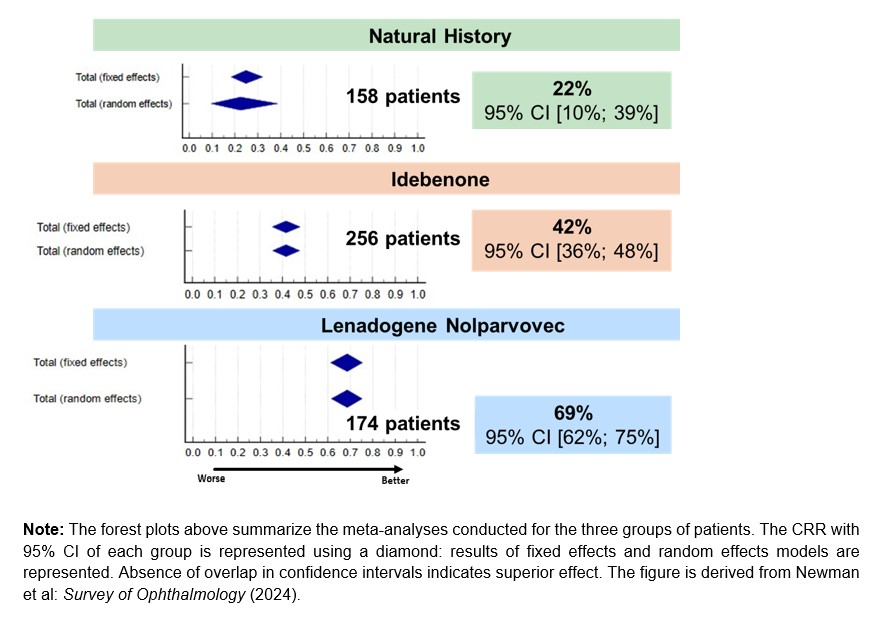
The paper, published in the peer-reviewed journal Survey of Ophthalmology, is the first to compare the efficacy of LHON treatments, approved or in development, on visual outcomes in the ND4-LHON patient population and to compare these outcomes with those in untreated (natural history) patients. The meta-analyses establish a “gradient of efficacy” in two measures of visual outcomes assessed in the paper, with LUMEVOQ® gene therapy having better outcomes compared to idebenone treatment and both treatments having better outcomes compared to the natural history of the disease.

As measured by the rate of Clinically Relevant Recovery (CRR)2, which is the responder rate common across the studies analyzed in the paper, the rate of visual recovery after LUMEVOQ® gene therapy is triple that in the natural evolution of ND4-LHON and substantially greater than that among idebenone-treated patients.

This study is very important for comparing these therapies’ abilities to achieve visual function outcomes in ND4-LHON patients,” commented Dr. Nancy J. Newman, LeoDelle Jolley Professor of Ophthalmology and Neurology at the Emory University School of Medicine in Atlanta, United-States, and lead author. “For the first time, we clearly demonstrate a gradient of efficacy in visual outcomes, more marked for Clinically Relevant Recovery (CRR) than for final Best-Corrected Visual Acuity (BCVA), with lenadogene nolparvovec gene therapy superior to idebenone treatment, and both superior to the natural history of the disease.”

The article updates an earlier set of findings, presented at the 2024 North American Neuro-Ophthalmology Society annual meeting, by including data from the recently published LEROS trial for idebenone and by including an assessment of final Best-Corrected Visual Acuity (BCVA) outcomes among the three groups of patients.

Figure 1. “A Gradient of Efficacy”: Visual Recovery (CRR2 from Nadir3) Among ND4-LHON Patients4,5

(See Figure 1)

The meta-analyses are the largest comprehensive review of the available data on the natural history of patients with vision loss from the MT-ND4 LHON mutation and those treated with idebenone, as well as all the available results on the efficacy of lenadogene nolparvovec gene therapy. The ND4-LHON population included in each group was representative of the typical demographics of the disease as reported in a century and a half of literature. In the natural evolution of the disease, most ND4-LHON patients experience a severe and chronic reduction in visual acuity in both eyes, which seriously affects their quality of life.

The article is available online via this link.

About GenSight Biologics

GenSight Biologics S.A. is a clinical-stage biopharma company focused on discovering and developing innovative gene therapies for retinal neurodegenerative diseases and central nervous system disorders. GenSight Biologics’ pipeline leverages two core technology platforms, the Mitochondrial Targeting Sequence (MTS) and optogenetics, to help preserve or restore vision in patients suffering from blinding retinal diseases. GenSight Biologics’ lead product candidate, GS010, is in Phase III trials in Leber Hereditary Optic Neuropathy (LHON), a rare mitochondrial disease that leads to irreversible blindness in teens and young adults. Using its gene therapy-based approach, GenSight Biologics’ product candidates are designed to be administered in a single treatment to each eye by intravitreal injection to offer patients a sustainable functional visual recovery.

About Leber Hereditary Optic Neuropathy (LHON)

Leber Hereditary Optic Neuropathy (LHON) is a rare maternally inherited mitochondrial genetic disease, characterized by the degeneration of retinal ganglion cells that results in brutal and irreversible vision loss that can lead to legal blindness, and mainly affects adolescents and young adults. LHON is associated with painless, sudden loss of central vision in the 1st eye, with the 2nd eye sequentially impaired. It is a symmetric disease with poor functional visual recovery. 97% of subjects have bilateral involvement at less than one year of onset of vision loss, and in 25% of cases, vision loss occurs in both eyes simultaneously.

About LUMEVOQ® (GS010; lenadogene nolparvovec)

LUMEVOQ® (GS010; lenadogene nolparvovec) targets Leber Hereditary Optic Neuropathy (LHON) by leveraging a mitochondrial targeting sequence (MTS) proprietary technology platform, arising from research conducted at the Institut de la Vision in Paris, which, when associated with the gene of interest, allows the platform to specifically address defects inside the mitochondria using an AAV vector (Adeno-Associated Virus). The gene of interest is transferred into the cell to be expressed and produces the functional protein, which will then be shuttled to the mitochondria through specific nucleotidic sequences in order to restore the missing or deficient mitochondrial function. “LUMEVOQ” was accepted as the invented name for GS010 (lenadogene nolparvovec) by the European Medicines Agency (EMA) in October 2018. LUMEVOQ® (GS010; lenadogene nolparvovec) has not been registered in any country at this stage.

_________________________

1
Newman et al: J Neuro-Ophthalmol 2020 Dec;40(4):547-557.

2 “Clinically Relevant Recovery”, or CRR, denotes an improvement in Best-Corrected Visual Acuity (BCVA) that satisfies one of two conditions: (1) A 10-letter (≥0.2 LogMAR) improvement for an on-chart starting visual acuity. (2) Improvement from “off-chart” to “on-chart” (≤1.6 LogMAR).

3 Nadir = lowest observation of visual acuity between baseline and time point of interest.

4 The three meta-analyses were pre-defined in a statistical analysis plan

5 Sources of data: For idebenone and natural history data, systematic review of the literature and available clinical/regulatory reports on MT-ND4 LHON patients; for Lumevoq, all phase 3 studies (RESCUE/RESTORE, REVERSE/RESTORE and REFLECT).

Contacts

GenSight Biologics
Chief Financial Officer

Jan Eryk Umiastowski

jeumiastowski@gensight-biologics.com

LifeSci Advisors
Investor Relations

Guillaume van Renterghem

gvanrenterghem@lifesciadvisors.com
+41 (0)76 735 01 31

ADx NeuroSciences and Alamar Biosciences Announce Partnership to Provide Customized Blood-Based Biomarker Assay Solutions to Accelerate Biopharma Clinical Development

ADx NeuroSciences and Alamar Biosciences Announce Partnership to Provide Customized Blood-Based Biomarker Assay Solutions to Accelerate Biopharma Clinical Development


ADx NeuroSciences and Alamar Biosciences Announce Partnership to Provide Customized Blood-Based Biomarker Assay Solutions to Accelerate Biopharma Clinical Development

Collaboration will expand access to high sensitivity NULISA immunoassays for clinical biomarker analysis.

GENT, Belgium & FREMONT, Calif.–(BUSINESS WIRE)–#IVD–ADx NeuroSciences, a wholly owned subsidiary of Fujirebio and a leader in neurodegenerative disease biomarker development, and Alamar Biosciences, a leader in ultra-sensitive immunoassay technologies, today announced a partnership in the development of customized biomarker assay solutions using Alamar’s NULISA™ (Nucleic Acid Linked Immuno-Sandwich Assay) immunoassay platform and ARGO™ HT System. This collaboration aims to provide advanced tools for the detection and quantification of critical biomarkers to support neurological disease therapeutic development.


Under the terms of the partnership, Alamar Biosciences and ADx NeuroSciences will combine their respective expertise to provide tailored assay solutions to meet the specific needs of pharmaceutical companies advancing novel therapeutics for neurodegenerative diseases, including Alzheimer’s, Parkinson’s and ALS.

“We are excited to partner with ADx NeuroSciences, a recognized leader in the field of neurodegenerative biomarker research,” said Dr. Yuling Luo, Chairman and CEO of Alamar Biosciences. “By combining our NULISA platform’s ultra-sensitive detection capabilities with ADx’s extensive expertise in neuroscience antibody and assay development, we aim to accelerate the development of biomarker assays that can facilitate the development and approval of disease modifying therapies for neurodegenerative diseases.”

Koen Dewaele, CEO of ADx NeuroSciences, commented, “Our collaboration with Alamar Biosciences marks a significant step forward in our mission to support pharmaceutical companies advancing their therapeutic programs. Every phase in the search for a therapeutic, from preclinical work up to the launch of the ultimate drug, requires specific biomarker tools. By working with various technology platforms, we are able to make our biomarker assays available on the right technology at the right time. By adding the NULISA platform with its remarkable sensitivity to our range of possible platforms, it enforces our capabilities to support our pharma network in their search for tailor-made biomarkers.”

This strategic collaboration highlights both companies’ commitment to advancing biomarker detection and expanding the possibilities for early diagnosis and treatment of neurodegenerative diseases. By harnessing the power of the NULISA platform, Alamar Biosciences and ADx NeuroSciences aim to deliver cutting-edge solutions that will benefit clinical research and aid in the development of novel therapeutics.

About Alamar Biosciences, Inc.

Alamar Biosciences is a privately held life sciences company with a mission to power precision proteomics to enable the earliest detection of disease. The company’s proprietary NULISA Platform along with the ARGO™ HT System works seamlessly with the latest advances in genomics to achieve single digit attomolar detection sensitivity, greatly surpassing the high sensitivity protein detection technologies on the market today. For more information, please visit alamarbio.com.

About ADx NeuroSciences NV

ADx NeuroSciences is specialized in the research and development of neurodegenerative biomarker tools for diseases such as Alzheimer’s and Parkinson’s. Its expertise is used by pharmaceutical and diagnostic companies across the world for the conception, development, production, and worldwide commercialization of novel biomarkers, supporting the development of promising drugs, either by monitoring the drug effect or by selecting the right patients at a very early stage of the disease. These assays can be applied to a variety of platforms from research up to IVD use. The company was founded in 2011 and was acquired in 2022 by Fujirebio, a member of H.U. Group Holdings Inc., which is listed on the Tokyo Stock Exchange (TSE: 4544). For more information, please visit www.adxneurosciences.com.

About Fujirebio

Fujirebio, a member of H.U. Group Holdings Inc., is a global leader in the field of high-quality IVD testing with more than 50 years’ accumulated experience in the conception, development, production, and worldwide commercialization of robust IVD products. Fujirebio was the first company to develop and market CSF biomarkers for AD testing, under the Innogenetics brand, over 25 years ago. Fujirebio remains the only company with such a comprehensive line-up of manual and fully automated neurodegenerative disease assays and consistently partners with organizations and clinical experts across the world to develop new pathways for earlier, easier, and more complete neurodegenerative diagnostic tools. For more information, please visit www.fujirebio.com.

Contacts

For media inquiries, please contact:

Alamar Biosciences, Inc. Media Contact:
April Falcone

Alamar Biosciences

afalcone@alamarbio.com
(510) 838-1783

ADx NeuroSciences NV:
Ann De Vos

ADx NeuroSciences

info@adxneurosciences.com
+32 9 329 1486

Odyssey Therapeutics to Present New Data on its Clinical-Stage RIPK2 Scaffolding Inhibitor, OD-07656, at the American College of Gastroenterology (ACG) Annual Scientific Meeting 2024

Odyssey Therapeutics to Present New Data on its Clinical-Stage RIPK2 Scaffolding Inhibitor, OD-07656, at the American College of Gastroenterology (ACG) Annual Scientific Meeting 2024


Odyssey Therapeutics to Present New Data on its Clinical-Stage RIPK2 Scaffolding Inhibitor, OD-07656, at the American College of Gastroenterology (ACG) Annual Scientific Meeting 2024

BOSTON–(BUSINESS WIRE)–#BiotechOdyssey Therapeutics, Inc., a clinical-stage biopharmaceutical company seeking to transform the standard of care for patients suffering from autoimmune and inflammatory diseases by developing medicines that are designed to precisely target disease pathology, announced that new translational data for its receptor-interacting protein kinase 2 (RIPK2) scaffolding inhibitor product candidate, OD-07656, will be presented at the American College of Gastroenterology (ACG) Annual Scientific Meeting in Philadelphia, held October 25-30, 2024.


Activation of RIPK2 in innate immune cells is linked to multiple aspects of inflammatory bowel disease (IBD) pathogenesis through its role as a signal transducer and amplifier of cytokine production. This presentation will focus on the anti-inflammatory and anti-fibrotic effects of RIPK2 scaffolding inhibition, a proprietary gene signature for RIPK2 activation, RIPK2 as a mechanism of resistance to standard of care therapies, and the additive activity of RIPK2 inhibition with standard of care therapies.

“Odyssey’s presentation represents our ongoing commitment to advancing potentially transformative therapies to treat patients suffering from inflammatory diseases,” said Gary D. Glick, Ph.D., founder and CEO of Odyssey Therapeutics. “At this year’s ACG, we will share additional data supporting the monotherapy potential of our RIPK2 product candidate, but also its potential as a combination therapy with standard-of-care to deepen responses and address treatment resistance. We are excited by the potential of an innate immune targeted medicine for patients with IBD and look forward to sharing this data with researchers and patients.”

Poster Presentation

Title: Blocking RIPK2 Scaffolding Inhibits Downstream Signaling that Drive Inflammatory Bowel Disease

Poster Number: P4328

Presenting Author: Marta Wlodarska, PhD

Dates: October 29, 2024 | 10:30 AM – 4:00 PM ET | Pennsylvania Convention Center, Exhibit Hall E

About Odyssey Therapeutics

Odyssey Therapeutics is a clinical-stage biopharmaceutical company seeking to transform the standard of care for patients suffering from autoimmune and inflammatory diseases by developing medicines that are designed to precisely target disease pathology. Since its founding in 2021, Odyssey has leveraged the scientific expertise of its team of drug hunters and a comprehensive suite of tools to efficiently build a portfolio of internally discovered product candidates that it believes have the potential to induce deep and durable remission for patients across several inflammatory diseases with unmet need. For more information, please visit odysseytx.com and follow Odyssey Therapeutics on X (formerly Twitter) and LinkedIn.

Disclaimer

All statements contained herein other than statements of historical facts are forward-looking statements, including, but not limited to, statements regarding business strategy; the future clinical development, efficacy, safety and therapeutic potential of product candidates; expectations regarding the initiation, design and reporting of data from preclinical studies and clinical trials; expectations regarding regulatory approval of any product candidates; and plans for future operations or other characterizations of future events. In some cases, you can identify forward-looking statements through the use of words such as “may,” “will,” “should,” “expects,” “plans,” “anticipates,” “could,” “intends,” “target,” “projects,” “contemplates,” “believes,” “estimates,” “predicts,” “potential” or “continue” or the negatives of these words or other similar terms or expressions that concern our expectations, strategy, plans or intentions. These statements are not guarantees of future performance and involve risks and uncertainties, some of which are beyond our control, and you are cautioned not to place undue reliance on any forward-looking statements.

Contacts

Media Contact:
Josh George

jgeorge@spectrumscience.com
713-828-1913

Judo Bio Presents Data Demonstrating Mechanism of Receptor-mediated Delivery of Oligonucleotides Resulting in Gene Silencing in the Kidney

Judo Bio Presents Data Demonstrating Mechanism of Receptor-mediated Delivery of Oligonucleotides Resulting in Gene Silencing in the Kidney


Judo Bio Presents Data Demonstrating Mechanism of Receptor-mediated Delivery of Oligonucleotides Resulting in Gene Silencing in the Kidney

Preclinical data show intracellular uptake of a ligand-siRNA conjugate in vitro using megalin, an endogenous, endocytic recycling receptor on proximal tubular cells of the kidney

Megalin-mediated delivery of siRNA leads to significant, durable knock-down in vivo

CAMBRIDGE, Mass.–(BUSINESS WIRE)–Judo Bio, a biotechnology company pioneering oligonucleotide medicines delivered to the kidney, today announced the presentation of preclinical data that demonstrate a mechanism of uptake and trafficking of ligand-siRNA conjugates using megalin receptors to achieve targeted gene knockdown in proximal tubule epithelial cells (PTEC) of the kidney. The data is being presented at Kidney Week 2024, the annual meeting of the American Society of Nephrology, taking place in San Diego, CA on October 24-27.


These data represent the capabilities of the Company’s STRIKE (Selectively Targeting RNA Into KidnEy) platform to discover ligand‑siRNA conjugates that harness the natural, endogenous process of receptor-mediated endocytosis to deliver oligonucleotide therapeutics to specific kidney cell populations. Megalin-STRIKERs are ligand-siRNA conjugates that bind to megalin on PTECs, resulting in drug uptake to the kidney and gene silencing of the target mRNA. In its initial drug programs, Judo Bio is designing megalin-STRIKERs to silence mRNA expression of specific solute carrier (SLC) proteins, thereby inhibiting the uptake of circulating metabolites linked to systemic diseases.

“Our understanding of endocytic trafficking in kidney proximal tubule cells has advanced rapidly in recent years,” said Ora A. Weisz, PhD, an author of the poster presentation and Professor of Medicine, Cell Biology, and Clinical and Translational Science in the Division of Renal-Electrolyte at the University of Pittsburgh. “This approach to harness the endocytic pathway to selectively target delivery of RNA to specific kidney cells provides an opportunity to target and silence solute carrier proteins in order to address numerous systemic diseases.”

The preclinical data presented at Kidney Week studied megalin ligand-conjugated siRNA, or megalin-STRIKERs, in a differentiated, opossum kidney PTEC cell line that recapitulates proximal tubule morphology and is functionally similar to kidneys in animals. Key findings include:

  • Ligand-siRNAs were taken up by opossum kidney cells in both a time and concentration dependent manner, predominantly from the apical surface.
  • Uptake of ligand-siRNA conjugates was megalin dependent and achieved with different megalin ligands.
  • Megalin ligand-siRNA conjugates led to significant gene knock-down across multiple targets and was durable for up to 40 days in mice.

Judo Bio’s Kidney Week poster presentation is available here on the company’s website.

“We are pleased to share data describing the use of megalin’s endogenous receptor-mediated endocytosis to enable gene silencing in PTECs,” said Alfica Sehgal, PhD, Chief Scientific Officer of Judo Bio. “Understanding the mechanism that leads to gene silencing directs the optimization efforts on our first megalin-STRIKERs that target SLC proteins. Modulating function of specific SLCs is an established approach for the treatment of various systemic diseases, and an RNAi approach opens vast therapeutic opportunities because of its specificity.”

About Judo Bio

Judo Bio is pioneering oligonucleotide medicines delivered to the kidney, opening the way for new genetic medicines for systemic and renal diseases. With its STRIKE (Selectively Targeting RNA Into KidnEy) platform, the company is using a proprietary approach to create ligand-RNA conjugate drugs designed for receptor-mediated update by specific kidney cell types, resulting in gene silencing of disease-modifying target genes. Judo Bio’s initial pipeline programs are megalin-STRIKERs that use the megalin receptor family to selectively deliver siRNA therapeutics to the proximal tubule of the kidney to silence mRNA expression of specific solute carrier proteins (SLCs), thereby inhibiting the uptake of circulating solutes linked to systemic diseases. Located in Cambridge, MA, Judo Bio’s team and advisors include experts in oligonucleotide therapies and innovative drug development. For more information, visit www.judo.bio and follow us on LinkedIn.

Contacts

Media:
Kathryn Morris

The Yates Network LLC

914-204-6412

kathryn@theyatesnetwork.com

Evecxia Therapeutics Announces Successful Completion of Pre-IND Meeting with the FDA Regarding Development of EVX-101 For Depression

Evecxia Therapeutics Announces Successful Completion of Pre-IND Meeting with the FDA Regarding Development of EVX-101 For Depression


Evecxia Therapeutics Announces Successful Completion of Pre-IND Meeting with the FDA Regarding Development of EVX-101 For Depression

  • No concerns raised regarding presented non-clinical or clinical safety data
  • Meeting provides clear path forward for filing an IND for conducting a Phase 2 trial in depression patients responding inadequately to standard of care

RESEARCH TRIANGLE PARK, N.C.–(BUSINESS WIRE)–Evecxia Therapeutics—the first company dedicated to realizing the therapeutic potential of Serotonin Synthesis Amplification to treat central nervous system disorders—today announced the completion of a pre-Investigational New Drug (pre-IND) meeting with the U.S. Food and Drug Administration (FDA) Division of Psychiatry, Office of Neuroscience, Center for Drug Evaluation and Research.


FDA Feedback & Guidance

The focus of the pre-IND meeting was to receive FDA feedback and guidance on the non-clinical data, clinical data, and Phase 2 trial design for EVX-101, a novel adjunctive antidepressant candidate for depression patients responding inadequately to first-line serotonin reuptake inhibitor monotherapy. The pre-IND meeting was completed through written responses.

The FDA expressed no concerns regarding the three months GLP non-clinical safety data presented and provided useful guidance on further non-clinical development of EVX-101, including on elements that can be omitted, given the favorable historical safety record on 5‑hydroxytryptophan (5‑HTP), the key active pharmaceutical ingredient in EVX-101.

The FDA expressed no concerns regarding the safety, tolerability, pharmacokinetic, and pharmacodynamic data from a Phase 1 trial of adjunctive EVX-101 in healthy volunteers, in terms of supporting a subsequent Phase 2 trial.

The pre-IND meeting enabled alignment with the FDA regarding submission of an IND to conduct a Phase 2 trial of EVX-101 in depression.

“We are delighted with the outcome of the pre-IND meeting written responses from the FDA,” said Jacob Jacobsen, CEO of Evecxia Therapeutics. “The positive and helpful feedback from the FDA is a significant milestone for our development program to develop EVX-101 as a potentially safer and more effective option for the millions of mood disorder patients not responding adequately to first-line serotonin reuptake inhibitors.”

About EVX-101

EVX-101 is a first-in-class, proprietary gastro-retentive, sustained-release tablet formulation of 5‑hydroxytryptophan (5-HTP), the immediate precursor to serotonin, and low-dose carbidopa (multiplies 5-HTP’s bioavailability). EVX-101 is in development for next-line adjunctive therapy in depression and obsessive compulsive disorder.

Adjunctive EVX-101 is intended to elevate brain serotonin activity beyond the effect of first-line serotonin reuptake inhibitor monotherapy. Multiple published clinical studies support this serotonin augmentation pharmacology is safe and effective in treating depression patients responding inadequately to serotonin reuptake inhibitors (1-4); but, it is not used in any marketed antidepressants. Hence, EVX-101 for depression is risk-mitigated, as based in clinical evidence, yet novel. All marketed antidepressants are based in clinical evidence.

EVX-101 appears safe and devoid of abuse potential and could be scalable to broad outpatient mood disorder care.

About 5-HTP

5-HTP is the immediate precursor of the neurotransmitter serotonin. Decades of clinical reports support a consensus that 5-HTP has demonstrated therapeutic potential in mood and others central nervous system disorders (5-7). 5-HTP has a benign human safety record (6, 8). 5-HTP’s putative therapeutic action is via Serotonin Synthesis Amplification, creating a stronger, more resilient brain serotonin system, a pharmacology distinct from available serotonin drugs, e.g., serotonin reuptake inhibitors and psychedelics. But the 5-HTP molecule is impractical for clinical practice, as 5-HTP is minimally absorbed by the body and very short-acting (9). No FDA-approved 5-HTP drug exists. Evecxia deploys pharmaceutical technologies to ensure sufficient absorption and prolonged action of 5-HTP in the body, thus enabling practical Serotonin Synthesis Amplification therapy.

About Evecxia Therapeutics

Evecxia is the first company dedicated to realizing the therapeutic potential of Serotonin Synthesis Amplification to treat central nervous system disorders. Evecxia has two Phase 2 clinical-stage drug candidates in development. EVX-101 is being developed as an adjunctive treatment for depression and obsessive-compulsive disorder when first-line serotonin reuptake inhibitor antidepressants alone are inadequate. EVX-301 is being developed as rescue therapy for patients hospitalized for acute suicidal crisis.

For additional information about Evecxia, please visit www.evecxia.com.

References

1. van Praag HM (1982): Adv Biochem Psychopharmacol. 34:259-286.

2 Nardini M, et al. (1983): Int J Clin Pharmacol Res. 3:239-250.

3. Walinder J, et al. (1976): Arch Gen Psychiatry. 33:1384-1389.

4. Papakostas GI, et al. (2012): Am J Psychiatry. 169:1267-1274.

5. Shaw K, et al. (2002): Cochrane Database Syst Rev.CD003198.

6. Turner EH, et al. (2006): Pharmacol Ther. 109:325-338.

7. Levy A, et al. (2016): Curr Treat Options Neurol. 18:21.

8. Das YT, et al. (2004): Toxicol Lett. 150:111-122.

9. Evecxia (2024): Data on file.

Contacts

Jacob Jacobsen, CEO

Evecxia Therapeutics, Inc.

Info@evecxia.com