Merck’s Clesrovimab (MK-1654), an Investigational Respiratory Syncytial Virus (RSV) Preventative Monoclonal Antibody, Significantly Reduced Incidence of RSV Disease and Hospitalization in Healthy Preterm and Full-term Infants

Merck’s Clesrovimab (MK-1654), an Investigational Respiratory Syncytial Virus (RSV) Preventative Monoclonal Antibody, Significantly Reduced Incidence of RSV Disease and Hospitalization in Healthy Preterm and Full-term Infants


Merck’s Clesrovimab (MK-1654), an Investigational Respiratory Syncytial Virus (RSV) Preventative Monoclonal Antibody, Significantly Reduced Incidence of RSV Disease and Hospitalization in Healthy Preterm and Full-term Infants

In the Phase 2b/3 trial, clesrovimab reduced RSV-associated hospitalizations (secondary endpoint) and RSV-associated lower respiratory infection hospitalizations (tertiary endpoint) by more than 84% and 90%, respectively, through 5 months

Clesrovimab has the potential to become the first and only approved immunization designed to protect infants with the same single dose regardless of weight for the duration of their first RSV season

RAHWAY, N.J.–(BUSINESS WIRE)–$MRK #MRK–Merck (NYSE: MRK), known as MSD outside of the United States and Canada, today announced the presentation of positive results from the Phase 2b/3 clinical trial (MK-1654-004) evaluating clesrovimab, the company’s investigational prophylactic monoclonal antibody designed to protect infants from respiratory syncytial virus (RSV) disease during their first RSV season. The results, along with interim findings from the ongoing Phase 3 trial (MK-1654-007) of clesrovimab, were presented during IDWeek 2024, held October 16-19 in Los Angeles, California.



Results from MK-1654-004, a placebo-controlled Phase 2b/3 pivotal trial evaluating a single dose of clesrovimab administered to healthy preterm and full-term infants (birth to 1 year of age) met all prespecified endpoints, with consistent results through both the 5-month and 6-month time points. The incidence of adverse events (AEs) and serious AEs were comparable between the clesrovimab and placebo groups, and there were no treatment or RSV-related deaths during the study.

RSV continues to be a widespread seasonal infection that can affect both healthy and at-risk infants and is the leading cause of hospitalization for infants,” said Dr. Octavio Ramilo, chair of the Department of Infectious Diseases at St. Jude’s Children’s Research Hospital and investigator for the MK-1654-004 and MK-1654-007 trials. “The MK-1654-004 study evaluated a broad spectrum of RSV disease ranging from mild outpatient illness to severe disease requiring hospitalization. These promising results demonstrating decreased incidence of RSV disease, including hospitalizations, highlight the potential for clesrovimab to play an important role in helping to alleviate the continued burden of RSV on infants and their families.”

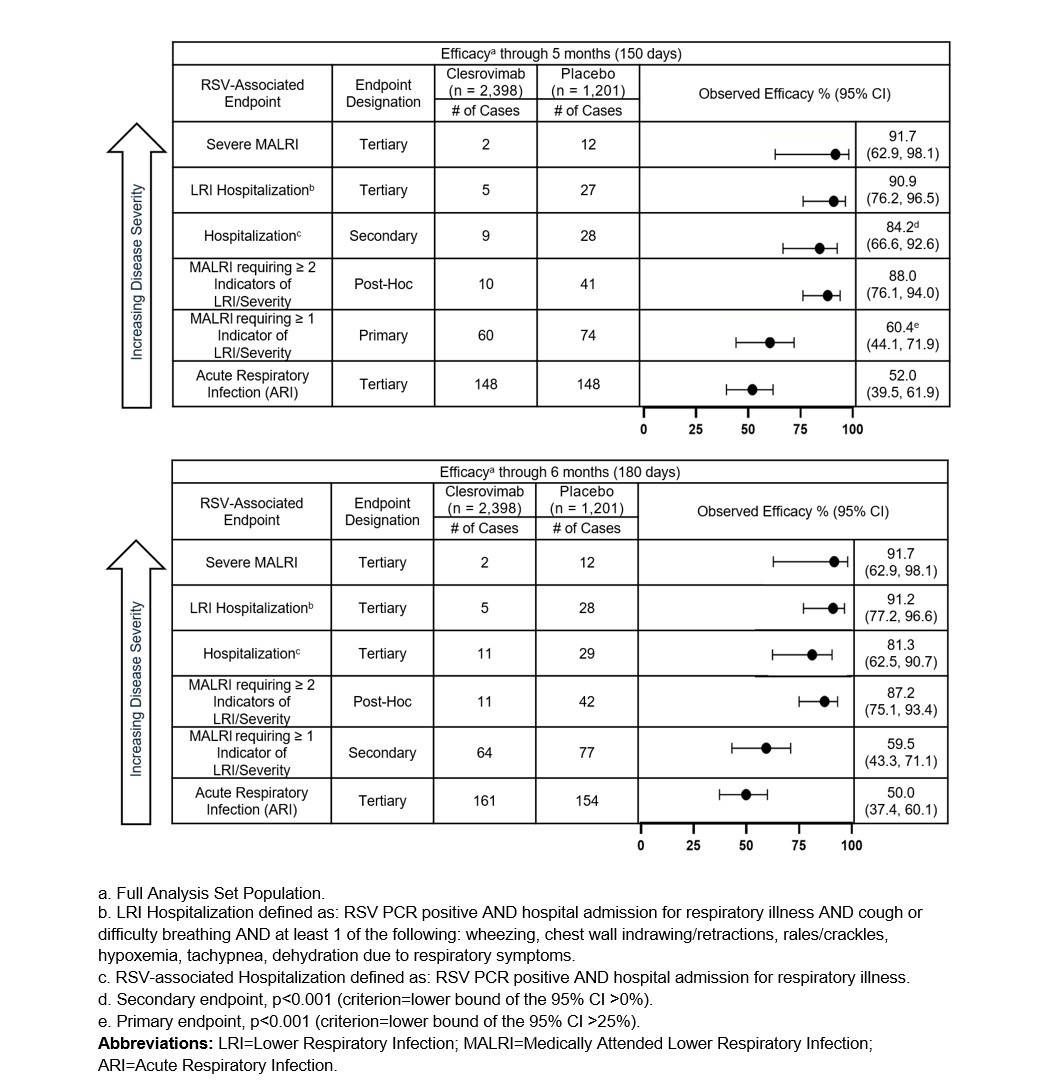
The primary efficacy endpoint of the trial, the reduction in incidence of RSV-associated medically attended lower respiratory infections (MALRI) requiring ≥ 1 indicator of lower respiratory infection (LRI) or severity compared to placebo through Day 150 (5 months) postdose, was 60.4% (95% CI: 44.1, 71.9, p<0.001). Clesrovimab also reduced RSV-associated hospitalizations (secondary endpoint) and RSV-associated LRI hospitalizations (tertiary endpoint) through Day 150 (5 months) compared to placebo by 84.2% (95% CI: 66.6, 92.6, p<0.001) and 90.9% (95% CI: 76.2, 96.5), respectively. Clesrovimab reduced the incidence of severe MALRI (tertiary endpoint) by 91.7% (95% CI: 62.9, 98.1).

In addition, in a post hoc analysis, the reduction in incidence of MALRI requiring ≥ 2 indicators of LRI and severity (an endpoint of more severe MALRI than the primary MALRI endpoint), was 88.0% (95% CI: 76.1, 94.0) through Day 150 (5 months).

Additional details on the data from the MK-1654-004 trial across RSV disease burden are presented in order of decreasing disease severity endpoints in Figure 1 above.

Merck also announced data from a planned interim analysis of the MK-1654-007 trial, a Phase 3 trial evaluating the safety and efficacy of clesrovimab versus palivizumab in infants and children at increased risk for severe RSV disease. The primary endpoint of the study is the safety and tolerability of clesrovimab in infants entering their first RSV season. Interim results showed clesrovimab had a comparable safety profile to palivizumab, and no drug-related serious AEs were reported to date. Incidence rates of RSV-associated MALRI requiring ≥ 1 indicator of LRI or severity and RSV-associated hospitalizations (secondary endpoints) were also comparable between clesrovimab (3.6% and 1.3%, respectively) and palivizumab (3.0% and 1.5%, respectively) through Day 150 (5 months).

The breadth of data presented at IDWeek highlight the potential for clesrovimab to help lessen the significant impact RSV can have on infants and their families, as well as the strain on healthcare systems due to high infection and hospitalization rates,” said Dr. Paula Annunziato, senior vice president, infectious diseases and vaccines, Global Clinical Development, Merck Research Laboratories. “These clinically meaningful findings also reinforce the potential for clesrovimab to be the first and only immunization designed to protect both healthy and at-risk infants using the same dose, regardless of weight. We look forward to continuing to discuss these data with health authorities around the world with the goal of making clesrovimab available for infants as early as the 2025-26 RSV season.”

About MK-1654-004

MK-1654-004 (NCT04767373) is a Phase 2b/3 double-blind, randomized, placebo-controlled clinical trial to evaluate the safety and efficacy of clesrovimab in healthy preterm and full-term infants from birth to 1 year of age entering their first RSV season. The study enrolled 3,632 participants who were randomized 2:1 to receive either a single fixed dose of clesrovimab (105 mg intramuscular injection (IM)) or placebo on Day 1. Primary endpoints included the incidence of participants with RSV-associated medically attended lower respiratory infection (MALRI) from Day 1 (postdose) to Day 150 as compared to placebo and safety. The MALRI definition required >1 indicator of LRI or severity. RSV-associated hospitalization through Day 150 and MALRI requiring >1 indicator of LRI or severity to Day 180, were prespecified secondary endpoints. Prespecified tertiary endpoints included acute respiratory infection, RSV-associated lower respiratory infection hospitalizations and incidence of severe MALRI through Day 150. In a post hoc analysis, more severe forms of RSV-associated MALRI (>2 indicators of LRI and severity) were assessed. Across endpoints, additional measures of efficacy were assessed through Day 180. Safety measures included the percentage of participants with solicited injection-related adverse events (AEs), AEs of special interest (AESIs) solicited systemic AEs or serious adverse events (SAEs).

About MK-1654-007

MK-1654-007 (NCT04938830) is a Phase 3, multicenter, randomized, partially blinded, controlled study to evaluate the safety, efficacy, and pharmacokinetics of clesrovimab in infants and children at increased risk for severe RSV disease compared to palivizumab. The study enrolled participants who were entering their first RSV season and recommended to receive palivizumab due to prematurity (≤35 weeks gestational age), chronic lung disease (CLD) of prematurity, or hemodynamically significant congenital heart disease (CHD). Participants were randomized 1:1 to receive clesrovimab (105 mg IM on Day 1, placebo on Day 28) or monthly palivizumab in their first season, and eligible participants received clesrovimab (210 mg IM) in the second RSV season. At this interim analysis, 901 participants were enrolled in the trial. The primary endpoint is safety and tolerability of clesrovimab versus palivizumab in the first season. Secondary endpoints include the incidence of RSV-associated medically attended lower respiratory infections (MALRI) requiring ≥1 indicator of LRI or severity and of RSV-associated hospitalization through Day 150.

About clesrovimab (MK-1654)

Clesrovimab (MK-1654) is an investigational, extended half-life monoclonal antibody (mAb) developed as a passive immunization for the prevention of RSV. Clesrovimab is designed to be administered as the same single dose, regardless of birth weight, and is being studied in healthy preterm, full-term and at-risk infants to provide direct, rapid, and durable protection through their first RSV season against mild, moderate and severe RSV.

About RSV

Respiratory syncytial virus (RSV) is a contagious virus that causes widespread seasonal infections like the flu, with a worldwide burden in infants and older adults. There is high unmet need for preventative options in both healthy and high-risk infants. Globally, RSV is the leading cause of hospitalization for healthy infants under a year old. RSV can lead to serious respiratory conditions like bronchiolitis and pneumonia, causing an estimated 101,000 deaths a year worldwide in children under five. According to the CDC, RSV season starts in the fall and peaks in the winter in most regions of the United States, but timing and severity in a given community or region can vary year to year.

About Merck

At Merck, known as MSD outside of the United States and Canada, we are unified around our purpose: We use the power of leading-edge science to save and improve lives around the world. For more than 130 years, we have brought hope to humanity through the development of important medicines and vaccines. We aspire to be the premier research-intensive biopharmaceutical company in the world – and today, we are at the forefront of research to deliver innovative health solutions that advance the prevention and treatment of diseases in people and animals. We foster a diverse and inclusive global workforce and operate responsibly every day to enable a safe, sustainable and healthy future for all people and communities. For more information, visit www.merck.com and connect with us on X (formerly Twitter), Facebook, Instagram, YouTube and LinkedIn.

Forward-Looking Statement of Merck & Co., Inc., Rahway, N.J., USA

This news release of Merck & Co., Inc., Rahway, N.J., USA (the “company”) includes “forward-looking statements” within the meaning of the safe harbor provisions of the U.S. Private Securities Litigation Reform Act of 1995. These statements are based upon the current beliefs and expectations of the company’s management and are subject to significant risks and uncertainties. There can be no guarantees with respect to pipeline candidates that the candidates will receive the necessary regulatory approvals or that they will prove to be commercially successful. If underlying assumptions prove inaccurate or risks or uncertainties materialize, actual results may differ materially from those set forth in the forward-looking statements.

Risks and uncertainties include but are not limited to, general industry conditions and competition; general economic factors, including interest rate and currency exchange rate fluctuations; the impact of pharmaceutical industry regulation and health care legislation in the United States and internationally; global trends toward health care cost containment; technological advances, new products and patents attained by competitors; challenges inherent in new product development, including obtaining regulatory approval; the company’s ability to accurately predict future market conditions; manufacturing difficulties or delays; financial instability of international economies and sovereign risk; dependence on the effectiveness of the company’s patents and other protections for innovative products; and the exposure to litigation, including patent litigation, and/or regulatory actions.

The company undertakes no obligation to publicly update any forward-looking statement, whether as a result of new information, future events or otherwise. Additional factors that could cause results to differ materially from those described in the forward-looking statements can be found in the company’s Annual Report on Form 10-K for the year ended December 31, 2023 and the company’s other filings with the Securities and Exchange Commission (SEC) available at the SEC’s Internet site (www.sec.gov).

Contacts

Media:

Julie Cunningham

(617) 519-6264

Kimberly Petrillo

(267) 742-2813

Investors:

Alexis Constantine

(732) 594-1578

Peter Dannenbaum

(732) 594-1579

Quantum-Si Announces Inducement Grants Under Nasdaq Listing Rule 5635(c)(4)

Quantum-Si Announces Inducement Grants Under Nasdaq Listing Rule 5635(c)(4)


Quantum-Si Announces Inducement Grants Under Nasdaq Listing Rule 5635(c)(4)

BRANFORD, Conn.–(BUSINESS WIRE)–Quantum-Si Incorporated (Nasdaq: QSI) (“Quantum-Si,” “QSI” or the “Company”), The Protein Sequencing Company™, today announced that the Compensation Committee of Quantum-Si’s Board of Directors has granted an aggregate of 385,983 restricted stock units (“RSUs”) to five new employees under the Company’s previously adopted Quantum-Si Incorporated 2023 Inducement Equity Incentive Plan, as amended (the “2023 Inducement Plan”). The RSUs were granted as inducements material to the new employees becoming employees of Quantum-Si in accordance with Nasdaq Listing Rule 5635(c)(4).


The 2023 Inducement Plan is used exclusively for the grant of equity awards to individuals who were not previously employees of Quantum-Si (or following a bona fide period of non-employment), as an inducement material to such individuals’ entering into employment with Quantum-Si, pursuant to Rule 5635(c)(4) of the Nasdaq Listing Rules.

The RSUs will vest as to 25% on December 20, 2025, with the remainder vesting in 12 equal quarterly installments thereafter, subject to the employees’ continued employment with Quantum-Si on such vesting dates. The RSUs are subject to the terms and conditions of the 2023 Inducement Plan and RSU agreements covering the grants.

About Quantum-Si Incorporated

Quantum-Si, The Protein Sequencing Company™, is focused on revolutionizing the growing field of proteomics. The Company’s Platinum® instrument enables Next-Generation Protein Sequencing™ that advances proteomic research, drug discovery, and diagnostics beyond what has been possible with existing proteomic tools. Learn more at quantum-si.com or follow us on LinkedIn or X.

Contacts

Investor Contact
Doug Farrell, VP, Investor Relations

ir@quantum-si.com

Media Contact
Katherine Atkinson, SVP, Commercial Marketing

media@quantum-si.com

Vir Biotechnology to Provide Business Update and Report Third Quarter 2024 Financial Results on October 31, 2024

Vir Biotechnology to Provide Business Update and Report Third Quarter 2024 Financial Results on October 31, 2024


Vir Biotechnology to Provide Business Update and Report Third Quarter 2024 Financial Results on October 31, 2024

SAN FRANCISCO–(BUSINESS WIRE)–Vir Biotechnology, Inc. (Nasdaq: VIR) today announced the Company will provide a corporate update and report financial results for the third quarter ended September 30, 2024, on October 31, 2024. The Company will host a conference call at 1:30 p.m. Pacific Time / 4:30 p.m. Eastern Time on October 31, 2024.


The corporate update and financial results will be provided via a press release after market close and will be accessible under Press Releases in the Investors section of the Vir website at www.vir.bio. Participants may access the conference call via webcast on the Events & Presentations page of Vir’s website at https://investors.vir.bio/events-presentations or listen in by dialing the U.S. toll free number (888) 800-8770 or international +1 (646) 307-1953. Conference ID: 7568777. A recorded version of the call will be available on the website approximately two hours after the completion of the event and will be archived there for 30 days.

About Vir Biotechnology, Inc.

Vir Biotechnology, Inc. is a clinical-stage biopharmaceutical company focused on powering the immune system to transform lives by discovering and developing medicines for serious infectious diseases and cancer. Vir’s clinical-stage portfolio includes infectious disease programs for chronic hepatitis delta and chronic hepatitis B infections, in addition to multiple oncology programs. Vir also has a preclinical portfolio of programs across a range of other infectious diseases and oncologic malignancies. Vir routinely posts information that may be important to investors on its website.

Contacts

Media
Arran Attridge

Senior Vice President, Corporate Communications

aattridge@vir.bio

Investors
Richard Lepke

Senior Director, Investor Relations

rlepke@vir.bio

KinderFarms Announces CEO Transition to Lead Next Stage of Growth

KinderFarms Announces CEO Transition to Lead Next Stage of Growth


KinderFarms Announces CEO Transition to Lead Next Stage of Growth

LOS ANGELES–(BUSINESS WIRE)–#ChooseKinder–KinderFarms, the children’s OTC medicine pioneer, announces a leadership transition. Co-founder and CEO Jeremy Adams will move into a Board of Directors position for the company, enabling Kristin Recchiuti, former CEO of Advantice Health and 20-year Johnson & Johnson veteran, to join the company as CEO.


This leadership change comes as the company embarks on its next phase of growth, with an eye to bringing clean medicine to the masses and transforming the children’s OTC space. Joining an impressive executive bench including former Zarbees VP of Sales Sean McLean (CCO), former Vital Proteins CFO Matt Leytman and former Orgain CMO Andrea Theodore, Recchiuti aims to leverage her deep experience in the OTC medicine industry to accelerate market disruption and create a healthier and kinder future for kids.

The company thanks Jeremy Adams for his vision and leadership since founding the business in 2018. “I am thrilled for Kristin to join the KinderFarms family,” said Adams. “Kristin has a proven track record of success in the OTC space, and I believe the company will continue to thrive under her leadership.”

Recchiuti also shared her enthusiasm about taking on the new role: “It’s inspiring to join KinderFarms at such an exciting time, advancing a family-first approach to health and wellness through trusted OTC solutions. I’m eager to work with this exceptional team and dedicated Board to expand our impact in delivering products families feel great about using.”

KinderFarms, a parent-founded company, is best known for its KinderMed products, including children’s OTC medicines that are made with the same proven active ingredients as the leading conventional brands but without unnecessary artificial additives like dyes, parabens, artificial sweeteners or flavors. Formulated with doctors and scientists, KinderMed’s OTC treatments have struck a chord and developed a fast-growing following of parents who read ingredient labels and prefer effective options with cleaner inactive ingredients and competitive prices. KinderFarms products are now available in over 30,000 stores across the country including Walmart, CVS, Walgreens, Rite Aid, Kroger and other major grocery outlets nationwide.

Follow us at www.KinderFarms.com, on Instagram, LinkedIn, Facebook and TikTok.

Contacts

FOR MEDIA INQUIRIES, PLEASE CONTACT:

Andrea Theodore

andrea@kinderfarms.com

Majority of Children With Spinal Muscular Atrophy (SMA) Treated With Genentech’s Evrysdi Are Able to Sit, Stand and Walk Independently, Two-Year Data Demonstrate

Majority of Children With Spinal Muscular Atrophy (SMA) Treated With Genentech’s Evrysdi Are Able to Sit, Stand and Walk Independently, Two-Year Data Demonstrate


Majority of Children With Spinal Muscular Atrophy (SMA) Treated With Genentech’s Evrysdi Are Able to Sit, Stand and Walk Independently, Two-Year Data Demonstrate

– Positive data confirm Evrysdi efficacy and safety in children first treated pre-symptomatically before 6 weeks of age, with most achieving motor milestones similar to children without SMA –

– All children were able to swallow and feed orally, with none requiring permanent ventilation –

– Evrysdi is the only non-invasive SMA therapy and is approved in over 100 countries, with more than 16,000 people with SMA treated globally –

SOUTH SAN FRANCISCO, Calif.–(BUSINESS WIRE)–Genentech, a member of the Roche Group (SIX: RO, ROG; OTCQX: RHHBY), presented positive 2-year data from the ongoing RAINBOWFISH study at the 29th World Muscle Society (WMS) Congress, October 8-12, 2024, assessing the efficacy and safety of Evrysdi® (risdiplam) in children with SMA who were treated pre-symptomatically as infants before 6 weeks of age (n=23). The study found the majority of children achieved key motor milestones, were able to swallow and feed orally, and demonstrated cognitive skills typical of children without SMA, with none requiring permanent ventilation.


“In children with SMA, motor neuron degeneration starts before the onset of symptoms, so time is of the essence if we hope to preserve muscle function,” said Laurent Servais, M.D., Ph.D., Professor of Paediatric Neuromuscular Diseases at the MDUK Oxford Neuromuscular Centre. “It’s heartening to see that through early intervention with Evrysdi these children have achieved important milestones like sitting, standing and walking that would typically be unattainable without treatment.”

All of the children treated with Evrysdi who had three or more SMN2 copies (n=18), achieved standing and walking (100%) milestones as assessed by Bayley Scales of Infant and Toddler Development, Third Edition (BSID-III) and Hammersmith Infant Neurological Examination, Module 2 (HINE-2), with most achieving these milestones within World Health Organization (WHO) windows of typical child development. Among the children with two SMN2 copies (n=5), all could sit (100%) and most could stand and walk (60%) independently after 2 years of treatment. After 2 years of treatment, all children were able to swallow and feed orally and none required permanent ventilation. Natural history studies indicate that without disease-modifying treatment, children with Type 1 SMA would not be able to reach such milestones, nor typically live past the age of 2.

After 2 years of Evrysdi treatment, children in the study showed cognitive skills typical of children without SMA, as assessed by the BSID-III Cognitive Scale. This study was the first clinical trial in SMA to assess cognition as an exploratory endpoint using a standardized scale.

“These 2-year findings confirm the potential of early intervention with Evrysdi to meaningfully improve the lives of children with SMA,” said Levi Garraway, M.D., Ph.D., Genentech’s chief medical officer and head of Global Product Development. “Working in tandem with newborn screening programs, Evrysdi is the only non-invasive SMA treatment that can be administered during a child’s first hours of life.”

To assess outcomes of early treatment initiation before the onset of symptoms, children in the study started treatment with Evrysdi before 6 weeks of age (median age of first dose was 25 days). The study analyzed outcomes against the number of copies of the SMN2 gene each child had. Generally, fewer SMN2 copy numbers are associated with more severe SMA.

There were no deaths or adverse events (AEs) leading to withdrawal or treatment discontinuation. The most common AEs were teething, gastroenteritis, diarrhea, eczema and pyrexia. The AEs observed in the year-2 analysis are generally consistent with those AEs seen in other Evrysdi trials in SMA. AEs were more reflective of age than underlying SMA. The majority of AEs were not considered treatment-related and resolved over time.

Genentech leads the clinical development of Evrysdi as part of a collaboration with the SMA Foundation and PTC Therapeutics.

About Evrysdi® (risdiplam)

Evrysdi is a survival motor neuron 2 (SMN2) splicing modifier designed to treat SMA caused by mutations in chromosome 5q that lead to survival motor neuron (SMN) protein deficiency. Evrysdi is administered daily at home in liquid form either by feeding tube or by mouth.

Evrysdi is designed to treat SMA by increasing and sustaining the production of SMN protein in the central nervous system (CNS) and peripheral tissues, as demonstrated in animal models. SMN protein is found throughout the body and is critical for maintaining healthy motor neurons and core motor functions, such as swallowing, speaking and breathing.

Evrysdi was granted PRIME designation by the European Medicines Agency (EMA) in 2018 and Orphan Drug Designation by the U.S. Food and Drug Administration in 2017. In 2021, Evrysdi was awarded Drug Discovery of the Year by the British Pharmacological Society as well as the Society for Medicines Research Award for Drug Discovery. Evrysdi is currently approved in more than 100 countries, and the dossier is under review in a further 12 countries. A new risdiplam room-temperature stable tablet is currently under review by regulators.

Evrysdi is currently being, or has been, evaluated in numerous global multicenter trials in people with SMA:

  • FIREFISH (NCT02913482) – an open-label, two-part pivotal clinical trial in infants with Type 1 SMA. Infants were approximately 5.5 months of age (median) at the time of enrollment and of the 58 infants that completed the first year of treatment, 52 entered the open-label extension study. The study met its primary endpoint and has concluded after 5 years of follow up.
  • SUNFISH (NCT02908685) – a two-part, double-blind, placebo-controlled pivotal study in people aged 2-25 years with Types 2 or 3 SMA. The study met its primary endpoint.
  • JEWELFISH (NCT03032172) – an open-label exploratory trial designed to assess the safety, tolerability, pharmacokinetics and pharmacodynamics in people with SMA aged 6 months to 60 years who received other investigational or approved SMA therapies for at least 90 days prior to receiving Evrysdi. The study has completed recruitment (n=174).
  • RAINBOWFISH (NCT03779334) – an open-label, single-arm, multicenter study, investigating the efficacy, safety, pharmacokinetics, and pharmacodynamics of Evrysdi in babies (n=26), from birth to 6 weeks of age (at first dose) with genetically diagnosed SMA who are not yet presenting with symptoms. The study met its primary endpoint.
  • MANATEE (NCT05115110) – a Phase II/III clinical study to evaluate the safety and efficacy of GYM329 (RG6237), an anti-myostatin molecule targeting muscle growth, in combination with Evrysdi for the treatment of SMA in patients 2-10 years of age. The FDA Office of Orphan Products Development granted GYM329 Orphan Drug Designation for the treatment of patients with SMA in December 2021. The study is currently recruiting.
  • HINALEA 1 (NCT05861986) and HINALEA 2 (NCT05861999) – Phase IV clinical studies to evaluate the effectiveness and safety of Evrysdi in patients under 2 years of age at enrollment, who received onasemnogene abeparvovec gene therapy either pre-symptomatically or post-symptomatically, following a genetically confirmed diagnosis of 5q–autosomal recessive SMA. The studies are currently recruiting.

About SMA

SMA is a severe, progressive neuromuscular disease that can be fatal. It affects approximately one in 10,000 babies and is the leading genetic cause of infant mortality. SMA is caused by a mutation of the survival motor neuron 1 (SMN1) gene, which leads to a deficiency of SMN protein. This protein is found throughout the body and is essential to the function of nerves that control muscles and movement. Without it, nerve cells cannot function correctly, leading to muscle weakness over time. Depending on the type of SMA, an individual’s physical strength and their ability to walk, eat or breathe can be significantly diminished or lost.

What is Evrysdi?

Evrysdi is a prescription medicine used to treat spinal muscular atrophy (SMA) in children and adults.

Important Safety Information

  • Before taking Evrysdi, tell your healthcare provider about all of your medical conditions, including if you:

    • are pregnant or plan to become pregnant, as Evrysdi may harm your unborn baby. Ask your healthcare provider for advice before taking this medicine
    • are a woman who can become pregnant:

      • Before you start your treatment with Evrysdi, your healthcare provider may test you for pregnancy
      • Talk to your healthcare provider about birth control methods that may be right for you. Use birth control while on treatment and for at least 1 month after stopping Evrysdi
      • Pregnancy Registry. There is a pregnancy registry for women who take Evrysdi during pregnancy. The purpose of this registry is to collect information about the health of the pregnant woman and her baby. If you are pregnant or become pregnant while receiving Evrysdi, tell your healthcare provider right away. Talk to your healthcare provider about registering with the Evrysdi Pregnancy Registry. Your healthcare provider can enroll you in this registry or you can enroll by calling 1-833-760-1098 or visiting http://www.evrysdipregnancyregistry.com
    • are an adult male. Evrysdi may affect a man’s ability to have children (fertility). Ask a healthcare provider for advice before taking this medicine
    • are breastfeeding or plan to breastfeed. It is not known if Evrysdi passes into breast milk and may harm your baby
  • Tell your healthcare provider about all the medicines you take
  • You should receive Evrysdi from the pharmacy as a liquid. If the medicine in the bottle is a powder, do not use it. Contact your pharmacist for a replacement
  • Avoid getting Evrysdi on your skin or in your eyes. If Evrysdi gets on your skin, wash the area with soap and water. If Evrysdi gets in your eyes, rinse your eyes with water
  • The most common side effects of Evrysdi include:

    • For later-onset SMA:

      • fever
      • diarrhea
      • rash
    • For infantile-onset SMA:

      • fever
      • diarrhea
      • rash
      • runny nose, sneezing, and sore throat (upper respiratory infection)
      • lung infection (lower respiratory infection)
      • constipation
      • vomiting
      • cough

These are not all of the possible side effects of Evrysdi. For more information on the risk and benefits profile of Evrysdi, ask your healthcare provider or pharmacist.

You may report side effects to the FDA at 1-800-FDA-1088 or http://www.fda.gov/medwatch. You may also report side effects to Genentech at 1-888-835-2555.

Please see full Prescribing Information for additional Important Safety Information.

For more information, go to https://www.evrysdi.com/.

About Genentech in Neuroscience

Neuroscience is a major focus of research and development at Genentech. Our goal is to pursue groundbreaking science to develop new treatments that help improve the lives of people with chronic and potentially devastating diseases.

Genentech and Roche are investigating more than a dozen medicines for neurological disorders, including multiple sclerosis, spinal muscular atrophy, neuromyelitis optica spectrum disorder, Alzheimer’s disease, Huntington’s disease, Parkinson’s disease and Duchenne muscular dystrophy. Together with our partners, we are committed to pushing the boundaries of scientific understanding to solve some of the most difficult challenges in neuroscience today.

About Genentech

Founded more than 40 years ago, Genentech is a leading biotechnology company that discovers, develops, manufactures and commercializes medicines to treat patients with serious and life-threatening medical conditions. The company, a member of the Roche Group, has headquarters in South San Francisco, California. For additional information about the company, please visit http://www.gene.com.

All trademarks used or mentioned in this release are protected by law.

Contacts

Media Contact:

Adam Pryor, (650) 467-6800

Advocacy Contact:

Alana Paull, (925) 528-1014

Investor Contacts:

Loren Kalm, (650) 225-3217

Bruno Eschli, +41 61 68 75284

Innate Pharma Appoints Jonathan Dickinson as New Chief Executive Officer and Chairman of the Executive Board

Innate Pharma Appoints Jonathan Dickinson as New Chief Executive Officer and Chairman of the Executive Board


Innate Pharma Appoints Jonathan Dickinson as New Chief Executive Officer and Chairman of the Executive Board

  • Jonathan Dickinson joins Innate on November 1 and brings broad experience from leadership roles in biotech and big pharma
  • Current interim CEO and co-founder Hervé Brailly will support the transition

MARSEILLE, France–(BUSINESS WIRE)–#ANKET–Regulatory News:


Innate Pharma SA (Euronext Paris: IPH; Nasdaq: IPHA) (“Innate” or the “Company”) today announced that its supervisory Board has appointed Jonathan Dickinson as the Company’s new Chief Executive Officer (CEO) and Chairman of the Executive Board, effective November 1, 2024. Jonathan Dickinson succeeds Hervé Brailly, co-founder of the Company, who was interim CEO, during the search process.

Jonathan Dickinson most recently served as Executive Vice President and General Manager, Europe at Incyte, a role he held since 2016. Prior to Incyte, he gained significant leadership experience through several senior positions at ARIAD Pharmaceuticals, a US oncology focused biotechnology company and Bristol-Myers Squibb. This followed a distinguished 13-year tenure at Hoffmann-La Roche, where he was instrumental in driving the success of several of the company’s flagship oncology therapies. Mr. Dickinson began his career at Novartis, holding roles of increasing responsibility within the oncology and endocrinology divisions. He holds a Bachelor of Science degree in Genetics and a Master of Business Administration from the University of Nottingham.

Dr. Hervé Brailly, PhD, current interim CEO, will stay for the next few months in an advisory role to ensure a smooth transition. It will be proposed that Dr. Brailly joins the Board at the next opportunity.

Irina Staatz-Granzer, Chairwoman of the Supervisory Board, commented:I am very pleased to announce the appointment of Jonathan Dickinson as our new Chief Executive Officer. Jonathan is a distinguished industry leader whose extensive experience in the biotechnology and pharmaceutical sectors, combined with his proven leadership abilities, make him the ideal choice to lead Innate Pharma. We are confident that his vision and strategic acumen will drive the advancement of our innovative immuno-oncology pipeline and position the Company for continued success in the next phase of its growth.”

Jonathan Dickinson, new Chief Executive Officer of Innate Pharma said: “I am excited to join Innate Pharma, a pioneer in harnessing the power of the immune system to fight cancer, at a pivotal moment in the Company’s evolution. With a diverse pipeline spanning early-stage ADCs and ANKET® NK-cell engagers to more advanced programs like lacutamab and monalizumab, I look forward to working with the talented team at Innate to drive the Company’s innovative therapies forward. Together, we will continue to advance Innate Pharma’s mission to deliver transformative treatments for patients while creating value for employees, shareholders, and all our stakeholders.”

About Innate Pharma

Innate Pharma S.A. is a global, clinical-stage biotechnology company developing immunotherapies for cancer patients. Its innovative approach aims to harness the innate immune system through three therapeutic approaches: monoclonal antibodies, multi-specific NK Cell Engagers via its ANKET® (Antibody-based NK cell Engager Therapeutics) proprietary platform and Antibody Drug Conjugates (ADC).

Innate’s portfolio includes lead proprietary program lacutamab, developed in advanced form of cutaneous T cell lymphomas and peripheral T cell lymphomas, monalizumab developed with AstraZeneca in non-small cell lung cancer, several ANKET® drug candidates to address multiple tumor types as well as IPH4502 a differentiated ADC in development in solid tumors.

Innate Pharma is a trusted partner to biopharmaceutical companies such as Sanofi and AstraZeneca, as well as leading research institutions, to accelerate innovation, research and development for the benefit of patients.

Headquartered in Marseille, France with a US office in Rockville, MD, Innate Pharma is listed on Euronext Paris and Nasdaq in the US.

Learn more about Innate Pharma at www.innate-pharma.com and follow us on LinkedIn and X.

Information about Innate Pharma shares

ISIN code
Ticker code
LEI

FR0010331421

Euronext: IPH Nasdaq: IPHA

9695002Y8420ZB8HJE29

This press release contains certain forward-looking statements, including those within the meaning of applicable securities laws, including the Private Securities Litigation Reform Act of 1995. The use of certain words, including “anticipate,” “believe,” “can,” “could,” “estimate,” “expect,” “may,” “might,” “potential,” “expect” “should,” “will,” or the negative of these and similar expressions, is intended to identify forward-looking statements. Although the Company believes its expectations are based on reasonable assumptions, these forward-looking statements are subject to numerous risks and uncertainties, which could cause actual results to differ materially from those anticipated. These risks and uncertainties include, among other things, the uncertainties inherent in research and development, including related to safety, progression of and results from its ongoing and planned clinical trials and preclinical studies, review and approvals by regulatory authorities of its product candidates, the Company’s reliance on third parties to manufacture its product candidates, the Company’s commercialization efforts and the Company’s continued ability to raise capital to fund its development. For an additional discussion of risks and uncertainties, which could cause the Company’s actual results, financial condition, performance or achievements to differ from those contained in the forward-looking statements, please refer to the Risk Factors (“Facteurs de Risque”) section of the Universal Registration Document filed with the French Financial Markets Authority (“AMF”), which is available on the AMF website http://www.amf-france.org or on Innate Pharma’s website, and public filings and reports filed with the U.S. Securities and Exchange Commission (“SEC”), including the Company’s Annual Report on Form 20-F for the year ended December 31, 2023, and subsequent filings and reports filed with the AMF or SEC, or otherwise made public by the Company. References to the Company’s website and the AMF website are included for information only and the content contained therein, or that can be accessed through them, are not incorporated by reference into, and do not constitute a part of, this press release.

In light of the significant uncertainties in these forward-looking statements, you should not regard these statements as a representation or warranty by the Company or any other person that the Company will achieve its objectives and plans in any specified time frame or at all. The Company undertakes no obligation to publicly update any forward-looking statements, whether as a result of new information, future events or otherwise, except as required by law.

This press release and the information contained herein do not constitute an offer to sell or a solicitation of an offer to buy or subscribe to shares in Innate Pharma in any country.

Contacts

For additional information, please contact:

Investors
Innate Pharma
Henry Wheeler

Tel.: +33 (0)4 84 90 32 88

Henry.wheeler@innate-pharma.fr

Media Relations
NewCap
Arthur Rouillé

Tel.: +33 (0)1 44 71 00 15

innate@newcap.eu

CareDx Reports Inducement Grant Under Nasdaq Listing Rule 5635(c)(4)

CareDx Reports Inducement Grant Under Nasdaq Listing Rule 5635(c)(4)


CareDx Reports Inducement Grant Under Nasdaq Listing Rule 5635(c)(4)

BRISBANE, Calif.–(BUSINESS WIRE)–CareDx, Inc. (Nasdaq: CDNA) – The Transplant Company™ — a leading precision medicine company focused on the discovery, development, and commercialization of clinically differentiated, high-value healthcare solutions for transplant patients and caregivers — today announced that, on October 8, 2024, CareDx granted to Jing Huang, the Company’s newly appointed Chief Data and AI Officer, 15,547 restricted stock units (“RSUs”) and an option to purchase 22,248 shares of CareDx common stock (“Option”), as an inducement material to entering into employment with CareDx, pursuant to the Company’s 2019 Inducement Equity Incentive Plan, which was approved by the Compensation Committee of the Board of Directors in August 2019 in accordance with Nasdaq Listing Rule 5635(c)(4).


The RSUs will vest over four years in four equal annual installments beginning on October 8, 2025, the first anniversary of Ms. Huang’s employment commencement date, subject to her continued service through each vesting date. The Option has an exercise price of $32.16 and will vest over four years, with 25% of the total number of shares subject to the Option vesting on October 8, 2025, the first anniversary of Ms. Huang’s employment commencement date, and the remainder vesting at the end of each calendar month thereafter in equal installments, subject to her continued service through each vesting date.

CareDx is providing this information in accordance with Nasdaq Listing Rule 5635(c)(4).

About CareDx – The Transplant Company

CareDx, Inc., headquartered in Brisbane, California, is a leading precision medicine solutions company focused on the discovery, development, and commercialization of clinically differentiated, high-value healthcare solutions for transplant patients and caregivers. CareDx offers testing services, products, and digital healthcare solutions along the pre- and post-transplant patient journey and is the leading provider of genomics-based information for transplant patients. For more information, please visit: www.CareDx.com.

Forward Looking Statements

This press release includes forward-looking statements related to CareDx, Inc., including statements regarding the equity grants. These forward-looking statements are based upon information that is currently available to CareDx and its current expectations, speak only as of the date hereof, and are subject to risks and uncertainties that could cause actual results to differ materially from those projected, including general economic and market factors; and other risks discussed in CareDx’s filings with the SEC, including the Annual Report on Form 10-K for the fiscal year ended December 31, 2023 filed by CareDx with the SEC on February 28, 2024, the Quarterly Report on Form 10-Q for the fiscal quarter ended March 31, 2024 filed by CareDx with the SEC on May 9, 2024 and the Quarterly Report on Form 10-Q for the fiscal quarter ended June 30, 2024 filed by CareDx with the SEC on July 31, 2024, and other reports that CareDx has filed with the SEC. Any of these may cause CareDx’s actual results, performance, or achievements to differ materially and adversely from those anticipated or implied by CareDx’s forward-looking statements. CareDx expressly disclaims any obligation, except as required by law, or undertaking to update or revise any such forward-looking statements.

Contacts

CareDx, Inc.
Media Relations

Anna Czene

818-731-2203

aczene@caredx.com

Investor Relations

Greg Chodaczek

investor@caredx.com

U.S. FDA Approves Pfizer’s HYMPAVZI™ (marstacimab-hncq) for the Treatment of Adults and Adolescents with Hemophilia A or B Without Inhibitors

U.S. FDA Approves Pfizer’s HYMPAVZI™ (marstacimab-hncq) for the Treatment of Adults and Adolescents with Hemophilia A or B Without Inhibitors


U.S. FDA Approves Pfizer’s HYMPAVZI™ (marstacimab-hncq) for the Treatment of Adults and Adolescents with Hemophilia A or B Without Inhibitors

  • HYMPAVZI’s approval is based on Phase 3 study results demonstrating substantial bleed reduction compared to routine prophylaxis and on-demand treatment in eligible patients with hemophilia A or B without inhibitors
  • In the U.S., HYMPAVZI is the first once-weekly subcutaneous prophylactic treatment for eligible people living with hemophilia B, and the first to be administered via a pre-filled pen or syringe for eligible people living with hemophilia A or B

NEW YORK–(BUSINESS WIRE)–Pfizer Inc. (NYSE: PFE) announced today that the U.S. Food and Drug Administration (FDA) has approved HYMPAVZI™ (marstacimab-hncq) for routine prophylaxis to prevent or reduce the frequency of bleeding episodes in adults and pediatric patients 12 years of age and older with hemophilia A (congenital factor VIII deficiency) without factor VIII (FVIII) inhibitors, or hemophilia B (congenital factor IX deficiency) without factor IX (FIX) inhibitors.


HYMPAVZI is the first and only anti-tissue factor pathway inhibitor (anti-TFPI) approved in the U.S. for the treatment of hemophilia A or B and the first hemophilia medicine approved in the U.S. to be administered via a pre-filled, auto-injector pen. HYMPAVZI can offer a subcutaneous treatment option with a once-weekly dosing schedule and minimal preparation required for each individual administration.

“The approval of HYMPAVZI is a meaningful advancement for people living with hemophilia A or B without inhibitors for bleed prevention, with a generally manageable safety profile and a straightforward once-weekly subcutaneous administration,” said Suchitra S. Acharya, M.D., Director, Hemostasis and Thrombosis Center Northwell Health, Program Head, Bleeding Disorders and Thrombosis Program, Cohen Children’s Medical Center. “HYMPAVZI aims to reduce the current treatment burden by meeting an important need for these patients, including many who have required frequent, time-consuming intravenous treatment infusion regimens.”

Hemophilia is a family of rare genetic blood diseases caused by a clotting factor deficiency (FVIII in hemophilia A, FIX in hemophilia B), impacting more than 800,000 people globally.1 Diagnosed in early childhood, hemophilia inhibits the blood’s ability to clot properly, increasing the risk of repeated bleeding inside the joints, which can lead to permanent joint damage.2,3 Despite significant progress in hemophilia treatment in recent years, many people living with the disease continue to experience bleeding episodes and manage their condition with frequent intravenous infusions that may need to be administered multiple times a week.4

“HYMPAVZI is Pfizer’s second hemophilia treatment to receive FDA approval this year and is the latest meaningful scientific advancement in our more than 40-year commitment to improve care for people living with hemophilia,” said Aamir Malik, Chief U.S. Commercial Officer and Executive Vice President, Pfizer. “We look forward to launching this latest medical breakthrough and to now offer three distinct classes of hemophilia medicines – an anti-TFPI, gene therapy, and recombinant factor treatments – that can meet the unique treatment needs of a wide range of patients.”

Results from the Phase 3 BASIS trial (NCT03938792) supported the approval of HYMPAVZI in the U.S. in adults and adolescents with hemophilia A or B without inhibitors. In the study, HYMPAVZI reduced the annualized bleeding rate (ABR) for treated bleeds by 35% and 92% after a 12-month active treatment period compared to routine prophylaxis (RP) and on-demand (OD) treatment, respectively, in patients with hemophilia A or B without inhibitors. The safety profile for HYMPAVZI was consistent with Phase 1/2 results. The most commonly reported adverse reactions (≥3% of patients) in the study were injection site reactions, headache, and pruritus.

“The hemophilia community continually seeks advancements in care that can improve quality of life for our community members,” said Phil Gattone, President and CEO, National Bleeding Disorders Foundation. “We greatly appreciate Pfizer’s innovative efforts in developing this novel treatment option that addresses some of the ongoing challenges faced by people with hemophilia A and B. The availability of this therapy represents a powerful step forward in advancing care for more individuals and families in the bleeding disorders community.”

The Committee for Medicinal Products for Human Use (CHMP) of the European Medicines Agency (EMA) adopted a positive opinion for marstacimab for the routine prophylaxis of bleeding episodes in adults and adolescents 12 years and older with severe hemophilia A without FVIII inhibitors, or severe hemophilia B without FIX inhibitors. In addition to HYMPAVZI, Pfizer recently received regulatory approvals for its hemophilia B gene therapy BEQVEZ™ (fidanacogene elaparvovec) in the U.S., EU, and Canada, and announced positive results from a Phase 3 program investigating its hemophilia A gene therapy (giroctocogene fitelparvovec).

About HYMPAVZI (marstacimab-hncq)

Discovered by Pfizer scientists, HYMPAVZI is a rebalancing agent that targets the Kunitz 2 domain of tissue factor pathway inhibitor (TFPI), a natural anticoagulation protein that functions to prevent the formation of blood clots and restore hemostasis.

HYMPAVZI is approved in the U.S. for routine prophylaxis to prevent or reduce the frequency of bleeding episodes in adults and pediatric patients 12 years of age and older with hemophilia A (congenital factor VIII deficiency) without factor VIII inhibitors, or hemophilia B (congenital factor IX deficiency) without factor IX inhibitors.

About the BASIS study

The pivotal BASIS study is a global Phase 3, open-label, multicenter study to evaluate the efficacy and safety of HYMPAVZI in adolescent and adult participants ages 12 to <75 years with severe hemophilia A (defined as FVIII <1%) or moderately severe to severe hemophilia B (defined as FIX activity ≤2%) with or without inhibitors.

The FDA approval is based on results from the BASIS study that included 116 people living with hemophilia without inhibitors who were treated with HYMPAVZI during a 12-month active treatment period (ATP) versus an RP and OD intravenous regimen with FVIII or FIX, administered as part of usual care in a six-month observational period. During the ATP, participants received prophylaxis (a 300 mg subcutaneous loading dose of HYMPAVZI, followed by 150 mg subcutaneously once weekly) with potential for dose escalation to 300 mg once weekly.

HYMPAVZI reduced the ABR for treated bleeds by 35% and 92% after a 12-month ATP compared to RP and OD treatment, respectively, in patients with hemophilia A or B without inhibitors. In the OD group, superiority (p<0.0001) of HYMPAVZI was demonstrated across all bleeding-related secondary endpoints – spontaneous bleeds, joint bleeds, target joint bleeds, and total bleeds. In the RP group, HYMPAVZI demonstrated non-inferiority to these secondary efficacy endpoints.

The safety profile for HYMPAVZI was consistent with Phase 1/2 results and treatment was generally well-tolerated. The most commonly reported adverse reactions (≥3% of patients) were injection site reactions, headache, and pruritus.

The inhibitor cohort of the BASIS trial is ongoing, with results expected in the third quarter of 2025. Pfizer is also conducting BASIS KIDS, an open-label study investigating the safety and efficacy of marstacimab in children 1 to <18 years of age with severe hemophilia A or moderately severe to severe hemophilia B with or without inhibitors.

About Hemophilia

Hemophilia is a family of rare genetic blood diseases caused by a clotting factor deficiency (FVIII in hemophilia A, FIX in hemophilia B), which prevents normal blood clotting. Hemophilia is diagnosed in early childhood and impacts more than 800,000 people worldwide.1 The inability of the blood to clot properly can increase the risk of painful bleeding inside the joints, which can cause joint scarring and damage. People living with hemophilia can suffer permanent joint damage following repeated bleeding episodes.2,3

For decades, the most common treatment approach for hemophilia A and B has been factor replacement therapy, which replaces the missing clotting factors. Factor replacement therapies increase the amount of clotting factor in the body to levels that improve clotting, resulting in less bleeding.5,6

In a survey of people in the U.S. receiving prophylaxis for hemophilia A or B, nearly one-third of those that receive treatment and have high compliance – defined as taking 75% or more of their prescribed infusions – stated that the time-consuming nature of prophylaxis was the most significant challenge of the regimen.7,8 Nearly 60% of those that took less than the prescribed number of infusions reported that the time commitment was the primary reason for missing infusions.

HYMPAVZI (marstacimab) U.S. Important Safety Information

Important: Before you start using HYMPAVZI, it is very important to talk to your healthcare provider about using factor VIII and factor IX products (products that help blood clot but work in a different way than HYMPAVZI). You may need to use factor VIII or factor IX medicines to treat episodes of breakthrough bleeding during treatment with HYMPAVZI. Carefully follow your healthcare provider’s instructions regarding when to use factor VIII or factor IX medicines and the prescribed dose during your treatment with HYMPAVZI.

Before using HYMPAVZI, tell your healthcare provider about all of your medical conditions, including if you:

  • have a planned surgery. Your healthcare provider may stop treatment with HYMPAVZI before your surgery. Talk to your healthcare provider about when to stop using HYMPAVZI and when to start it again if you have a planned surgery.
  • have a severe short-term (acute) illness such as an infection or injury.
  • are pregnant or plan to become pregnant. HYMPAVZI may harm your unborn baby.

Females who are able to become pregnant:

  • Your healthcare provider will do a pregnancy test before you start your treatment with HYMPAVZI.
  • You should use effective birth control (contraception) during treatment with HYMPAVZI and for at least 2 months after the last dose of HYMPAVZI.
  • Tell your healthcare provider right away if you become pregnant or think that you may be pregnant during treatment with HYMPAVZI.
  • are breastfeeding or plan to breastfeed. It is not known if HYMPAVZI passes into your breast milk.

Tell your healthcare provider about all the medicines you take, including prescription medicines, over‑the‑counter medicines, vitamins, and herbal supplements.

What are the possible side effects of HYMPAVZI?

HYMPAVZI may cause serious side effects, including:

  • blood clots (thromboembolic events). HYMPAVZI may increase the risk for your blood to clot. Blood clots may form in blood vessels in your arm, leg, lung, or head and can be life‑threatening. Get medical help right away if you develop any of these signs or symptoms of blood clots:

    • swelling or pain in arms or legs
    • redness or discoloration in your arms or legs
    • shortness of breath
    • pain in chest or upper back
    • fast heart rate
    • cough up blood
    • feel faint
    • headache
    • numbness in your face
    • eye pain or swelling
    • trouble seeing
  • allergic reactions. Allergic reactions, including rash and itching have happened in people treated with HYMPAVZI. Stop using HYMPAVZI and get medical help right away if you develop any of the following symptoms of a severe allergic reaction:

    • swelling of your face, lips, mouth, or tongue
    • trouble breathing
    • wheezing
    • dizziness or fainting
    • fast heartbeat or pounding in your chest
    • sweating

The most common side effects of HYMPAVZI are injection site reactions (itching, swelling, hardening, redness, bruising, pain at the injection site), headache, and itching.

These are not all the possible side effects of HYMPAVZI. Call your doctor for medical advice about side effects. You may report side effects to the FDA at 1-800-FDA-1088.

The full Prescribing Information can be found here. If it is not currently available via this link, it will be visible as soon as possible as we work to finalize the document. Please check back for the full information shortly.

About Pfizer: Breakthroughs That Change Patients’ Lives

At Pfizer, we apply science and our global resources to bring therapies to people that extend and significantly improve their lives. We strive to set the standard for quality, safety and value in the discovery, development and manufacture of health care products, including innovative medicines and vaccines. Every day, Pfizer colleagues work across developed and emerging markets to advance wellness, prevention, treatments and cures that challenge the most feared diseases of our time. Consistent with our responsibility as one of the world’s premier innovative biopharmaceutical companies, we collaborate with health care providers, governments and local communities to support and expand access to reliable, affordable health care around the world. For 175 years, we have worked to make a difference for all who rely on us. We routinely post information that may be important to investors on our website at www.Pfizer.com. In addition, to learn more, please visit us on www.Pfizer.com and follow us on X at @Pfizer and @Pfizer_News, LinkedIn, YouTube and like us on Facebook at www.facebook.com/Pfizer/.

Category: Prescription Medicines

Disclosure notice

The information contained in this release is as of October 11, 2024. Pfizer assumes no obligation to update forward-looking statements contained in this release as the result of new information or future events or developments.

This release contains forward-looking information about HYMPAVZI, an anti-tissue factor pathway inhibitor, and Pfizer’s other hemophilia approved and investigational products, including their potential benefits, that involves substantial risks and uncertainties that could cause actual results to differ materially from those expressed or implied by such statements. Risks and uncertainties include, among other things, uncertainties regarding the commercial success of HYMPAVZI and Pfizer’s other hemophilia products; the uncertainties inherent in research and development, including the ability to meet anticipated clinical endpoints, commencement and/or completion dates for our clinical trials, regulatory submission dates, regulatory approval dates and/or launch dates, as well as the possibility of unfavorable new clinical data and further analyses of existing clinical data; whether or when the inhibitor cohort of the BASIS trial will be successful; the risk that clinical trial data are subject to differing interpretations and assessments by regulatory authorities; whether regulatory authorities will be satisfied with the design of and results from our clinical studies; whether and when any applications may be filed with regulatory authorities in particular jurisdictions for HYMPAVZI or any other products or product candidates; whether and when any such applications that may be pending or filed for HYMPAVZI or any other products or product candidates may be approved by regulatory authorities, which will depend on myriad factors, including making a determination as to whether the product’s benefits outweigh its known risks and determination of the product’s efficacy and, if approved, whether HYMPAVZI or any such other products or product candidates will be commercially successful; decisions by regulatory authorities impacting labeling, manufacturing processes, safety and/or other matters that could affect the availability or commercial potential of HYMPAVZI or any such other products or product candidates; uncertainties regarding the impact of COVID-19 on our business, operations and financial results; and competitive developments.

A further description of risks and uncertainties can be found in Pfizer’s Annual Report on Form 10-K for the fiscal year ended December 31, 2023 and in its subsequent reports on Form 10-Q, including in the sections thereof captioned “Risk Factors” and “Forward-Looking Information and Factors That May Affect Future Results”, as well as in its subsequent reports on Form 8-K, all of which are filed with the U.S. Securities and Exchange Commission and available at www.sec.gov and www.pfizer.com.

1 World Federation of Hemophilia. World Federation of Hemophilia Global Report on the Annual Global Survey 2022. https://www1.wfh.org/publications/files/pdf-2399.pdf.

2 Srivastava A, Santagostino E, Dougall A, et al. WFH guidelines for the management of hemophilia, 3rd Edition; 2020. Haemophilia. 26(S6), 1–158. https://doi.org/10.1111/hae.14046.

3 Franchini M, Mannucci PM. Past, present and future of hemophilia: a narrative review. Orphanet J Rare Dis. 7, 24 (2012). https://doi.org/10.1186/1750-1172-7-24.

4 Ohmori T, Mizukami H, Ozawa K, et al. New approaches to gene and cell therapy for hemophilia. J Thromb Haemost. 2015;13(Suppl 1): S133-142.

5 Centers for Disease Control and Prevention. Hemophilia. Last Reviewed: April 2023. https://www.cdc.gov/ncbddd/hemophilia/.

6 Weyand AC, Pipe SW. New therapies for hemophilia. Blood. 2019;133(5):389–398. doi: https://doi.org/10.1182/blood-2018-08-872291.

7 Thornburg CD, Duncan NA. Treatment adherence in hemophilia. Patient Prefer Adherence. 2017;11:1677-1686. https://doi.org/10.2147/PPA.S139851.

8 Hacker MR, Geraghty S, Manco-Johnson M. Barriers to compliance with prophylaxis therapy in haemophilia. Haemophilia. 2001;7(4):392-6.

Contacts

Media Contact:

+1 (212) 733-1226

PfizerMediaRelations@Pfizer.com

Investor Contact:

+1 (212) 733-4848

IR@Pfizer.com

Post-Traumatic Stress Disorder (PTSD) Therapeutics Global Strategic Business Report 2024-2030 Featuring Apotex, AstraZeneca, Azevan, Bionomics, GSK, Novartis, Otsuka, Pfizer, and Tonix – ResearchAndMarkets.com

Post-Traumatic Stress Disorder (PTSD) Therapeutics Global Strategic Business Report 2024-2030 Featuring Apotex, AstraZeneca, Azevan, Bionomics, GSK, Novartis, Otsuka, Pfizer, and Tonix – ResearchAndMarkets.com


Post-Traumatic Stress Disorder (PTSD) Therapeutics Global Strategic Business Report 2024-2030 Featuring Apotex, AstraZeneca, Azevan, Bionomics, GSK, Novartis, Otsuka, Pfizer, and Tonix – ResearchAndMarkets.com

DUBLIN–(BUSINESS WIRE)–The “Post-Traumatic Stress Disorder (PTSD) Therapeutics – Global Strategic Business Report” report has been added to ResearchAndMarkets.com’s offering.


The global market for Post-Traumatic Stress Disorder (PTSD) Therapeutics was estimated at US$2.9 Billion in 2023 and is projected to reach US$4.0 Billion by 2030, growing at a CAGR of 4.5% from 2023 to 2030. This comprehensive report provides an in-depth analysis of market trends, drivers, and forecasts, helping you make informed business decisions.

Technological advancements are playing a critical role in enhancing PTSD therapeutics, providing new avenues for treatment and management. Innovations in digital health, such as telemedicine and mobile health applications, have increased access to mental health services, allowing patients to receive therapy remotely.

Virtual reality (VR) therapy is an emerging treatment modality that uses immersive VR environments to safely expose patients to traumatic memories in a controlled setting, facilitating therapeutic processing. Advances in neuroimaging techniques, such as functional MRI (fMRI) and PET scans, are improving our understanding of the neural mechanisms underlying PTSD, guiding the development of targeted treatments. Additionally, breakthroughs in pharmacogenomics are paving the way for personalized medicine, enabling the customization of pharmacotherapy based on an individual’s genetic profile. These technological innovations are enhancing the effectiveness and accessibility of PTSD therapeutics, offering new hope for patients.

What Factors Are Driving the Growth in the PTSD Therapeutics Market?

The growth in the post-traumatic stress disorder (PTSD) therapeutics market is driven by several factors. The increasing prevalence of PTSD, particularly among military personnel, first responders, and survivors of violence and disasters, is a significant driver. Technological advancements that enhance treatment accessibility and efficacy, such as telemedicine, virtual reality therapy, and personalized medicine, are also propelling market growth. The rising awareness and destigmatization of mental health issues are encouraging more individuals to seek treatment, boosting demand for PTSD therapeutics.

Additionally, ongoing research and development efforts are leading to the discovery of novel therapeutic agents and treatment modalities, expanding the range of available options. The growing investment in mental health infrastructure and services, particularly in developing regions, is further contributing to market growth. These factors, coupled with the increasing recognition of PTSD as a critical public health issue, are driving the sustained growth of the PTSD therapeutics market.

What Are the Key Therapeutic Approaches and Benefits for PTSD?

The therapeutic approaches for PTSD encompass a range of psychotherapies and pharmacotherapies, each offering distinct benefits. Trauma-focused Cognitive Behavioral Therapy (CBT) and Eye Movement Desensitization and Reprocessing (EMDR) are widely recognized as effective psychotherapeutic interventions, helping patients process traumatic memories and reduce symptoms. Pharmacotherapy, including anxiolytics, SSRIs and other antidepressants, is beneficial for managing co-occurring symptoms such as depression and anxiety.

Additionally, emerging treatments like ketamine infusion therapy and MDMA-assisted psychotherapy are showing promise in clinical trials, offering rapid symptom relief and long-lasting effects. The comprehensive treatment of PTSD also includes complementary therapies such as mindfulness meditation, yoga, and art therapy, which can enhance emotional regulation and overall well-being. The primary benefits of these therapeutic approaches are symptom reduction, improved daily functioning, and enhanced quality of life for individuals with PTSD.

Key Insights:

  • Market Growth: Understand the significant growth trajectory of the Antidepressants segment, which is expected to reach US$2.1 Billion by 2030 with a CAGR of a 4.9%. The Anxiolytics segment is also set to grow at 4.2% CAGR over the analysis period.
  • Regional Analysis: Gain insights into the U.S. market, which was estimated at $791.2 Million in 2023, and China, forecasted to grow at an impressive 4.2% CAGR to reach $625.8 Million by 2030. Discover growth trends in other key regions, including Japan, Canada, Germany, and the Asia-Pacific.

Report Features:

  • Comprehensive Market Data: Independent analysis of annual sales and market forecasts in US$ Million from 2023 to 2030.
  • In-Depth Regional Analysis: Detailed insights into key markets, including the U.S., China, Japan, Canada, Europe, Asia-Pacific, Latin America, Middle East, and Africa.
  • Company Profiles: Coverage of major players such as Apotex, Inc., AstraZeneca PLC, Azevan Pharmaceuticals, Inc., and more.
  • Complimentary Updates: Receive free report updates for one year to keep you informed of the latest market developments.

Key Attributes:

Report Attribute Details
No. of Pages 189
Forecast Period 2023 – 2030
Estimated Market Value (USD) in 2023 $2.9 Billion
Forecasted Market Value (USD) by 2030 $4 Billion
Compound Annual Growth Rate 4.5%
Regions Covered Global

Key Topics Covered:

MARKET OVERVIEW

  • Influencer Market Insights
  • World Market Trajectories
  • Post-Traumatic Stress Disorder (PTSD) Therapeutics – Global Key Competitors Percentage Market Share in 2024 (E)
  • Competitive Market Presence – Strong/Active/Niche/Trivial for Players Worldwide in 2024 (E)
  • Global Economic Update

MARKET TRENDS & DRIVERS

  • Increasing Prevalence of PTSD and Mental Health Disorders Propels Market Growth
  • Rising Awareness and Diagnosis of PTSD Drives Market Expansion
  • Technological Innovations in Therapeutics Strengthen Business Case
  • Development of Novel Drug Therapies Generates New Opportunities
  • Advancements in Psychotherapy and Counseling Propel Market Growth
  • Growing Use of Telemedicine and Digital Health Solutions Drives Adoption
  • Expansion of Applications in Military and Veteran Care Throws Spotlight on Market Potential
  • Development of Biomarkers for PTSD Generates New Opportunities
  • Growing Focus on Combination Therapies Spurs Market Expansion
  • Growth in Mental Health Awareness Campaigns Expands Market Horizons

FOCUS ON SELECT PLAYERS (Total 31 Featured)

  • Apotex, Inc.
  • AstraZeneca PLC
  • Azevan Pharmaceuticals, Inc.
  • Bionomics Ltd.
  • GlaxoSmithKline PLC
  • Novartis AG
  • Otsuka Pharmaceutical Co., Ltd.
  • Pfizer, Inc.
  • Tonix Pharmaceuticals Holding Corporation

For more information about this report visit https://www.researchandmarkets.com/r/xwhe94

About ResearchAndMarkets.com

ResearchAndMarkets.com is the world’s leading source for international market research reports and market data. We provide you with the latest data on international and regional markets, key industries, the top companies, new products and the latest trends.

Contacts

ResearchAndMarkets.com

Laura Wood, Senior Press Manager

press@researchandmarkets.com

For E.S.T Office Hours Call 1-917-300-0470

For U.S./ CAN Toll Free Call 1-800-526-8630

For GMT Office Hours Call +353-1-416-8900

Transdermal Drug Delivery Strategic Business Report 2024: Global Market to each $235 Billion by 2030, Driven by Technological Advancements in Patch Design and Skin Penetration – ResearchAndMarkets.com

Transdermal Drug Delivery Strategic Business Report 2024: Global Market to each $235 Billion by 2030, Driven by Technological Advancements in Patch Design and Skin Penetration – ResearchAndMarkets.com


Transdermal Drug Delivery Strategic Business Report 2024: Global Market to each $235 Billion by 2030, Driven by Technological Advancements in Patch Design and Skin Penetration – ResearchAndMarkets.com

DUBLIN–(BUSINESS WIRE)–The “Transdermal Drug Delivery – Global Strategic Business Report” report has been added to ResearchAndMarkets.com’s offering.


The global market for Transdermal Drug Delivery was estimated at US$80.6 Billion in 2023 and is projected to reach US$235.3 Billion by 2030, growing at a CAGR of 16.5% from 2023 to 2030. This comprehensive report provides an in-depth analysis of market trends, drivers, and forecasts, helping you make informed business decisions.

Transdermal Drug Delivery is a method of administering medications through the skin in a controlled manner to achieve systemic effects. This delivery system is crucial for providing a non-invasive, convenient, and effective way of delivering drugs directly into the bloodstream, bypassing the gastrointestinal tract.

The growth in the Transdermal Drug Delivery market is driven by several factors. The increasing prevalence of chronic diseases and conditions requiring long-term medication creates a significant demand for effective and convenient drug delivery systems. Technological advancements in drug formulation, skin penetration enhancers, and patch design enhance the efficacy and range of transdermal delivery systems, driving their adoption. The focus on improving patient compliance and the need for non-invasive drug delivery options also contribute to market growth.

The expanding applications of transdermal systems, including pain management, hormone replacement therapy, and smoking cessation, further boost demand. Additionally, favorable regulatory policies and the development of novel transdermal technologies support market expansion. The growing acceptance of transdermal drug delivery in the healthcare industry, coupled with ongoing research and development efforts to enhance their performance and reliability, underscores the market’s potential for growth.

How Does Transdermal Drug Delivery Improve Therapeutic Outcomes?

Transdermal Drug Delivery improves therapeutic outcomes by offering a controlled and sustained release of medication. This delivery method ensures that drugs are absorbed at a steady rate, maintaining optimal therapeutic levels in the bloodstream, which enhances efficacy and reduces the frequency of dosing.

By bypassing the gastrointestinal tract, transdermal systems avoid issues such as gastric irritation and first-pass metabolism, which can degrade the drug before it reaches systemic circulation. This leads to better bioavailability and reduced dosage requirements. Additionally, transdermal patches are user-friendly and can be self-administered, improving patient adherence to prescribed treatment regimens. These benefits collectively contribute to more effective and reliable therapeutic outcomes.

Why is the Demand for Transdermal Drug Delivery Systems Increasing?

The demand for Transdermal Drug Delivery systems is increasing due to several key factors. The rising prevalence of chronic diseases and conditions that require long-term medication management drives the need for convenient and effective drug delivery methods. Advances in drug formulation and skin penetration technologies have expanded the range of drugs that can be delivered transdermally, increasing their applicability. The focus on improving patient compliance and reducing the burden of frequent dosing regimens also fuels the demand for transdermal systems.

Additionally, the non-invasive nature of transdermal drug delivery makes it an attractive option for patients who prefer to avoid injections or oral medications. The development of novel transdermal technologies and the growing acceptance of these systems in the healthcare industry further support their adoption.

Key Insights:

  • Market Growth: Understand the significant growth trajectory of the Passive Delivery segment, which is expected to reach US$123.5 Billion by 2030 with a CAGR of a 15.1%. The Active Delivery segment is also set to grow at 18.4% CAGR over the analysis period.
  • Regional Analysis: Gain insights into the U.S. market, which was estimated at $22.1 Billion in 2023, and China, forecasted to grow at an impressive 15.7% CAGR to reach $35.6 Billion by 2030. Discover growth trends in other key regions, including Japan, Canada, Germany, and the Asia-Pacific.

Report Features:

  • Comprehensive Market Data: Independent analysis of annual sales and market forecasts in US$ Million from 2023 to 2030.
  • In-Depth Regional Analysis: Detailed insights into key markets, including the U.S., China, Japan, Canada, Europe, Asia-Pacific, Latin America, Middle East, and Africa.
  • Company Profiles: Coverage of major players such as Antares Pharma, Inc., Bayer AG, Durect Corporation, and more.
  • Complimentary Updates: Receive free report updates for one year to keep you informed of the latest market developments.

Key Attributes:

Report Attribute Details
No. of Pages 179
Forecast Period 2023 – 2030
Estimated Market Value (USD) in 2023 $80.6 Billion
Forecasted Market Value (USD) by 2030 $235.3 Billion
Compound Annual Growth Rate 16.5%
Regions Covered Global

Key Topics Covered:

MARKET OVERVIEW

  • Influencer Market Insights
  • World Market Trajectories
  • Transdermal Drug Delivery – Global Key Competitors Percentage Market Share in 2024 (E)
  • Global Economic Update
  • Competitive Market Presence – Strong/Active/Niche/Trivial for Players Worldwide in 2024 (E)

MARKET TRENDS & DRIVERS

  • Growing Preference for Non-Invasive Drug Delivery Methods
  • Advancements in Patch Technology and Formulations
  • Increasing Incidence of Chronic Diseases
  • Rising Demand for Controlled Release and Targeted Delivery
  • Expansion of Applications Beyond Pain Management
  • Market Growth in Geriatric and Pediatric Populations
  • Impact of Biotechnology and Nanotechnology Innovations

FOCUS ON SELECT PLAYERS (Total 12 Featured)

  • Antares Pharma, Inc.
  • Bayer AG
  • Durect Corporation
  • Iontera, Inc.
  • Janssen Pharmaceuticals, Inc.
  • Nitto Denko Corporation
  • Novartis AG
  • Pantec Biosolutions AG
  • Tesa Labtec GmbH
  • Teva Pharmaceutical Industries Ltd.

For more information about this report visit https://www.researchandmarkets.com/r/7dt9ca

About ResearchAndMarkets.com

ResearchAndMarkets.com is the world’s leading source for international market research reports and market data. We provide you with the latest data on international and regional markets, key industries, the top companies, new products and the latest trends.

Contacts

ResearchAndMarkets.com

Laura Wood, Senior Press Manager

press@researchandmarkets.com
For E.S.T Office Hours Call 1-917-300-0470

For U.S./ CAN Toll Free Call 1-800-526-8630

For GMT Office Hours Call +353-1-416-8900