VIOLET Pharmaceuticals increases the effectiveness of immunotherapies for metastatic cancer

There is currently no specific treatment for metastatic cancers that focuses on the tumour’s invisibility to immune system cells. Tumour cells evade immune surveillance because of defects in the set of molecules and cellular processes that regulate the presence of antigens on the cell surface, which are required for recognition by the immune system. But now VIOLET Pharmaceuticals has been created with the aim of developing a solution to this challenge.

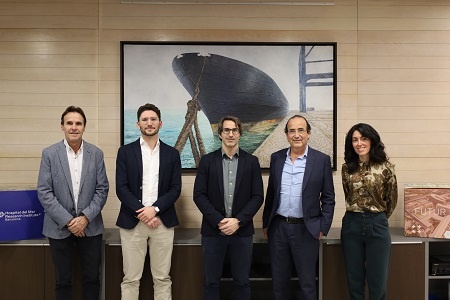
This spin-off of the Hospital del Mar Research Institute Barcelona seeks to make tumour cells visible by forcing them to overexpress the LCOR protein, which regulates tumour “visibility” by promoting the presentation of neoantigens. “By forcing tumour cells to express LCOR, we can make them visible to the immune system. By combining LCOR with immunotherapy, we open the door to treating metastatic breast cancer,” explains Dr Toni Celià-Terrassa, Chief Scientific Officer of VIOLET Pharmaceuticals and coordinator of the Cancer Stem Cells and Metastasis Dynamics Laboratory at the Hospital del Mar Research Institute.

To achieve this, the new company aims to advance the development of the first treatment based on mRNA therapy for metastatic breast cancer. The goal is to develop a nanotherapy that enhances immunotherapy’s effectiveness, following the model of mRNA vaccines used against COVID-19. LCOR messenger RNA would be responsible for inducing tumour cells to express the LCOR protein, thereby properly activating neoantigen presentation on the tumour cell surface to facilitate immune detection and elimination.

This translational research, led by Dr. Celià-Terrassa’s team, has already enabled the generation of intellectual property in a field where no treatment currently targets these mechanisms. “Our therapy emerges as a critical alternative to make tumour cells visible and vulnerable to immunotherapy,” he adds.
Thirty percent of breast cancer patients develop metastases, and the metastatic stage of the disease cannot be cured. Very few breast cancer patients currently benefit from immunotherapy. In experimental models, the approach pursued by VIOLET Pharmaceuticals has achieved complete responses in several preclinical models of different types of breast cancer. “VIOLET Pharmaceuticals is the tool that allows us to bring to life a novel alternative for treating these tumours, as there is currently no therapy on the market that acts on the mechanism allowing cancer to remain invisible,” states Dr Joan Albanell, Head of the Medical Oncology Department at Hospital del Mar, Director of the Cancer Research Programme at its research institute, and Medical and Clinical Director of the new company.

The new company has opened a funding round to finalise optimisation of the clinical candidate and validate its effectiveness in preclinical models of breast cancer and other cancers. The goal is to deliver the project to a pharmaceutical company between 2030 and 2032 to complete the steps required to commercialise the new therapy. The VIOLET Pharmaceuticals startup will be located at the Barcelona Biomedical Research Park (PRBB).

VIOLET Pharmaceuticals is the fourth company backed by the Hospital del Mar Research Institute Barcelona, following Palobiofarma, MedBioinformatics and Chemotargets, further consolidating the institute’s experience in knowledge transfer and the valorisation of biomedical research. Through its Technology Transfer and Translation Unit, HMRIB actively promotes the creation of spin-offs as a pathway to transform research into innovative solutions with real impact on people’s health, positioning the centre as a reference in transfer, translation, and biomedical innovation in Catalonia.

More info :https://violet-pharmaceuticals.com/ and https://www.linkedin.com/company/violet-pharmaceuticals/

Serina Therapeutics Secures $10 Million Financing to Continue Advancing Lead IND Candidate into Phase 1 Clinical Trial in Advanced Parkinson’s Disease Patients

HUNTSVILLE, Dec. 02, 2024 (GLOBE NEWSWIRE) — Serina Therapeutics, Inc. (“Serina”) (NYSE American: SER), a clinical-stage biotechnology company, today announced a $10 million equity financing with strategic shareholder JuvVentures (UK) Limited. The transaction provides Serina with funding to continue advancing SER-252 (POZ-apomorphine), enabled by its proprietary POZ Platform drug optimization technology, into a Phase 1 clinical trial in advanced Parkinson’s disease patients in the second half of 2025.

Under the terms of the funding agreement, Serina will issue one million shares of common stock at $10 per share, a 120% premium to the closing price on November 26, 2024. The financing will be delivered in two tranches: the first $5.0 million tranche was received November 27, 2024, and the second $5.0 million tranche by January 31, 2025. Serina filed a Form 8-K with the SEC on December 2, 2024 that provides additional information regarding this transaction.

About SER-252 (POZ-apomorphine)

SER 252 is an investigational apomorphine therapy developed with Serina’s POZ platform and designed to provide continuous dopaminergic stimulation (CDS). CDS has been shown to reduce the severity of levodopa-related motor complications (dyskinesia) and enable greater on time, with reduced off time, in advanced Parkinson’s patients. SER-252 leverages strategic partner Enable Injections’ enFuse wearable drug delivery platform to enhance patient comfort and convenience, providing CDS to patients via an easy-to-administer, long-acting subcutaneous injection without skin reactions.

About the POZ Platform

Serina’s proprietary POZ technology is based on a synthetic, water soluble, low viscosity polymer called poly(2-oxazoline). Serina’s POZ technology is engineered to provide greater control in drug loading and more precision in the rate of release of attached drugs delivered via subcutaneous injection. The therapeutic agents in Serina’s product candidates are typically well-understood and marketed drugs that are effective but are limited by pharmacokinetic profiles that can include toxicity, side effects and short half-life. Serina believes that by using POZ technology, drugs with narrow therapeutic windows can be designed to maintain more desirable and stable levels in the blood.

Serina’s POZ platform delivery technology has potential for use across a broad range of payloads and indications. Serina intends to advance additional applications of the POZ platform via out-licensing, co-development, or other partnership arrangements, including the non-exclusive license agreement with Pfizer, Inc. to use Serina’s POZ polymer technology for use in lipid nanoparticle drug (LNP) delivery formulations.

About Serina Therapeutics

Serina is a clinical-stage biotechnology company developing a pipeline of wholly owned drug product candidates to treat neurological diseases and other indications. Serina’s POZ PlatformTM provides the potential to improve the integrated efficacy and safety profile of multiple modalities including small molecules, RNA-based therapeutics and antibody-based drug conjugates (ADCs). Serina is headquartered in Huntsville, Alabama on the campus of the HudsonAlpha Institute of Biotechnology.

For more information, please visit https://serinatherapeutics.com.

Cautionary Statement Regarding Forward-Looking Statement

This release contains forward-looking statements within the meaning of federal securities laws. These statements are based on management’s current expectations, plans, beliefs or forecasts for the future, and are subject to uncertainty and changes in circumstances. Any express or implied statements in this press release that are not statements of historical fact, including statements about the potential of Serina’s POZ polymer technology, are forward-looking statements that involve substantial risks and uncertainties that could cause actual results to differ materially from those expressed or implied by such statements. Risks and uncertainties include, among other things, the uncertainties inherent in research and development, including the ability to meet anticipated clinical endpoints, commencement and/or completion dates for clinical trials, regulatory submission dates, regulatory approval dates and/or launch dates, as well as the possibility of unfavorable new clinical data and further analyses of existing clinical data; the risk that clinical trial data are subject to differing interpretations and assessments by regulatory authorities; whether regulatory authorities will be satisfied with the design of and results from our clinical studies; whether and when any applications may be filed for any drug or vaccine candidates in any jurisdictions; whether and when regulatory authorities may approve any potential applications that may be filed for any drug or vaccine candidates in any jurisdictions, which will depend on a myriad of factors, including making a determination as to whether the product’s benefits outweigh its known risks and determination of the product’s efficacy and, if approved, whether any such drug or vaccine candidates will be commercially successful; decisions by regulatory authorities impacting labeling, manufacturing processes, safety and/or other matters that could affect the availability or commercial potential of any drug or vaccine candidates; and competitive developments. These risks as well as other risks are more fully discussed in the company’s Annual Report on Form 10-K for the year ended December 31, 2023, the company’s Current Report on Form 8-K that was filed with the SEC on April 1, 2024, and the company’s other periodic reports and documents filed from time to time with the SEC.

The information contained in this release is as of the date hereof, and Serina assumes no obligation to update forward-looking statements contained in this release as the result of new information or future events or developments.

For inquiries, please contact:

Investor.relations@serinatherapeutics.com
(256) 327-9630

**************************************************************************************************

More info for healthcare startups : Healthcare Investors Database and Healthcare Investors Matchmaking .


ARMGO Pharma – developing small molecule Ryanodine Receptor modulators for treating cardiac, musculoskeletal and neurological disorders

ARMGO Pharma is a privately held biopharmaceutical company dedicated to applying original, targeted science to the discovery and development of novel small-molecule therapeutics to treat debilitating cardiac, musculoskeletal, and neurological disorders. The company’s proprietary drugs, known as Rycals®, are a new class of oral agents that repair calcium leaks through the Ryanodine Receptor (RyR).

ARMGO Pharma - developing small molecule Ryanodine Receptor modulators for treating cardiac, musculoskeletal and neurological disorders

ARM210 is a potential disease modifying therapy for genetic diseases, which targets the Ryanodine Receptor calcium channel (RyR), an intracellular calcium-release channel that becomes leaky in these and other diseases. Intracellular calcium leaks via mutant RyR1 channels impair muscle contraction leading to muscle weakness and loss of function, and activate toxic pathways that damage muscle, causing the symptoms in RYR1-RM.

ARM210 is a small molecule that binds to leaky RyR channels and repairs the leak, as demonstrated in vitro in muscle biopsies from RYR1-RM patients. The unique mechanism of action of ARM210 makes it an ideal potential disease modifying therapy for RYR1-RM. Muscle biopsies of the patients in this trial have been previously shown to respond biochemically to ARM210 in vitro. This trial will evaluate the safety and explore the biochemical effect of oral administration of ARM210 in these same patients.

ARMGO Pharma has been awarded an exclusive, worldwide license from Columbia University for its RyR technology based on the research of founding scientist Andrew R. Marks, M.D. In December 2021, ARMGO Pharma raises a $35 million Series B  funding round to progress clinical studies of lead molecule ARM210 in cardiac and skeletal muscle diseases.

ARMGO Pharma – developing small molecule Ryanodine Receptor modulators for treating cardiac, musculoskeletal and neurological disorders

More info : www.armgo.com

Keywords : ARMGO Pharma , small molecule , therapeutics , RyR technology , ARM210 , cardiovascular , musculoskeletal disorders , neurological disorders , CNS , neuroscience , Rycals , Ryanodine Receptor , RyR , Ryanodine Receptor modulators

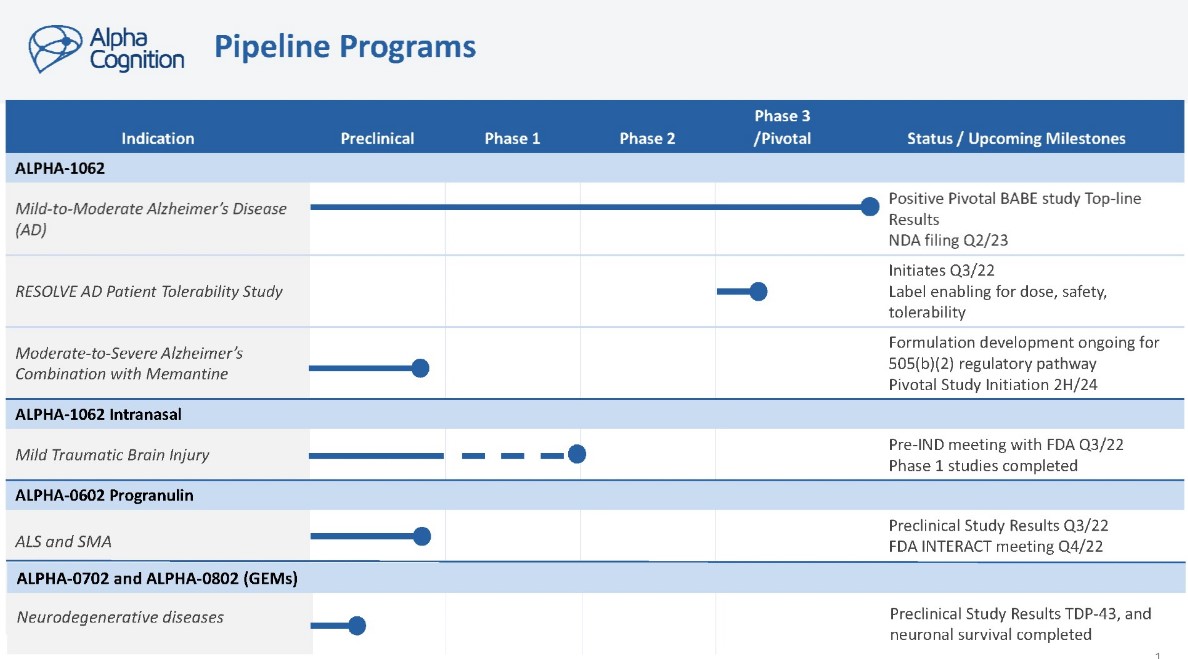
Alpha Cognition – developing novel treatments for neurodegenerative diseases such as Alzheimer’s Dementia and Amyotrophic Lateral Sclerosis

Alpha Cognition is a clinical stage, biopharmaceutical company dedicated to developing novel treatments for under-served neurodegenerative diseases such as Alzheimer’s Dementia and Amyotrophic Lateral Sclerosis (ALS).

Alpha Cognition - developing novel treatments for neurodegenerative diseases such as Alzheimer’s Dementia and Amyotrophic Lateral Sclerosis

ALPHA-1062, a patented new chemical entity that has demonstrated safety and improved ALPHA-1062, is a patented new chemical entity being developed as a new generation acetylcholinesterase inhibitor for the treatment of Alzheimer’s disease, with expected minimal gastrointestinal side effects. ALPHA-1062’s active metabolite is differentiated from donepezil and rivastigmine in that it binds neuronal nicotinic receptors, most notably the alpha-7 subtype, which is known to have a positive effect on cognition. ALPHA-1062 is also being developed in combination with memantine to treat moderate to severe Alzheimer’s dementia and as an intranasal formulation for traumatic brain injury.

ALPHA-0602 (Progranulin) is expressed in several cell types in the central nervous system and in peripheral tissues, promotes cell survival, regulates certain inflammatory processes, and plays a significant role in regulating lysosomal function and microglial responses to disease. Its intended use for the treatment of neurodegenerative diseases has been patented by the Company and Alpha-0602 has been granted an Orphan Drug Designation for the treatment of Amyotrophic Lateral Sclerosis by the FDA.

ALPHA-0702 and ALPHA-0802 are Granulin Epithelin Motifs, or GEMs, derived from full length progranulin which have therapeutic potential across multiple neurodegenerative diseases. Progranulin is comprised of 7½ Granulin Epithelin Motifs (GEMs). GEMs are important in regulating cell growth, survival, repair, and inflammation. Individual granulin domain peptides are approximately 60 amino acids in length (~7kDa). GEMs are metabolically stable and resistant to proteolysis (long half-life). Evidence suggests that not all GEMs are equally potent at promoting cell survival signaling or reducing proteinopathy, and may compete (e.g., binding to effectors) with active GEMs and effectively decrease their potency. Specific GEM combinations have been shown to be more effective than full length progranulin in promoting Cathepsin D maturation. GEMs have been shown to be important in regulating cell growth, survival, repair, and inflammation. Alpha-0702 and ALPHA-0802 are designed to deliver this with potentially lower toxicity, and greater therapeutic effect.

More info : http://www.alphacognition.com/

Keywords : Alpha Cognition , neurodegenerative diseases , dementia , Alzheimer’s Dementia , Alzheimer Disease , Amyotrophic Lateral Sclerosis , acetylcholinesterase inhibitor , orphan drug , CNS , neuroscience , traumatic brain injury , Granulin Epithelin Motifs , Gene Therapy

Biophytis – therapeutics to slow down the degenerative processes associated with aging

Biophytis is a clinical-stage biotechnology company specialized in the development of therapeutics that are aimed at slowing the degenerative processes associated with aging and improving functional outcomes for patients suffering from age-related diseases, including severe respiratoy failure in patients suffering from COVID-19.

Biophytis - therapeutics to slow down the degenerative processes associated with aging

Biophytis SA, founded in 2006, develops drug candidates targeting diseases of aging. Using its technology and know-how, Biophytis has begun clinical development of innovative therapeutics to restore the muscular and visual functions in diseases with significant unmet medical needs. Specifically, the company is advancing two proprietary drug candidates into mid-stage clinical testing this year: Sarconeos (BIO101) to treat sarcopenic obesity and Macuneos (BIO201) to treat dry age-related macular degeneration (AMD). The business model of BIOPHYTIS is to ensure the conduct of the project until clinical activity in the patient is proven, then to license the technologies in order to continue the development in partnership with a pharmaceutical laboratory. The company was founded in partnership with researchers at the UPMC (Pierre and Marie Curie University) and collaborates with scientists at the Institute of Myology, and the Vision Institute

Its lead drug candidate, Sarconeos (BIO101), is an orally administered small molecule in development for the treatment of neuromuscular diseases, including sarcopenia and Duchenne muscular dystrophy (DMD). Our second drug candidate, Macuneos (BIO201), is an orally administered small molecule in development for the treatment of retinal diseases, including dry AMD and Stargardt disease.

Biophytis also has preclinical efficacy data for Sarconeos (BIO101) in Spinal Muscular Atrophy (SMA), a rare neuromuscular disease. Spinal Muscular Atrophy is a rare progressive neurodegenerative disease that robs an individual of the ability to walk, eat and breathe. SMA is the leading genetic cause of death in infants. Symptoms may appear in the first 6 months of life (type 1, the most severe and common), in infancy (types 2 and 3) or in adulthood (type 4, the least common form). SMA affects 1 in 11,000 births in the United States each year, and about 1 in 50 Americans is a genetic carrier.

More info : www.biophytis.com

Keywords for Biophytis :

neuromuscular diseases, dry age-related macular degeneration, AMD, ophthalmology, infectious diseases, COVID19, Asthma, COPD, small molecule, sarcopenia, Stargardt disease, Duchenne muscular dystrophy , DMD, preclinical stage pharma company, clinical stage pharma company , Spinal Muscular Atrophy , rare diseases , aging

Celon Pharma had the largest IPO on the Polish capital market in 2016

Celon Pharma

Continue reading

Aduro Biotech – engineered Immunotherapy for Cancer

Aduro Biotech is a clinical-stage cancer immunotherapy company with multiple therapeutic approaches in development that have the potential to yield powerful immunotherapy combinations.

Aduro Biotech – engineered Immunotherapy for Cancer

Aduro Biotech

Continue reading

Newron Pharmaceuticals – innovative therapies for Central Nervous System

Newron Pharmaceuticals is a biopharmaceutical company focused on the development of novel therapies for patients with diseases of the Central Nervous System (CNS) and pain.

Newron Pharmaceuticals – innovative therapies for Central Nervous System

Newron Pharmaceuticals

Continue reading

Cebiotex – drug delivery with electrospun nanofiber technology

Cebiotex offers manufacturing technology and contract research in the field of drug delivery with electrospun nanofiber technology.

Cebiotex – drug delivery with electrospun nanofiber technology

cebiotex

Continue reading

Bioinvent – antibody drug discovery

BioInvent is a research-based pharmaceutical company focused on discovery and development of innovative antibody-based drugs against cancer. BioInvent also develops antibody-based drugs in collaboration with partners who finance the development of new drugs and provide BioInvent with the right to milestone payments and royalties on sales.

Bioinvent – antibody drug discovery

Bioinvent

Continue reading