
VIOLET Pharmaceuticals increases the effectiveness of immunotherapies for metastatic cancer

There is currently no specific treatment for metastatic cancers that focuses on the tumour’s invisibility to immune system cells. Tumour cells evade immune surveillance because of defects in the set of molecules and cellular processes that regulate the presence of antigens on the cell surface, which are required for recognition by the immune system. But now VIOLET Pharmaceuticals has been created with the aim of developing a solution to this challenge.

This spin-off of the Hospital del Mar Research Institute Barcelona seeks to make tumour cells visible by forcing them to overexpress the LCOR protein, which regulates tumour “visibility” by promoting the presentation of neoantigens. “By forcing tumour cells to express LCOR, we can make them visible to the immune system. By combining LCOR with immunotherapy, we open the door to treating metastatic breast cancer,” explains Dr Toni Celià-Terrassa, Chief Scientific Officer of VIOLET Pharmaceuticals and coordinator of the Cancer Stem Cells and Metastasis Dynamics Laboratory at the Hospital del Mar Research Institute.

To achieve this, the new company aims to advance the development of the first treatment based on mRNA therapy for metastatic breast cancer. The goal is to develop a nanotherapy that enhances immunotherapy’s effectiveness, following the model of mRNA vaccines used against COVID-19. LCOR messenger RNA would be responsible for inducing tumour cells to express the LCOR protein, thereby properly activating neoantigen presentation on the tumour cell surface to facilitate immune detection and elimination.

This translational research, led by Dr. Celià-Terrassa’s team, has already enabled the generation of intellectual property in a field where no treatment currently targets these mechanisms. “Our therapy emerges as a critical alternative to make tumour cells visible and vulnerable to immunotherapy,” he adds.

Thirty percent of breast cancer patients develop metastases, and the metastatic stage of the disease cannot be cured. Very few breast cancer patients currently benefit from immunotherapy. In experimental models, the approach pursued by VIOLET Pharmaceuticals has achieved complete responses in several preclinical models of different types of breast cancer. “VIOLET Pharmaceuticals is the tool that allows us to bring to life a novel alternative for treating these tumours, as there is currently no therapy on the market that acts on the mechanism allowing cancer to remain invisible,” states Dr Joan Albanell, Head of the Medical Oncology Department at Hospital del Mar, Director of the Cancer Research Programme at its research institute, and Medical and Clinical Director of the new company.

The new company has opened a funding round to finalise optimisation of the clinical candidate and validate its effectiveness in preclinical models of breast cancer and other cancers. The goal is to deliver the project to a pharmaceutical company between 2030 and 2032 to complete the steps required to commercialise the new therapy. The VIOLET Pharmaceuticals startup will be located at the Barcelona Biomedical Research Park (PRBB).

VIOLET Pharmaceuticals is the fourth company backed by the Hospital del Mar Research Institute Barcelona, following Palobiofarma, MedBioinformatics and Chemotargets, further consolidating the institute’s experience in knowledge transfer and the valorisation of biomedical research. Through its Technology Transfer and Translation Unit, HMRIB actively promotes the creation of spin-offs as a pathway to transform research into innovative solutions with real impact on people’s health, positioning the centre as a reference in transfer, translation, and biomedical innovation in Catalonia.

More info :https://violet-pharmaceuticals.com/ and https://www.linkedin.com/company/violet-pharmaceuticals/
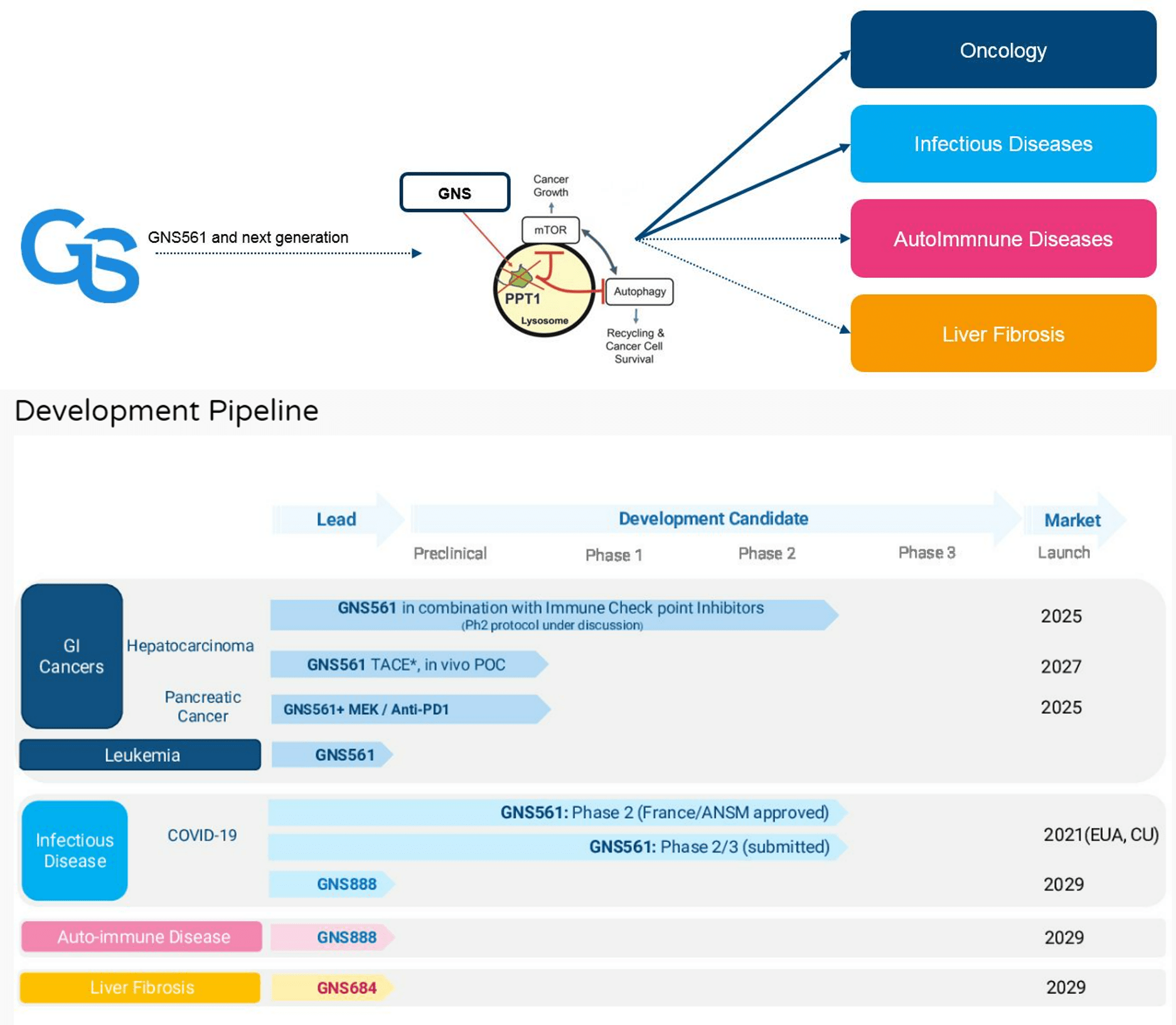
Genoscience Pharma – new approaches disrupting cancer cell lysosomal functions

Autophagy is a catabolic process which degrades a cellular own component through the lysosomal machinery. The lysosome, at the heart of the autophagy sytem is important in various processes (cancer, infection…).

Genoscience Pharma - new approaches disrupting cancer cell lysosomal functions

In Cancer, they are required in tumor cells for cellular adhesion, motility and signaling, exocytosis, angiogenesis and overall survival, growth, aggressiveness, metastatic potential and drug resistance. Because of their high metabolic rates, rapidly dividing and invasive cancer cells require increased new biomass production to survive. The lysosome is also important for adaptation to nutrient stress as it contains hydrolytic enzymes that play a major role in the degradation of intracellular macromolecules and catabolic (such as autophagy) and anabolic growth. This busy lysosomal behavior leads to alterations in lysosomal structure and function, which, paradoxically, renders cancer cells more sensitive to lysosomal destabilization. In addition, lysosomal enzyme activity is elevated in many tumors compared to adjacent normal tissue, and several reports suggest that lysosomes in tumor cells are more fragile than normal lysosomes. Therefore, lysosome seems to be a target of interest in the fight against cancers. Targeting lysosomes triggers apoptotic and lysosomal cell death pathways.

Genoscience Pharma – new approaches disrupting cancer cell lysosomal functions

In virology, It has been shown that autophagy is activated during virus and bacterial infection and that some viruses can use the autophagy system to facilitate their own replication . Some viruses, such as Coronaviruses are single stranded, positive sense RNA viruses, which induce the rearrangement of cellular membranes upon infection of a host cell. This provides the virus with a platform for the assembly of viral replication complexes, improving efficiency of RNA synthesis. Genoscience Pharma focuses on new approaches disrupting cancer cell lysosomal functions.

Genoscience Pharma was founded in 2001 by Pr Philippe Halfon, a world renowned medical expert on viral diseases, especially on Human Immunodeficient Virus (HIV) and Hepatitis C Virus (HCV). The company was initially focused on the development of anti-HCV agents. Two protease inhibitors were thus developed and out-licensed to BioLineRX. A new scientific direction was taken in 2012 after the discovery of a new chemical family: autophagy inhibitors. Following promising preliminary in vitro and in vivo results from these small molecules, including against cancer stem cells, Genoscience Pharma has decided to take the opportunity to make the difference in Oncology, especially in cancers where medical needs are still unmet. Now, Genoscience Pharma is a clinical stage biopharmaceutical company focused on translating novel scientific insights into medicines for patients with cancer.

Genoscience Pharma – new approaches disrupting cancer cell lysosomal functions

More info: https://www.genosciencepharma.com/

Keywords : lysosomal functions , cancer, oncology , Genoscience Pharma , lysosomes , infectious diseases  , virus , Covid19, leukemia , pancreatic cancer , hepatocarcinoma , small molecules

Nanostics – micro-flow cytometry to quantify extracellular vesicle size, concentration and marker abundance, with advanced machine learning algorithms to determine disease states

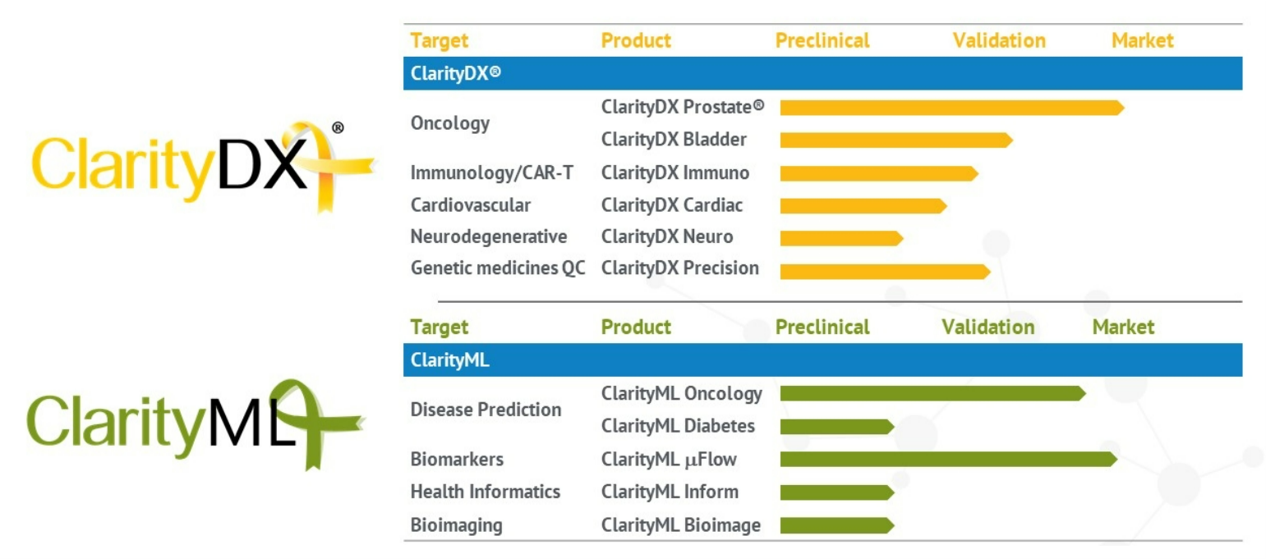
Nanostics is focused on development and commercialization of novel, non-invasive diagnostic tests for cancer. Its core technology is an advanced liquid biopsy platform that can accurately diagnose cancer from a single drop of blood. Its lead product, ClarityDx Prostate, is the most accurate diagnostic test to diagnose aggressive prostate cancer, and is positioned to emerge as the world’s leading diagnostic tool for prostate cancer.

Nanostics - micro-flow cytometry to quantify extracellular vesicle size, concentration and marker abundance, with advanced machine learning algorithms to determine disease states

EVs carrying disease-specific biomarkers like nucleic acid and proteins are continuously released from cells and can be found in biological fluids including blood, urine, semen, and cerebrospinal fluid.  The levels of disease-specific EVs are closely related to disease progression making EVs promising targets for minimally invasive diagnostic assays.

Technology designed to accurately detect and measure EVs has the potential to greatly improve liquid biopsy diagnostics. At Nanostics, we use micro-flow cytometry (µFCM) to quantify EV size, concentration, and marker abundance for millions of EVs in minutes. We then use advanced machine learning to analyze the vast amount of data generated using µFCM to provide rapid and precise results that continuously improve with every test.

The EV and machine learning platform ClarityDX® is set to transform the diagnostic landscape and make easy-to-use, minimally invasive predictive tests a reality in the near future.

At Nanostics, we use micro-flow cytometry (µFCM) to quantify EV size, concentration, and marker abundance for millions of EVs in minutes. We then use advanced machine learning to analyze the vast amount of data generated using µFCM to provide rapid and precise results that continuously improve with every test.

The EV and machine learning platform ClarityDX® is set to transform the diagnostic landscape and make easy-to-use, minimally invasive predictive tests a reality in the near future.

The ability to detect and measure EVs is transforming the diagnostic landscape in immunology, neurology, cardiology, and oncology. The ClarityDX® platform technology is well-positioned for future pipeline products including tests for screening, early diagnosis, complementary diagnosis, monitoring, and management for many diseases and medically-related events. Nanostics’ R&D team continues to expand the product pipeline through in-house and partnered projects to include additional liquid biopsy diagnostic tests to improve patient care.

Nanostics – micro-flow cytometry to quantify extracellular vesicle size, concentration and marker abundance, with advanced machine learning algorithms to determine disease states

More info : http://www.nanosticsdx.com

Keywords : machine learning, exosomes, extracellular vesicles, diagnostics, oncology, cancer, prostate cancer, cardiovascular, neuroscience, biofluids , liquid biopsy , micro-flow cytometry

Sycai Medical – Early stage diagnosis of pancreatic cancer through Medical Imaging and Artificial Intelligence

Sycai Medical is a technological startup founded in Barcelona in 2020, born from the motivation of empowering radiologists to improve healthcare through artificial vision and big data. They develop AI-based algorithms, which helps medical professionals in the diagnosisof abdominal injuries and in the prediction of their evolution to increase early-stage cancer detection and improving the quality of life of patients with chronic diseases.

Their product Sycai Medical is an assistant, which helps radiologists to detect pancreatic cystic lesions, predicting their malignant potential and presenting similar cases to verify the diagnosis.

This kind of lesions can evolve into pancreatic cancer, the 4th cause of death by cancer in Europe with an average survival time from diagnosis of less than 5 months and currently without an efficient method or early diagnosis.

The follow-up treatment of the pancreatic cysts leads to repetitive image tests for life, due to the difficulty of predicting which ones are going to be malignant and which are staying benign. The ability of predicting their evolution is the key to increase early detection of pancreatic cancer and to optimize the follow-up treatments.

Their Artificial Intelligence and Big Data based software assists radiologists in the detection and classification of abdominal lesions on CT scans and MRIs. It also provides a prediction of the probability of each lesion to become cancer in the future, which is crucial to diagnose early-stage pancreatic cancer and to improve the life quality of patients.

More info : www.sycaimedical.com  

Artificial Intelligence – Big Data – Software – Digital Health – Medical Imaging – Oncology – Pancreatic Cancer – Abdomen – Radiology – Diagnostics – Detection  

Crownbio – cancer Immunotherapy and xenograft models

Crownbio provides a “gold-standard” collection of well-characterized models and services for drug discovery to help its clients reduce the attrition rate of candidate compounds, before they enter the clinic.

Crownbio – cancer Immunotherapy and xenograft models

 crownbio Continue reading

Nerviano – antibody drug conjugate

Nerviano is a biotech company identifying innovative agents for clinical development in areas of unmet medical needs in Oncology.

Nerviano – antibody drug conjugate

Nerviano Continue reading

Selvita – accelerating drug discovery

Selvita is a biotech company offering drug discovery support at every step of the process, from the early discovery phase up to preclinical research. Selvita delivers a comprehensive panel of solutions to accelerate and decrease the cost of the introduction of new drugs to the market.

Selvita – accelerating drug discovery

selvita Continue reading

OncoDNA – deep sequencing of tumor DNA

OncoDNA is the first European company to provide personalized medicine in oncology based on the analysis of patient tumor DNA.

OncoDNA – deep sequencing of tumor DNA

oncoDNA Continue reading

ActivX – in situ kinase profiling

ActivX is a biotech company developing activity-based profiling systems for several families of drug targets (including kinases and serine hydrolases). The utility of these probes in facilitating drug discoveries has been validated for multiple therapeutic areas including metabolic diseases, oncology and pain management.

ActivX – in situ kinase profiling

Activx

Continue reading